
Variety Tropical · Araliaceae
Fatshedera 'Annemieke'
× Fatshedera lizei 'Annemieke' · A variety of Tree ivy
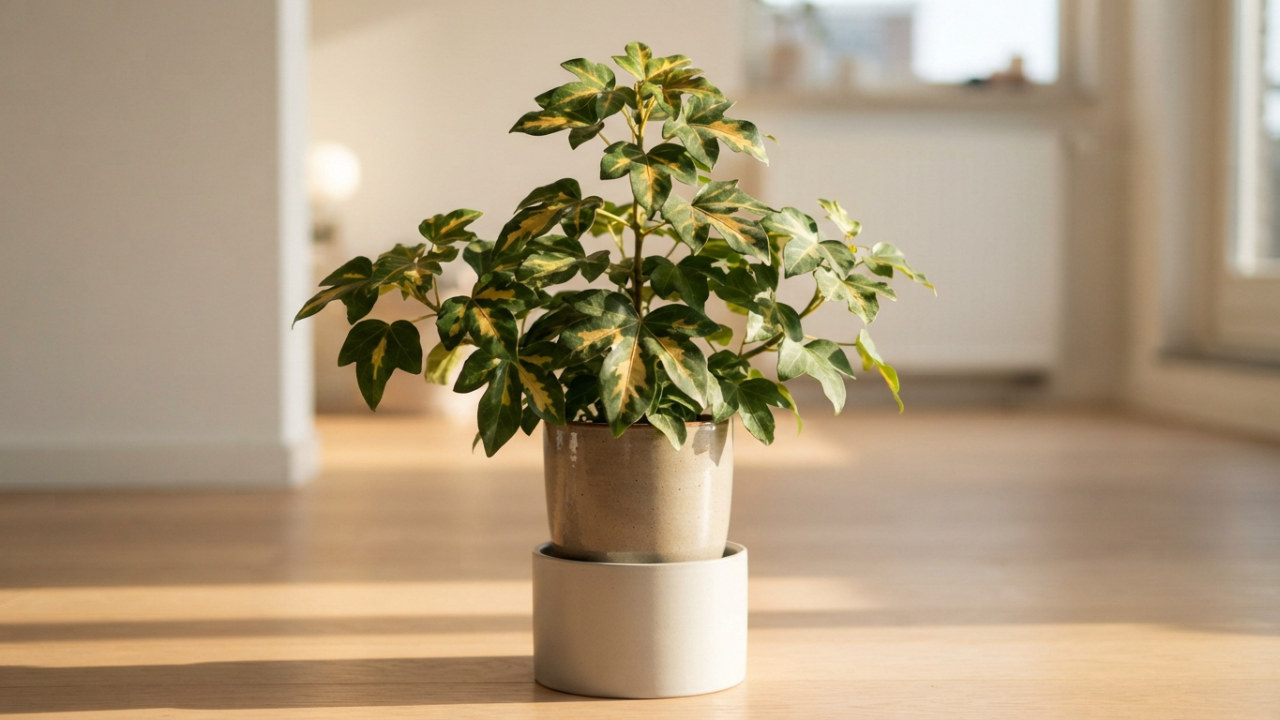
A slow tree ivy whose glossy lobed leaves are dark green at the edge and splashed with yellow or gold in the center.
- Every 5 daysWatering
- Bright indirect lightLight
- 50–70 %Humidity
- 5–22 °CTemperature


Other varieties 2
How to care for your Fatshedera 'Annemieke'
Everything you need to keep your Fatshedera 'Annemieke' healthy: watering, light, humidity, feeding, repotting and pruning.
This cultivar of the hybrid between Fatsia and ivy has the same glossy, leathery, five-lobed leaves, but the middle of each blade is splashed with yellow to gold while the border stays dark green. It is the reverse of a white-edged variety. It sprawls as a shrub of three to five feet indoors, or climbs when supported. The yellow areas hold little chlorophyll, so growth is slow and strong sun scorches them. The origin of this cultivar is not documented.

How to recognise Fatshedera 'Annemieke'
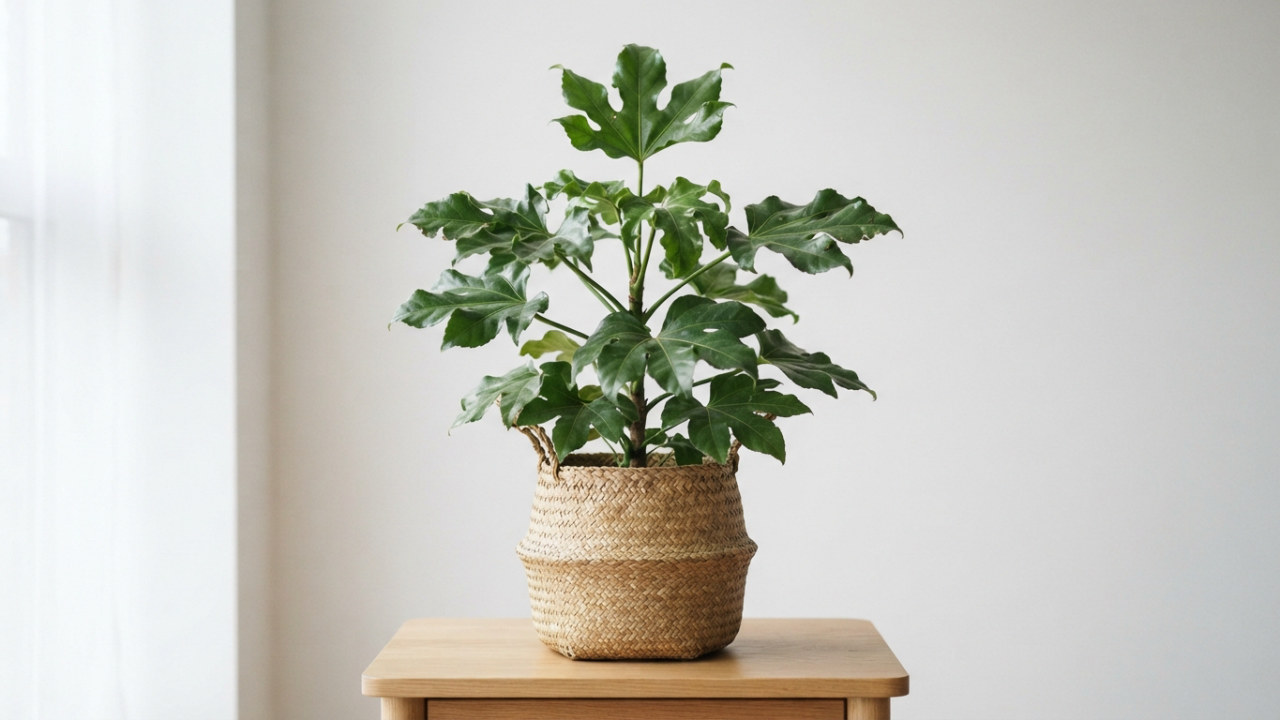
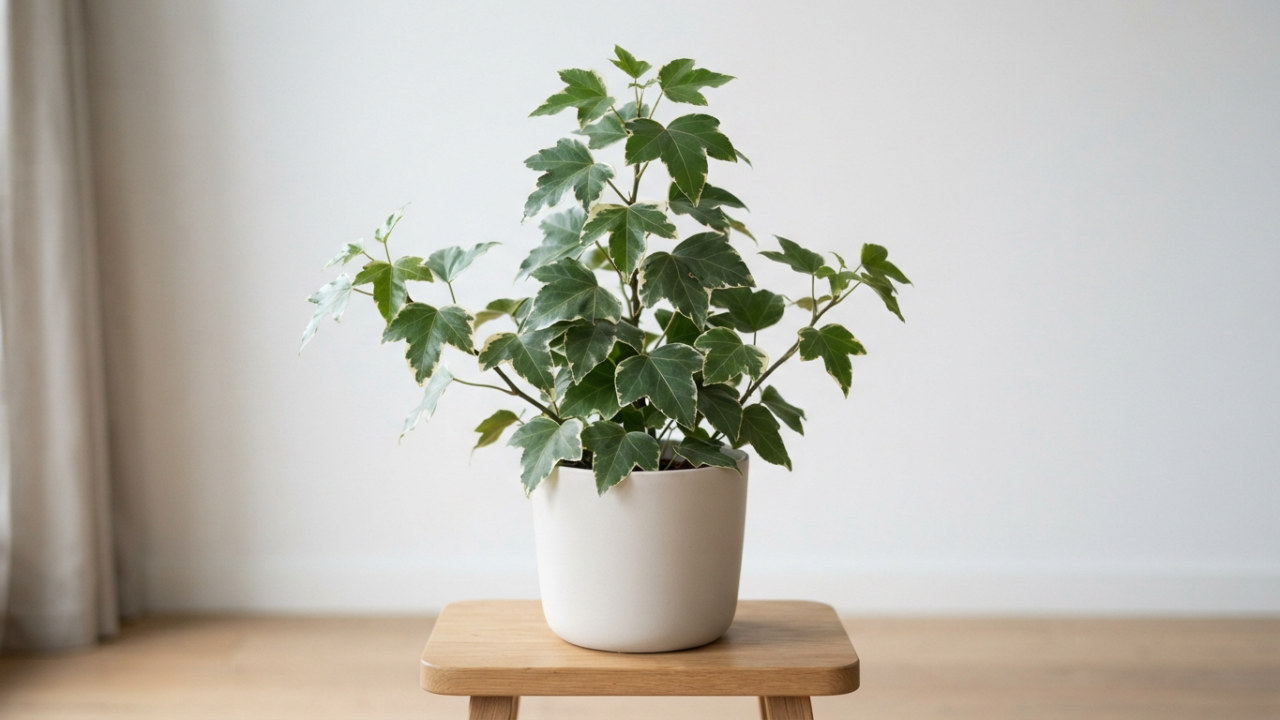
Dark green five-lobed leaves with a yellow to gold splash in the center and a green rim; 'Variegata' has the opposite pattern, a cream edge, and the plain hybrid is all green. Much larger than a gold-variegated ivy leaf, and unlike Fatsia japonica it sprawls on thin stems.

Watering your Fatshedera 'Annemieke'
Every 5 days
Water thoroughly when the top inch of mix feels dry, then empty the saucer so the roots never sit in water.
How to know it needs water
- The top inch of mix is dry when you press a finger in
- The glossy leaves look slightly limp

How much light a Fatshedera 'Annemieke' needs
Bright indirect light
Bright indirect light keeps the pale variegation clear; a spot near a north or east window works, but shield it from hot midday sun.
- Direct sun tolerated
- No direct sun
- Orientations that suit it
- North, North-east, East, North-west

Humidity and misting
50–70 %
Ordinary indoor humidity of 50 to 70 percent is enough; dry heated air in winter is its only real trouble. Skip misting; wipe the leaves with a damp cloth now and then to remove dust and keep them glossy.

Feeding and fertiliser
Every 21 days
Feed about every three weeks from April to September and stop completely in winter.
- Recommended feed
- A balanced liquid houseplant fertilizer, diluted to the label dose. · 2-1-2

Repotting your Fatshedera 'Annemieke'
Every 24 months
Go up one pot size into fresh universal mix lightened with perlite, and re-tie the stems to their stake.
- When
- Repot in spring, between March and May, as growth restarts.
- Potting mix
- All-purpose potting mix
- Mix in
- perlite, coco fibre
The tell-tale signs
- Roots show at the drainage holes
- Water runs straight through without soaking the mix

Pruning your Fatshedera 'Annemieke'
Prune in early spring, before the new growth starts. Cut long stems just above a leaf node and pinch young tips so the plant branches instead of reaching.

Through the year
Watering is not set once and for all: it follows the light and the growth. Allow 8 days between waterings in the depth of winter, against 4 in the growing season.
- 8 J
- 6 F
- 5 M
- 4 A
- 4 M
- 4 J
- 4 J
- 4 A
- 5 S
- 5 O
- 6 N
- 8 D
Active growth · Days between waterings

Toxicity
The sap and leaves irritate the skin and, if eaten, upset the stomach of cats, dogs and people, so keep it out of reach.

Good to know
- Its parent hybrid arose in 1910 in Nantes, France, when the Lizé brothers crossed Fatsia japonica 'Moserii' with an ivy.
- A genus hybrid like this one is rare among houseplants, since Fatsia and Hedera are different genera of the same family.

Frequently asked questions about the Fatshedera 'Annemieke'
How do you care for a Fatshedera 'Annemieke'?
Water it every 5 days. Give it bright indirect light. Ideal humidity: 50–70 %. Ideal temperature: 5–22 °C. Water thoroughly when the top inch of mix feels dry, then empty the saucer so the roots never sit in water.
How often should you water a Fatshedera 'Annemieke'?
Every 5 days Water thoroughly when the top inch of mix feels dry, then empty the saucer so the roots never sit in water. How to know it needs water : The top inch of mix is dry when you press a finger in ; The glossy leaves look slightly limp.
How much light does a Fatshedera 'Annemieke' need?
Bright indirect light Bright indirect light keeps the pale variegation clear; a spot near a north or east window works, but shield it from hot midday sun. No direct sun
Is the Fatshedera 'Annemieke' toxic to cats and dogs?
Yes. The sap and leaves irritate the skin and, if eaten, upset the stomach of cats, dogs and people, so keep it out of reach. Keep it out of reach of your pets and call a vet if any is swallowed.
Why are my Fatshedera 'Annemieke' leaves turning yellow?
Yellowing most often comes from too much water: the mix stays wet and the roots suffocate. Check that the pot drains, empty the saucer, and let the mix dry before watering again. Too little light or a cold draught cause the same symptom.
When should you repot a Fatshedera 'Annemieke'?
Repot every 24 months, ideally in repot in spring, between march and may, as growth restarts.. Go up one pot size into fresh universal mix lightened with perlite, and re-tie the stems to their stake.

At a glance
- Family
- Araliaceae
- Category
- Tropical
- Placement
- Indoor and outdoor
- Mature height
- 1.2 m
- Growth
- Slow
- Temperature
- 5–22 °C
- Pot materials
- ceramic, plastic
- Growth
- Reaches maturity in 5 years
These figures are for an average plant. In the app they are recalculated for yours, based on your room, its orientation and the season.
And for your plant, in your home?
In the app this plant becomes yours: a watering schedule tuned to your home, health tracking from photos, and reminders at the right moment.
In the same spirit
 Every 7 days


Air Plant
Tillandsia ionantha

 Every 6 days
Alocasia amazonica
Alocasia amazonica
 Every 7 days
Alocasia baginda
Alocasia baginda
 Every 4 days
Angel Wings
Caladium bicolor
