
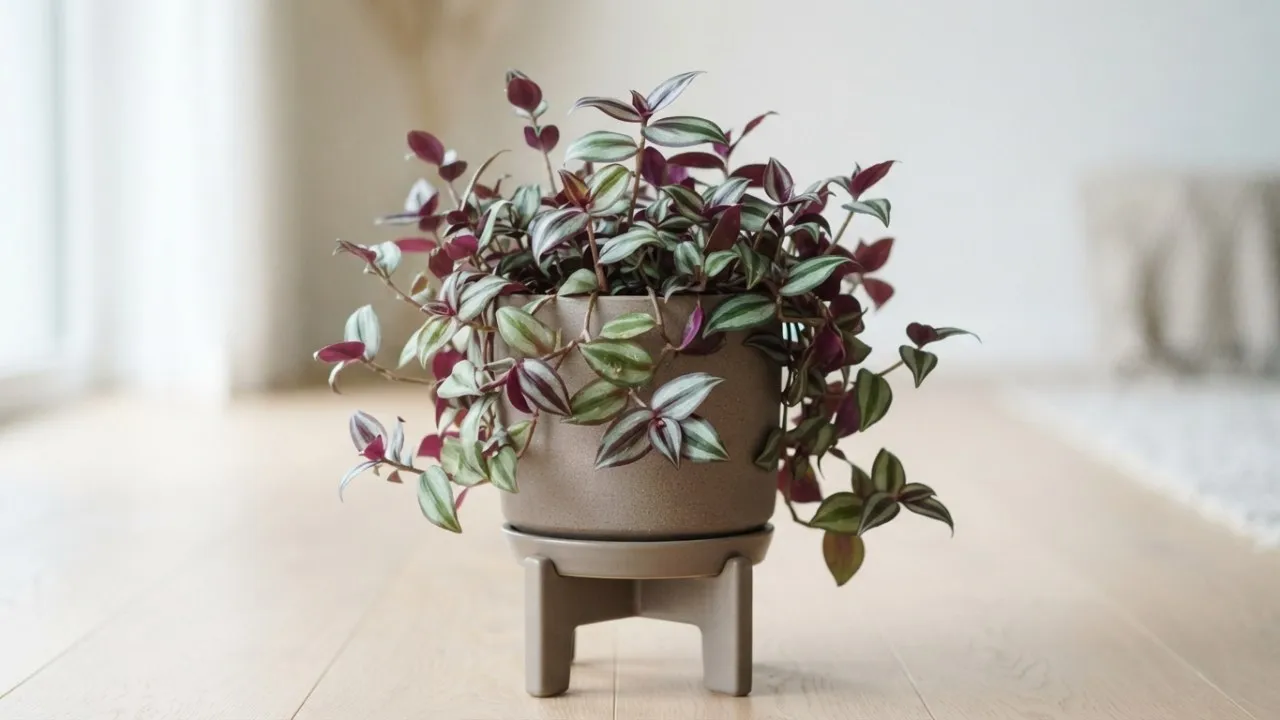
Inch Plant
Tradescantia zebrina
A trailing plant with leaves striped in green, silver, and purple, the inch plant is a vigorous grower with an impressive growth rate.
The essentials at a glance
-
Watering
Every 5 days
-
Light
Bright indirect light
-
Humidity
40–60 %
-
Temperature
15–27 °C


How to care for your Inch Plant
Everything you need to keep your Inch Plant healthy: watering, light, humidity, feeding, repotting and pruning.
Tradescantia zebrina is native to Mexico and Central America, where it forms vast ground cover carpets on tropical forest floors. Its oval leaves display alternating stripes of deep green, metallic silver, and intense purple, with a vibrant violet underside. In a hanging basket, it produces long trailing stems that can reach a meter in length in a single season. Very easy to propagate from cuttings, it is perfect for beginning gardeners who want to quickly achieve a spectacular decorative effect.

Watering your Inch Plant
Every 5 days
Keep soil evenly moist but not waterlogged. Water when the top centimeter of soil feels dry. Use room-temperature water.
How to know it needs water
- Top 1–2 cm of soil feels dry
- Leaves lose their luster and look dull
- Stems become slightly limp

How much light a Inch Plant needs
Bright indirect light
Bright indirect light for best coloration. Tolerates lower light but purple coloring fades. Some direct morning sun enhances leaf patterns.
- Direct sun tolerated
- 1 to 3 h a day
- Orientations that suit it
- North, North-east, East, South-east, South, South-west, West, North-west

Humidity and misting
40–60 %
40–60% Appreciates regular misting especially in dry environments. Avoid letting water pool in leaf axils to prevent rot.

Feeding and fertiliser
Every 14 days
Feed every two weeks during the growing season at half strength. Reduce to monthly in autumn and stop in winter.
- Recommended feed
- Balanced liquid fertilizer (10-10-10) · 2-1-2

Repotting your Inch Plant
Every 12 months
Use a standard well-draining potting mix. Take the opportunity to propagate stem cuttings to refresh leggy plants. Pot several cuttings together for a full look.
- When
- Spring
- Potting mix
- All-purpose potting mix
- Mix in
- perlite, coco fibre
The tell-tale signs
- Plant becomes leggy and bare at the base
- Roots fill the entire pot
- Growth slows significantly despite regular feeding

Pruning your Inch Plant
Regularly throughout the growing season, or whenever the plant becomes leggy. Pinch or cut stems back to promote bushy growth. Remove bare or leggy stems at the base. Root cuttings easily in water or moist soil.

Through the year
Watering is not set once and for all: it follows the light and the growth. Allow 7 days between waterings in the depth of winter, against 4 in the growing season.
- 7 J
- 6 F
- 5 M
- 5 A
- 4 M
- 4 J
- 4 J
- 5 A
- 5 S
- 6 O
- 6 N
- 7 D
Active growth · Days between waterings

Toxicity
Mildly toxic to cats and dogs, causing skin irritation and digestive upset if ingested. Generally safe for humans but may cause contact dermatitis in sensitive individuals.

Good to know
- Its French nickname 'misère' (misery) comes from its ability to survive in difficult conditions, even when neglected.
- Tradescantia zebrina can root at every stem node that touches soil, making it one of the easiest plants to propagate.

Frequently asked questions about the Inch Plant
How do you care for a Inch Plant?
Water it every 5 days. Give it bright indirect light. Ideal humidity: 40–60 %. Ideal temperature: 15–27 °C. Keep soil evenly moist but not waterlogged. Water when the top centimeter of soil feels dry. Use room-temperature water.
How often should you water a Inch Plant?
Every 5 days Keep soil evenly moist but not waterlogged. Water when the top centimeter of soil feels dry. Use room-temperature water. How to know it needs water : Top 1–2 cm of soil feels dry ; Leaves lose their luster and look dull ; Stems become slightly limp.
How much light does a Inch Plant need?
Bright indirect light Bright indirect light for best coloration. Tolerates lower light but purple coloring fades. Some direct morning sun enhances leaf patterns. 1 to 3 h a day
Is the Inch Plant toxic to cats and dogs?
Yes. Mildly toxic to cats and dogs, causing skin irritation and digestive upset if ingested. Generally safe for humans but may cause contact dermatitis in sensitive individuals. Keep it out of reach of your pets and call a vet if any is swallowed.
Why are my Inch Plant leaves turning yellow?
Yellowing most often comes from too much water: the mix stays wet and the roots suffocate. Check that the pot drains, empty the saucer, and let the mix dry before watering again. Too little light or a cold draught cause the same symptom.
When should you repot a Inch Plant?
Repot every 12 months, ideally in spring. Use a standard well-draining potting mix. Take the opportunity to propagate stem cuttings to refresh leggy plants. Pot several cuttings together for a full look.

At a glance
- Family
- Commelinaceae
- Category
- Tropical
- Placement
- Indoor
- Mature height
- 20 cm
- Growth
- Fast
- Temperature
- 15–27 °C
- Pot materials
- terracotta, ceramic, plastic
- Growth
- Reaches maturity in 1 years
These figures are for an average plant. In the app they are recalculated for yours, based on your room, its orientation and the season.
And for your plant, in your home?
In the app this plant becomes yours: a watering schedule tuned to your home, health tracking from photos, and reminders at the right moment.
In the same spirit
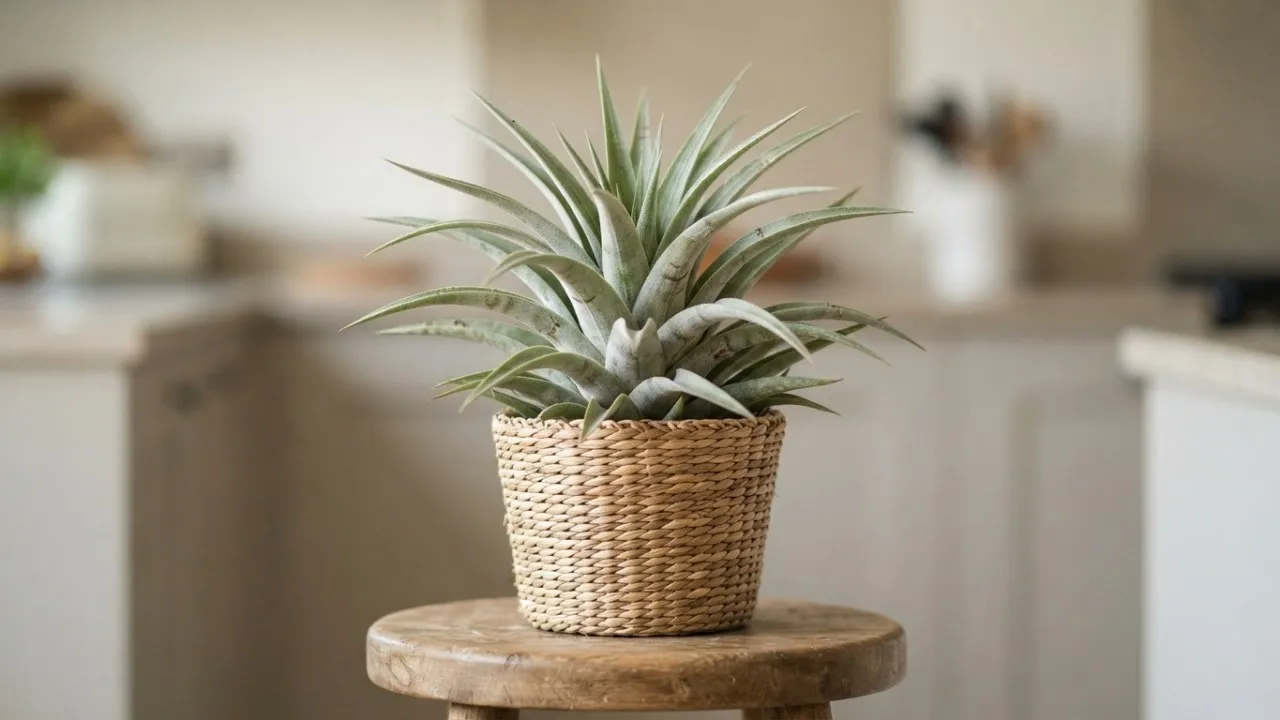 Every 4 days
 Air Plant
Tillandsia ionantha

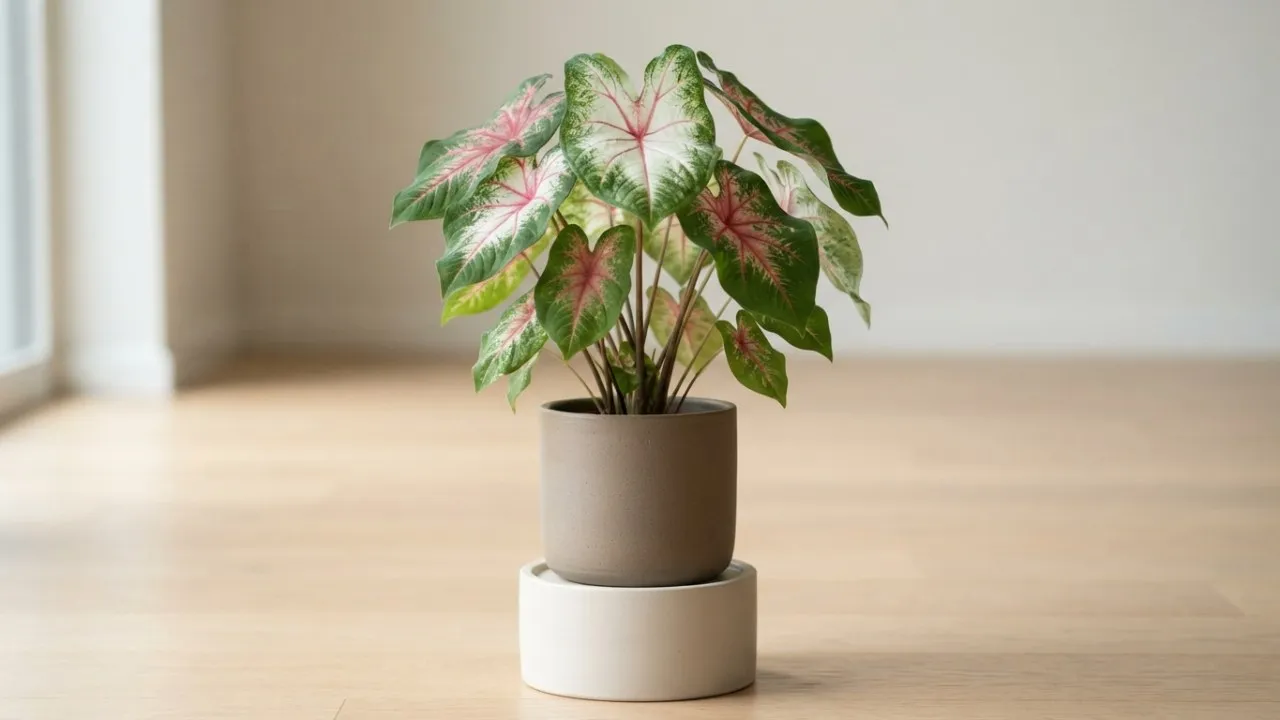 Every 3 days
 Angel Wings
Caladium bicolor
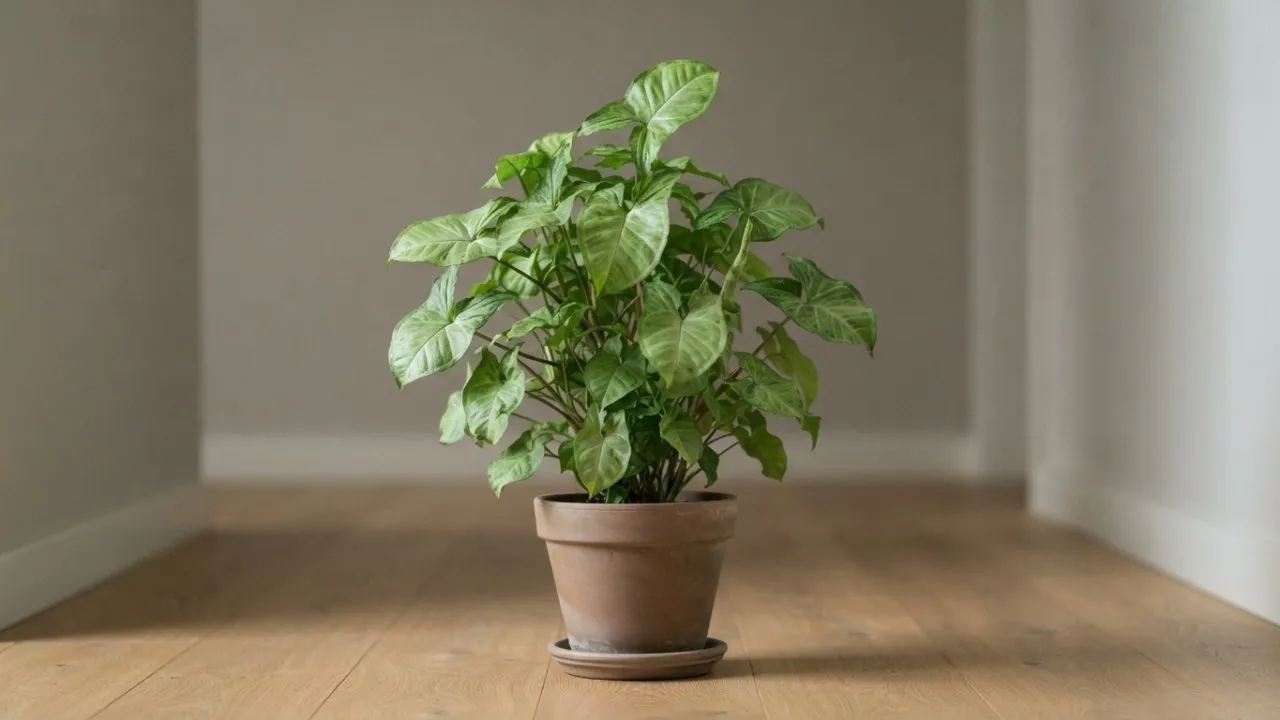 Every 7 days
 Arrowhead Plant
Syngonium podophyllum
 Every 10 days
 Baby Rubber Plant
Peperomia obtusifolia