Perennial · Commelinaceae
Purple Heart
Tradescantia pallida
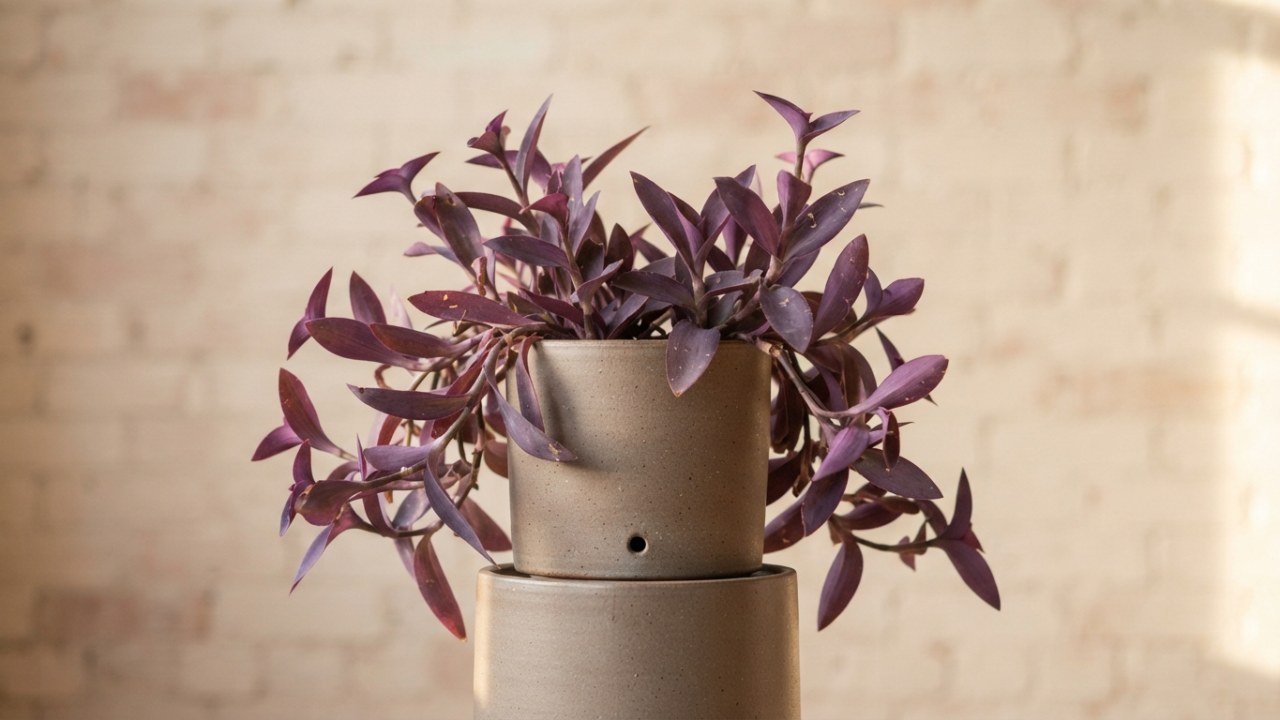
Tradescantia pallida, commonly known as Purple Heart, is a striking perennial plant celebrated for its vibrant, deep purple foliage.
- Every 7 daysWatering
- Bright indirect lightLight
- 40–60 %Humidity
- 15–28 °CTemperature


Its varieties 1
How to care for your Purple Heart
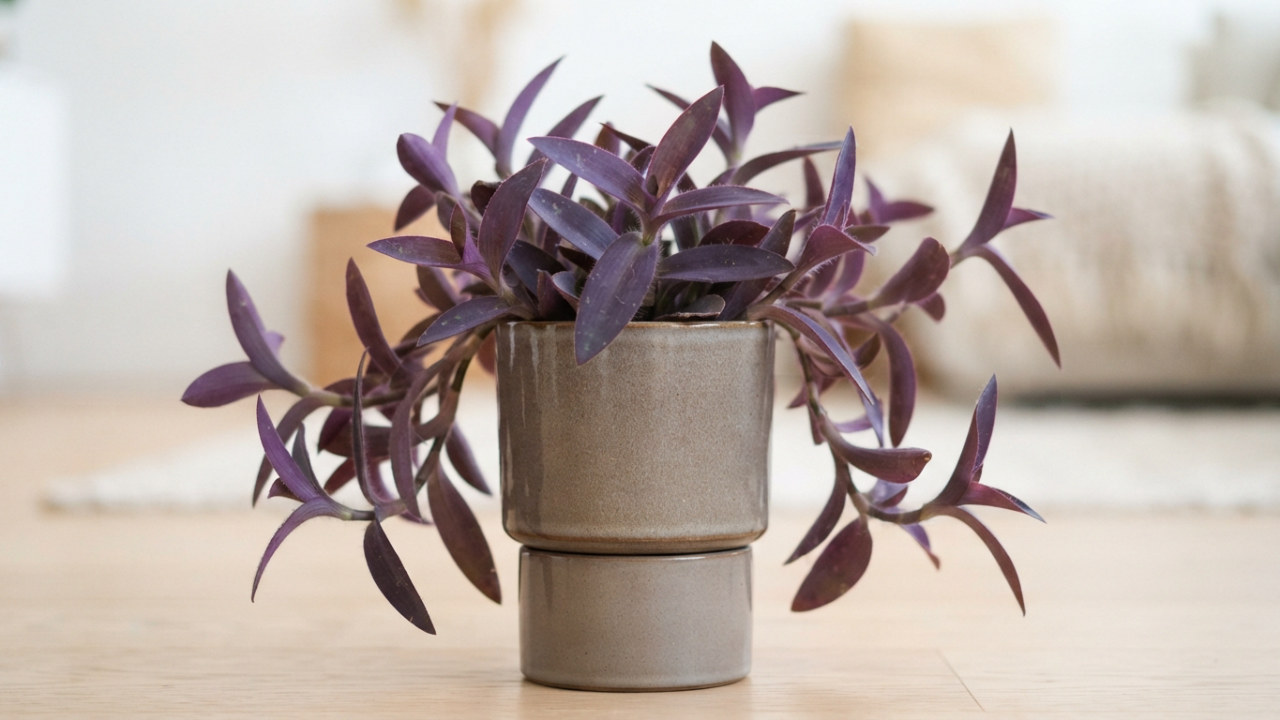
Everything you need to keep your Purple Heart healthy: watering, light, humidity, feeding, repotting and pruning.
Tradescantia pallida is a fast-growing, trailing perennial native to the Gulf Coast region of Mexico. Its lance-shaped leaves are a rich, velvety purple, intensifying in color with brighter light exposure. It produces small, delicate pink or purple flowers, though it is primarily grown for its foliage. Easy to care for and adaptable, it thrives indoors as a houseplant and outdoors in warm climates as a groundcover or in hanging baskets. It is not hardy in cold winters: in a pot, bring it indoors before the first frosts. Regular pinching encourages a denser, bushier habit.

How to recognise Purple Heart
A sprawling or trailing perennial with reddish-purple stems and lance-shaped, deep purple leaves that clasp the stem, with small pink three-petalled flowers. It can be confused with Tradescantia zebrina, whose leaves are striped silvery-green with a purple underside, with Tradescantia spathacea (Moses-in-the-cradle), which forms an upright rosette of leaves green above and purple below, or with other purple-leaved plants such as Tradescantia fluminensis cultivars. The solid purple, lance-shaped leaves identify Tradescantia pallida.

Watering your Purple Heart
Every 7 days
Water thoroughly until drainage runs clear, then wait until the upper half of the substrate is dry before watering again, about every 7 days in the growing season. Water less often, about every 12 days, in the cooler months.
How to know it needs water
- Soil dry in the upper half of the pot
- Leaves appear slightly less turgid
- Pot feels lighter than usual

How much light a Purple Heart needs
Bright indirect light
Bright indirect light to full sun. Brighter light enhances the purple coloration.
- Direct sun tolerated
- 2 to 6 h a day
- Orientations that suit it
- East, South-east, South, South-west, West, North-west

Humidity and misting
40–60 %
Average indoor humidity (40 to 60 %) Misting is generally not required as it tolerates average indoor humidity.

Feeding and fertiliser
Every 28 days
Apply about once a month from March to September, during the growing season. Do not feed from October to February.
- Recommended feed
- Balanced NPK liquid fertilizer · 10-10-10

Repotting your Purple Heart
Every 12 months
Repot every year in spring into a container 2 to 3 cm larger, using a well-draining potting mix.
- When
- Spring
- Potting mix
- All-purpose potting mix
- Mix in
- perlite, pine bark
The tell-tale signs
- Roots emerging from drainage holes
- Growth has slowed significantly
- Substrate compact and drying out quickly

Pruning your Purple Heart
Pinch back leggy stems regularly throughout the growing season to encourage bushier growth. Remove any yellowing or damaged leaves as needed. Use clean, sharp scissors or pruners to snip stems just above a leaf node.

Through the year
Watering is not set once and for all: it follows the light and the growth. Allow 13 days between waterings in the depth of winter, against 6 in the growing season.
- 11 J
- 8 F
- 7 M
- 6 A
- 6 M
- 6 J
- 6 J
- 6 A
- 7 S
- 8 O
- 11 N
- 13 D
Active growth · Days between waterings

Toxicity
The sap can cause skin irritation (dermatitis) on contact, so wear gloves when pruning. If eaten by pets or people it can cause mild stomach upset (vomiting, diarrhea). Keep out of reach of children and pets.

Good to know
- The intense purple coloration comes from natural plant pigments called anthocyanins.
- This species originates from the Gulf Coast region of Mexico, where it grows as a groundcover.
- It produces small, three-petaled pink or purple flowers, often hidden among the leaves.

Frequently asked questions about the Purple Heart
How do you care for a Purple Heart?
Water it every 7 days. Give it bright indirect light. Ideal humidity: 40–60 %. Ideal temperature: 15–28 °C. Water thoroughly until drainage runs clear, then wait until the upper half of the substrate is dry before watering again, about every 7 days in the growing season. Water less often, about every 12 days, in the cooler months.
How often should you water a Purple Heart?
Every 7 days Water thoroughly until drainage runs clear, then wait until the upper half of the substrate is dry before watering again, about every 7 days in the growing season. Water less often, about every 12 days, in the cooler months. How to know it needs water : Soil dry in the upper half of the pot ; Leaves appear slightly less turgid ; Pot feels lighter than usual.
How much light does a Purple Heart need?
Bright indirect light Bright indirect light to full sun. Brighter light enhances the purple coloration. 2 to 6 h a day
Is the Purple Heart toxic to cats and dogs?
Yes. The sap can cause skin irritation (dermatitis) on contact, so wear gloves when pruning. If eaten by pets or people it can cause mild stomach upset (vomiting, diarrhea). Keep out of reach of children and pets. Keep it out of reach of your pets and call a vet if any is swallowed.
Why are my Purple Heart leaves turning yellow?
Yellowing most often comes from too much water: the mix stays wet and the roots suffocate. Check that the pot drains, empty the saucer, and let the mix dry before watering again. Too little light or a cold draught cause the same symptom.
When should you repot a Purple Heart?
Repot every 12 months, ideally in spring. Repot every year in spring into a container 2 to 3 cm larger, using a well-draining potting mix.

At a glance
- Family
- Commelinaceae
- Category
- Perennial
- Placement
- Indoor and outdoor
- Mature height
- 30 cm
- Growth
- Fast
- Temperature
- 15–28 °C
- Pot materials
- terracotta, ceramic, plastic
- Growth
- Reaches maturity in 1 years
These figures are for an average plant. In the app they are recalculated for yours, based on your room, its orientation and the season.
And for your plant, in your home?
In the app this plant becomes yours: a watering schedule tuned to your home, health tracking from photos, and reminders at the right moment.