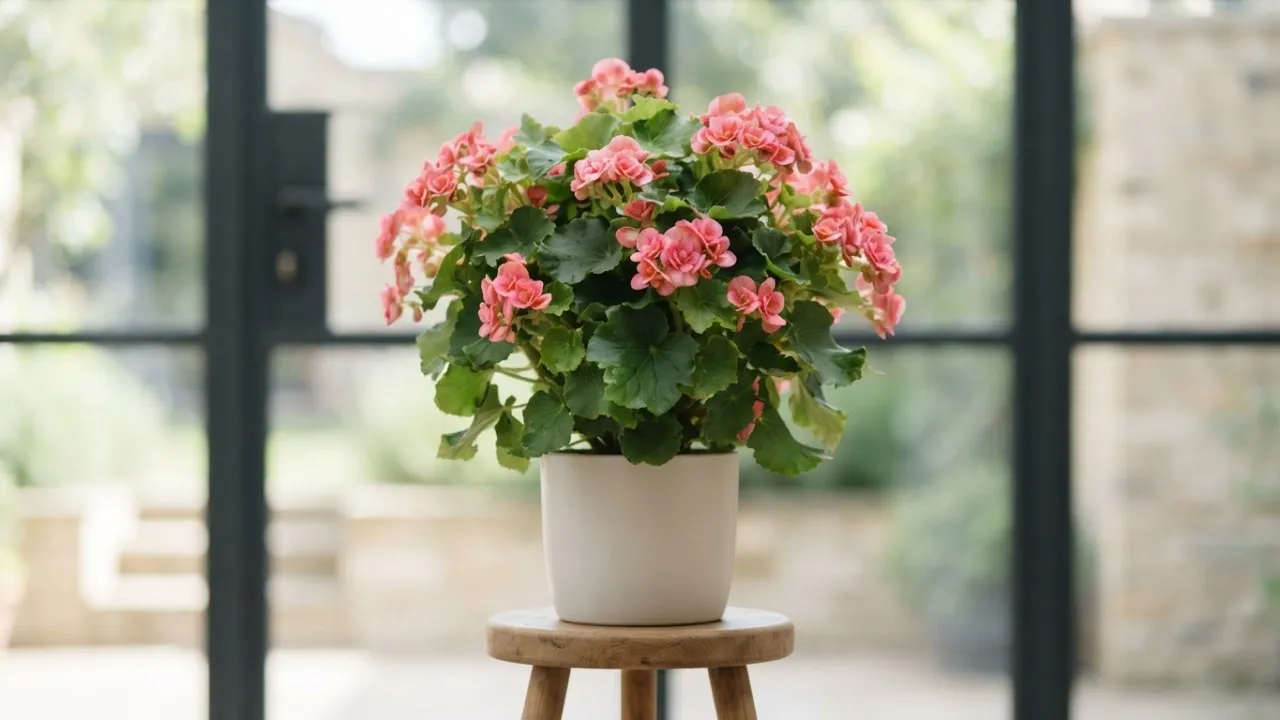
Perennial · Begoniaceae
Rieger Begonia
Begonia elatior
Rieger Begonias are popular houseplants, celebrated for their vibrant, long-lasting flowers and compact form.
- Every 5 daysWatering
- Bright indirect lightLight
- 60–80 %Humidity
- 18–24 °CTemperature


How to care for your Rieger Begonia
Everything you need to keep your Rieger Begonia healthy: watering, light, humidity, feeding, repotting and pruning.
Begonia elatior, commonly known as Rieger Begonia, is a widely cultivated hybrid known for its profuse, colorful flowers that bloom for extended periods, often throughout the cooler months. These plants are grown as indoor ornamentals, appreciating bright, indirect light and high humidity. They thrive with consistent moisture but are susceptible to root rot if overwatered, so excellent drainage is crucial. Their compact size and vibrant floral display make them a favorite for brightening interior spaces.

How to recognise Rieger Begonia
A compact, bushy plant with fleshy stems and glossy, asymmetrical, heart-shaped leaves in bright to mid green, covered with masses of single or double, rose-like flowers in red, pink, orange, yellow or white. It is often confused with the wax begonia (Begonia semperflorens), which is smaller, with rounder leaves and simple flowers, grown mostly in beds, or with tuberous begonias, which have larger flowers and die back to a tuber in winter.

Watering your Rieger Begonia
Every 5 days
Water thoroughly when the top 2 to 3 cm of soil are dry, allowing complete drainage, about every 5 days in the growing season (March to October). From November to February, water less often, about every 9 days. Avoid wetting the foliage.
How to know it needs water
- Top 2 to 3 cm of soil dry to touch
- Pot feels lighter

How much light a Rieger Begonia needs
Bright indirect light
Bright, indirect light
- Direct sun tolerated
- 0 to 2 h a day
- Orientations that suit it
- North, North-east, East, South-east, North-west

Humidity and misting
60–80 %
High (60 to 80 %) Do not mist: water sitting on the leaves and flowers encourages powdery mildew and gray mold. To raise humidity, use a tray of moist clay pebbles (pot above the water) or a humidifier nearby.

Feeding and fertiliser
Every 14 days
Feed every two weeks from April to September, during active growth and flowering; none in winter.
- Recommended feed
- Balanced liquid fertilizer · 10-30-20

Repotting your Rieger Begonia
Every 12 months
Repot every year in spring into a pot one size larger using a well-draining, peat-based mix.
- When
- Spring
- Potting mix
- All-purpose potting mix
- Mix in
- perlite, coco fibre
The tell-tale signs
- Roots emerging from drainage holes
- Stunted growth

Pruning your Rieger Begonia
After flowering Trim spent flowers and leggy stems to maintain shape and encourage new growth.

Through the year
Watering is not set once and for all: it follows the light and the growth. Allow 7 days between waterings in the depth of winter, against 4 in the growing season.
- 6 J
- 6 F
- 5 M
- 4 A
- 4 M
- 4 J
- 4 J
- 4 A
- 5 S
- 5 O
- 6 N
- 7 D
Active growth · Days between waterings

Toxicity
Contains soluble calcium oxalates; ingestion can cause oral irritation, vomiting, and difficulty swallowing in pets, and mild irritation in humans. The roots are the most toxic. Keep out of reach of children and pets.

Good to know
- Hybridized for their abundant, colorful flowers and compact growth habit.
- These hybrids descend from crosses involving Begonia socotrana, a species native to the island of Socotra.
- Often given as a gift plant, blooming profusely for months.

Frequently asked questions about the Rieger Begonia
How do you care for a Rieger Begonia?
Water it every 5 days. Give it bright indirect light. Ideal humidity: 60–80 %. Ideal temperature: 18–24 °C. Water thoroughly when the top 2 to 3 cm of soil are dry, allowing complete drainage, about every 5 days in the growing season (March to October). From November to February, water less often, about every 9 days. Avoid wetting the foliage.
How often should you water a Rieger Begonia?
Every 5 days Water thoroughly when the top 2 to 3 cm of soil are dry, allowing complete drainage, about every 5 days in the growing season (March to October). From November to February, water less often, about every 9 days. Avoid wetting the foliage. How to know it needs water : Top 2 to 3 cm of soil dry to touch ; Pot feels lighter.
How much light does a Rieger Begonia need?
Bright indirect light Bright, indirect light 0 to 2 h a day
Is the Rieger Begonia toxic to cats and dogs?
Yes. Contains soluble calcium oxalates; ingestion can cause oral irritation, vomiting, and difficulty swallowing in pets, and mild irritation in humans. The roots are the most toxic. Keep out of reach of children and pets. Keep it out of reach of your pets and call a vet if any is swallowed.
Why are my Rieger Begonia leaves turning yellow?
Yellowing most often comes from too much water: the mix stays wet and the roots suffocate. Check that the pot drains, empty the saucer, and let the mix dry before watering again. Too little light or a cold draught cause the same symptom.
When should you repot a Rieger Begonia?
Repot every 12 months, ideally in spring. Repot every year in spring into a pot one size larger using a well-draining, peat-based mix.

At a glance
- Family
- Begoniaceae
- Category
- Perennial
- Placement
- Indoor
- Mature height
- 40 cm
- Growth
- Moderate
- Temperature
- 18–24 °C
- Pot materials
- ceramic, plastic
- Growth
- Reaches maturity in 1 years
These figures are for an average plant. In the app they are recalculated for yours, based on your room, its orientation and the season.
And for your plant, in your home?
In the app this plant becomes yours: a watering schedule tuned to your home, health tracking from photos, and reminders at the right moment.