Perennial · Asparagaceae
Asparagus Fern
Asparagus setaceus
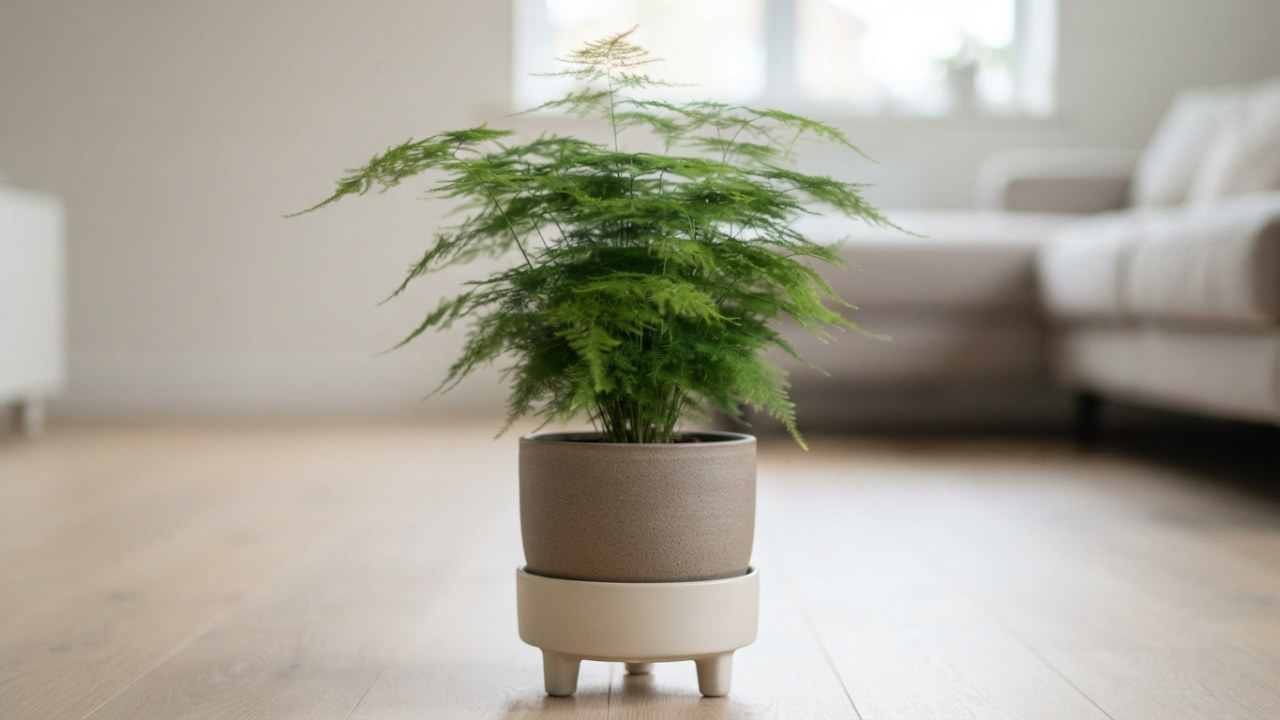
The Asparagus Fern is a delicate-looking plant with feathery, bright green foliage.
- Every 5 daysWatering
- Bright indirect lightLight
- 50–70 %Humidity
- 18–24 °CTemperature


How to care for your Asparagus Fern
Everything you need to keep your Asparagus Fern healthy: watering, light, humidity, feeding, repotting and pruning.
Asparagus setaceus, native to Southern Africa, is a popular houseplant known for its airy, fern-like appearance. Its delicate, feathery 'leaves' (actually modified stems called cladodes) create a soft texture, making it an attractive addition to hanging baskets or as a filler in arrangements. While it tolerates some neglect, consistent moisture and high humidity will keep its foliage lush and vibrant. It is frost tender: outdoors it needs a mild, sheltered spot, and in a pot it should come indoors before the first frost. It can grow quite vigorously in ideal conditions, forming a dense, bushy plant.

How to recognise Asparagus Fern
Asparagus setaceus has thin, wiry, arching to climbing stems, with tiny hooked spines, carrying flat, tiered, triangular sprays of very fine, soft, needle-like cladodes. It is often mistaken for a true fern, which has spore-bearing fronds and no spines or berries, and for Asparagus densiflorus 'Sprengeri', which is coarser with longer, flatter cladodes and red berries.

Watering your Asparagus Fern
Every 5 days
Water thoroughly until drainage runs clear, then allow the top 2 to 3 cm of substrate to dry out before watering again. Water less often from November to February.
How to know it needs water
- Top 2 to 3 cm of soil dry
- Foliage appears dull or slightly droopy
- Pot feels lighter than usual

How much light a Asparagus Fern needs
Bright indirect light
Bright indirect light; tolerates some direct morning sun but avoid harsh afternoon exposure.
- Direct sun tolerated
- 0 to 2 h a day
- Orientations that suit it
- North, North-east, East, North-west

Humidity and misting
50–70 %
Medium to high (50-70%) Mist the foliage about every 4 days, or place the pot on a pebble tray with water (without the pot touching the water) to maintain adequate humidity.

Feeding and fertiliser
Every 21 days
Apply every 3 weeks from April to September; none from October to March.
- Recommended feed
- Balanced NPK liquid fertilizer · 5-10-5

Repotting your Asparagus Fern
Every 12 months
Repot every year in spring into a container 2 to 3 cm larger using a rich, well-draining potting mix; its fleshy roots fill the pot quickly.
- When
- Spring
- Potting mix
- All-purpose potting mix
- Mix in
- perlite, coco fibre
The tell-tale signs
- Roots emerging from drainage holes
- Noticeably slowed growth despite good care
- Substrate drying out within a day or two of watering

Pruning your Asparagus Fern
Remove yellowing, dry, or damaged stems at any time of year. Cut cleanly at the base of the stem with sterilised scissors or a sharp blade.

Through the year
Watering is not set once and for all: it follows the light and the growth. Allow 9 days between waterings in the depth of winter, against 5 in the growing season.
- 8 J
- 6 F
- 5 M
- 5 A
- 5 M
- 5 J
- 5 J
- 5 A
- 5 S
- 6 O
- 8 N
- 9 D
Active growth · Days between waterings

Toxicity
Berries and foliage can cause gastrointestinal upset in pets and skin irritation in humans. The stems carry small spines, so wear gloves when pruning or repotting, and keep the plant away from pets and children.

Good to know
- Despite its common name, it is not a true fern but a member of the asparagus family (Asparagaceae).
- It produces small white flowers followed by blue-black berries.
- Its 'leaves' are actually modified stems called cladodes.

Frequently asked questions about the Asparagus Fern
How do you care for a Asparagus Fern?
Water it every 5 days. Give it bright indirect light. Ideal humidity: 50–70 %. Ideal temperature: 18–24 °C. Water thoroughly until drainage runs clear, then allow the top 2 to 3 cm of substrate to dry out before watering again. Water less often from November to February.
How often should you water a Asparagus Fern?
Every 5 days Water thoroughly until drainage runs clear, then allow the top 2 to 3 cm of substrate to dry out before watering again. Water less often from November to February. How to know it needs water : Top 2 to 3 cm of soil dry ; Foliage appears dull or slightly droopy ; Pot feels lighter than usual.
How much light does a Asparagus Fern need?
Bright indirect light Bright indirect light; tolerates some direct morning sun but avoid harsh afternoon exposure. 0 to 2 h a day
Is the Asparagus Fern toxic to cats and dogs?
Yes. Berries and foliage can cause gastrointestinal upset in pets and skin irritation in humans. The stems carry small spines, so wear gloves when pruning or repotting, and keep the plant away from pets and children. Keep it out of reach of your pets and call a vet if any is swallowed.
Why are my Asparagus Fern leaves turning yellow?
Yellowing most often comes from too much water: the mix stays wet and the roots suffocate. Check that the pot drains, empty the saucer, and let the mix dry before watering again. Too little light or a cold draught cause the same symptom.
When should you repot a Asparagus Fern?
Repot every 12 months, ideally in spring. Repot every year in spring into a container 2 to 3 cm larger using a rich, well-draining potting mix; its fleshy roots fill the pot quickly.

At a glance
- Family
- Asparagaceae
- Category
- Perennial
- Placement
- Indoor and outdoor
- Mature height
- 60 cm
- Growth
- Moderate
- Temperature
- 18–24 °C
- Pot materials
- terracotta, ceramic, plastic
- Growth
- Reaches maturity in 3 years
These figures are for an average plant. In the app they are recalculated for yours, based on your room, its orientation and the season.
And for your plant, in your home?
In the app this plant becomes yours: a watering schedule tuned to your home, health tracking from photos, and reminders at the right moment.