Climber · Commelinaceae
Wandering Jew
Tradescantia fluminensis
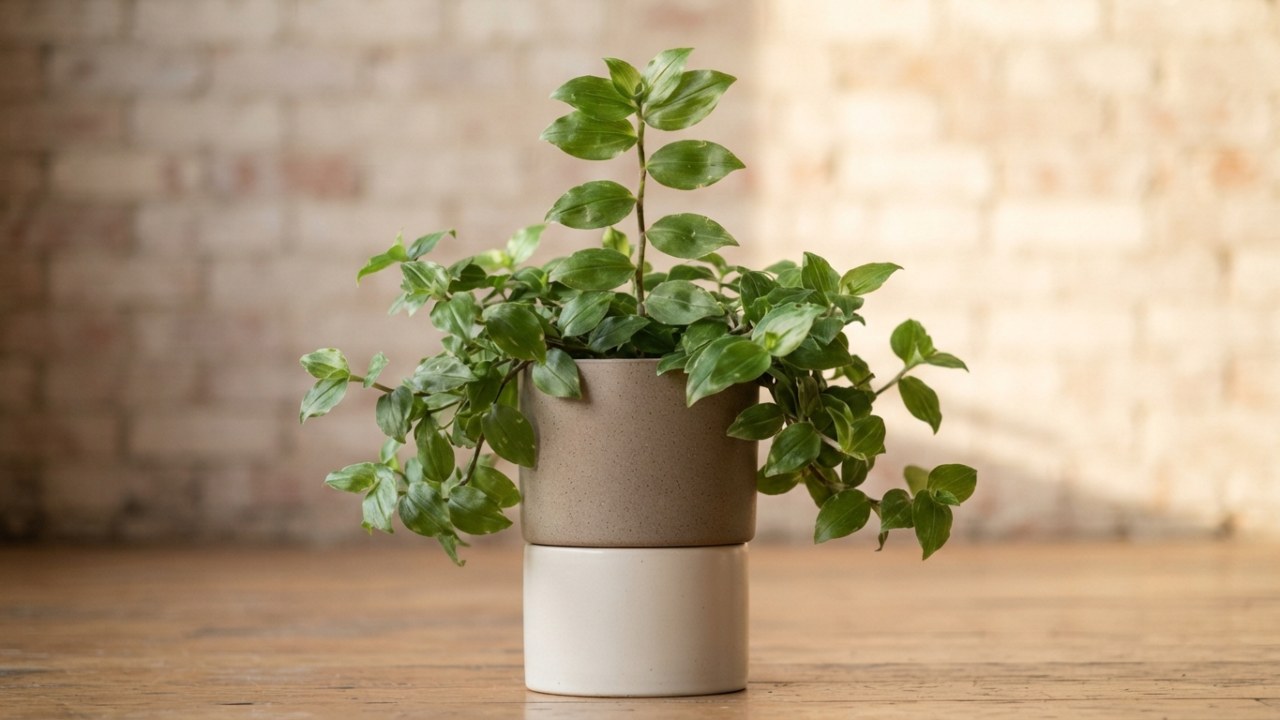
Tradescantia fluminensis, commonly known as Wandering Jew, is a fast-growing, trailing plant admired for its colourful foliage and ease of care.
- Every 6 daysWatering
- Bright indirect lightLight
- 40–60 %Humidity
- 18–27 °CTemperature


Its varieties 5
How to care for your Wandering Jew
Everything you need to keep your Wandering Jew healthy: watering, light, humidity, feeding, repotting and pruning.
Native to South America, Tradescantia fluminensis is a popular houseplant due to its vibrant, often variegated leaves and vigorous growth. It produces long, trailing stems that can cascade beautifully from hanging baskets or spread as ground cover. Its resilience and ability to root easily from cuttings make it a favourite for beginners and experienced growers alike. Outdoors it is not frost hardy: in a pot, bring it indoors before the first frosts. In mild climates it can escape and become invasive, so never dump trimmings in the wild or in garden waste. It thrives in bright, indirect light and consistent moisture during its active growing season.

How to recognise Wandering Jew
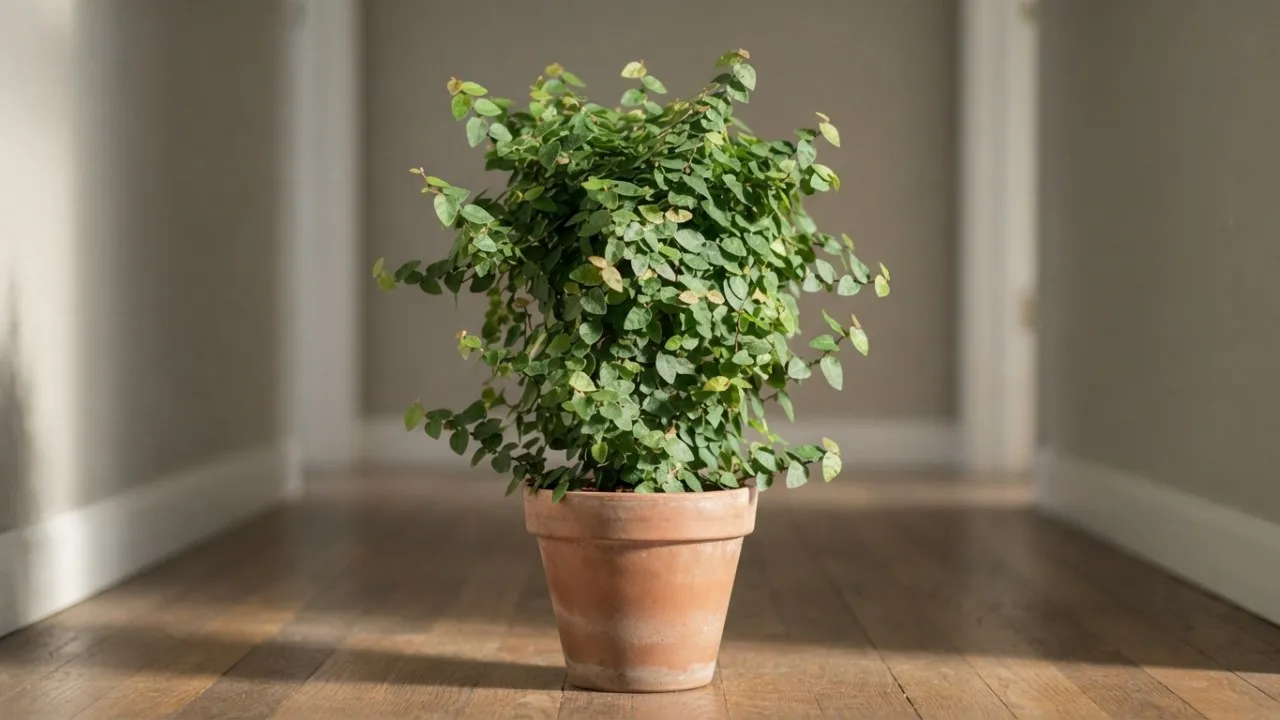
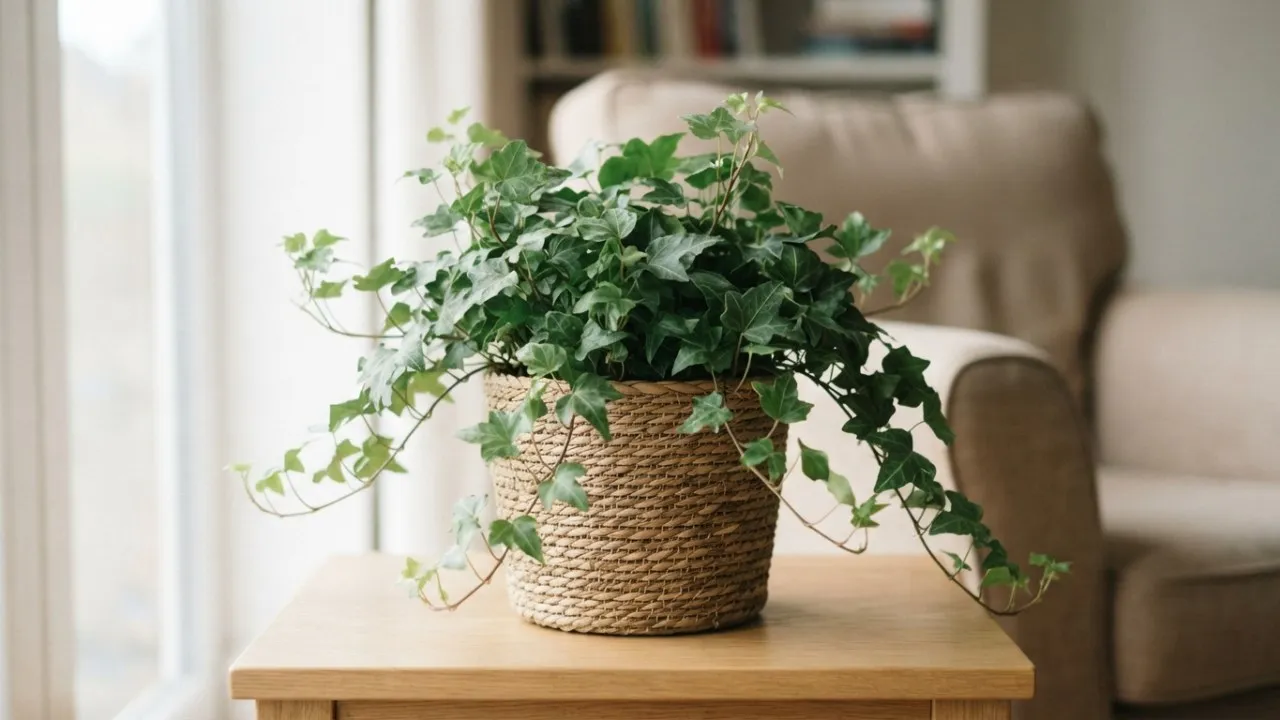
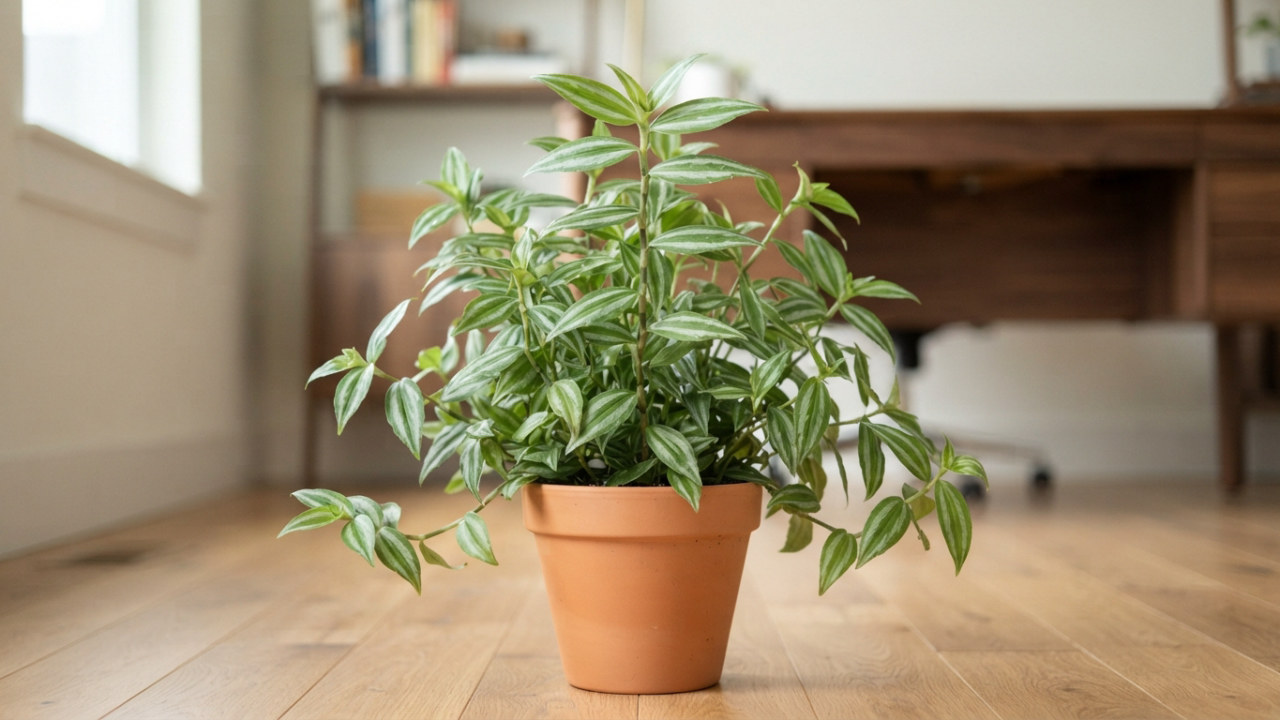
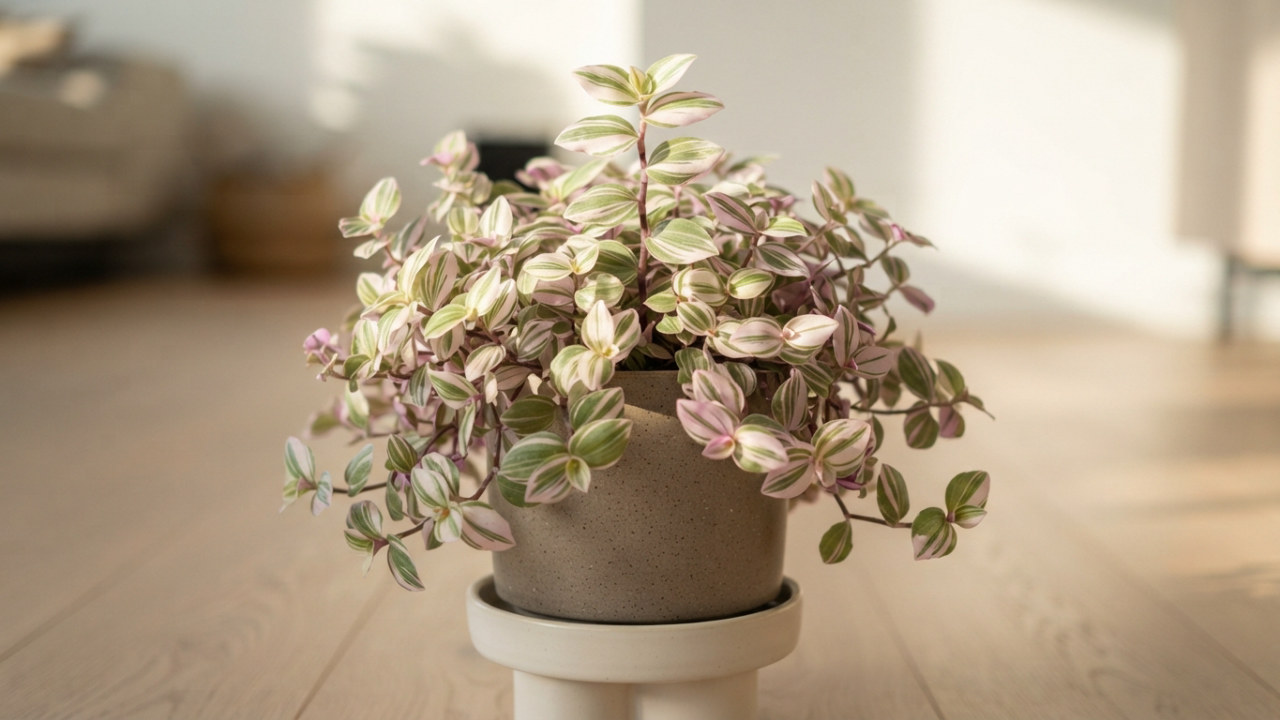
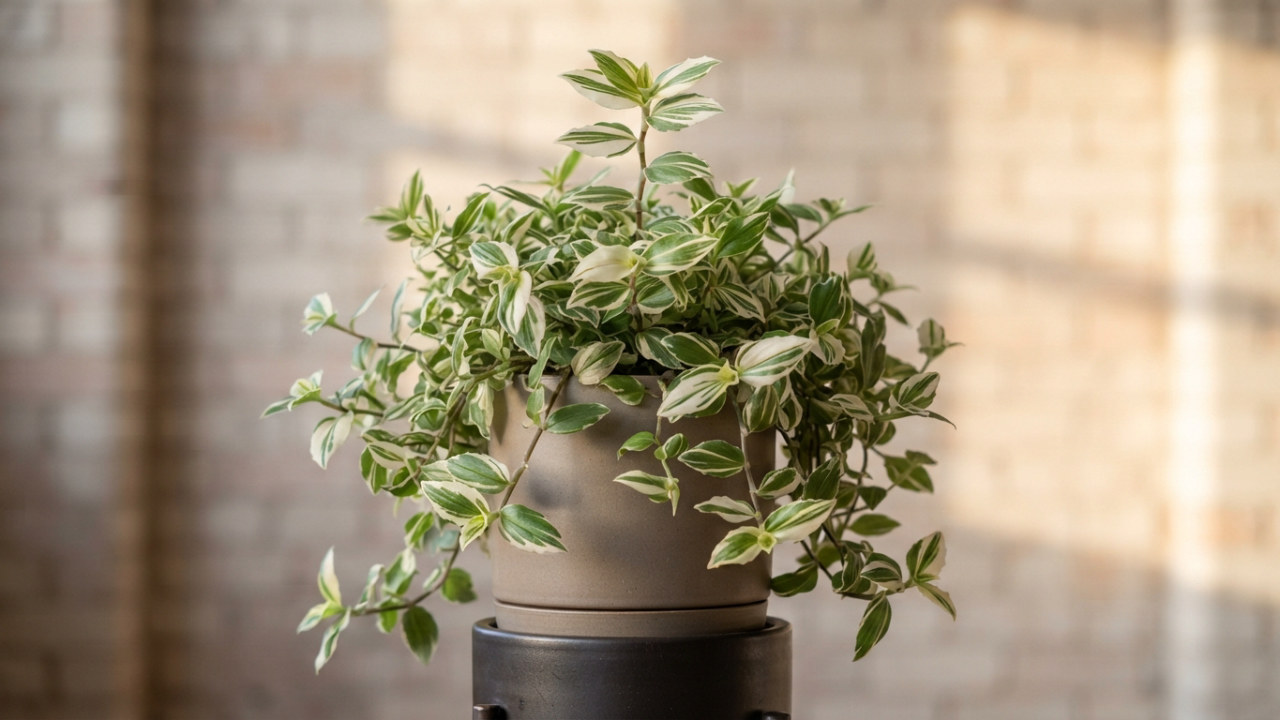
A fast-growing trailing plant with soft, fleshy stems that root at the nodes, and glossy, oval, pointed leaves 2 to 4 cm long, plain green or striped with white or cream, with small white three-petalled flowers. It can be confused with Tradescantia zebrina, whose leaves are striped silvery-green with a purple underside and whose flowers are pink-purple, or with Tradescantia pallida, which has larger purple leaves. The plain or cream-striped green leaves and white flowers identify Tradescantia fluminensis.

Watering your Wandering Jew
Every 6 days
Water thoroughly about every 6 days in the growing season, when the top 2 to 3 cm of soil feels dry. Water less often, about every 10 days, in the cooler months. Ensure good drainage and do not let the plant sit in standing water.
How to know it needs water
- Soil dry 2 to 3 cm deep
- Leaves appear slightly dull
- Pot feels lighter than usual

How much light a Wandering Jew needs
Bright indirect light
Bright indirect light; can tolerate some direct morning sun but avoid harsh afternoon sun which can scorch leaves.
- Direct sun tolerated
- 0 to 2 h a day
- Orientations that suit it
- North, North-east, East, South-east, South, South-west, West, North-west

Humidity and misting
40–60 %
Medium (40 to 60 %) Misting is not needed, as it tolerates average household humidity.

Feeding and fertiliser
Every 28 days
Apply about once a month from April to September, during the growing season. Do not feed in autumn and winter.
- Recommended feed
- Balanced liquid houseplant fertilizer · 10-10-10

Repotting your Wandering Jew
Every 12 months
Repot every year in spring into a container 2 to 4 cm larger using a general-purpose potting mix with good drainage. Gently loosen roots if pot-bound.
- When
- Spring
- Potting mix
- All-purpose potting mix
- Mix in
- perlite, coco fibre
The tell-tale signs
- Roots emerging from drainage holes
- Plant becoming top-heavy or unstable
- Growth slowing down despite adequate care

Pruning your Wandering Jew
Prune regularly to maintain shape, encourage bushier growth, and remove leggy stems. Best done in spring or summer. Pinch back or cut stems just above a leaf node using clean scissors or fingers. Cuttings can be easily propagated.

Through the year
Watering is not set once and for all: it follows the light and the growth. Allow 11 days between waterings in the depth of winter, against 5 in the growing season.
- 9 J
- 7 F
- 6 M
- 5 A
- 5 M
- 5 J
- 5 J
- 5 A
- 6 S
- 7 O
- 9 N
- 11 D
Active growth · Days between waterings

Toxicity
Toxic to people and pets. The sap can cause skin irritation, redness, and itching on contact, so wear gloves when pruning. If eaten, it can cause mild irritation of the mouth and stomach. Keep out of reach of children and pets.

Good to know
- Known for its rapid growth and trailing habit, making it ideal for hanging baskets.
- Its stems root at every node that touches the soil or water, so a cutting in a glass of water roots within days.
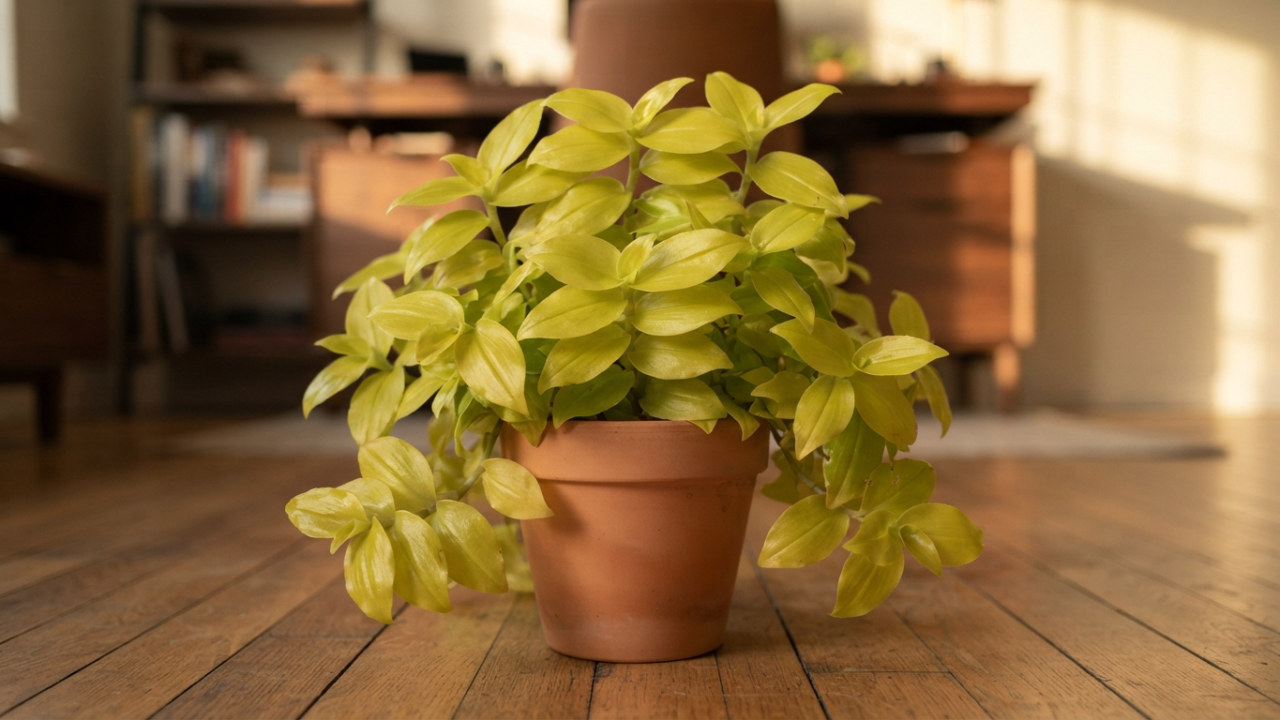
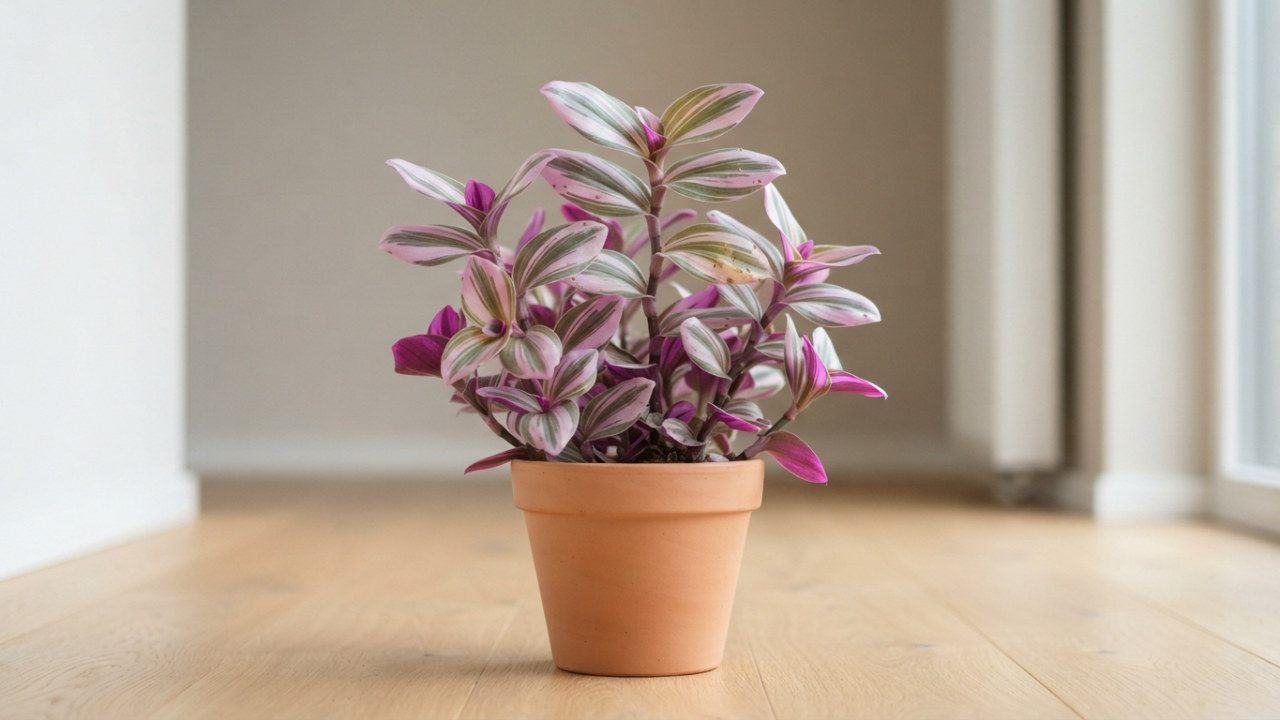
- Many cultivars exist with variegated leaves featuring shades of green, white, pink, and purple.

Frequently asked questions about the Wandering Jew
How do you care for a Wandering Jew?
Water it every 6 days. Give it bright indirect light. Ideal humidity: 40–60 %. Ideal temperature: 18–27 °C. Water thoroughly about every 6 days in the growing season, when the top 2 to 3 cm of soil feels dry. Water less often, about every 10 days, in the cooler months. Ensure good drainage and do not let the plant sit in standing water.
How often should you water a Wandering Jew?
Every 6 days Water thoroughly about every 6 days in the growing season, when the top 2 to 3 cm of soil feels dry. Water less often, about every 10 days, in the cooler months. Ensure good drainage and do not let the plant sit in standing water. How to know it needs water : Soil dry 2 to 3 cm deep ; Leaves appear slightly dull ; Pot feels lighter than usual.
How much light does a Wandering Jew need?
Bright indirect light Bright indirect light; can tolerate some direct morning sun but avoid harsh afternoon sun which can scorch leaves. 0 to 2 h a day
Is the Wandering Jew toxic to cats and dogs?
Yes. Toxic to people and pets. The sap can cause skin irritation, redness, and itching on contact, so wear gloves when pruning. If eaten, it can cause mild irritation of the mouth and stomach. Keep out of reach of children and pets. Keep it out of reach of your pets and call a vet if any is swallowed.
Why are my Wandering Jew leaves turning yellow?
Yellowing most often comes from too much water: the mix stays wet and the roots suffocate. Check that the pot drains, empty the saucer, and let the mix dry before watering again. Too little light or a cold draught cause the same symptom.
When should you repot a Wandering Jew?
Repot every 12 months, ideally in spring. Repot every year in spring into a container 2 to 4 cm larger using a general-purpose potting mix with good drainage. Gently loosen roots if pot-bound.

At a glance
- Family
- Commelinaceae
- Category
- Climber
- Placement
- Indoor and outdoor
- Mature height
- 15 cm
- Growth
- Fast
- Temperature
- 18–27 °C
- Pot materials
- plastic, ceramic, terracotta
- Growth
- Reaches maturity in 1 years
These figures are for an average plant. In the app they are recalculated for yours, based on your room, its orientation and the season.
And for your plant, in your home?
In the app this plant becomes yours: a watering schedule tuned to your home, health tracking from photos, and reminders at the right moment.