
Flowering · Dioscoreaceae
Bat Flower
Tacca chantrieri
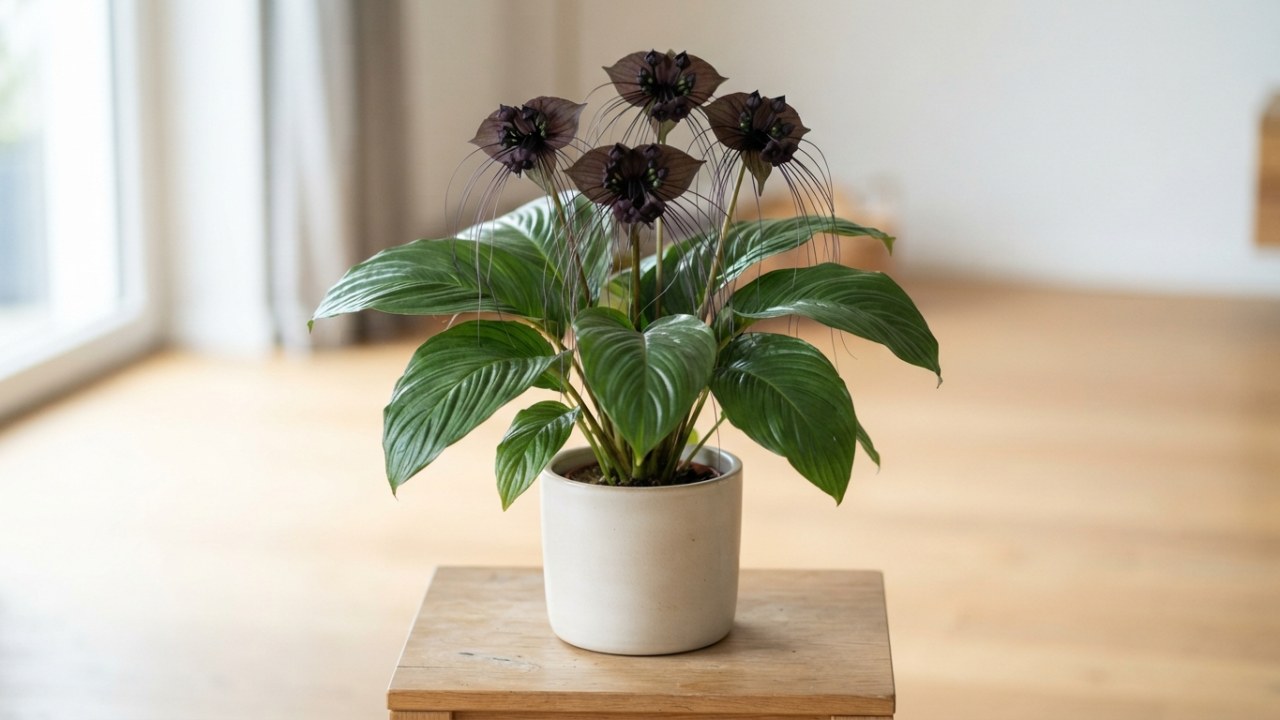
The Bat Flower is an exotic and striking plant known for its unusual, dark, bat-like blooms.
- Every 7 daysWatering
- Bright indirect lightLight
- 60–80 %Humidity
- 18–30 °CTemperature


How to care for your Bat Flower
Everything you need to keep your Bat Flower healthy: watering, light, humidity, feeding, repotting and pruning.
Tacca chantrieri, also known as the Black Bat Flower, is a fascinating tropical perennial native to the humid forests of Southeast Asia. It is highly prized for its unique, dark purple to black flowers, which feature long, drooping 'whiskers' (bracteoles) that can exceed 30 cm in length, giving it the appearance of a bat in flight. This plant requires specific conditions to thrive indoors, including high humidity, consistent warmth, and bright, indirect light. While challenging, its spectacular blooms make it a rewarding plant for experienced growers.

How to recognise Bat Flower
A clump-forming tropical perennial with large, glossy, pleated, oval to lance-shaped leaves rising straight from the base. In bloom it carries a stalk topped with four large dark purple to black bracts, two of them wing-like, and long hanging whiskers. It can be mistaken for Tacca integrifolia, the white bat flower, whose bracts are white veined with purple; the near-black bracts and very long whiskers identify Tacca chantrieri.

Watering your Bat Flower
Every 7 days
Water about every week in the growing season, once the top 2 to 3 cm have dried, keeping the substrate evenly moist. In winter, water less often, about every 10 days, letting the top 2 to 3 cm dry out. Never allow the plant to sit in standing water.
How to know it needs water
- Top 2 to 3 cm of substrate dry (growing season)
- Top 2 to 3 cm of substrate dry (winter)
- Leaves showing slight wilting

How much light a Bat Flower needs
Bright indirect light
Bright indirect light or filtered shade; avoid any direct sun, which can scorch leaves.
- Direct sun tolerated
- No direct sun
- Orientations that suit it
- North, North-east, East, North-west

Humidity and misting
60–80 %
High (60 to 80 %) Mist the foliage every 2 days, especially in dry environments, or use a humidifier to maintain high ambient humidity. Place on a pebble tray for added moisture.

Feeding and fertiliser
Every 14 days
Apply a diluted balanced liquid fertilizer every 2 weeks from March to September, during the growing season. Withhold entirely from October to February, during winter dormancy.
- Recommended feed
- Balanced NPK liquid fertilizer · 10-10-10

Repotting your Bat Flower
Every 12 months
Repot every year in spring (March to April) into a slightly larger pot (2 to 3 cm wider) using a rich, airy, and well-draining substrate. Handle roots gently.
- When
- Spring
- Potting mix
- All-purpose potting mix
- Mix in
- perlite, pine bark, sphagnum moss
The tell-tale signs
- Roots emerging from drainage holes
- Plant becoming top-heavy
- Substrate breaking down and compacting

Pruning your Bat Flower
Remove yellowing, damaged, or spent flower stalks as needed. Cut cleanly at the base of the leaf or flower stalk with sterilised scissors or a sharp blade.

Through the year
Watering is not set once and for all: it follows the light and the growth. Allow 13 days between waterings in the depth of winter, against 6 in the growing season.
- 11 J
- 8 F
- 7 M
- 6 A
- 6 M
- 6 J
- 6 J
- 6 A
- 7 S
- 8 O
- 11 N
- 13 D
Active growth · Days between waterings

Toxicity
Considered toxic to people and pets if eaten, and it may irritate the mouth and stomach, with drooling and vomiting in cats and dogs. The plant may also cause skin irritation in sensitive people, so handle with care. Keep out of reach.

Good to know
- Its unique flowers resemble a bat in flight, complete with long 'whiskers'
- Native to the humid tropical forests of Southeast Asia
- The 'flowers' are actually bracts, with the true flowers being small and clustered at the centre

Frequently asked questions about the Bat Flower
How do you care for a Bat Flower?
Water it every 7 days. Give it bright indirect light. Ideal humidity: 60–80 %. Ideal temperature: 18–30 °C. Water about every week in the growing season, once the top 2 to 3 cm have dried, keeping the substrate evenly moist. In winter, water less often, about every 10 days, letting the top 2 to 3 cm dry out. Never allow the plant to sit in standing water.
How often should you water a Bat Flower?
Every 7 days Water about every week in the growing season, once the top 2 to 3 cm have dried, keeping the substrate evenly moist. In winter, water less often, about every 10 days, letting the top 2 to 3 cm dry out. Never allow the plant to sit in standing water. How to know it needs water : Top 2 to 3 cm of substrate dry (growing season) ; Top 2 to 3 cm of substrate dry (winter) ; Leaves showing slight wilting.
How much light does a Bat Flower need?
Bright indirect light Bright indirect light or filtered shade; avoid any direct sun, which can scorch leaves. No direct sun
Is the Bat Flower toxic to cats and dogs?
Yes. Considered toxic to people and pets if eaten, and it may irritate the mouth and stomach, with drooling and vomiting in cats and dogs. The plant may also cause skin irritation in sensitive people, so handle with care. Keep out of reach. Keep it out of reach of your pets and call a vet if any is swallowed.
Why are my Bat Flower leaves turning yellow?
Yellowing most often comes from too much water: the mix stays wet and the roots suffocate. Check that the pot drains, empty the saucer, and let the mix dry before watering again. Too little light or a cold draught cause the same symptom.
When should you repot a Bat Flower?
Repot every 12 months, ideally in spring. Repot every year in spring (March to April) into a slightly larger pot (2 to 3 cm wider) using a rich, airy, and well-draining substrate. Handle roots gently.

At a glance
- Family
- Dioscoreaceae
- Category
- Flowering
- Placement
- Indoor
- Mature height
- 60 cm
- Growth
- Slow
- Temperature
- 18–30 °C
- Pot materials
- ceramic, plastic
- Growth
- Reaches maturity in 3 years
These figures are for an average plant. In the app they are recalculated for yours, based on your room, its orientation and the season.
And for your plant, in your home?
In the app this plant becomes yours: a watering schedule tuned to your home, health tracking from photos, and reminders at the right moment.
In the same spirit
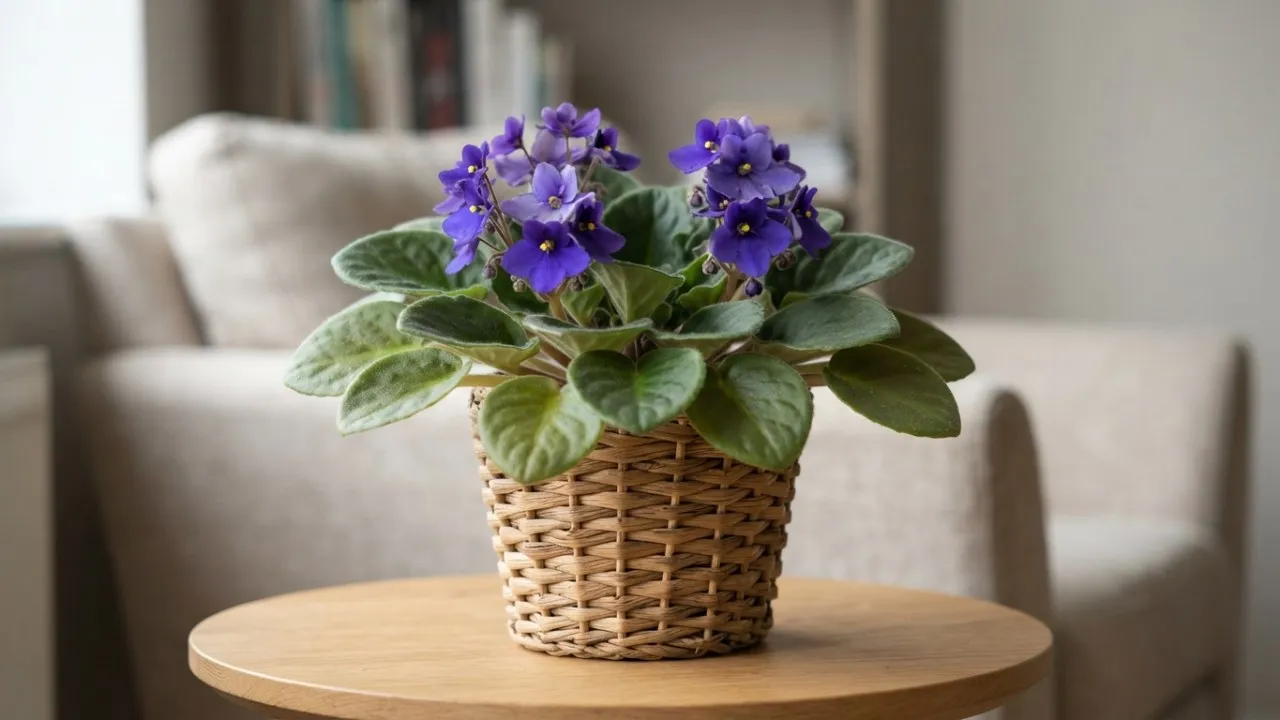 Every 6 days


African Violet
Saintpaulia ionantha

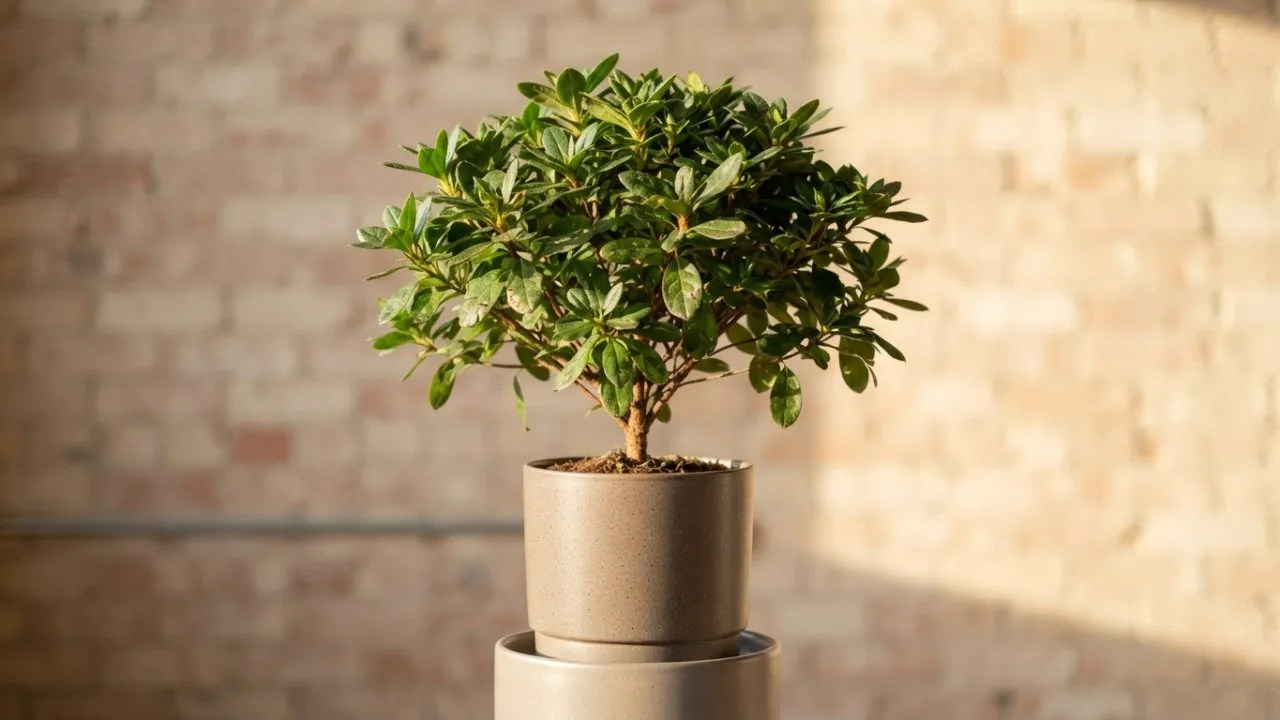 Every 3 days
Azalea
Rhododendron simsii
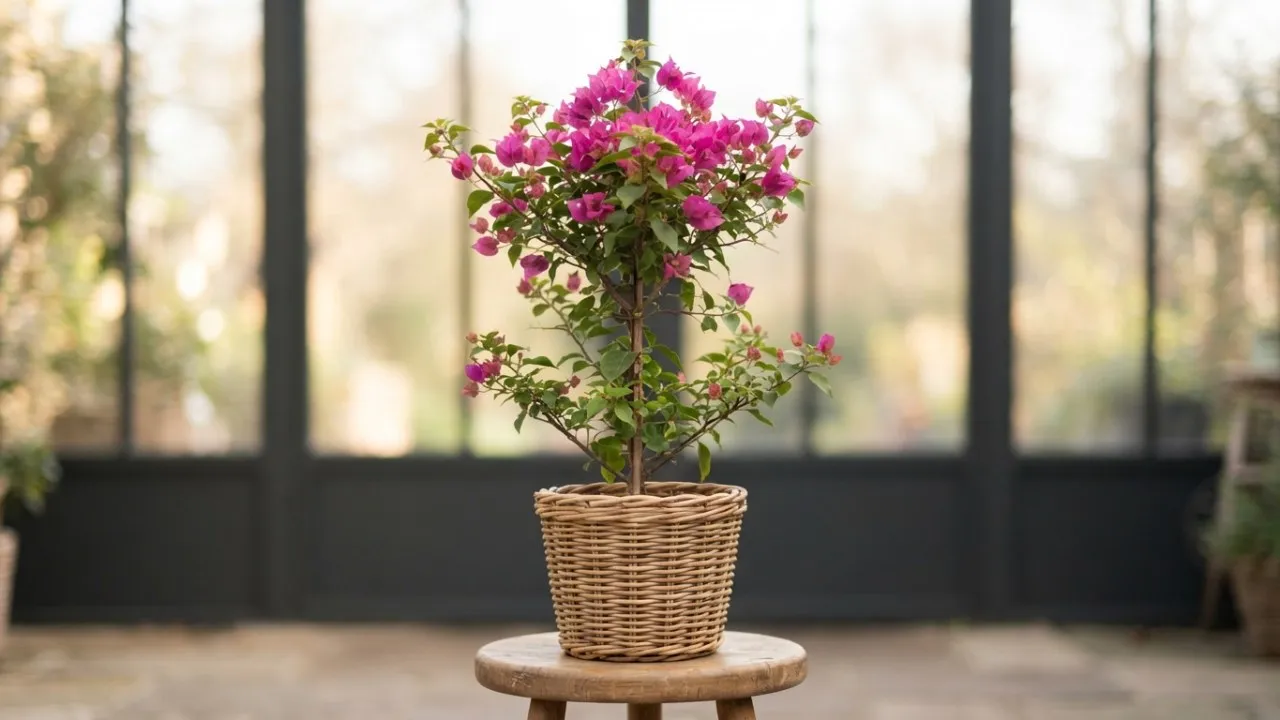 Every 5 days
Bougainvillea
Bougainvillea glabra
 Every 3 days
Chrysanthemum
Chrysanthemum morifolium
