
Flowering · Strelitziaceae
White Bird of Paradise
Strelitzia alba
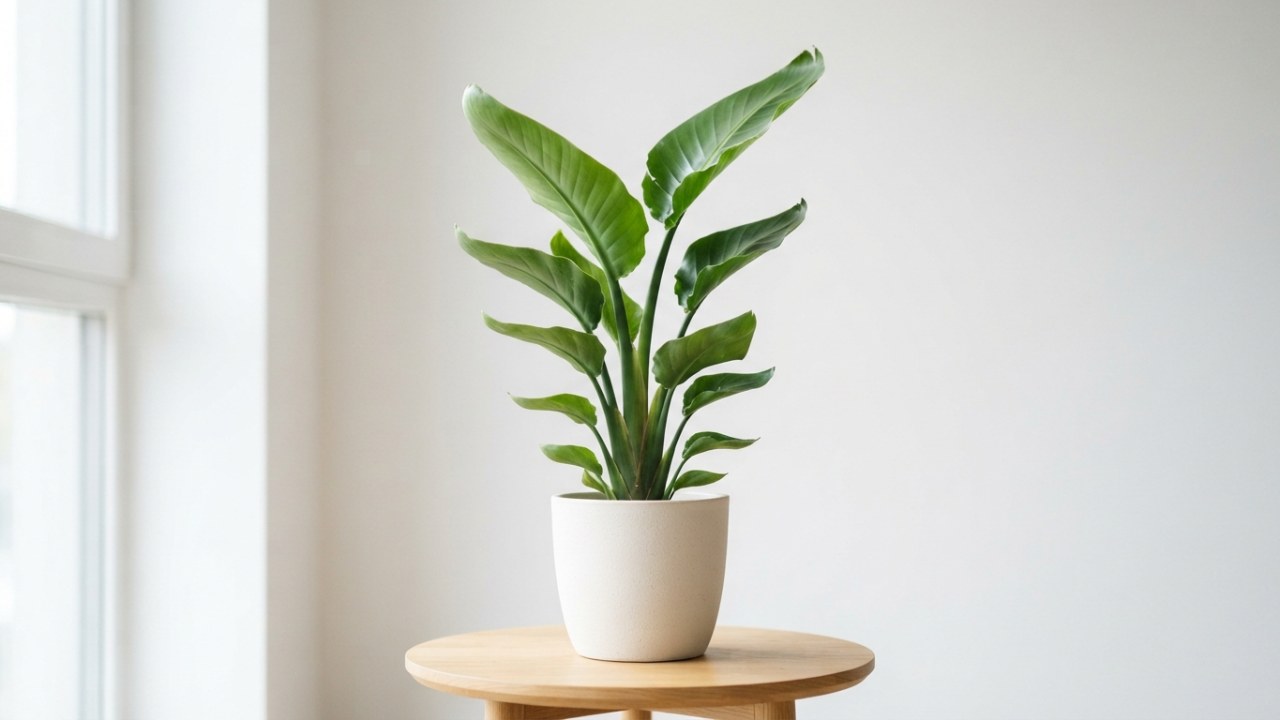
The White Bird of Paradise is a majestic, large-leaved plant known for its striking white and blue crane-like flowers.
- Every 7 daysWatering
- Full sunLight
- 40–60 %Humidity
- 10–30 °CTemperature


How to care for your White Bird of Paradise
Everything you need to keep your White Bird of Paradise healthy: watering, light, humidity, feeding, repotting and pruning.
Strelitzia alba, native to coastal evergreen forests of South Africa, is a magnificent plant that can reach impressive sizes. Its large, banana-like leaves create a lush, tropical feel, and mature plants produce unique white and blue flowers resembling a bird's head. While it can grow into a small tree outdoors in warm climates, it makes a stunning, architectural houseplant indoors, requiring ample space and bright light to thrive and potentially flower. It is not frost hardy: in a pot, bring it indoors before the first frost and keep it in a bright, frost-free place over winter.

How to recognise White Bird of Paradise
A large, clump-forming plant with leathery, paddle-shaped, banana-like leaves held on long stalks in a flat fan, which becomes trunk-like with age. Mature plants bear white flowers with a blue-violet tongue, emerging from a dark, boat-shaped bract. Strelitzia nicolai is its closest look-alike and the two are nearly impossible to tell apart out of flower, so rely on the label. S. reginae has orange flowers and a much smaller habit, and banana plants (Musa) have soft leaves that tear easily and spiral around the stem.

Watering your White Bird of Paradise
Every 7 days
Water thoroughly when the top 3 to 5 cm of soil are dry. Ensure good drainage and do not let the pot sit in standing water. Water less often in winter.
How to know it needs water
- Soil dry 3 to 5 cm deep
- Leaves slightly curling
- Pot feels light

How much light a White Bird of Paradise needs
Full sun
Full sun to bright indirect light. Prefers at least 4 to 6 hours of direct sun daily for best growth and flowering.
- Direct sun tolerated
- 4 to 8 h a day
- Orientations that suit it
- South, South-east, South-west, East, West

Humidity and misting
40–60 %
Medium (40 to 60%) Misting is not needed, as the plant tolerates average indoor humidity. Ensure good air circulation.

Feeding and fertiliser
Every 21 days
Apply about every 3 weeks from March to September; withhold entirely from October to February.
- Recommended feed
- Liquid fertilizer, slightly richer in potassium (e.g., 8-2-10 or similar) · 8-2-10

Repotting your White Bird of Paradise
Every 36 months
Repot into a container 5-10 cm larger, using a well-draining potting mix. Handle roots carefully.
- When
- Spring
- Potting mix
- All-purpose potting mix
- Mix in
- perlite, pine bark, coco fibre
The tell-tale signs
- Roots emerging from drainage holes
- Plant becoming top-heavy
- Growth significantly slowed

Pruning your White Bird of Paradise
Remove yellow, damaged, or spent flower stalks at any time. Prune for shape or size in spring. Use clean, sharp shears to cut at the base of the leaf or flower stalk. Wear gloves if sensitive to sap.

Through the year
Watering is not set once and for all: it follows the light and the growth. Allow 13 days between waterings in the depth of winter, against 6 in the growing season.
- 11 J
- 8 F
- 7 M
- 6 A
- 6 M
- 6 J
- 6 J
- 6 A
- 7 S
- 8 O
- 11 N
- 13 D
Active growth · Days between waterings

Toxicity
Mildly toxic to pets and humans if ingested, causing gastrointestinal upset. Keep out of reach of children and animals.

Good to know
- Unlike the orange Bird of Paradise (S. reginae), its flowers are white with a blue-violet tongue.
- Can grow into a large, tree-like specimen outdoors in tropical climates
- Native to the coastal forests of South Africa.

Frequently asked questions about the White Bird of Paradise
How do you care for a White Bird of Paradise?
Water it every 7 days. Give it full sun. Ideal humidity: 40–60 %. Ideal temperature: 10–30 °C. Water thoroughly when the top 3 to 5 cm of soil are dry. Ensure good drainage and do not let the pot sit in standing water. Water less often in winter.
How often should you water a White Bird of Paradise?
Every 7 days Water thoroughly when the top 3 to 5 cm of soil are dry. Ensure good drainage and do not let the pot sit in standing water. Water less often in winter. How to know it needs water : Soil dry 3 to 5 cm deep ; Leaves slightly curling ; Pot feels light.
How much light does a White Bird of Paradise need?
Full sun Full sun to bright indirect light. Prefers at least 4 to 6 hours of direct sun daily for best growth and flowering. 4 to 8 h a day
Is the White Bird of Paradise toxic to cats and dogs?
Yes. Mildly toxic to pets and humans if ingested, causing gastrointestinal upset. Keep out of reach of children and animals. Keep it out of reach of your pets and call a vet if any is swallowed.
Why are my White Bird of Paradise leaves turning yellow?
Yellowing most often comes from too much water: the mix stays wet and the roots suffocate. Check that the pot drains, empty the saucer, and let the mix dry before watering again. Too little light or a cold draught cause the same symptom.
When should you repot a White Bird of Paradise?
Repot every 36 months, ideally in spring. Repot into a container 5-10 cm larger, using a well-draining potting mix. Handle roots carefully.

At a glance
- Family
- Strelitziaceae
- Category
- Flowering
- Placement
- Indoor and outdoor
- Mature height
- 3 m
- Growth
- Moderate
- Temperature
- 10–30 °C
- Pot materials
- terracotta, ceramic, plastic
- Growth
- Reaches maturity in 5 years
These figures are for an average plant. In the app they are recalculated for yours, based on your room, its orientation and the season.
And for your plant, in your home?
In the app this plant becomes yours: a watering schedule tuned to your home, health tracking from photos, and reminders at the right moment.
In the same spirit
 Every 6 days


African Violet
Saintpaulia ionantha

 Every 3 days
Azalea
Rhododendron simsii
 Every 5 days
Bougainvillea
Bougainvillea glabra
 Every 3 days
Chrysanthemum
Chrysanthemum morifolium
