
Tropical · Araliaceae
Dwarf Umbrella Tree
Schefflera arboricola
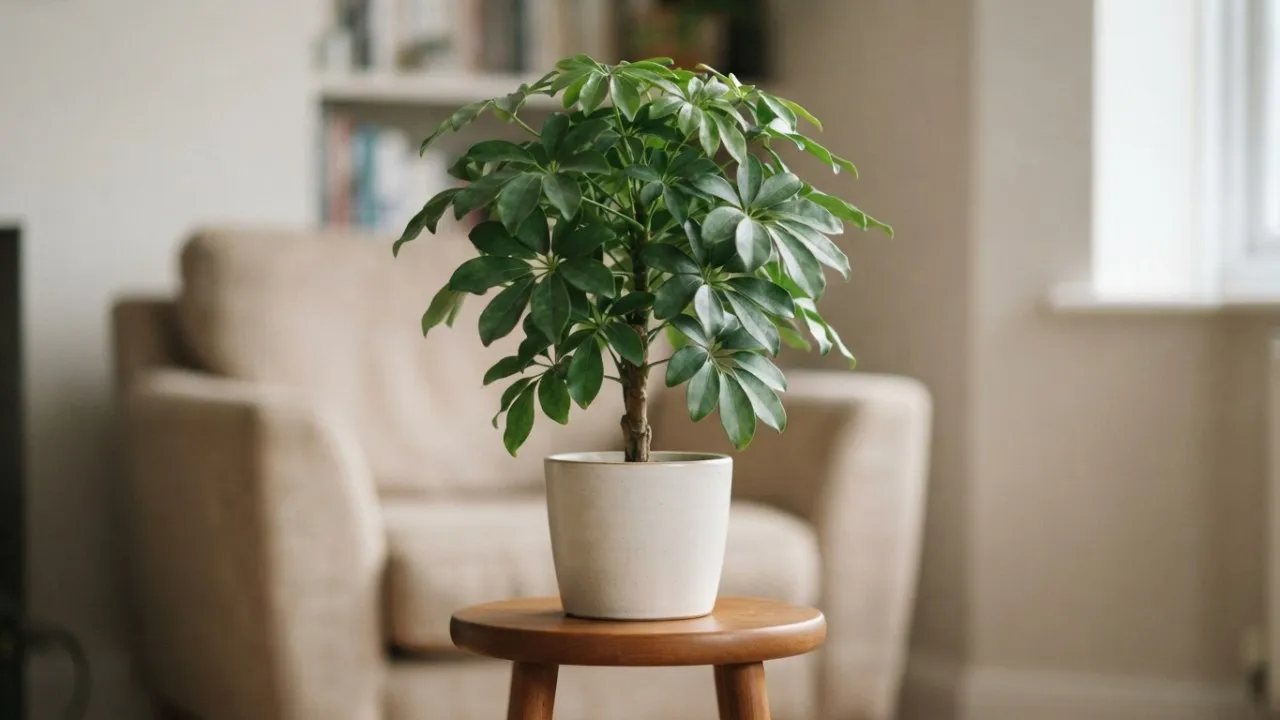
A small indoor tree with elegant palmate foliage, the dwarf umbrella tree is a robust plant that brings a tropical touch to any space.
- Every 8 daysWatering
- Bright indirect lightLight
- 40–60 %Humidity
- 15–27 °CTemperature


Its varieties 5
How to care for your Dwarf Umbrella Tree
Everything you need to keep your Dwarf Umbrella Tree healthy: watering, light, humidity, feeding, repotting and pruning.
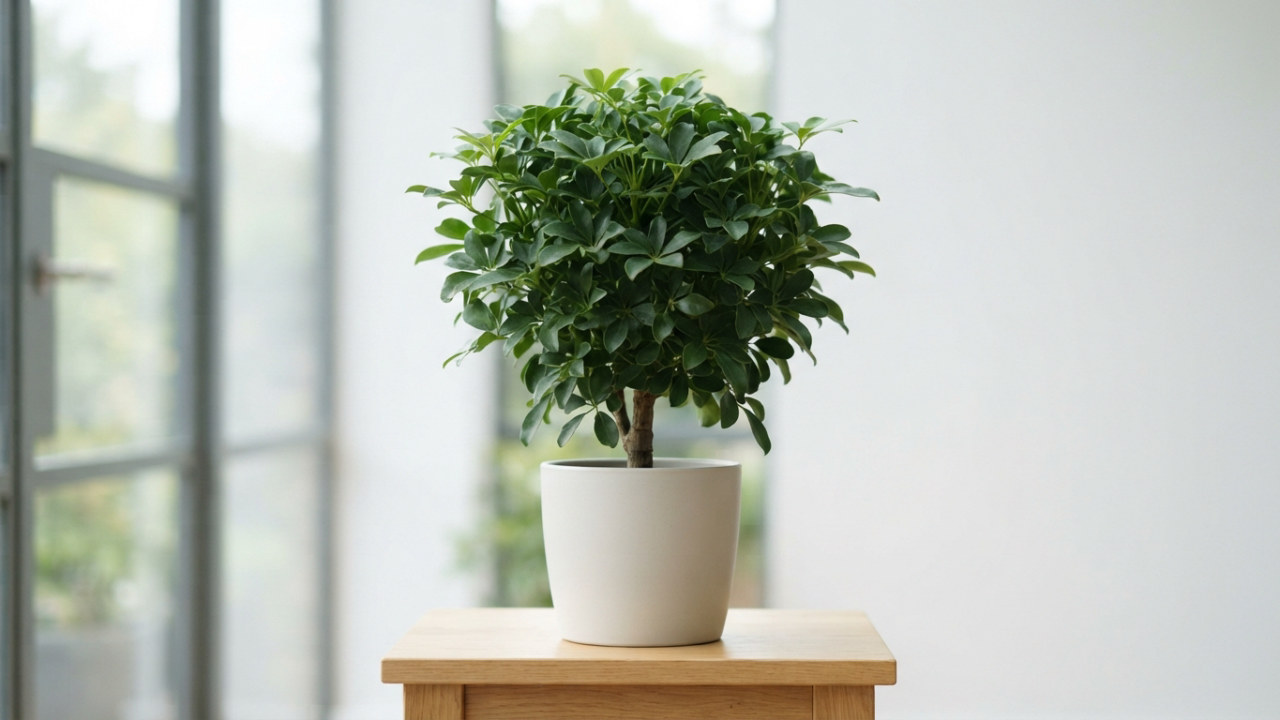
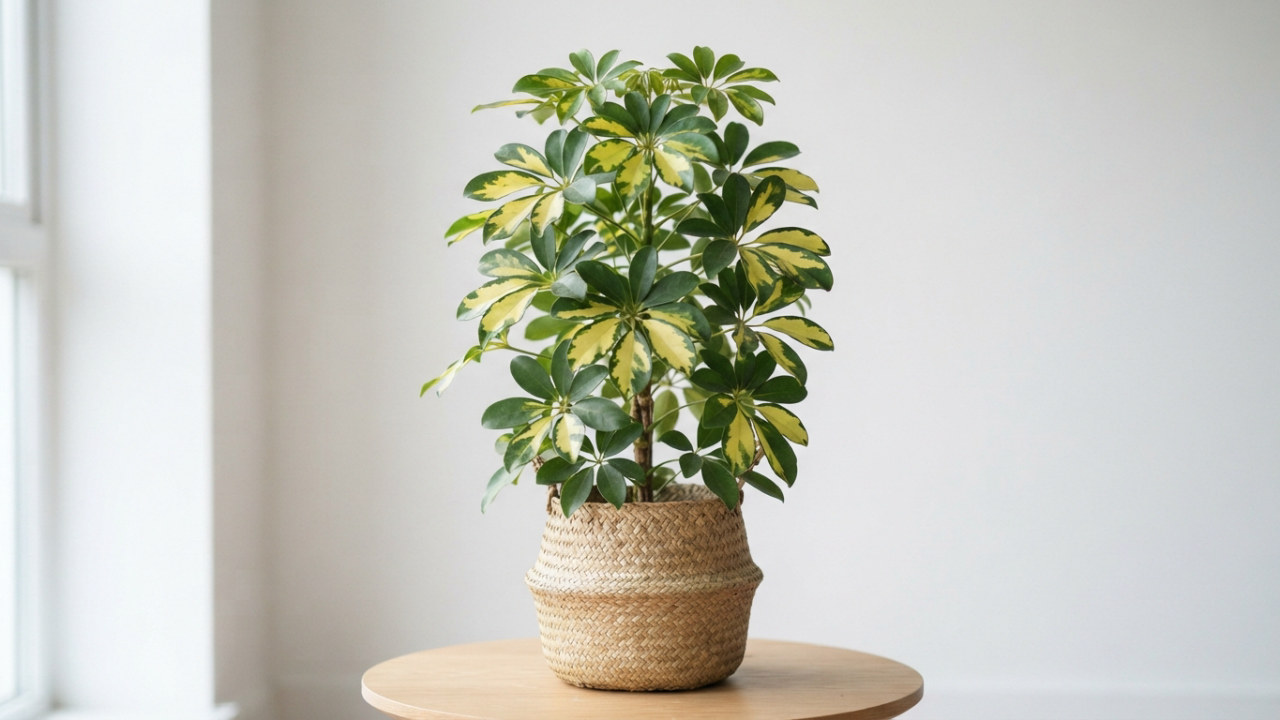
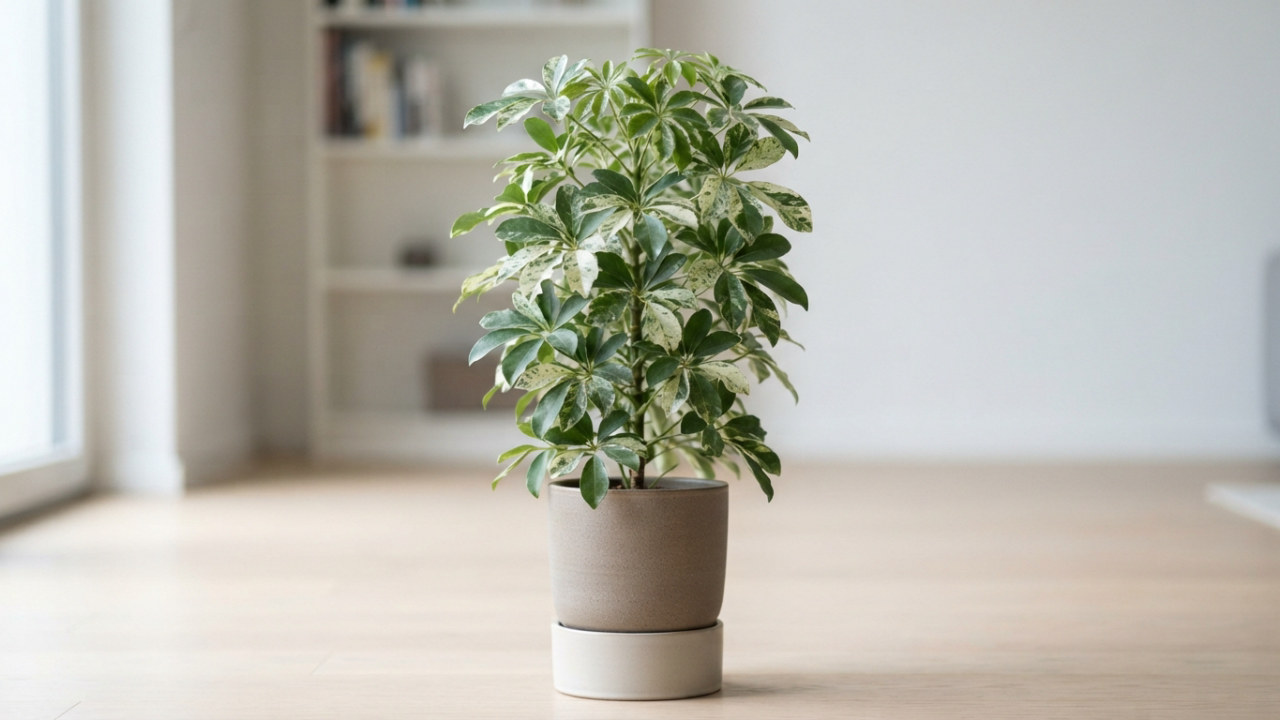
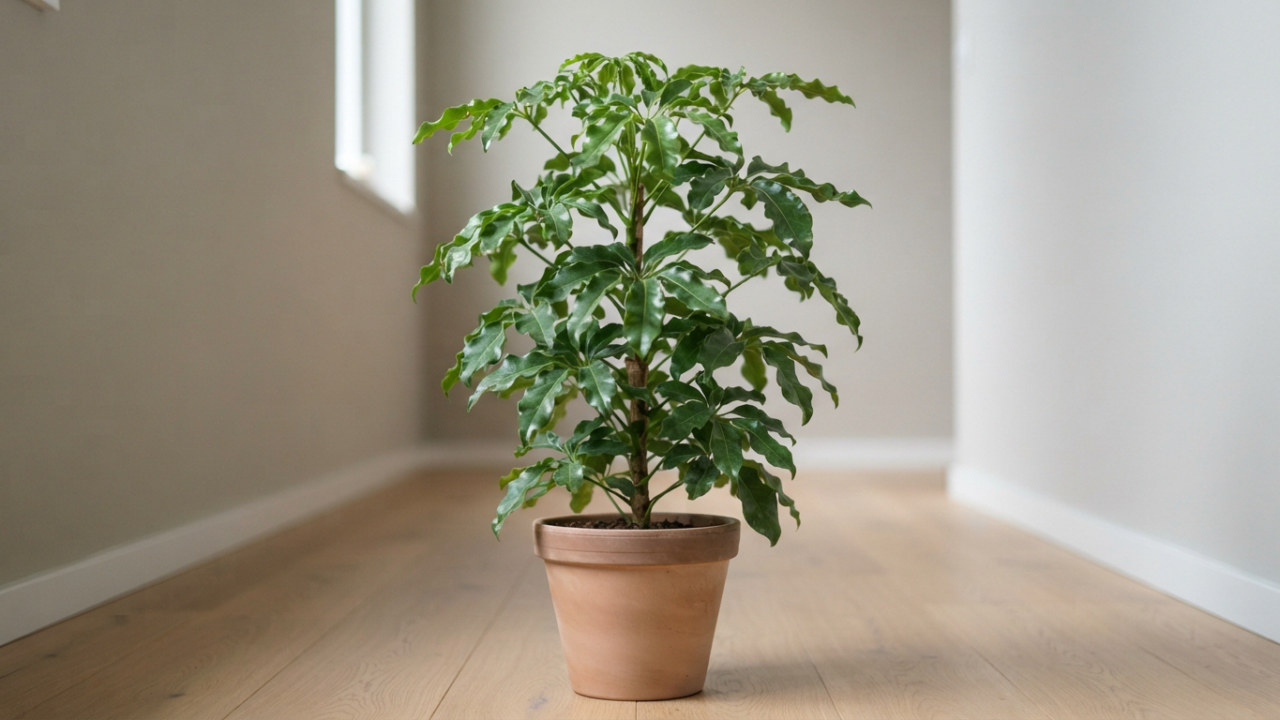
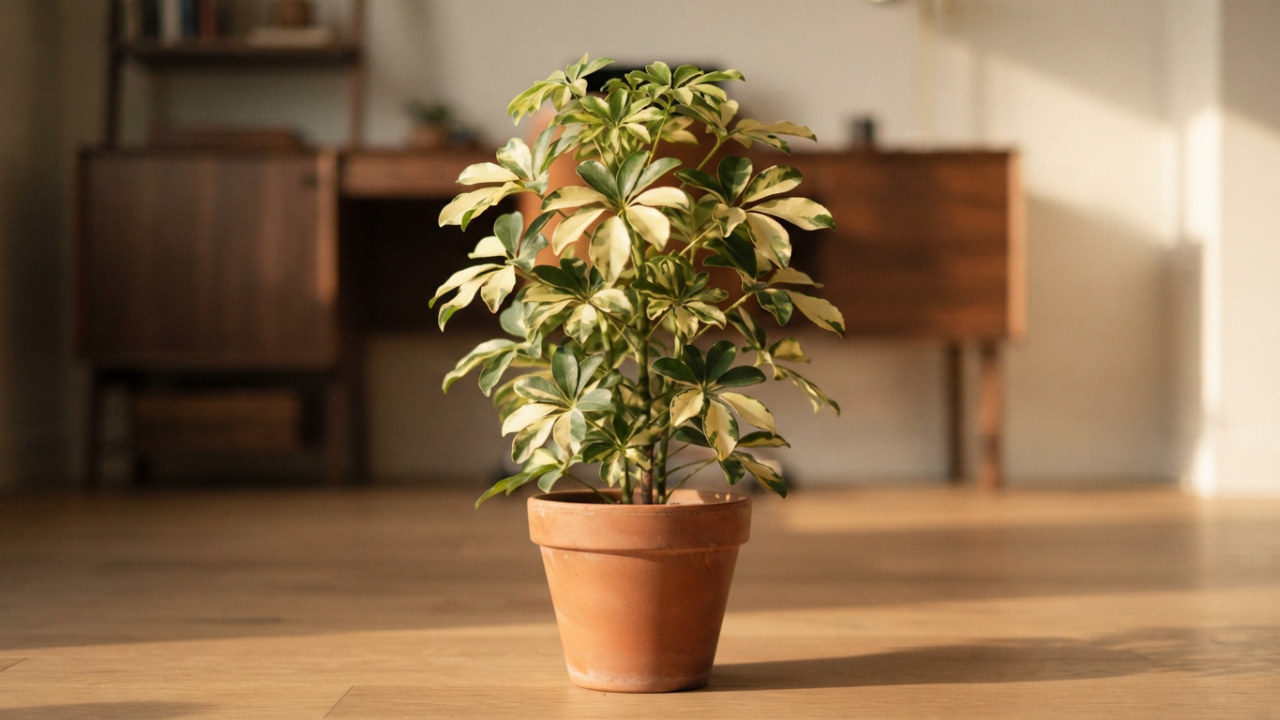
Schefflera arboricola is native to Taiwan and southern China, where it grows naturally in humid forests as either an epiphyte or a terrestrial shrub. Its compound leaves of 7 to 9 glossy oval leaflets radiate around a central petiole, creating a highly ornamental parasol effect. Robust and accommodating, it tolerates indoor cultivation well and adapts to various light levels. Many variegated cultivars with yellow or white markings are available, adding brightness to darker corners of the home.

How to recognise Dwarf Umbrella Tree
A bushy, upright shrub with glossy dark green leaves, each made of 7 to 9 oval leaflets about 5 to 10 cm long that radiate from the tip of a long stalk. It is often confused with Schefflera actinophylla, which has much larger leaflets and grows as a taller, less bushy tree. The leaflets of S. arboricola are small and its stems branch freely.

Watering your Dwarf Umbrella Tree
Every 8 days
Water thoroughly, then allow the top half of the soil to dry before watering again. Water less often in winter. Avoid letting the plant sit in standing water.
How to know it needs water
- Top half of the soil feels dry
- Leaves begin to droop and look limp
- Leaf tips start turning brown from underwatering

How much light a Dwarf Umbrella Tree needs
Bright indirect light
Bright indirect light to medium light. Tolerates some shade but may become leggy. Variegated cultivars need more light to keep their patterns.
- Direct sun tolerated
- 0 to 2 h a day
- Orientations that suit it
- North, North-east, East, South-east, South, South-west, West, North-west

Humidity and misting
40–60 %
40 to 60% Misting is not needed. Wipe the leaves regularly with a damp cloth to remove dust and keep them healthy, and use a tray of damp pebbles if the air is very dry.

Feeding and fertiliser
Every 28 days
Feed about every 4 weeks from April to September at half strength. Do not fertilize in winter.
- Recommended feed
- Balanced liquid fertilizer · 10-10-10

Repotting your Dwarf Umbrella Tree
Every 24 months
Repot every two years in spring. Use a well-draining potting mix with perlite and go up only one pot size. Prune any circling roots before repotting. Can be kept slightly pot-bound to control size.
- When
- Spring
- Potting mix
- All-purpose potting mix
- Mix in
- perlite, pine bark
The tell-tale signs
- Roots circling at the bottom of the pot
- Water drains straight through without being absorbed
- Plant looks top-heavy or unstable

Pruning your Dwarf Umbrella Tree
Spring, or whenever the plant becomes too tall or leggy. Cut back long stems to a desired height just above a leaf node. Remove any dead or yellowing leaves. Can be pruned heavily and will regrow from old wood.

Through the year
Watering is not set once and for all: it follows the light and the growth. Allow 10 days between waterings in the depth of winter, against 6 in the growing season.
- 10 J
- 9 F
- 7 M
- 6 A
- 6 M
- 6 J
- 6 J
- 6 A
- 7 S
- 8 O
- 9 N
- 10 D
Active growth · Days between waterings

Toxicity
Contains calcium oxalate crystals. Causes oral irritation, excessive drooling, vomiting, and difficulty swallowing in pets and humans. The sap can irritate the skin, so wear gloves when pruning and keep the plant out of reach of pets and children.

Good to know
- The dwarf umbrella tree gets its name from its compound leaves that spread out like the ribs of an open umbrella.
- Many variegated cultivars exist, such as 'Gold Capella' and 'Janine', with leaflets marked in yellow or cream.

Frequently asked questions about the Dwarf Umbrella Tree
How do you care for a Dwarf Umbrella Tree?
Water it every 8 days. Give it bright indirect light. Ideal humidity: 40–60 %. Ideal temperature: 15–27 °C. Water thoroughly, then allow the top half of the soil to dry before watering again. Water less often in winter. Avoid letting the plant sit in standing water.
How often should you water a Dwarf Umbrella Tree?
Every 8 days Water thoroughly, then allow the top half of the soil to dry before watering again. Water less often in winter. Avoid letting the plant sit in standing water. How to know it needs water : Top half of the soil feels dry ; Leaves begin to droop and look limp ; Leaf tips start turning brown from underwatering.
How much light does a Dwarf Umbrella Tree need?
Bright indirect light Bright indirect light to medium light. Tolerates some shade but may become leggy. Variegated cultivars need more light to keep their patterns. 0 to 2 h a day
Is the Dwarf Umbrella Tree toxic to cats and dogs?
Yes. Contains calcium oxalate crystals. Causes oral irritation, excessive drooling, vomiting, and difficulty swallowing in pets and humans. The sap can irritate the skin, so wear gloves when pruning and keep the plant out of reach of pets and children. Keep it out of reach of your pets and call a vet if any is swallowed.
Why are my Dwarf Umbrella Tree leaves turning yellow?
Yellowing most often comes from too much water: the mix stays wet and the roots suffocate. Check that the pot drains, empty the saucer, and let the mix dry before watering again. Too little light or a cold draught cause the same symptom.
When should you repot a Dwarf Umbrella Tree?
Repot every 24 months, ideally in spring. Repot every two years in spring. Use a well-draining potting mix with perlite and go up only one pot size. Prune any circling roots before repotting. Can be kept slightly pot-bound to control size.

At a glance
- Family
- Araliaceae
- Category
- Tropical
- Placement
- Indoor
- Mature height
- 1.5 m
- Growth
- Moderate
- Temperature
- 15–27 °C
- Pot materials
- terracotta, ceramic, plastic
- Growth
- Reaches maturity in 5 years
These figures are for an average plant. In the app they are recalculated for yours, based on your room, its orientation and the season.
And for your plant, in your home?
In the app this plant becomes yours: a watering schedule tuned to your home, health tracking from photos, and reminders at the right moment.
In the same spirit
 Every 7 days


Air Plant
Tillandsia ionantha

 Every 6 days
Alocasia amazonica
Alocasia amazonica
 Every 7 days
Alocasia baginda
Alocasia baginda
 Every 4 days
Angel Wings
Caladium bicolor
