
Tropical · Araliaceae
Balfour aralia
Polyscias scutellaria
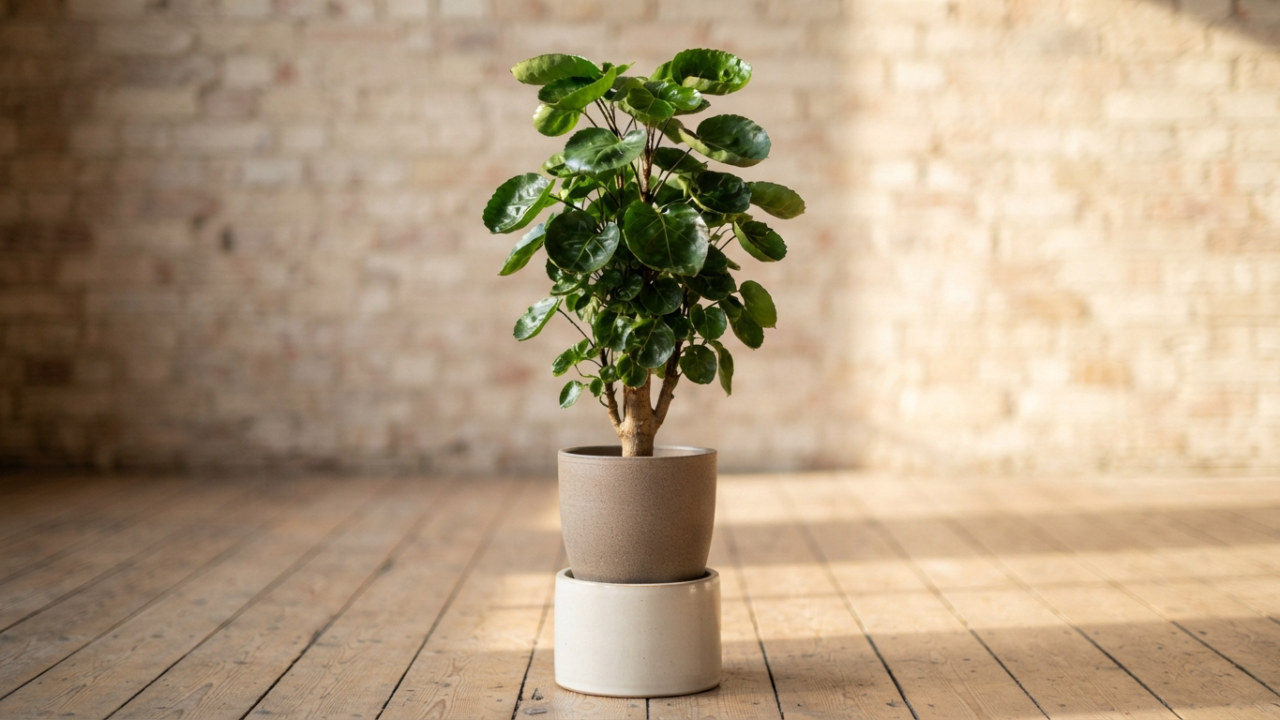
An upright, tree-like shrub with glossy, rounded shield-shaped leaflets on woody stems, slow and elegant indoors.
- Every 6 daysWatering
- Bright indirect lightLight
- 60–80 %Humidity
- 16–26 °CTemperature


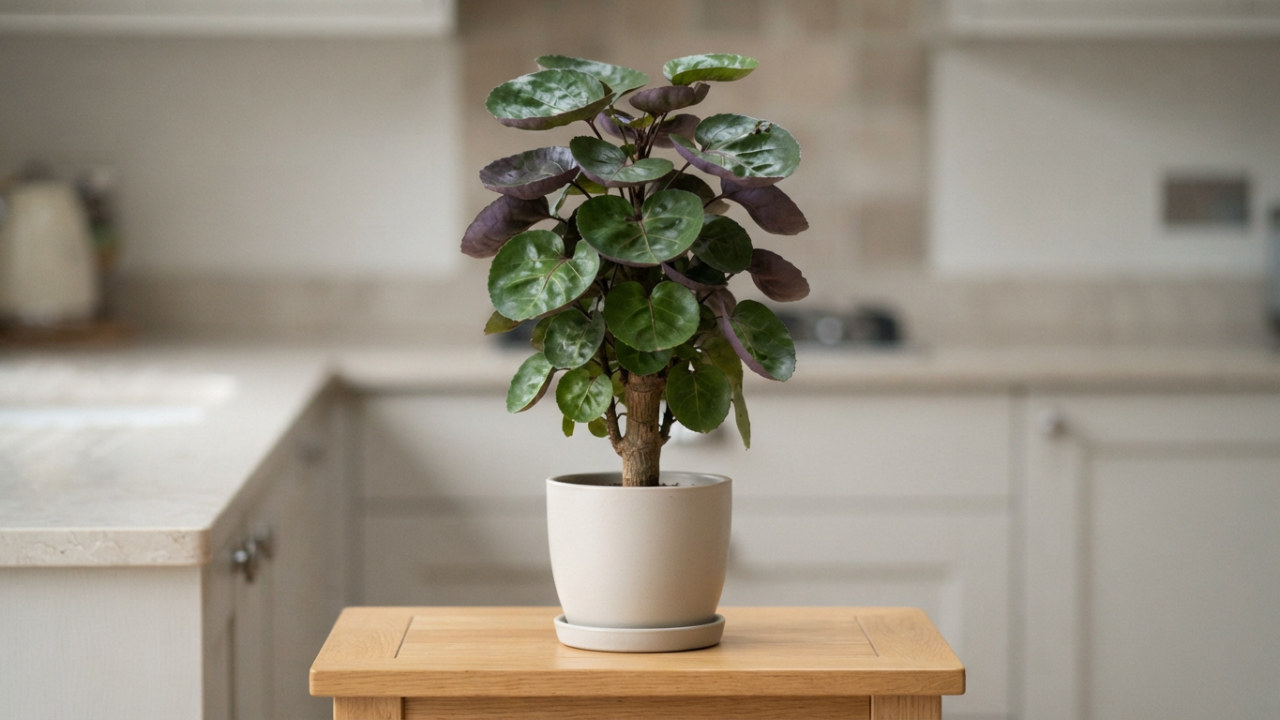
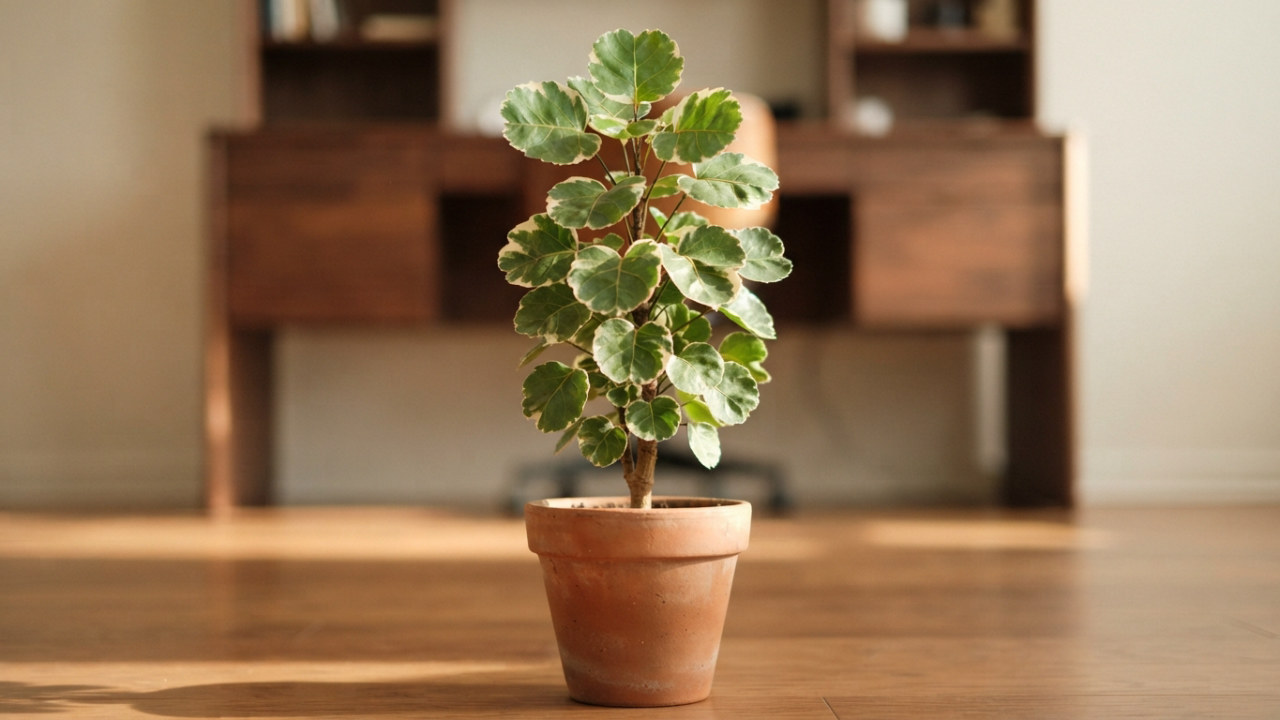
Its varieties 2
How to care for your Balfour aralia
Everything you need to keep your Balfour aralia healthy: watering, light, humidity, feeding, repotting and pruning.
Balfour aralia, long sold as Polyscias balfouriana and also called shield aralia, is native to the wet tropics from eastern Malesia to the southwest Pacific. Its woody, upright stems carry glossy, almost leathery leaves of one to five broad, rounded leaflets with wavy or scalloped edges. It grows slowly into a compact little tree, needs steady warmth and humid air, and drops leaves when drafts or dry heat catch it.

How to recognise Balfour aralia
Broad, rounded to kidney-shaped glossy leaflets with scalloped edges, on upright woody stems. Ming aralia (Polyscias fruticosa) has finely cut, lacy leaves, and geranium aralia (P. guilfoylei) has coarsely toothed leaflets, often edged with cream.

Watering your Balfour aralia
Every 6 days
Water when the top of the soil is dry, until water runs out of the pot, and never leave it standing in a saucer.
How to know it needs water
- The top 2 or 3 centimeters of soil are dry
- Leaves start to droop or drop

How much light a Balfour aralia needs
Bright indirect light
Bright, indirect light suits it best; keep it away from direct, strong sun that scorches the leaves.
- Direct sun tolerated
- No direct sun
- Orientations that suit it
- North, North-east, East, North-west, West, South-east, South-west

Humidity and misting
60–80 %
It prefers humid air, between 60 and 80 percent. Mist every few days, or stand the pot on a tray of wet pebbles, since dry air makes it drop leaves.

Feeding and fertiliser
Every 28 days
Feed about every 4 weeks from April to September, and not at all in winter.
- Recommended feed
- A balanced liquid fertilizer for foliage plants, at half strength. · 3-1-2

Repotting your Balfour aralia
Every 24 months
Move it to a pot slightly larger with light, well-drained potting mix; it dislikes disturbed roots, so handle the root ball gently.
- When
- Spring, just as growth resumes.
- Potting mix
- All-purpose potting mix
- Mix in
- perlite, coco fibre
The tell-tale signs
- Roots show at the drainage holes
- Growth stalls and the soil dries out very quickly

Pruning your Balfour aralia
In spring, before the new growth starts. Shorten long branches just above a leaf node to keep the tree shape; cuttings can be rooted.

Through the year
Watering is not set once and for all: it follows the light and the growth. Allow 7 days between waterings in the depth of winter, against 5 in the growing season.
- 7 J
- 7 F
- 5 M
- 5 A
- 5 M
- 5 J
- 5 J
- 5 A
- 5 S
- 6 O
- 7 N
- 7 D
Active growth · Days between waterings

Toxicity
All parts are mildly toxic to pets and people if eaten (mouth irritation, nausea, vomiting), and handling the sap can irritate the skin.

Good to know
- Polyscias scutellaria is the accepted name, but the plant is still widely sold as Polyscias balfouriana.
- Its native range stretches from eastern Malesia to the southwest Pacific islands, where it grows in wet tropical forest.

Frequently asked questions about the Balfour aralia
How do you care for a Balfour aralia?
Water it every 6 days. Give it bright indirect light. Ideal humidity: 60–80 %. Ideal temperature: 16–26 °C. Water when the top of the soil is dry, until water runs out of the pot, and never leave it standing in a saucer.
How often should you water a Balfour aralia?
Every 6 days Water when the top of the soil is dry, until water runs out of the pot, and never leave it standing in a saucer. How to know it needs water : The top 2 or 3 centimeters of soil are dry ; Leaves start to droop or drop.
How much light does a Balfour aralia need?
Bright indirect light Bright, indirect light suits it best; keep it away from direct, strong sun that scorches the leaves. No direct sun
Is the Balfour aralia toxic to cats and dogs?
Yes. All parts are mildly toxic to pets and people if eaten (mouth irritation, nausea, vomiting), and handling the sap can irritate the skin. Keep it out of reach of your pets and call a vet if any is swallowed.
Why are my Balfour aralia leaves turning yellow?
Yellowing most often comes from too much water: the mix stays wet and the roots suffocate. Check that the pot drains, empty the saucer, and let the mix dry before watering again. Too little light or a cold draught cause the same symptom.
When should you repot a Balfour aralia?
Repot every 24 months, ideally in spring, just as growth resumes.. Move it to a pot slightly larger with light, well-drained potting mix; it dislikes disturbed roots, so handle the root ball gently.

At a glance
- Family
- Araliaceae
- Category
- Tropical
- Placement
- Indoor
- Mature height
- 1.8 m
- Growth
- Slow
- Temperature
- 16–26 °C
- Pot materials
- ceramic, plastic
- Growth
- Reaches maturity in 5 years
These figures are for an average plant. In the app they are recalculated for yours, based on your room, its orientation and the season.
And for your plant, in your home?
In the app this plant becomes yours: a watering schedule tuned to your home, health tracking from photos, and reminders at the right moment.
In the same spirit
 Every 7 days


Air Plant
Tillandsia ionantha

 Every 6 days
Alocasia amazonica
Alocasia amazonica
 Every 7 days
Alocasia baginda
Alocasia baginda
 Every 4 days
Angel Wings
Caladium bicolor
