


How to care for your Chinese Money Plant
Everything you need to keep your Chinese Money Plant healthy: watering, light, humidity, feeding, repotting and pruning.
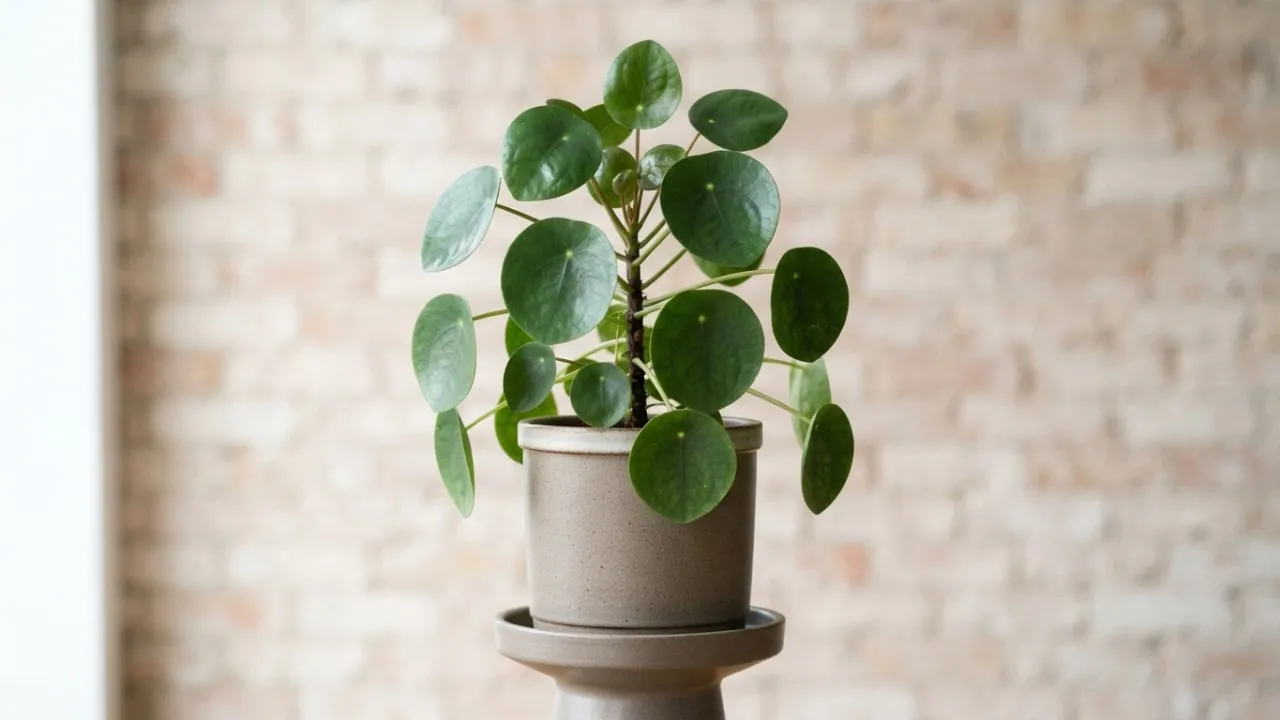
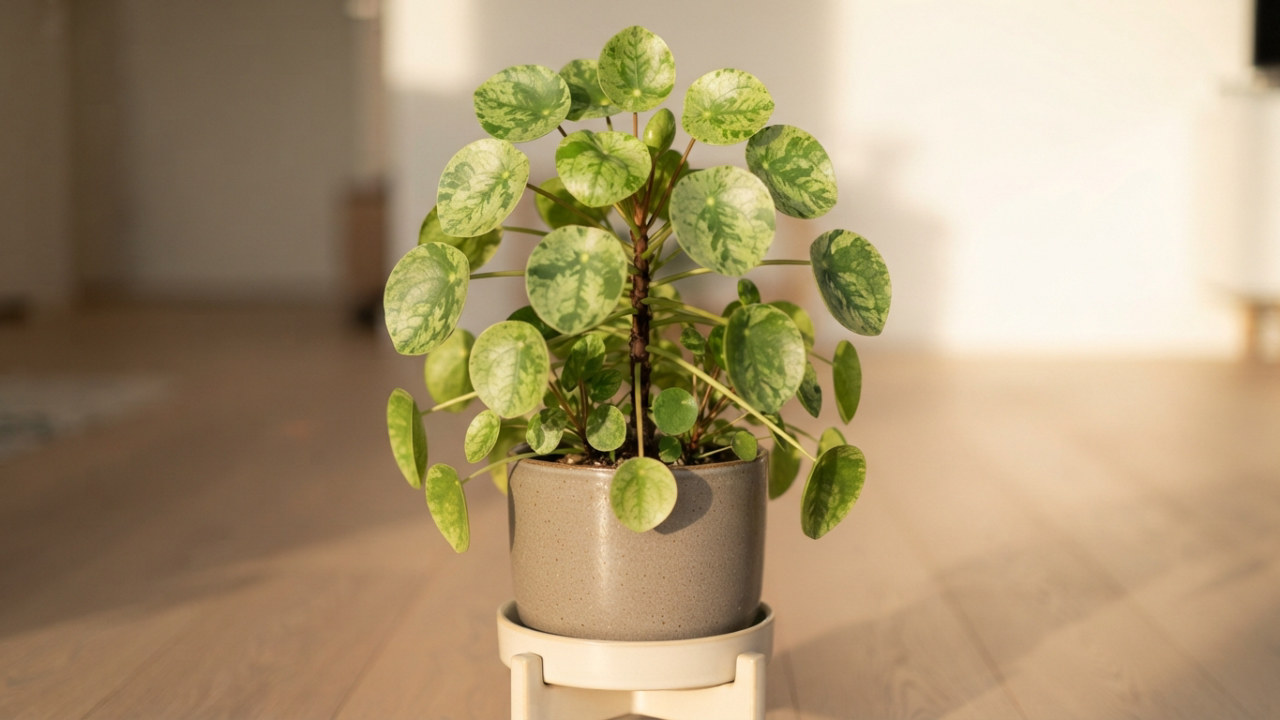
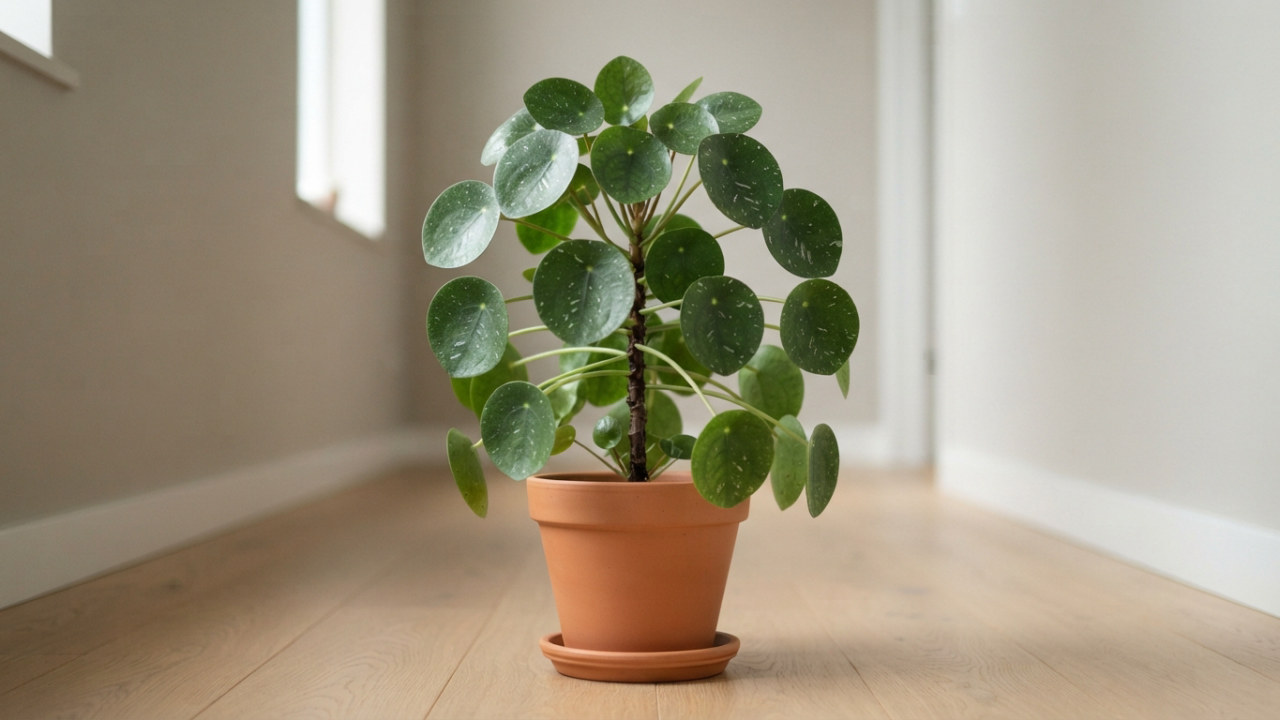
Native to the Yunnan and Sichuan provinces of China, Pilea peperomioides naturally grows on shaded rocks in the foothills of the Himalayas. Its perfectly round, bright green, slightly succulent leaves are held on thin petioles that give it a unique and highly decorative appearance. This plant generously produces offsets at its base, which can easily be separated to share or repot. Undemanding, it simply needs good indirect light and moderate watering to thrive.

How to recognise Chinese Money Plant
A small plant with perfectly round, slightly fleshy, bright green leaves, each held by a long thin stalk attached to the middle of the underside of the blade. It often forms little pups at the base. Peperomia polybotrya (raindrop peperomia) has thick, heart-shaped leaves with a small point, and Hydrocotyle (pennywort) has similar round leaves but trails along the ground.

Watering your Chinese Money Plant
Every 8 days
Water thoroughly when the top half of the soil is dry, and let the excess drain. This plant is sensitive to root rot, so water less often in winter.
How to know it needs water
- Top half of the soil is dry to the touch
- Leaves begin to droop slightly
- Pot feels noticeably lighter

How much light a Chinese Money Plant needs
Bright indirect light
Bright indirect light. Rotate the pot weekly for even growth. Tolerates some direct morning sun but avoid harsh afternoon rays.
- Direct sun tolerated
- 0 to 2 h a day
- Orientations that suit it
- North, North-east, East, South-east, South, South-west, West, North-west

Humidity and misting
40–50 %
Low to moderate (40 to 50 %) Misting is not needed. Average household humidity is enough, and water left on the leaves can leave marks.

Feeding and fertiliser
Every 28 days
Feed once a month from April to September at half strength. Do not feed from October to March.
- Recommended feed
- Balanced liquid fertilizer, diluted to half strength · 5-10-5

Repotting your Chinese Money Plant
Every 12 months
Repot in spring into a pot one size larger. Use a well-draining potting mix with added perlite. Separate pups during repotting if desired.
- When
- Spring
- Potting mix
- All-purpose potting mix
- Mix in
- perlite, coco fibre
The tell-tale signs
- Numerous baby plants (pups) crowding the pot
- Roots visible at the soil surface
- Plant becomes top-heavy and tips over

Pruning your Chinese Money Plant
Year-round as needed to remove yellowing lower leaves. Remove yellowing leaves at the base. Separate baby plants (pups) by cutting below the soil line with a clean blade. Let pups develop roots before potting.

Through the year
Watering is not set once and for all: it follows the light and the growth. Allow 10 days between waterings in the depth of winter, against 6 in the growing season.
- 10 J
- 9 F
- 7 M
- 6 A
- 6 M
- 6 J
- 6 J
- 6 A
- 7 S
- 8 O
- 10 N
- 10 D
Active growth · Days between waterings

Good to know
- Nicknamed the "missionary plant", it was introduced to Europe by a Norwegian missionary who brought cuttings from China in 1946.
- Its round leaves are peltate: the stalk joins the middle of the underside of the leaf, which is uncommon among houseplants.

Frequently asked questions about the Chinese Money Plant
How do you care for a Chinese Money Plant?
Water it every 8 days. Give it bright indirect light. Ideal humidity: 40–50 %. Ideal temperature: 15–25 °C. Water thoroughly when the top half of the soil is dry, and let the excess drain. This plant is sensitive to root rot, so water less often in winter.
How often should you water a Chinese Money Plant?
Every 8 days Water thoroughly when the top half of the soil is dry, and let the excess drain. This plant is sensitive to root rot, so water less often in winter. How to know it needs water : Top half of the soil is dry to the touch ; Leaves begin to droop slightly ; Pot feels noticeably lighter.
How much light does a Chinese Money Plant need?
Bright indirect light Bright indirect light. Rotate the pot weekly for even growth. Tolerates some direct morning sun but avoid harsh afternoon rays. 0 to 2 h a day
Is the Chinese Money Plant toxic to cats and dogs?
No, the Chinese Money Plant is not listed as toxic to cats and dogs. That is still no reason to let your pets chew on it.
Why are my Chinese Money Plant leaves turning yellow?
Yellowing most often comes from too much water: the mix stays wet and the roots suffocate. Check that the pot drains, empty the saucer, and let the mix dry before watering again. Too little light or a cold draught cause the same symptom.
When should you repot a Chinese Money Plant?
Repot every 12 months, ideally in spring. Repot in spring into a pot one size larger. Use a well-draining potting mix with added perlite. Separate pups during repotting if desired.

At a glance
- Family
- Urticaceae
- Category
- Tropical
- Placement
- Indoor
- Mature height
- 30 cm
- Growth
- Moderate
- Temperature
- 15–25 °C
- Pot materials
- terracotta, ceramic, plastic
- Growth
- Reaches maturity in 3 years
These figures are for an average plant. In the app they are recalculated for yours, based on your room, its orientation and the season.
And for your plant, in your home?
In the app this plant becomes yours: a watering schedule tuned to your home, health tracking from photos, and reminders at the right moment.
In the same spirit
 Every 7 days


Air Plant
Tillandsia ionantha

 Every 6 days
Alocasia amazonica
Alocasia amazonica
 Every 7 days
Alocasia baginda
Alocasia baginda
 Every 4 days
Angel Wings
Caladium bicolor
