
Tropical · Urticaceae
Creeping Charlie
Pilea nummulariifolia
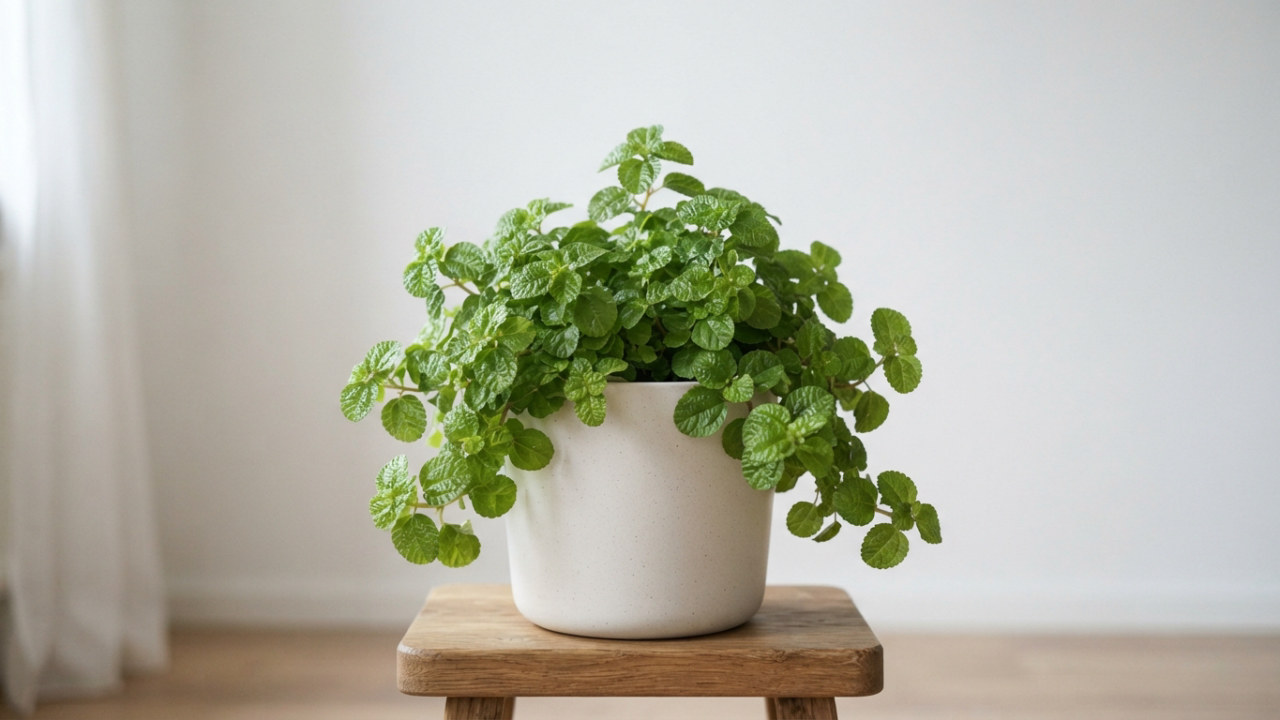
A fast, low pilea with quilted bright green leaves on trailing stems, good for hanging pots.
- Every 8 daysWatering
- Bright indirect lightLight
- 40–50 %Humidity
- 15–25 °CTemperature


How to care for your Creeping Charlie
Everything you need to keep your Creeping Charlie healthy: watering, light, humidity, feeding, repotting and pruning.
Pilea nummulariifolia grows wild from the Caribbean and Central America to northern South America. Its rounded, glossy bright green leaves, 2 to 5 cm long, have lightly scalloped edges and sunken veins that make the surface puffy and quilted. Thin stems creep outward and root where they touch moist soil, spreading 30 to 90 cm. Tiny whitish to pinkish flowers may appear in clusters at the leaf joints in spring and summer.

How to recognise Creeping Charlie
Rounded, glossy bright green leaves with sunken veins that look quilted, on thin creeping stems; larger than any other small pilea here. Pilea depressa has much smaller smooth leaves, P. glauca is silvery gray, and Callisia repens has smaller, thicker leaves, purple-tinted beneath.

Watering your Creeping Charlie
Every 8 days
Water thoroughly when the top inch of the mix is dry, keeping it evenly moist but never soggy, and ease off slightly in winter.
How to know it needs water
- The top inch of the mix feels dry to the touch.
- The quilted leaves look a little limp and less glossy.

How much light a Creeping Charlie needs
Bright indirect light
Give it bright indirect light, though it adapts to dimmer spots, and keep it out of direct sun.
- Direct sun tolerated
- 0 to 2 h a day
- Orientations that suit it
- North, North-east, East, South-east, South, South-west, West, North-west

Humidity and misting
40–50 %
Ordinary indoor air at 40 to 50 percent humidity is enough, and it does not need extra moisture. Misting is not needed, and water left on the quilted, slightly hairy leaves invites spots and rot, so skip it.

Feeding and fertiliser
Every 28 days
Feed about once a month from April to September and stop in the cooler months.
- Recommended feed
- A balanced liquid houseplant fertilizer diluted to half strength is enough. · 5-10-5

Repotting your Creeping Charlie
Every 12 months
Use a wide, shallow pot with drainage holes and a light mix, and set the thin stems in gently.
- When
- Repot in spring, when growth picks up.
- Potting mix
- All-purpose potting mix
- Mix in
- perlite, coco fibre
The tell-tale signs
- Roots show at the drainage holes.
- The mix dries out within a few days and the center of the clump thins.

Pruning your Creeping Charlie
Trim in spring or summer, whenever stems get long and bare. Shorten trailing stems with clean scissors, and press the cuttings into moist mix, where they root readily.

Through the year
Watering is not set once and for all: it follows the light and the growth. Allow 10 days between waterings in the depth of winter, against 6 in the growing season.
- 10 J
- 9 F
- 7 M
- 6 A
- 6 M
- 6 J
- 6 J
- 6 A
- 7 S
- 8 O
- 10 N
- 10 D
Active growth · Days between waterings

Good to know
- The species name nummulariifolia means with leaves like Nummularia, the coin-shaped creeping Jenny.
- Stems root wherever they touch moist soil, so it spreads quickly across a pot or planter.

Frequently asked questions about the Creeping Charlie
How do you care for a Creeping Charlie?
Water it every 8 days. Give it bright indirect light. Ideal humidity: 40–50 %. Ideal temperature: 15–25 °C. Water thoroughly when the top inch of the mix is dry, keeping it evenly moist but never soggy, and ease off slightly in winter.
How often should you water a Creeping Charlie?
Every 8 days Water thoroughly when the top inch of the mix is dry, keeping it evenly moist but never soggy, and ease off slightly in winter. How to know it needs water : The top inch of the mix feels dry to the touch. ; The quilted leaves look a little limp and less glossy..
How much light does a Creeping Charlie need?
Bright indirect light Give it bright indirect light, though it adapts to dimmer spots, and keep it out of direct sun. 0 to 2 h a day
Is the Creeping Charlie toxic to cats and dogs?
No, the Creeping Charlie is not listed as toxic to cats and dogs. That is still no reason to let your pets chew on it.
Why are my Creeping Charlie leaves turning yellow?
Yellowing most often comes from too much water: the mix stays wet and the roots suffocate. Check that the pot drains, empty the saucer, and let the mix dry before watering again. Too little light or a cold draught cause the same symptom.
When should you repot a Creeping Charlie?
Repot every 12 months, ideally in repot in spring, when growth picks up.. Use a wide, shallow pot with drainage holes and a light mix, and set the thin stems in gently.

At a glance
- Family
- Urticaceae
- Category
- Tropical
- Placement
- Indoor
- Mature height
- 60 cm
- Growth
- Fast
- Temperature
- 15–25 °C
- Pot materials
- terracotta, ceramic, plastic
- Growth
- Reaches maturity in 3 years
These figures are for an average plant. In the app they are recalculated for yours, based on your room, its orientation and the season.
And for your plant, in your home?
In the app this plant becomes yours: a watering schedule tuned to your home, health tracking from photos, and reminders at the right moment.
In the same spirit
 Every 7 days


Air Plant
Tillandsia ionantha

 Every 6 days
Alocasia amazonica
Alocasia amazonica
 Every 7 days
Alocasia baginda
Alocasia baginda
 Every 4 days
Angel Wings
Caladium bicolor
