
Tropical · Piperaceae
String of Turtles
Peperomia prostrata
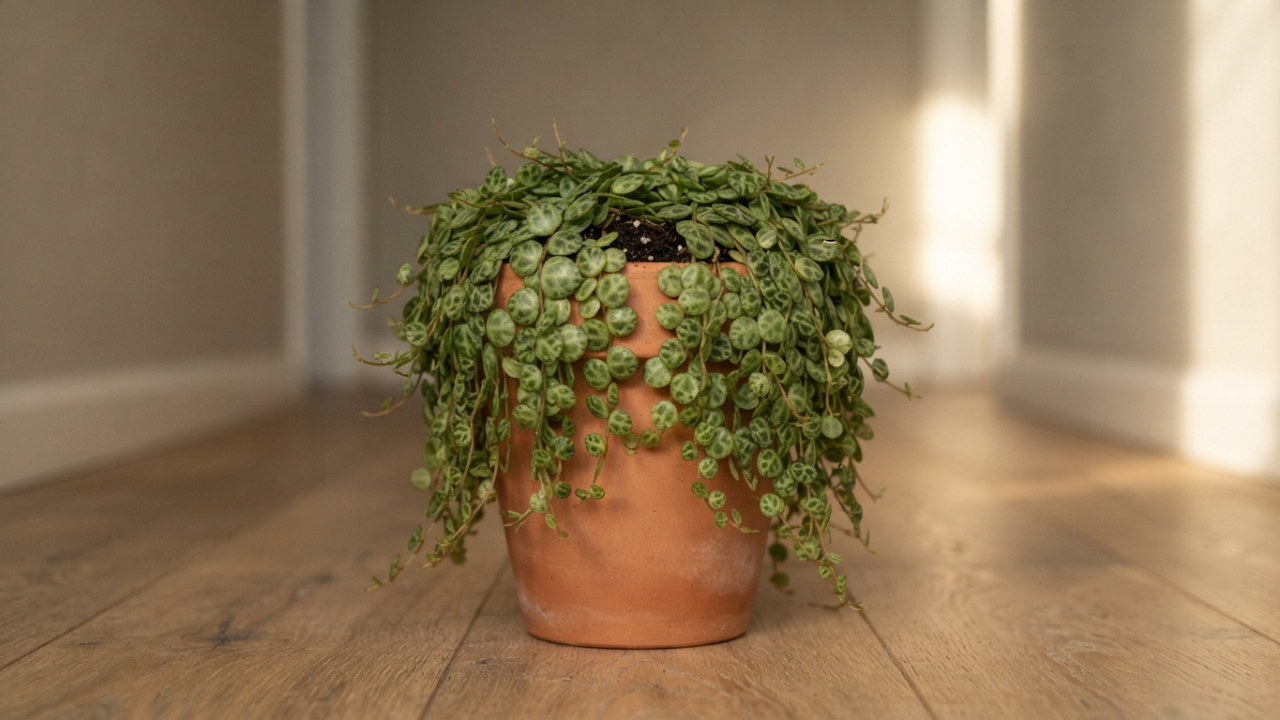
A delightful trailing miniature semi-succulent prized for its small, circular leaves marked with intricate turtle shell patterns.
- Every 8 daysWatering
- Bright indirect lightLight
- 50–75 %Humidity
- 18–26 °CTemperature


How to care for your String of Turtles
Everything you need to keep your String of Turtles healthy: watering, light, humidity, feeding, repotting and pruning.
Peperomia prostrata, widely known as String of Turtles, is a compact trailing epiphyte native to the warm rainforests of South America. Belonging to the family Piperaceae, it features thread-like trailing vines adorned with small, coin-shaped leaves that showcase a deep green background mapped with lighter silvery-green or purple-tinted veining. Because of its epiphytic origin, the plant possesses very shallow, delicate root systems that are particularly sensitive to excess moisture and dense substrates. When given bright indirect light, moderate warmth, and a loose potting medium that dries somewhat between waterings, it thrives as a hanging basket specimen or as a charming trailing accent in terrariums and on high shelves.

How to recognise String of Turtles
Tiny, rounded, succulent leaves patterned with dark green and creamy-white veining that mimics a turtle shell, strung along delicate thread-like reddish stems. Unlike String of Hearts, the leaves are circular rather than heart-shaped and produce slender rat-tail flower spikes.

Watering your String of Turtles
Every 8 days
Water from the bottom or carefully at soil level when half of the substrate has dried out, about every 8 days in the growing season and about every 16 days at rest, avoiding wetting the crowns directly.
How to know it needs water
- Foliage feels slightly soft or flexible instead of plump and firm
- Top half of the potting mix feels dry and pot feels notably lightweight
- Lower leaves lose their rounded turgidity without turning yellow or translucent

How much light a String of Turtles needs
Bright indirect light
Requires plenty of bright indirect light to maintain leaf pattern intensity; avoid intense midday sun which bleaches and burns the foliage.
- Direct sun tolerated
- 0 to 2 h a day
- Orientations that suit it
- East, South-east, South, South-west, West

Humidity and misting
50–75 %
Best at 50 to 75 % relative humidity, though it tolerates average room humidity if not placed near heating vents. Do not mist: droplets trapped on the dense foliage can lead to fungal issues and rot.

Feeding and fertiliser
Every 30 days
Feed monthly from April to September using a balanced liquid fertilizer diluted to half strength. Do not feed in autumn and winter.
- Recommended feed
- balanced · 10-10-10

Repotting your String of Turtles
Every 36 months
Repot every 3 years in spring. Select a shallow pot only slightly wider than the previous one, handle the fragile stems with extreme care to prevent leaf drop, and use a loose, well-draining mix.
- When
- Spring (April to May)
- Potting mix
- Cactus and succulent mix
- Mix in
- perlite, pumice, sphagnum moss, pine bark
The tell-tale signs
- Stems completely carpet the surface and trail extensively with roots emerging from drainage holes
- Substrate dries out within one to two days of thorough watering
- Growth slows noticeably during the peak spring season despite proper care

Pruning your String of Turtles
Spring or early summer, during active growth Trim excessively long or bare stems using sterile shears just above a leaf node; cuttings root easily on damp substrate.

Through the year
Watering is not set once and for all: it follows the light and the growth. Allow 12 days between waterings in the depth of winter, against 6 in the growing season.
- 12 J
- 11 F
- 9 M
- 7 A
- 6 M
- 6 J
- 6 J
- 6 A
- 7 S
- 9 O
- 10 N
- 12 D
Active growth · Days between waterings

Good to know
- In its native rainforest habitat, this plant grows as an epiphyte creeping over moist mossy tree trunks.
- The distinctive pattern on the leaves often fades in deep shade, turning a uniform pale green if light is insufficient.
- Like all peperomias, it belongs to the pepper family (Piperaceae), the family of black pepper.

Frequently asked questions about the String of Turtles
How do you care for a String of Turtles?
Water it every 8 days. Give it bright indirect light. Ideal humidity: 50–75 %. Ideal temperature: 18–26 °C. Water from the bottom or carefully at soil level when half of the substrate has dried out, about every 8 days in the growing season and about every 16 days at rest, avoiding wetting the crowns directly.
How often should you water a String of Turtles?
Every 8 days Water from the bottom or carefully at soil level when half of the substrate has dried out, about every 8 days in the growing season and about every 16 days at rest, avoiding wetting the crowns directly. How to know it needs water : Foliage feels slightly soft or flexible instead of plump and firm ; Top half of the potting mix feels dry and pot feels notably lightweight ; Lower leaves lose their rounded turgidity without turning yellow or translucent.
How much light does a String of Turtles need?
Bright indirect light Requires plenty of bright indirect light to maintain leaf pattern intensity; avoid intense midday sun which bleaches and burns the foliage. 0 to 2 h a day
Is the String of Turtles toxic to cats and dogs?
No, the String of Turtles is not listed as toxic to cats and dogs. That is still no reason to let your pets chew on it.
Why are my String of Turtles leaves turning yellow?
Yellowing most often comes from too much water: the mix stays wet and the roots suffocate. Check that the pot drains, empty the saucer, and let the mix dry before watering again. Too little light or a cold draught cause the same symptom.
When should you repot a String of Turtles?
Repot every 36 months, ideally in spring (april to may). Repot every 3 years in spring. Select a shallow pot only slightly wider than the previous one, handle the fragile stems with extreme care to prevent leaf drop, and use a loose, well-draining mix.

At a glance
- Family
- Piperaceae
- Category
- Tropical
- Placement
- Indoor
- Mature height
- 10 cm
- Growth
- Slow
- Temperature
- 18–26 °C
- Pot materials
- terracotta, ceramic, plastic
- Growth
- Reaches maturity in 3 years
These figures are for an average plant. In the app they are recalculated for yours, based on your room, its orientation and the season.
And for your plant, in your home?
In the app this plant becomes yours: a watering schedule tuned to your home, health tracking from photos, and reminders at the right moment.
In the same spirit
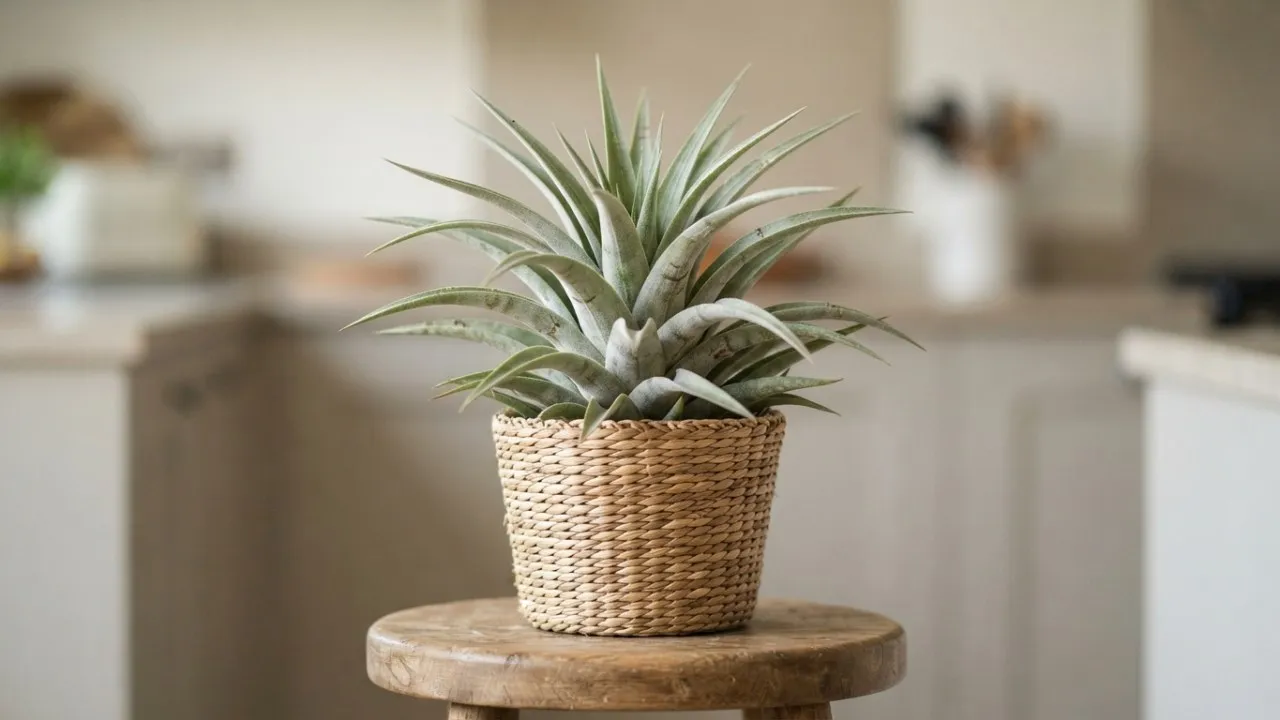 Every 7 days


Air Plant
Tillandsia ionantha

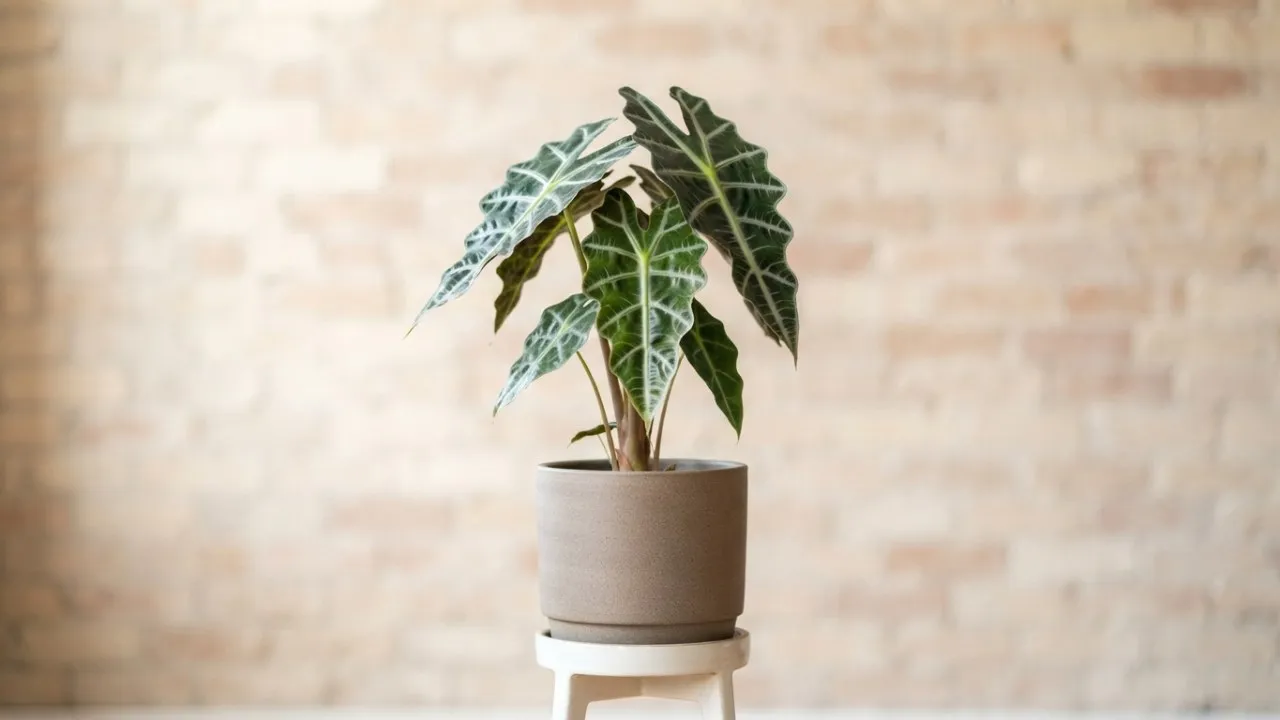 Every 6 days
Alocasia amazonica
Alocasia amazonica
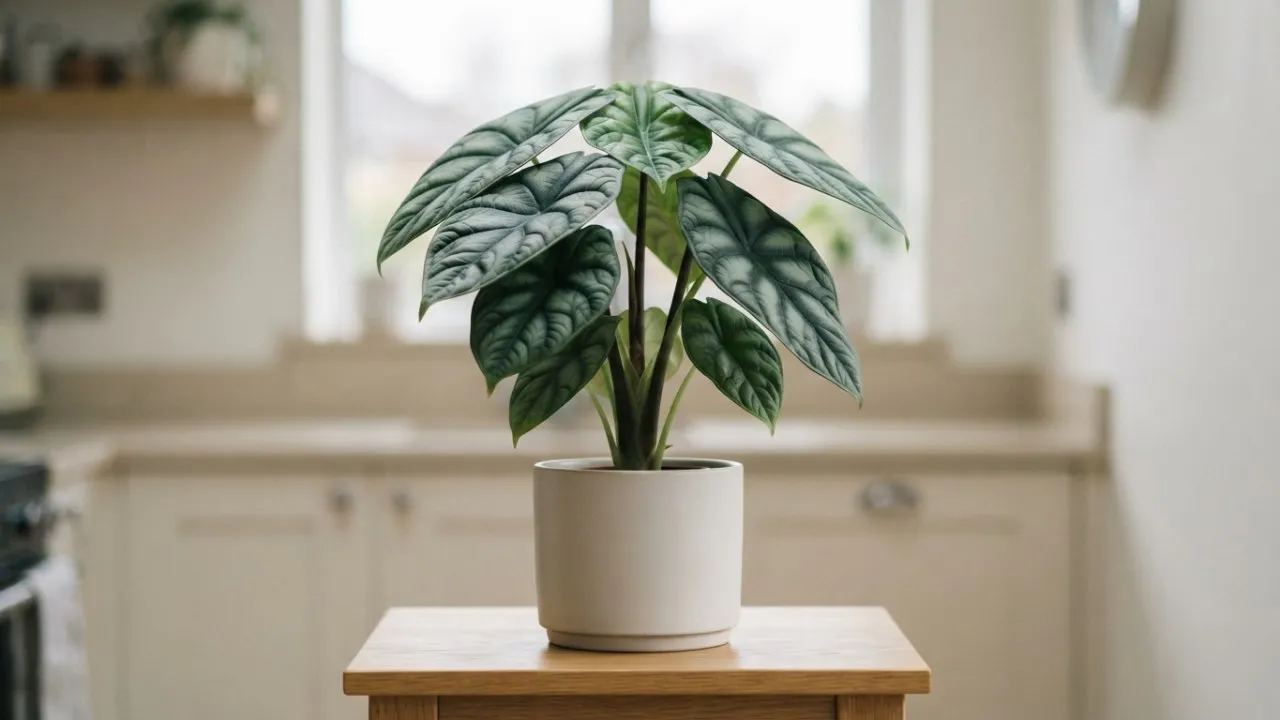 Every 7 days
Alocasia baginda
Alocasia baginda
 Every 4 days
Angel Wings
Caladium bicolor
