
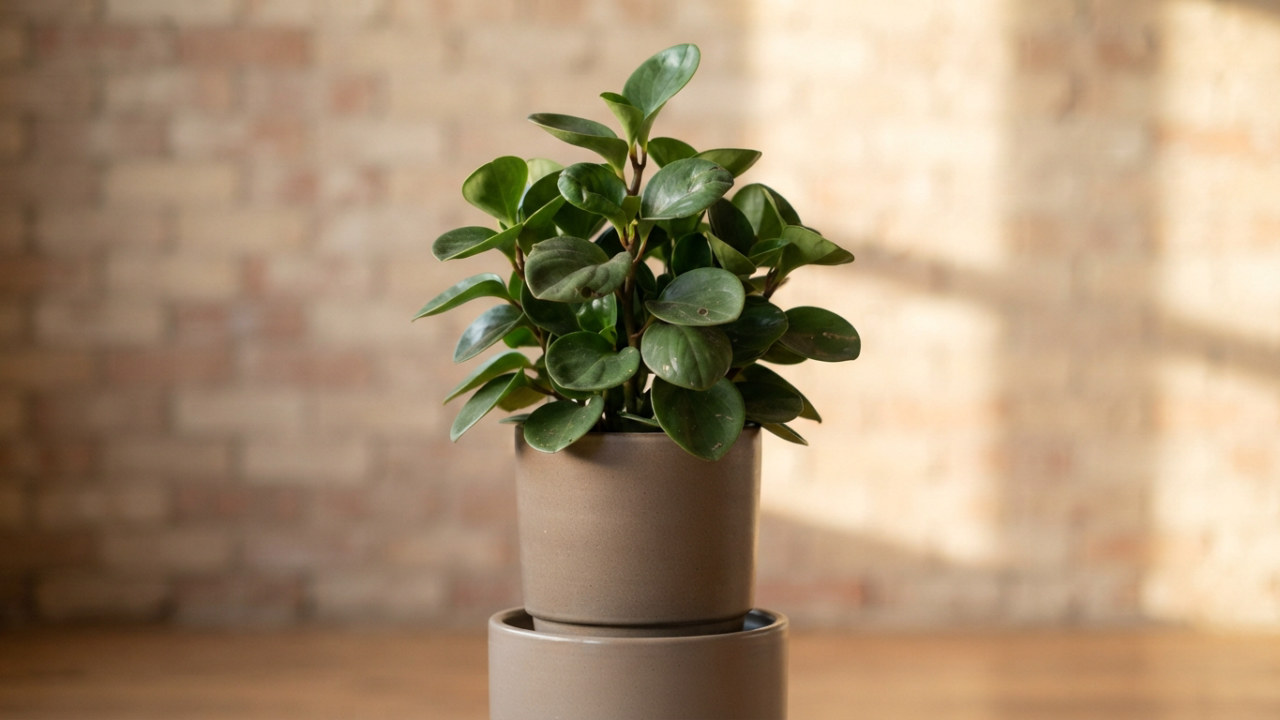
Tropical · Piperaceae
Peperomia
Peperomia
A genus of compact tropical plants with fleshy, waxy or corrugated leaves in many shapes, patterns and colors.
- Every 10 daysWatering
- Bright indirect lightLight
- 40–50 %Humidity
- 18–26 °CTemperature


Its varieties 1
How to care for your Peperomia
Everything you need to keep your Peperomia healthy: watering, light, humidity, feeding, repotting and pruning.
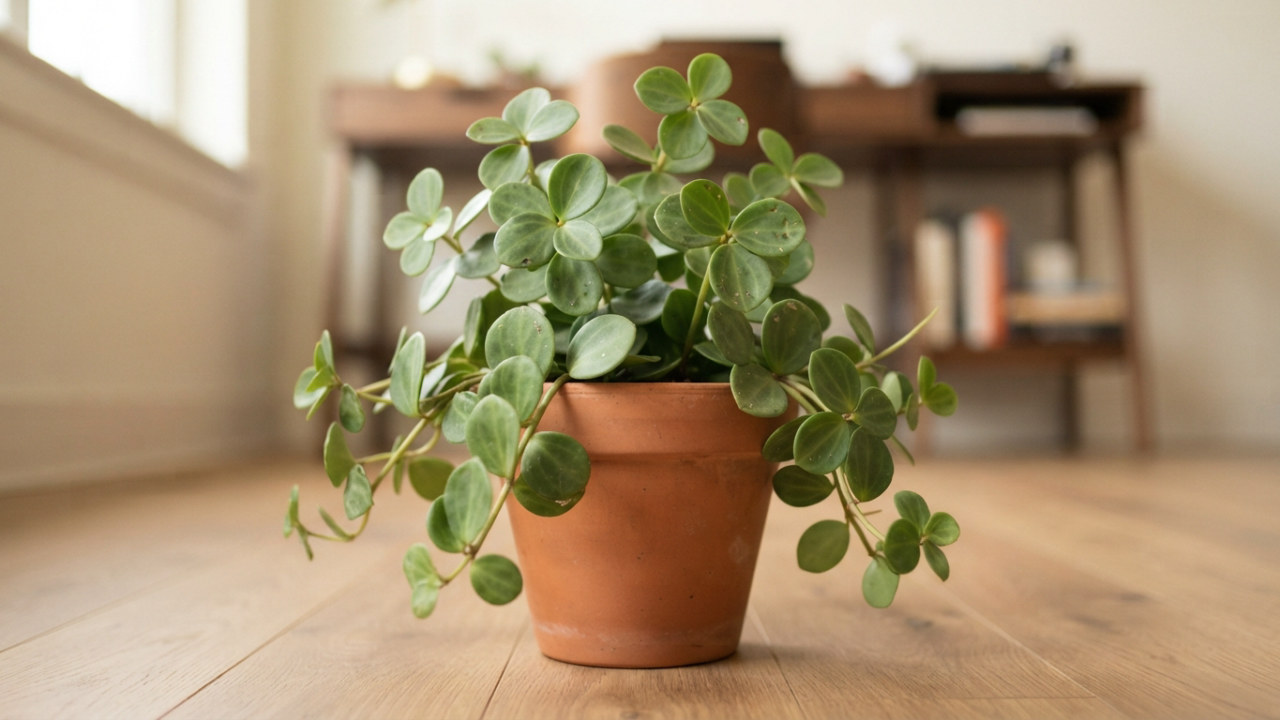
Peperomia is a very large genus of the pepper family, native mostly to tropical and subtropical Central and South America, where many grow as small epiphytes in forest understory. Indoors they stay compact, usually 15 to 30 cm tall, as bushy, trailing or rosette plants. Their leaves are often thick and succulent, which stores water, so they forgive a missed watering. Leaves are smooth, waxy or corrugated, plain green or marked with cream, silver or red. Flowers are slender, tail-like spikes that are not showy.

How to recognise Peperomia
Thick, fleshy, often waxy leaves in many shapes, round, heart-shaped or lance-like, on a compact bushy, trailing or rosette plant, with slim tail-like flower spikes. Pilea has thinner leaves that are often toothed or quilted, and Crassula has hard, plump leaves in opposite pairs on woody stems.

Watering your Peperomia
Every 10 days
Water thoroughly when the top half of the mix is dry, let all the excess drain away, and water less in winter, because too much water rots the fine roots faster than a dry spell harms the plant.
How to know it needs water
- A finger pushed into the mix finds the top half dry
- Leaves feel a little less firm and the pot is noticeably light

How much light a Peperomia needs
Bright indirect light
Bright indirect light suits most, such as near an east or west window; they tolerate lower light, but variegated types lose their pattern and grow leggy, and direct sun scorches the leaves.
- Direct sun tolerated
- 0 to 2 h a day
- Orientations that suit it
- North, North-east, East, South-east, South, South-west, West, North-west

Humidity and misting
40–50 %
Ordinary indoor air at 40 to 50 percent is enough, since the fleshy leaves hold water well. Misting is not needed, and water left on the fleshy leaves in cool air can encourage rot and spots.

Feeding and fertiliser
Every 28 days
Peperomias need little, so feed about once a month from April to September and not at all in the cooler months.
- Recommended feed
- A balanced liquid fertilizer for houseplants, diluted to a quarter or half of the label dose. · 2-2-2

Repotting your Peperomia
Every 24 months
Move up only one small size, since they like a snug pot, using a light, airy mix of potting soil with extra perlite and good drainage.
- When
- Spring, from March to May, when growth resumes.
- Potting mix
- All-purpose potting mix
- Mix in
- perlite, coco fibre
The tell-tale signs
- Roots show at the drainage holes or crowd the top of the mix
- The mix dries out within a few days of watering

Pruning your Peperomia
In spring or summer when stems grow long or sparse, and whenever a leaf or stem is damaged. Pinch or cut stem tips just above a leaf with clean scissors to encourage branching, and root the cuttings, or single leaves of many species, in a light mix.

Through the year
Watering is not set once and for all: it follows the light and the growth. Allow 12 days between waterings in the depth of winter, against 8 in the growing season.
- 12 J
- 11 F
- 9 M
- 8 A
- 8 M
- 8 J
- 8 J
- 8 A
- 9 S
- 10 O
- 11 N
- 12 D
Active growth · Days between waterings

Good to know
- Peperomia is one of the largest genera of flowering plants, with well over a thousand species described.
- Peperomia fraseri is an exception to the dull flowers of the genus, with fragrant white bottle-brush spikes on reddish stalks.

Frequently asked questions about the Peperomia
How do you care for a Peperomia?
Water it every 10 days. Give it bright indirect light. Ideal humidity: 40–50 %. Ideal temperature: 18–26 °C. Water thoroughly when the top half of the mix is dry, let all the excess drain away, and water less in winter, because too much water rots the fine roots faster than a dry spell harms the plant.
How often should you water a Peperomia?
Every 10 days Water thoroughly when the top half of the mix is dry, let all the excess drain away, and water less in winter, because too much water rots the fine roots faster than a dry spell harms the plant. How to know it needs water : A finger pushed into the mix finds the top half dry ; Leaves feel a little less firm and the pot is noticeably light.
How much light does a Peperomia need?
Bright indirect light Bright indirect light suits most, such as near an east or west window; they tolerate lower light, but variegated types lose their pattern and grow leggy, and direct sun scorches the leaves. 0 to 2 h a day
Is the Peperomia toxic to cats and dogs?
No, the Peperomia is not listed as toxic to cats and dogs. That is still no reason to let your pets chew on it.
Why are my Peperomia leaves turning yellow?
Yellowing most often comes from too much water: the mix stays wet and the roots suffocate. Check that the pot drains, empty the saucer, and let the mix dry before watering again. Too little light or a cold draught cause the same symptom.
When should you repot a Peperomia?
Repot every 24 months, ideally in spring, from march to may, when growth resumes.. Move up only one small size, since they like a snug pot, using a light, airy mix of potting soil with extra perlite and good drainage.

At a glance
- Family
- Piperaceae
- Category
- Tropical
- Placement
- Indoor
- Mature height
- 23 cm
- Growth
- Moderate
- Temperature
- 18–26 °C
- Pot materials
- terracotta, ceramic, plastic
- Growth
- Reaches maturity in 3 years
These figures are for an average plant. In the app they are recalculated for yours, based on your room, its orientation and the season.
And for your plant, in your home?
In the app this plant becomes yours: a watering schedule tuned to your home, health tracking from photos, and reminders at the right moment.
In the same spirit
 Every 7 days


Air Plant
Tillandsia ionantha

 Every 6 days
Alocasia amazonica
Alocasia amazonica
 Every 7 days
Alocasia baginda
Alocasia baginda
 Every 4 days
Angel Wings
Caladium bicolor
