
Tropical · Urticaceae
Pellionia
Pellionia repens
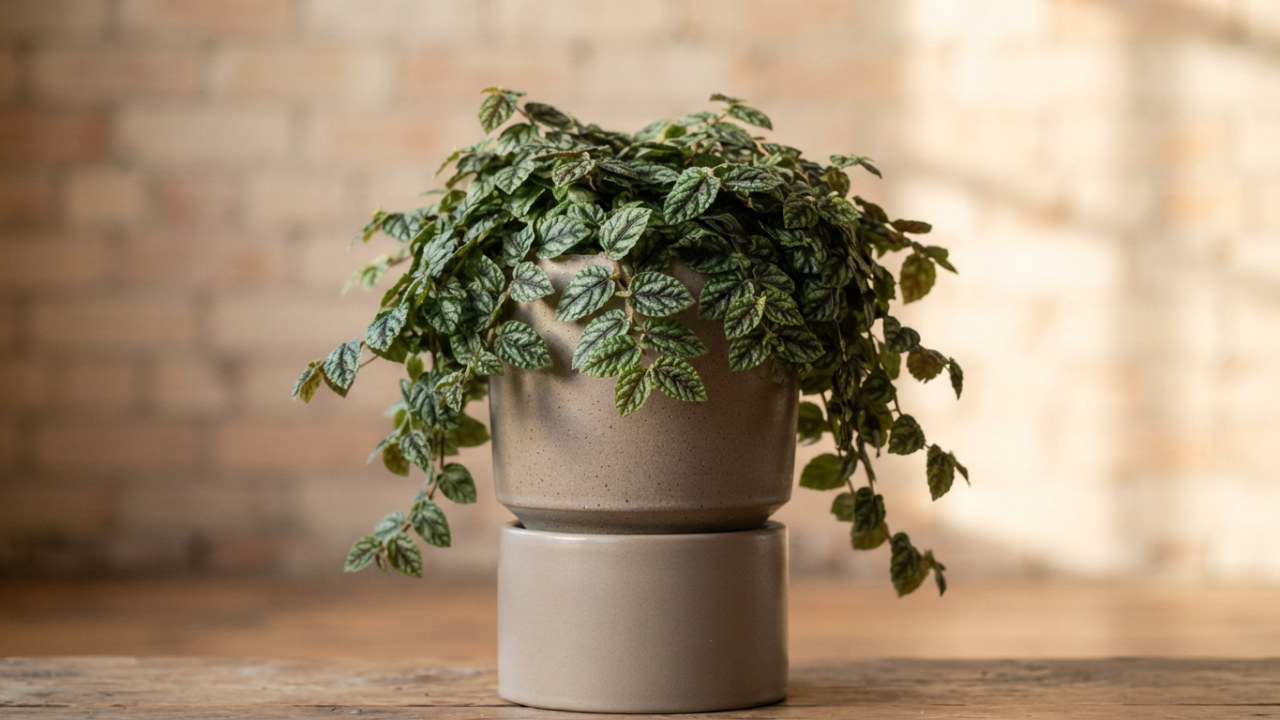
Pellionia repens is a charming, low-growing tropical plant known for its attractive, patterned foliage.
- Every 4 daysWatering
- Bright indirect lightLight
- 60–80 %Humidity
- 18–26 °CTemperature


How to care for your Pellionia
Everything you need to keep your Pellionia healthy: watering, light, humidity, feeding, repotting and pruning.
Pellionia repens, also known as Trailing Watermelon Begonia (though not a true Begonia), is a beautiful groundcover native to the tropical regions of Southeast Asia. It features oval leaves with striking patterns, often displaying shades of green, bronze and purple. This plant thrives in high humidity and bright, indirect light, making it an excellent choice for terrariums, hanging baskets, or as a trailing accent in mixed planters. Its creeping habit allows it to spread gracefully, creating a lush, colourful carpet.

How to recognise Pellionia
A creeping plant with fleshy, reddish stems that root at the nodes, and small oval leaves with an uneven base, green with darker bronze to purple markings. Pellionia pulchra is similar, but its leaves show darker veining and a more silvery sheen. Tradescantia zebrina also trails with silver stripes, but its leaves are pointed and clasp the stem.

Watering your Pellionia
Every 4 days
Keep the substrate evenly and lightly moist, about every 4 days in the growing season and about every 7 days in the rest period. Never let it dry out completely and never leave it waterlogged.
How to know it needs water
- Surface of the soil just starting to dry
- Leaves appear slightly dull
- Pot feels lighter than usual

How much light a Pellionia needs
Bright indirect light
Bright indirect light; avoid direct sun which can scorch its delicate leaves.
- Direct sun tolerated
- 0 to 1 h a day
- Orientations that suit it
- North, North-east, East, North-west

Humidity and misting
60–80 %
High (60 to 80%) Mist about every 3 days with soft water, or place the pot on a pebble tray with water to keep humidity high.

Feeding and fertiliser
Every 28 days
Apply monthly from March to September; stop in winter.
- Recommended feed
- Balanced NPK liquid fertilizer · 2-2-2

Repotting your Pellionia
Every 12 months
Repot every year into a slightly larger pot (2 to 3 cm wider) using a well-draining, humus-rich potting mix.
- When
- Spring
- Potting mix
- All-purpose potting mix
- Mix in
- perlite, coco fibre
The tell-tale signs
- Roots emerging from drainage holes
- Growth has slowed significantly
- Substrate dries out very quickly after watering

Pruning your Pellionia
Prune in spring or summer to maintain shape, encourage bushier growth, or propagate. Pinch back or cut stems just above a leaf node using clean, sharp scissors.

Through the year
Watering is not set once and for all: it follows the light and the growth. Allow 7 days between waterings in the depth of winter, against 3 in the growing season.
- 6 J
- 5 F
- 4 M
- 3 A
- 3 M
- 3 J
- 3 J
- 3 A
- 4 S
- 5 O
- 6 N
- 7 D
Active growth · Days between waterings

Good to know
- Native to Southeast Asia, where it grows as a groundcover in humid forests
- Its creeping stems can form a dense mat, making it ideal for terrariums or hanging baskets
- Its leaves are marked with bands of green, bronze and purple

Frequently asked questions about the Pellionia
How do you care for a Pellionia?
Water it every 4 days. Give it bright indirect light. Ideal humidity: 60–80 %. Ideal temperature: 18–26 °C. Keep the substrate evenly and lightly moist, about every 4 days in the growing season and about every 7 days in the rest period. Never let it dry out completely and never leave it waterlogged.
How often should you water a Pellionia?
Every 4 days Keep the substrate evenly and lightly moist, about every 4 days in the growing season and about every 7 days in the rest period. Never let it dry out completely and never leave it waterlogged. How to know it needs water : Surface of the soil just starting to dry ; Leaves appear slightly dull ; Pot feels lighter than usual.
How much light does a Pellionia need?
Bright indirect light Bright indirect light; avoid direct sun which can scorch its delicate leaves. 0 to 1 h a day
Is the Pellionia toxic to cats and dogs?
No, the Pellionia is not listed as toxic to cats and dogs. That is still no reason to let your pets chew on it.
Why are my Pellionia leaves turning yellow?
Yellowing most often comes from too much water: the mix stays wet and the roots suffocate. Check that the pot drains, empty the saucer, and let the mix dry before watering again. Too little light or a cold draught cause the same symptom.
When should you repot a Pellionia?
Repot every 12 months, ideally in spring. Repot every year into a slightly larger pot (2 to 3 cm wider) using a well-draining, humus-rich potting mix.

At a glance
- Family
- Urticaceae
- Category
- Tropical
- Placement
- Indoor
- Mature height
- 15 cm
- Growth
- Moderate
- Temperature
- 18–26 °C
- Pot materials
- ceramic, plastic
- Growth
- Reaches maturity in 2 years
These figures are for an average plant. In the app they are recalculated for yours, based on your room, its orientation and the season.
And for your plant, in your home?
In the app this plant becomes yours: a watering schedule tuned to your home, health tracking from photos, and reminders at the right moment.
In the same spirit
 Every 7 days


Air Plant
Tillandsia ionantha

 Every 6 days
Alocasia amazonica
Alocasia amazonica
 Every 7 days
Alocasia baginda
Alocasia baginda
 Every 4 days
Angel Wings
Caladium bicolor
