
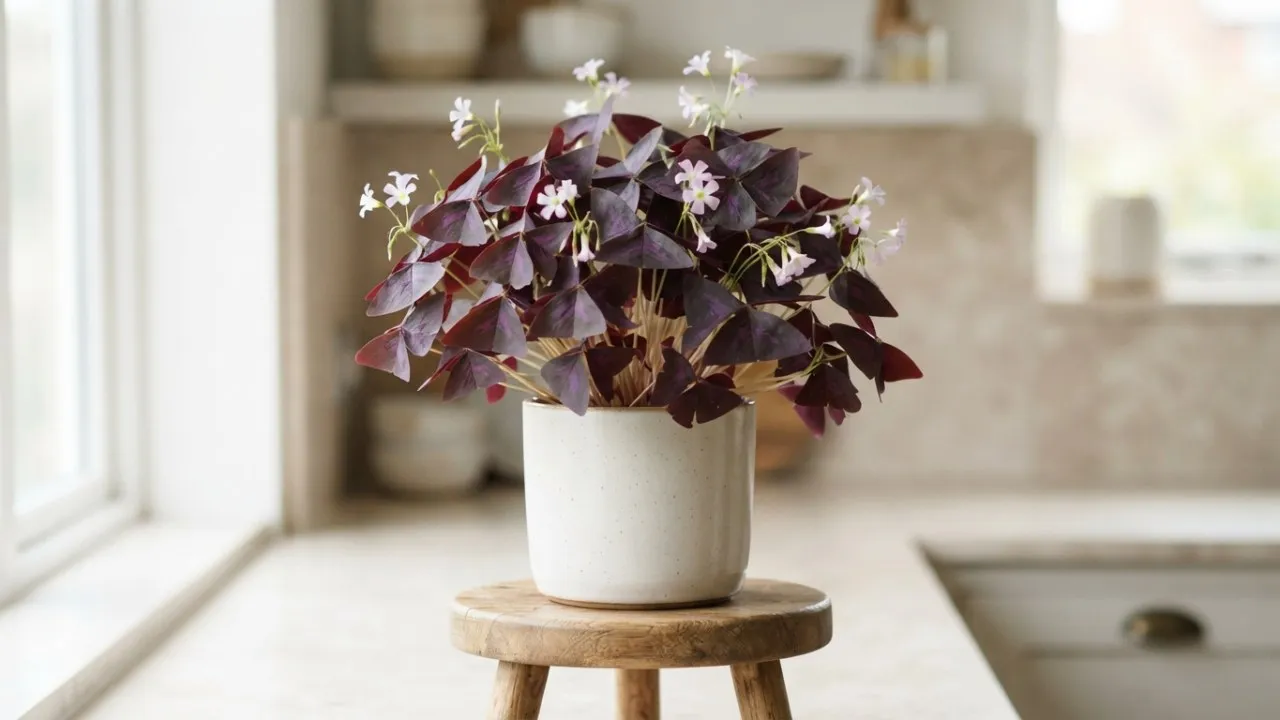
Purple Shamrock
Oxalis triangularis
Purple Shamrock is a fascinating bulbous plant with intense purple triangular foliage that opens and closes with the rhythm of day and night.
The essentials at a glance
-
Watering
Every 5 days
-
Light
Bright indirect light
-
Humidity
40–60 %
-
Temperature
15–25 °C


How to care for your Purple Shamrock
Everything you need to keep your Purple Shamrock healthy: watering, light, humidity, feeding, repotting and pruning.
Oxalis triangularis originates from Brazil and stands out with its spectacular butterfly-shaped foliage in deep purple. Its trifoliate leaves display a fascinating movement: they open in the morning to capture light and close in the evening like umbrellas. Delicate pale pink flowers regularly appear above the foliage. The plant may go dormant for a few weeks, losing all its foliage before vigorously regrowing from its underground bulbs.

Watering your Purple Shamrock
Every 5 days
Water moderately, allowing the compost to dry slightly between waterings. Reduce significantly during the dormancy period.
How to know it needs water
- Compost dry 2–3 cm down
- Leaves closing during the day (sign of stress)
- Pot feels light

How much light a Purple Shamrock needs
Bright indirect light
Bright indirect light. Tolerates semi-shade. Foliage will be more deeply coloured with better light.
- Direct sun tolerated
- 1 to 3 h a day
- Orientations that suit it
- North, North-east, East, South-east, South, South-west, West, North-west

Humidity and misting
40–60 %
40–60% No misting necessary. Oxalis adapts well to the normal ambient humidity of an indoor space.

Feeding and fertiliser
Every 30 days
Fertilize only during the active growing period. Stop completely during dormancy. Oxalis has low nutrient requirements.
- Recommended feed
- Dilute balanced liquid fertilizer (NPK 10-10-10), once a month. · 5-10-5

Repotting your Purple Shamrock
Every 24 months
Use light, well-draining compost. Plant the small bulbs (rhizomes) 2–3 cm deep. This is the ideal time to divide bulbs to multiply the plant.
- When
- Spring, as it emerges from dormancy
- Potting mix
- All-purpose potting mix
- Mix in
- perlite, coco fibre
The tell-tale signs
- Bulbs very crowded in the pot
- Plant producing fewer leaves
- Substrate exhausted and compacted

Pruning your Purple Shamrock
When the plant enters dormancy and the foliage yellows. Cut all yellowed or dry foliage to the ground. The plant will regrow on its own from the bulbs after a few weeks of rest. Do not worry — this is entirely natural.

Through the year
Watering is not set once and for all: it follows the light and the growth. Allow 9 days between waterings in the depth of winter, against 4 in the growing season.
- 8 J
- 6 F
- 5 M
- 4 A
- 4 M
- 4 J
- 4 J
- 4 A
- 5 S
- 5 O
- 7 N
- 9 D
Active growth · Days between waterings

Toxicity
Contains calcium oxalates toxic to dogs and cats. Ingestion in large quantities can cause tremors, hypersalivation, and renal failure.

Good to know
- Oxalis leaves fold down in the evening and on cloudy days through a mechanism called nyctinasty, as if the plant is falling asleep.
- Despite its shamrock nickname, Oxalis has no relation to true clover (Trifolium) and belongs to a completely different family.

Frequently asked questions about the Purple Shamrock
How do you care for a Purple Shamrock?
Water it every 5 days. Give it bright indirect light. Ideal humidity: 40–60 %. Ideal temperature: 15–25 °C. Water moderately, allowing the compost to dry slightly between waterings. Reduce significantly during the dormancy period.
How often should you water a Purple Shamrock?
Every 5 days Water moderately, allowing the compost to dry slightly between waterings. Reduce significantly during the dormancy period. How to know it needs water : Compost dry 2–3 cm down ; Leaves closing during the day (sign of stress) ; Pot feels light.
How much light does a Purple Shamrock need?
Bright indirect light Bright indirect light. Tolerates semi-shade. Foliage will be more deeply coloured with better light. 1 to 3 h a day
Is the Purple Shamrock toxic to cats and dogs?
Yes. Contains calcium oxalates toxic to dogs and cats. Ingestion in large quantities can cause tremors, hypersalivation, and renal failure. Keep it out of reach of your pets and call a vet if any is swallowed.
Why are my Purple Shamrock leaves turning yellow?
Yellowing most often comes from too much water: the mix stays wet and the roots suffocate. Check that the pot drains, empty the saucer, and let the mix dry before watering again. Too little light or a cold draught cause the same symptom.
When should you repot a Purple Shamrock?
Repot every 24 months, ideally in spring, as it emerges from dormancy. Use light, well-draining compost. Plant the small bulbs (rhizomes) 2–3 cm deep. This is the ideal time to divide bulbs to multiply the plant.

At a glance
- Family
- Oxalidaceae
- Category
- Flowering
- Placement
- Indoor
- Mature height
- 25 cm
- Growth
- Moderate
- Temperature
- 15–25 °C
- Pot materials
- terracotta, ceramic, plastic
- Growth
- Reaches maturity in 2 years
These figures are for an average plant. In the app they are recalculated for yours, based on your room, its orientation and the season.
And for your plant, in your home?
In the app this plant becomes yours: a watering schedule tuned to your home, health tracking from photos, and reminders at the right moment.
In the same spirit
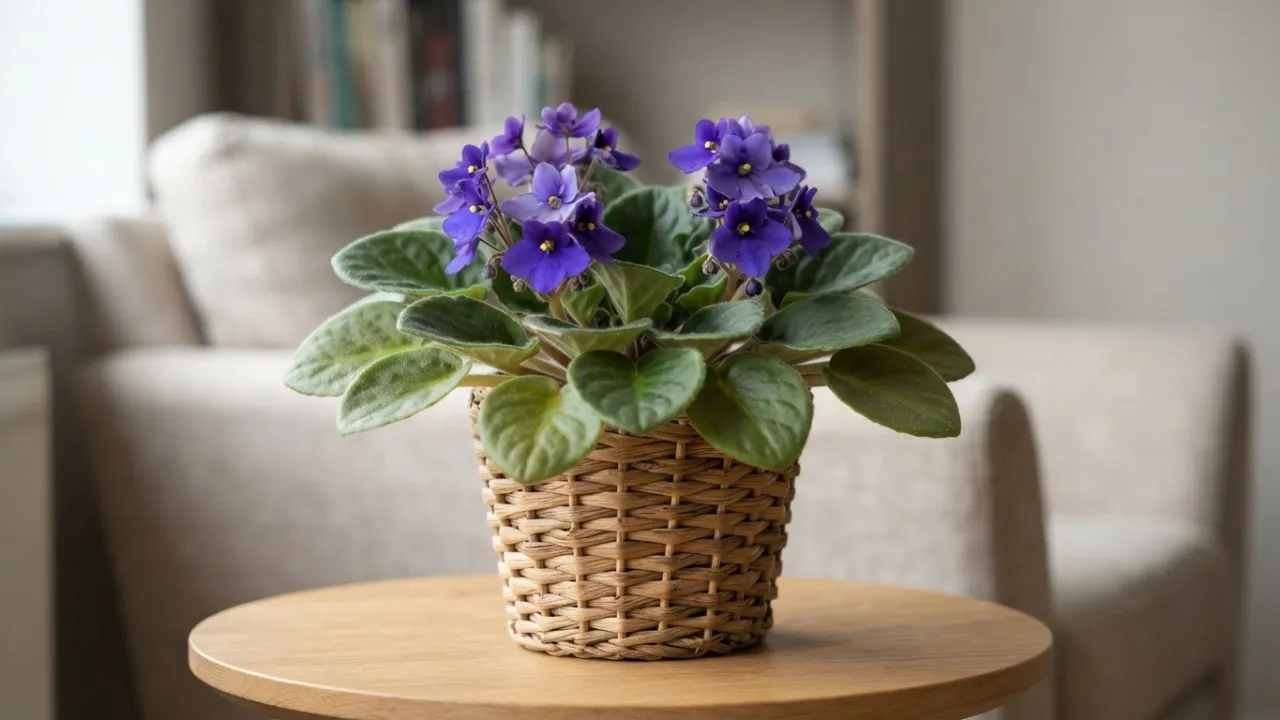 Every 5 days
 African Violet
Saintpaulia ionantha

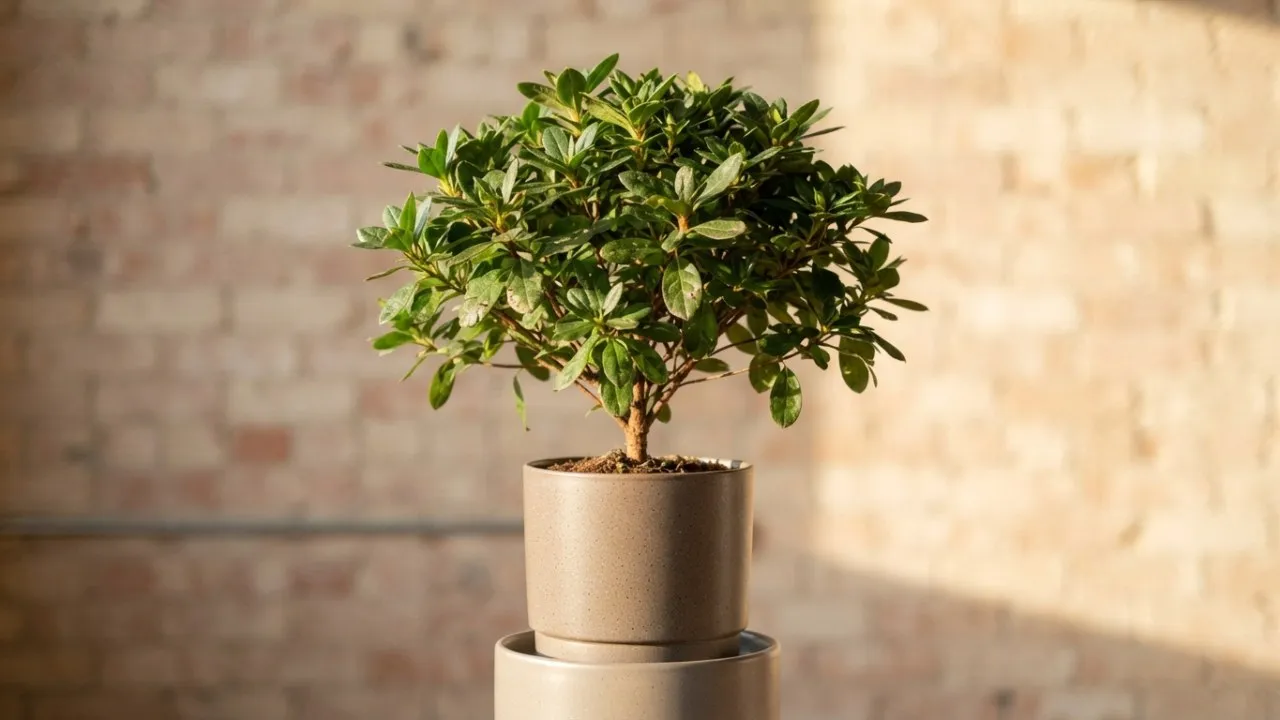 Every 3 days
 Azalea
Rhododendron simsii
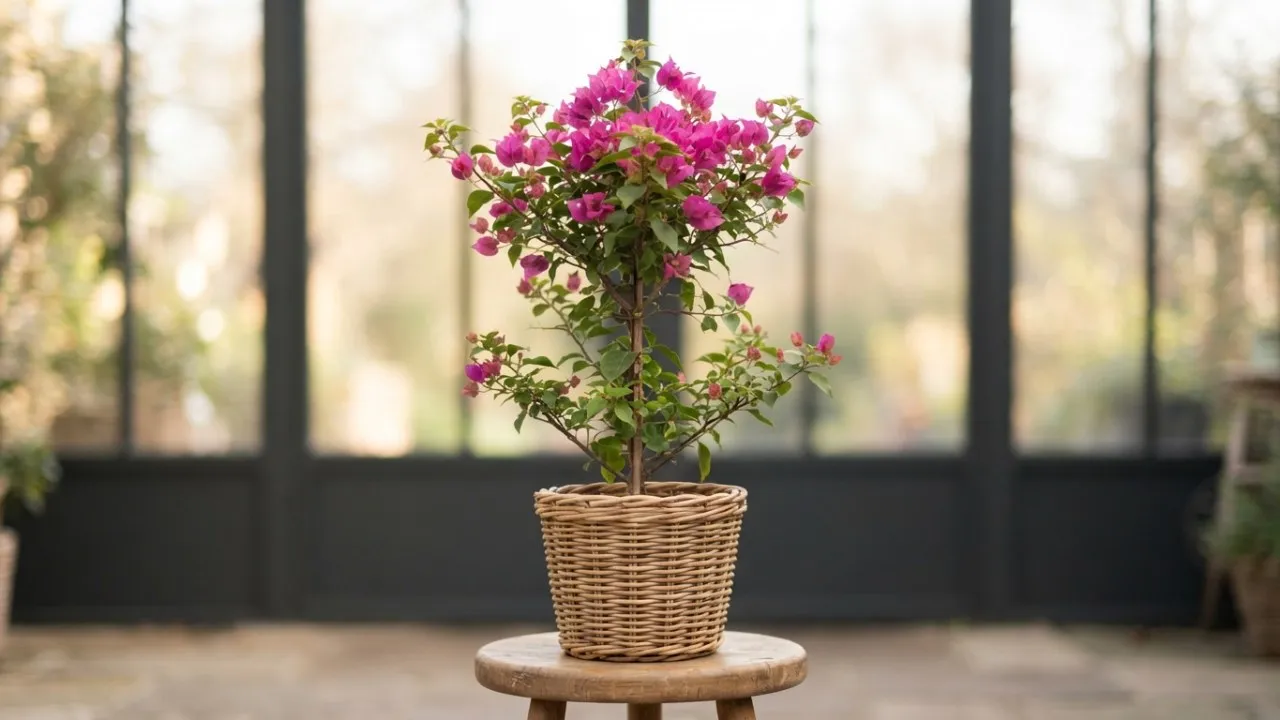 Every 5 days
 Bougainvillea
Bougainvillea glabra
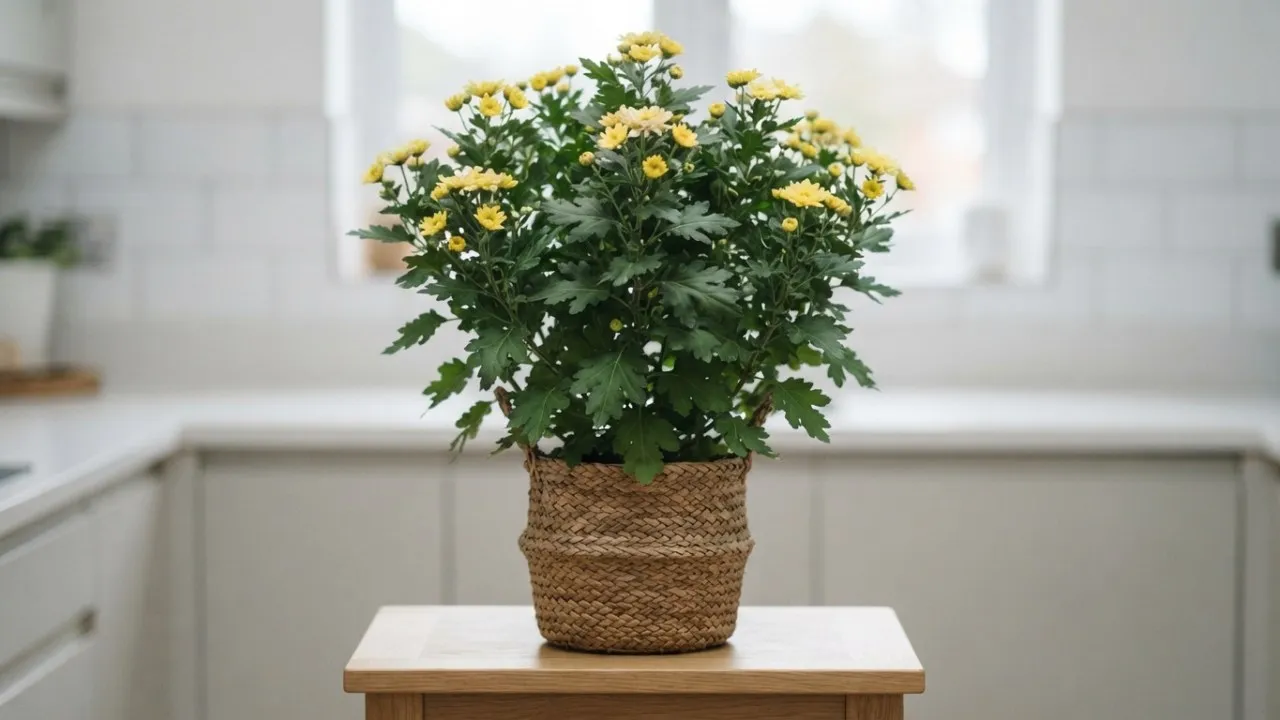 Every 3 days
 Chrysanthemum
Chrysanthemum morifolium