
Tropical · Nepenthaceae
Tropical Pitcher Plant
Nepenthes × ventrata
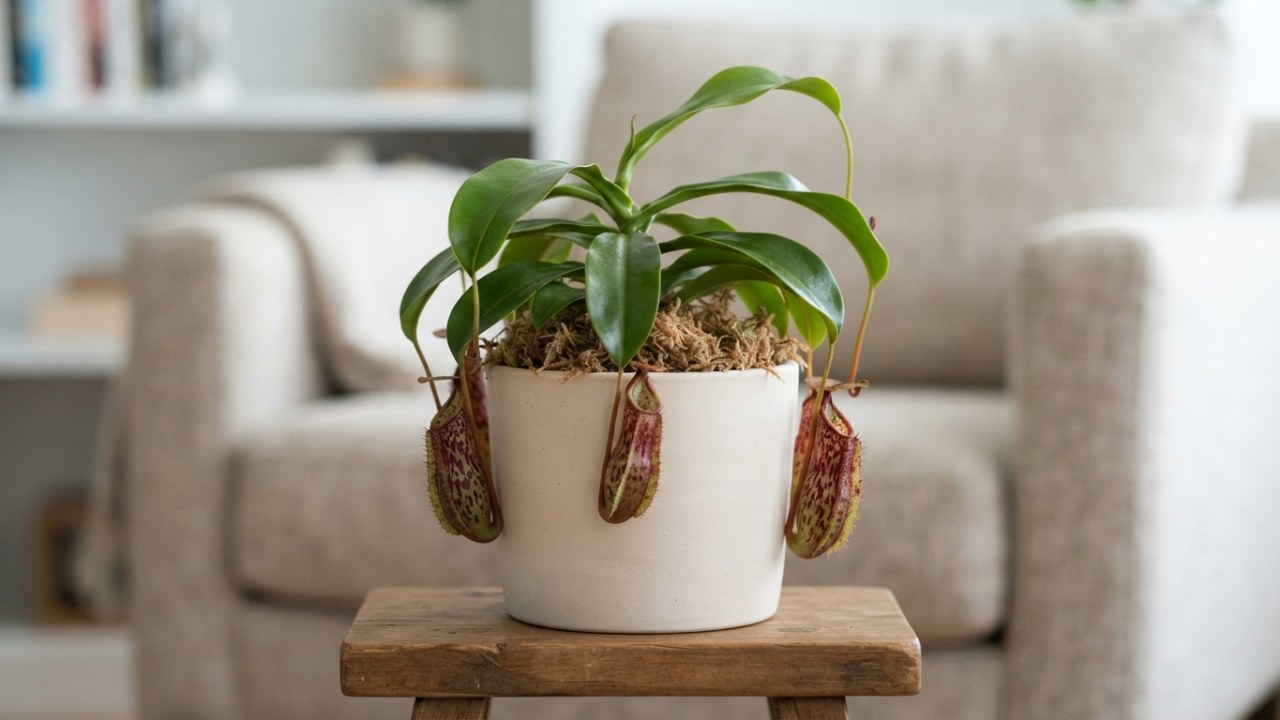
Nepenthes × ventrata is a popular carnivorous pitcher plant, known for its striking, insect-trapping pitchers.
- Every 2 daysWatering
- Bright indirect lightLight
- 60–80 %Humidity
- 18–30 °CTemperature


How to care for your Tropical Pitcher Plant
Everything you need to keep your Tropical Pitcher Plant healthy: watering, light, humidity, feeding, repotting and pruning.
Nepenthes × ventrata is a robust and relatively easy-to-grow natural hybrid of Nepenthes alata and Nepenthes ventricosa. Native to tropical regions, it thrives in warm, humid conditions with bright indirect light. Its distinctive pitchers, which can vary in color from green to red, are highly effective at trapping insects, providing the plant with essential nutrients. This plant is an excellent choice for beginners to carnivorous plants and adds an exotic touch to any indoor collection, especially when grown in a hanging basket.

How to recognise Tropical Pitcher Plant
A climbing tropical plant with long, oblong leaves whose midrib extends into a coiled tendril ending in a hanging pitcher. Lower pitchers are plump, green to reddish, with two fringed wings and a ribbed rim; upper pitchers are narrower. Sarracenia pitcher plants grow upright tubes straight from a rhizome with no tendril, and Nepenthes alata is very similar, with more winged, often redder pitchers on a less vigorous plant, so the two are hard to tell apart by the pitcher alone.

Watering your Tropical Pitcher Plant
Every 2 days
Water from above with rainwater, distilled water, or reverse-osmosis water as soon as the surface of the sphagnum starts to dry; keep it moist all year, with no reduced winter season, but never waterlogged and never standing in water.
How to know it needs water
- Substrate surface feels dry to the touch
- Pitchers appear less turgid or slightly deflated
- Plant feels lighter than usual

How much light a Tropical Pitcher Plant needs
Bright indirect light
Bright indirect light, with a few hours of gentle morning or late-afternoon sun; no harsh midday sun behind glass.
- Direct sun tolerated
- 1 to 3 h a day
- Orientations that suit it
- North, North-east, East, South-east, South, South-west, West, North-west

Humidity and misting
60–80 %
High (60 to 80%) Mist the foliage about every 2 days, especially in dry rooms, or stand the pot on a pebble tray with water to keep humidity high. High humidity is crucial for pitcher formation.

Feeding and fertiliser
Never fertilize the substrate. This plant obtains nutrients from insects caught in its pitchers. If grown indoors without insects, you can occasionally drop a small insect (like a dried mealworm) into a pitcher.
- Recommended feed
- None (carnivorous plant) · 0-0-0

Repotting your Tropical Pitcher Plant
Every 24 months
Repot every 2 years in March or April, into a container 2 to 3 cm larger using an airy mix of long-fibre sphagnum moss, orchid bark, and perlite. Handle roots gently.
- When
- Spring
- Potting mix
- carnivorous
- Mix in
- sphagnum moss, pine bark, perlite
The tell-tale signs
- Roots emerging from drainage holes
- Noticeably slowed growth despite good care
- Substrate breaking down and becoming compacted

Pruning your Tropical Pitcher Plant
Remove yellowing or dead leaves and pitchers at any time of year. Trim back overly long or leggy stems to encourage bushier growth. Cut cleanly at the base of the petiole or stem with sterilised scissors or a sharp blade.

Through the year
Watering is not set once and for all: it follows the light and the growth. Allow 2 days between waterings in the depth of winter, against 2 in the growing season.
- 2 J
- 2 F
- 2 M
- 2 A
- 2 M
- 2 J
- 2 J
- 2 A
- 2 S
- 2 O
- 2 N
- 2 D
Active growth · Days between waterings

Good to know
- This plant is a natural hybrid of Nepenthes alata and Nepenthes ventricosa, known for its vigorous growth and ease of care.
- Its pitchers are modified leaves that act as pitfall traps for insects.
- The fluid inside the pitchers contains enzymes that digest captured prey.

Frequently asked questions about the Tropical Pitcher Plant
How do you care for a Tropical Pitcher Plant?
Water it every 2 days. Give it bright indirect light. Ideal humidity: 60–80 %. Ideal temperature: 18–30 °C. Water from above with rainwater, distilled water, or reverse-osmosis water as soon as the surface of the sphagnum starts to dry; keep it moist all year, with no reduced winter season, but never waterlogged and never standing in water.
How often should you water a Tropical Pitcher Plant?
Every 2 days Water from above with rainwater, distilled water, or reverse-osmosis water as soon as the surface of the sphagnum starts to dry; keep it moist all year, with no reduced winter season, but never waterlogged and never standing in water. How to know it needs water : Substrate surface feels dry to the touch ; Pitchers appear less turgid or slightly deflated ; Plant feels lighter than usual.
How much light does a Tropical Pitcher Plant need?
Bright indirect light Bright indirect light, with a few hours of gentle morning or late-afternoon sun; no harsh midday sun behind glass. 1 to 3 h a day
Is the Tropical Pitcher Plant toxic to cats and dogs?
No, the Tropical Pitcher Plant is not listed as toxic to cats and dogs. That is still no reason to let your pets chew on it.
Why are my Tropical Pitcher Plant leaves turning yellow?
Yellowing most often comes from too much water: the mix stays wet and the roots suffocate. Check that the pot drains, empty the saucer, and let the mix dry before watering again. Too little light or a cold draught cause the same symptom.
When should you repot a Tropical Pitcher Plant?
Repot every 24 months, ideally in spring. Repot every 2 years in March or April, into a container 2 to 3 cm larger using an airy mix of long-fibre sphagnum moss, orchid bark, and perlite. Handle roots gently.

At a glance
- Family
- Nepenthaceae
- Category
- Tropical
- Placement
- Indoor
- Mature height
- 1 m
- Growth
- Moderate
- Temperature
- 18–30 °C
- Pot materials
- plastic, ceramic
- Growth
- Reaches maturity in 3 years
These figures are for an average plant. In the app they are recalculated for yours, based on your room, its orientation and the season.
And for your plant, in your home?
In the app this plant becomes yours: a watering schedule tuned to your home, health tracking from photos, and reminders at the right moment.
In the same spirit
 Every 7 days


Air Plant
Tillandsia ionantha

 Every 6 days
Alocasia amazonica
Alocasia amazonica
 Every 7 days
Alocasia baginda
Alocasia baginda
 Every 4 days
Angel Wings
Caladium bicolor
