
Variety Tropical · Araceae
Swiss Cheese Plant 'Albo Variegata'
Monstera deliciosa 'Albo Variegata' · A variety of Swiss Cheese Plant
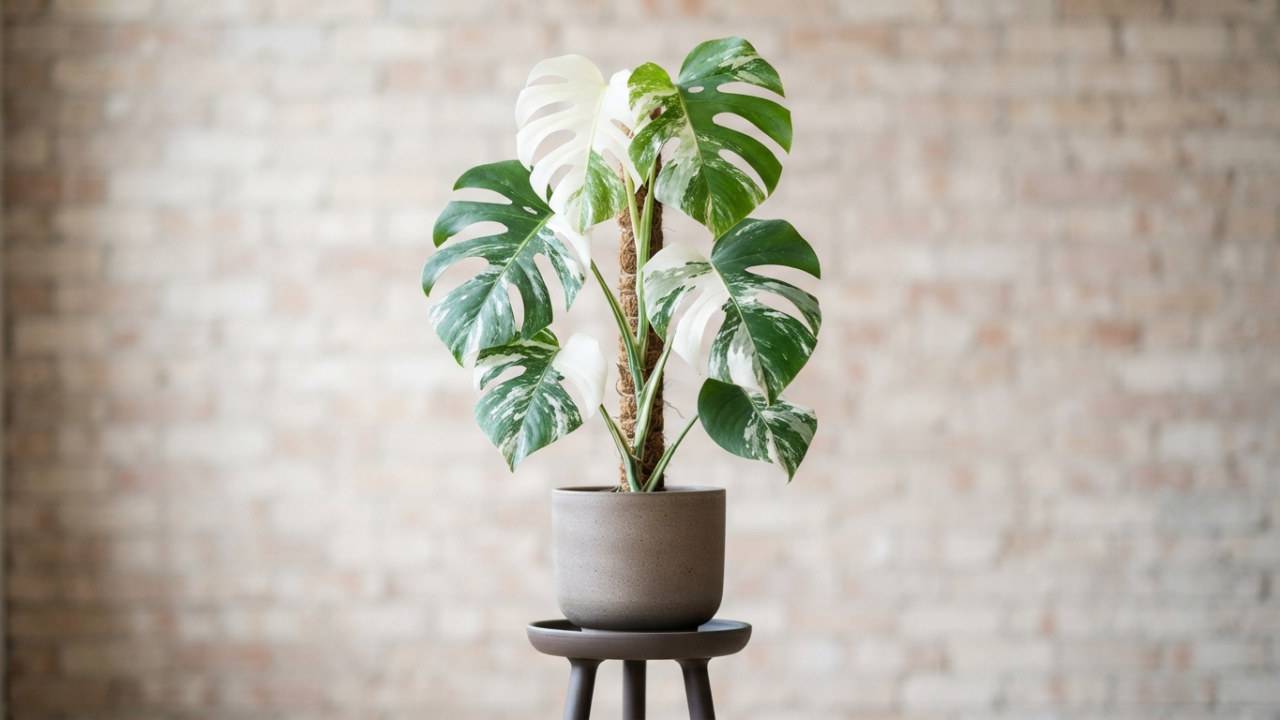
A climbing Monstera whose green leaves carry bold, irregular patches and sectors of pure white, different on every leaf.
- Every 8 daysWatering
- Bright indirect lightLight
- 50–70 %Humidity
- 18–30 °CTemperature


Other varieties 5
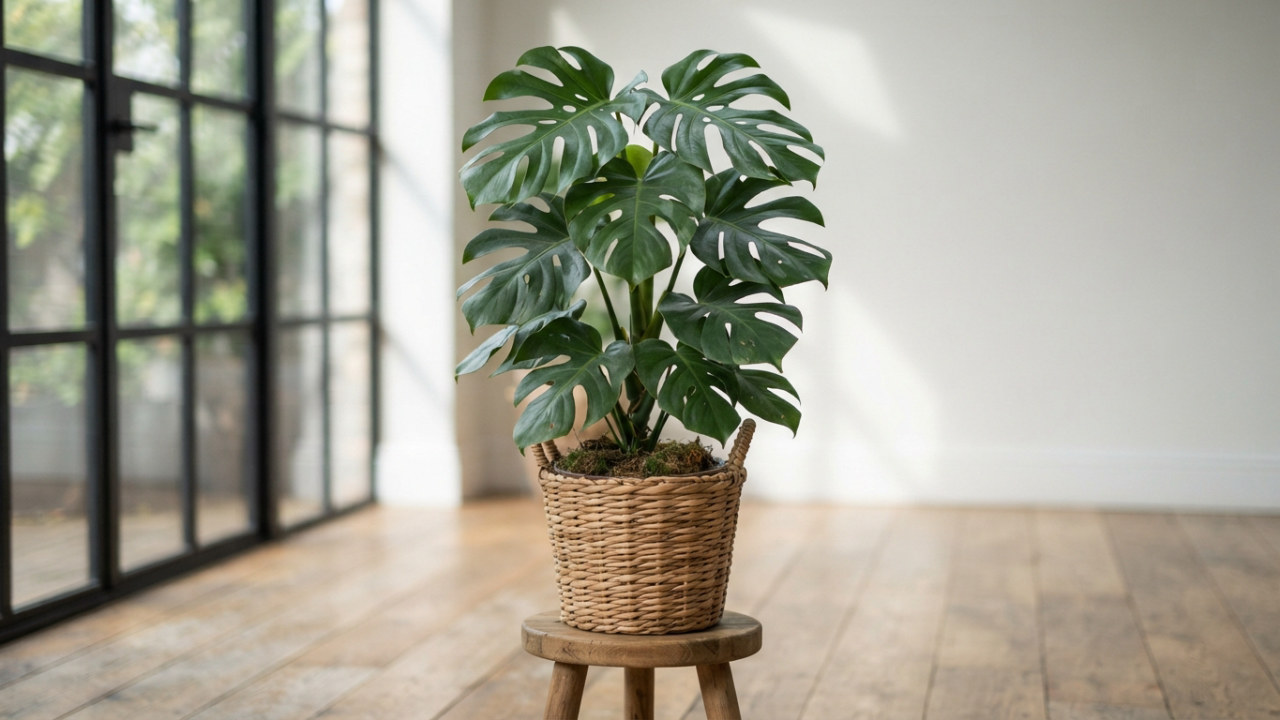
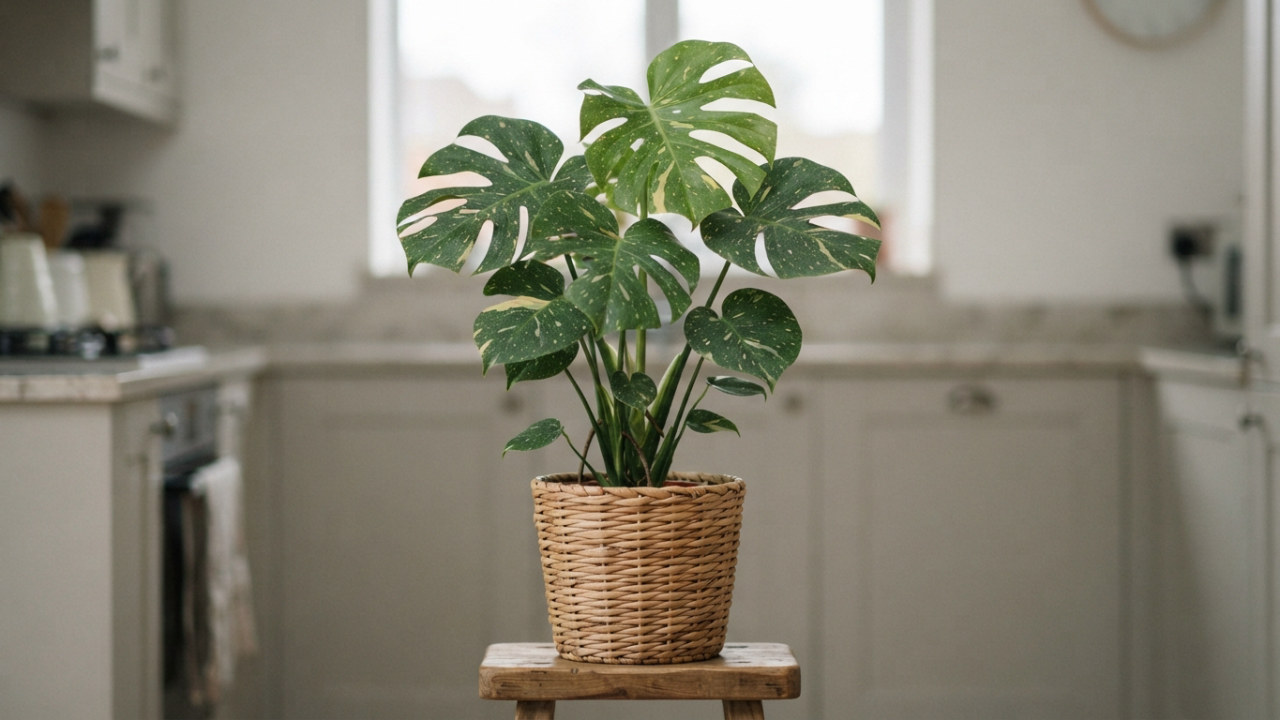
How to care for your Swiss Cheese Plant 'Albo Variegata'
Everything you need to keep your Swiss Cheese Plant 'Albo Variegata' healthy: watering, light, humidity, feeding, repotting and pruning.
This variegated Monstera arose as a spontaneous mutation of Monstera deliciosa, which grows wild in the rainforests of southern Mexico and Central America. Its glossy leaves mix deep green with pure white, from fine marbling to large half-moon blocks, and every leaf has its own pattern. Because white tissue holds no chlorophyll, it grows more slowly than the green species and needs bright light without harsh sun. Often sold as Monstera Albo.

How to recognise Swiss Cheese Plant 'Albo Variegata'
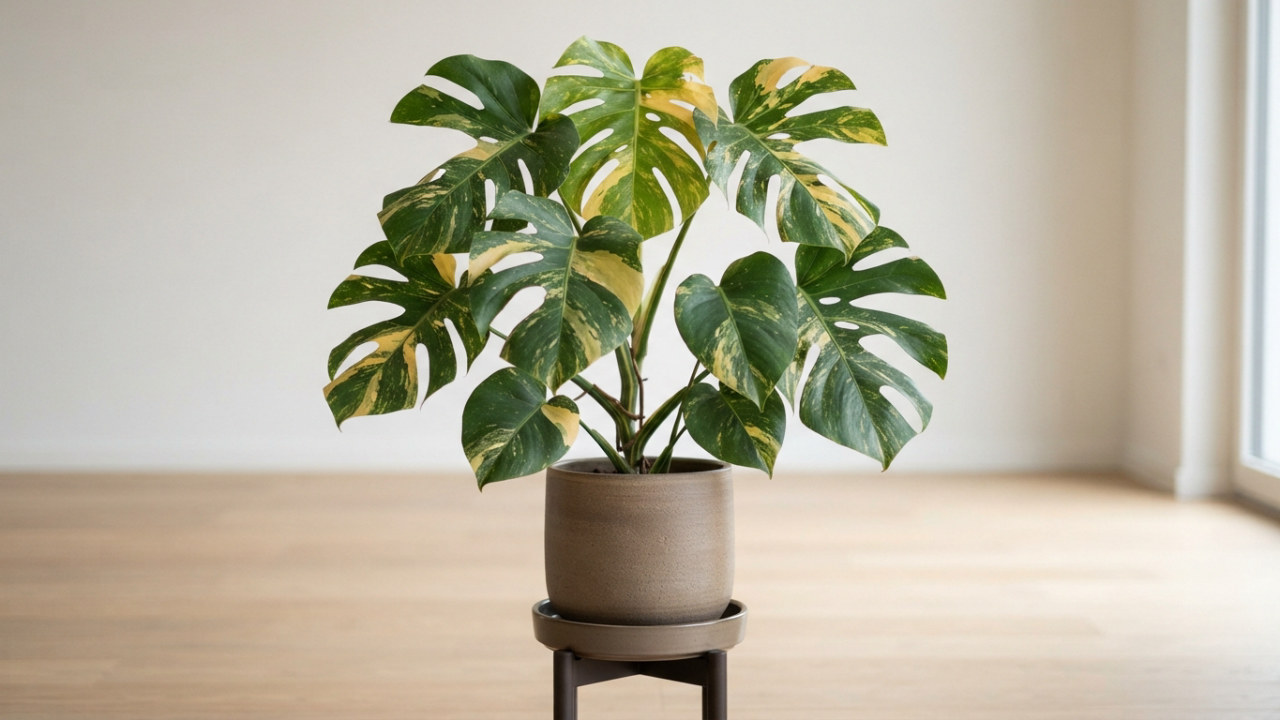
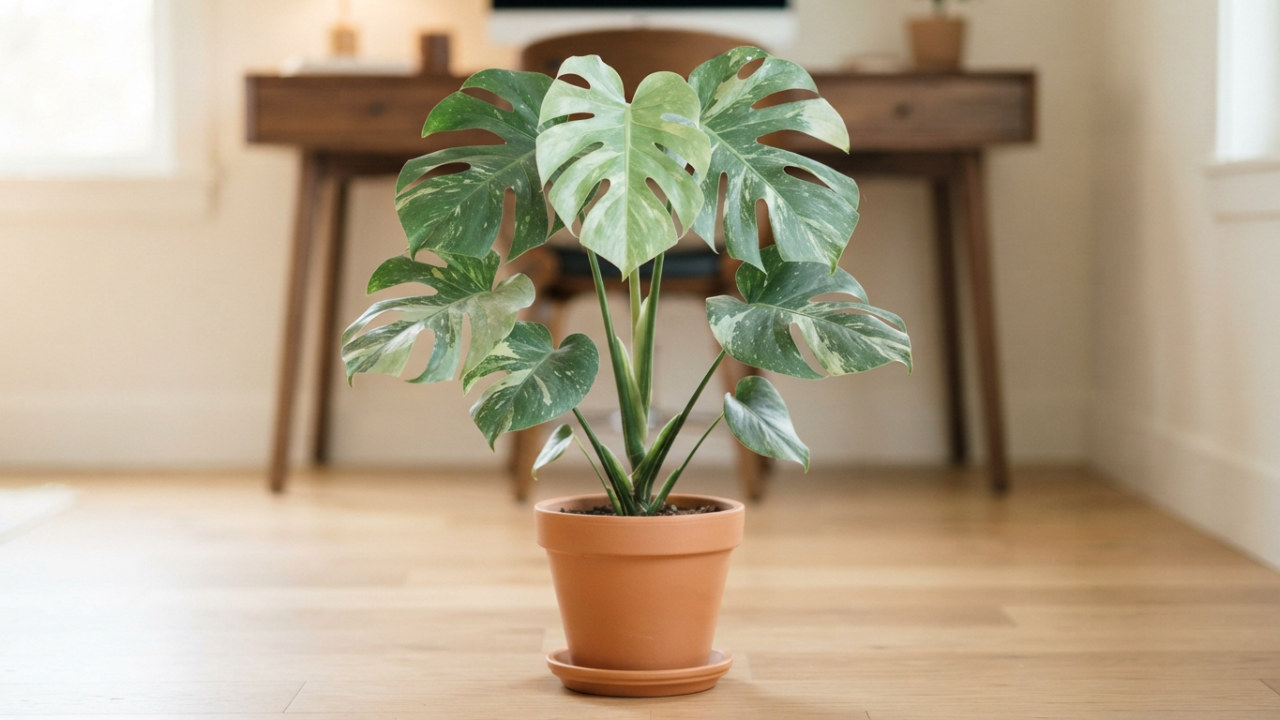
Pure white patches, sectors or whole half-leaves on green, with sharp edges and a pattern that differs from leaf to leaf, unlike the fine cream speckles of 'Thai Constellation' or the yellow of 'Aurea'. A few leaves may turn almost entirely white.

Watering your Swiss Cheese Plant 'Albo Variegata'
Every 8 days
Water thoroughly until it drains, then wait until the top 3 cm of the mix are dry, and never leave the pot standing in water.
How to know it needs water
- The top 3 cm of the mix are dry to the touch
- The pot feels light and the leaves begin to lose their firmness

How much light a Swiss Cheese Plant 'Albo Variegata' needs
Bright indirect light
Bright, filtered light for most of the day, kept away from direct sun, which burns the white areas; an hour of gentle early sun is the most it tolerates.
- Direct sun tolerated
- 0 to 1 h a day
- Orientations that suit it
- North, North-east, East, South-east, South, South-west, West, North-west

Humidity and misting
50–70 %
Medium to high, about 50-70%, since the white areas crisp at the edges when the air is very dry. Mist about every four days with soft water, without soaking the white areas, which mark easily, or run a humidifier nearby.

Feeding and fertiliser
Every 28 days
Apply about every four weeks from April to September, and not at all in autumn and winter.
- Recommended feed
- A balanced liquid fertilizer for foliage plants, at half the dose on the label. · 5-2-3

Repotting your Swiss Cheese Plant 'Albo Variegata'
Every 24 months
Move into a pot 2-3 cm wider with a free-draining mix of potting soil, pine bark and perlite, and add a moss pole to support the vine.
- When
- Spring, from March to May, as growth restarts.
- Potting mix
- All-purpose potting mix
- Mix in
- perlite, pine bark, coco fibre
The tell-tale signs
- Roots circle the inside of the pot or emerge from the drainage holes
- Water runs straight through without wetting the mix

Pruning your Swiss Cheese Plant 'Albo Variegata'
In spring or summer, as soon as a stem sends out all-green leaves, and at any time for damaged or yellow ones. Cut the reverting stem back to the last node that carries a variegated leaf, using clean, sharp shears.

Through the year
Watering is not set once and for all: it follows the light and the growth. Allow 10 days between waterings in the depth of winter, against 6 in the growing season.
- 10 J
- 9 F
- 7 M
- 6 A
- 6 M
- 6 J
- 6 J
- 6 A
- 7 S
- 8 O
- 9 N
- 10 D
Active growth · Days between waterings

Toxicity
All parts are harmful if chewed, causing mouth pain, drooling and vomiting in cats and dogs because of calcium oxalate crystals, and the sap can irritate the skin and mouth of people.

Good to know
- A leaf that comes out almost entirely white has little chlorophyll to feed itself, which is why such leaves often brown early
- The white comes from a chimera, where some cells lack pigment, so a stem can lose the pattern and revert to plain green

Frequently asked questions about the Swiss Cheese Plant 'Albo Variegata'
How do you care for a Swiss Cheese Plant 'Albo Variegata'?
Water it every 8 days. Give it bright indirect light. Ideal humidity: 50–70 %. Ideal temperature: 18–30 °C. Water thoroughly until it drains, then wait until the top 3 cm of the mix are dry, and never leave the pot standing in water.
How often should you water a Swiss Cheese Plant 'Albo Variegata'?
Every 8 days Water thoroughly until it drains, then wait until the top 3 cm of the mix are dry, and never leave the pot standing in water. How to know it needs water : The top 3 cm of the mix are dry to the touch ; The pot feels light and the leaves begin to lose their firmness.
How much light does a Swiss Cheese Plant 'Albo Variegata' need?
Bright indirect light Bright, filtered light for most of the day, kept away from direct sun, which burns the white areas; an hour of gentle early sun is the most it tolerates. 0 to 1 h a day
Is the Swiss Cheese Plant 'Albo Variegata' toxic to cats and dogs?
Yes. All parts are harmful if chewed, causing mouth pain, drooling and vomiting in cats and dogs because of calcium oxalate crystals, and the sap can irritate the skin and mouth of people. Keep it out of reach of your pets and call a vet if any is swallowed.
Why are my Swiss Cheese Plant 'Albo Variegata' leaves turning yellow?
Yellowing most often comes from too much water: the mix stays wet and the roots suffocate. Check that the pot drains, empty the saucer, and let the mix dry before watering again. Too little light or a cold draught cause the same symptom.
When should you repot a Swiss Cheese Plant 'Albo Variegata'?
Repot every 24 months, ideally in spring, from march to may, as growth restarts.. Move into a pot 2-3 cm wider with a free-draining mix of potting soil, pine bark and perlite, and add a moss pole to support the vine.

At a glance
- Family
- Araceae
- Category
- Tropical
- Placement
- Indoor
- Mature height
- 3 m
- Growth
- Moderate
- Temperature
- 18–30 °C
- Pot materials
- terracotta, ceramic, plastic
- Growth
- Reaches maturity in 5 years
These figures are for an average plant. In the app they are recalculated for yours, based on your room, its orientation and the season.
And for your plant, in your home?
In the app this plant becomes yours: a watering schedule tuned to your home, health tracking from photos, and reminders at the right moment.
In the same spirit
 Every 7 days


Air Plant
Tillandsia ionantha

 Every 6 days
Alocasia amazonica
Alocasia amazonica
 Every 7 days
Alocasia baginda
Alocasia baginda
 Every 4 days
Angel Wings
Caladium bicolor
