
Variety Tropical · Araceae
Swiss Cheese Vine 'Archipelago'
Monstera adansonii 'Archipelago' · A variety of Swiss Cheese Vine
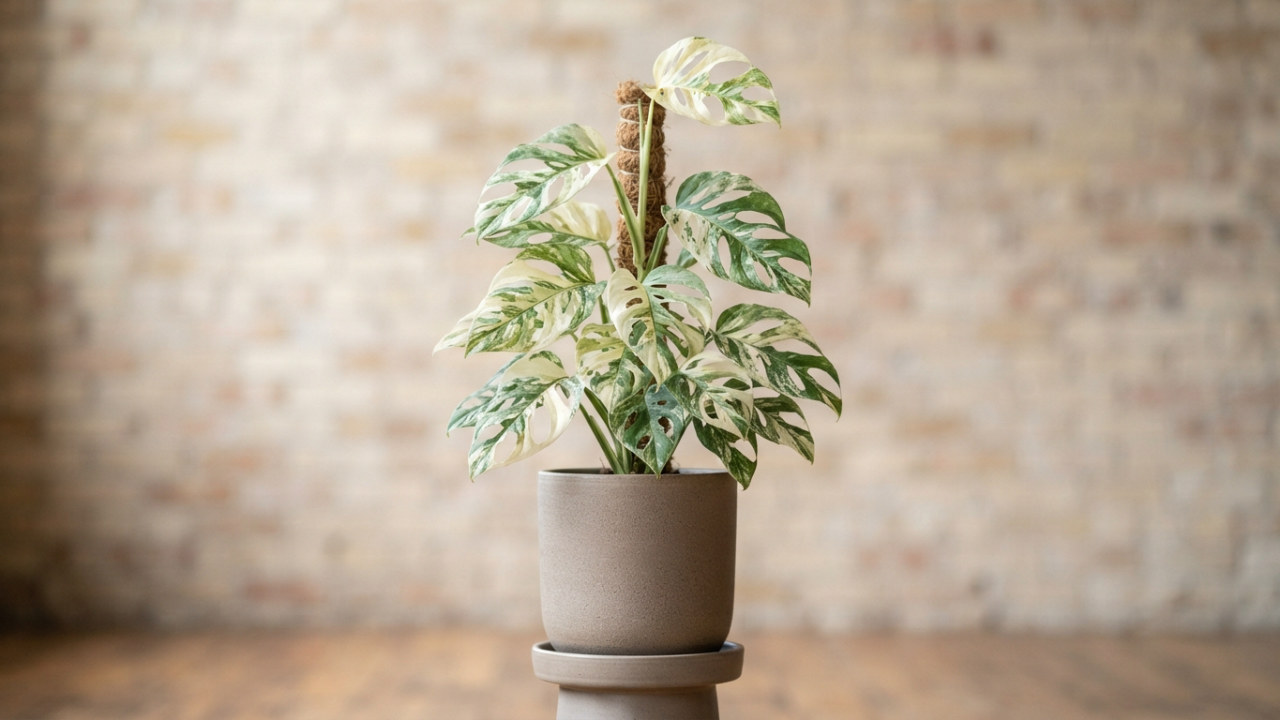
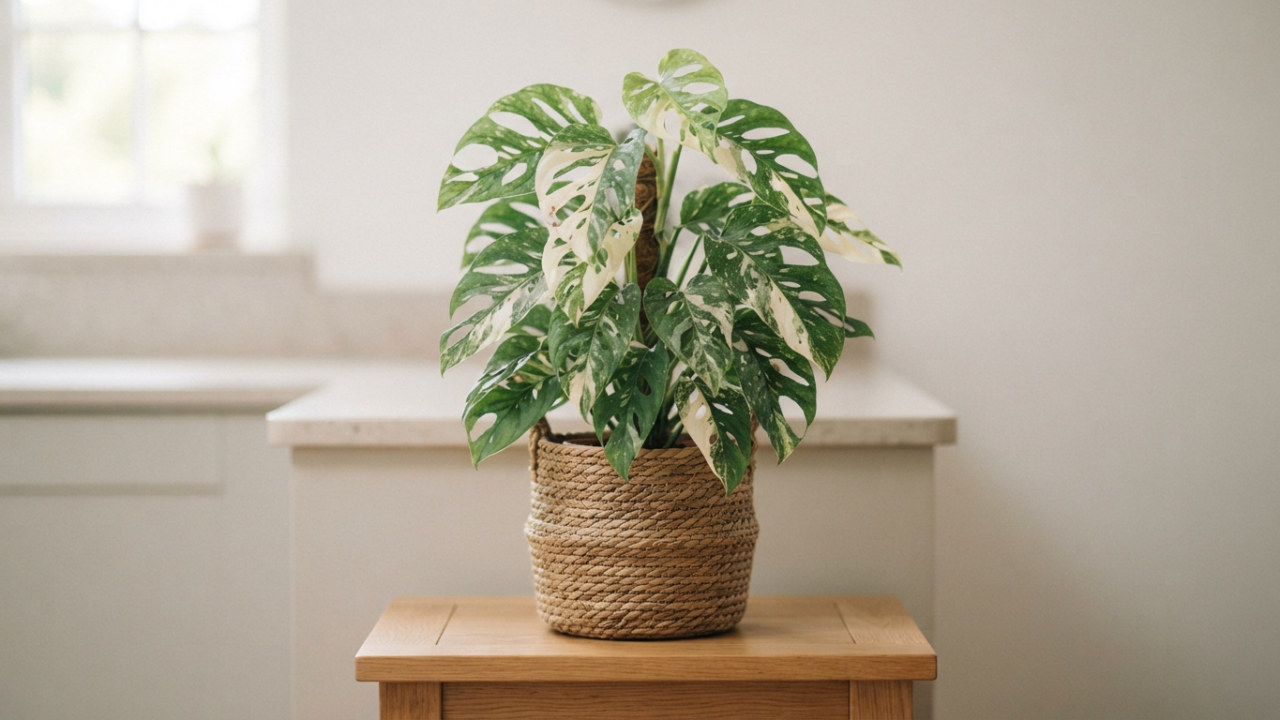
A variegated Swiss cheese vine with marbled white and cream patches, whose new leaves often unfold almost white.
- Every 6 daysWatering
- Bright indirect lightLight
- 50–70 %Humidity
- 18–28 °CTemperature


Other varieties 2
How to care for your Swiss Cheese Vine 'Archipelago'
Everything you need to keep your Swiss Cheese Vine 'Archipelago' healthy: watering, light, humidity, feeding, repotting and pruning.
A variegated selection of Monstera adansonii, reportedly found in the Stockholm archipelago in Sweden as a chance mutation of the common plant. Its oval, perforated leaves are marbled and sectored in white to cream, and new leaves often unfold almost white or pale jade before taking on more green with age. Mature leaves measure about 15 to 25 centimeters. The plant climbs or trails more slowly than the all-green form, usually reaching 1.5 to 3 meters on a support.

How to recognise Swiss Cheese Vine 'Archipelago'
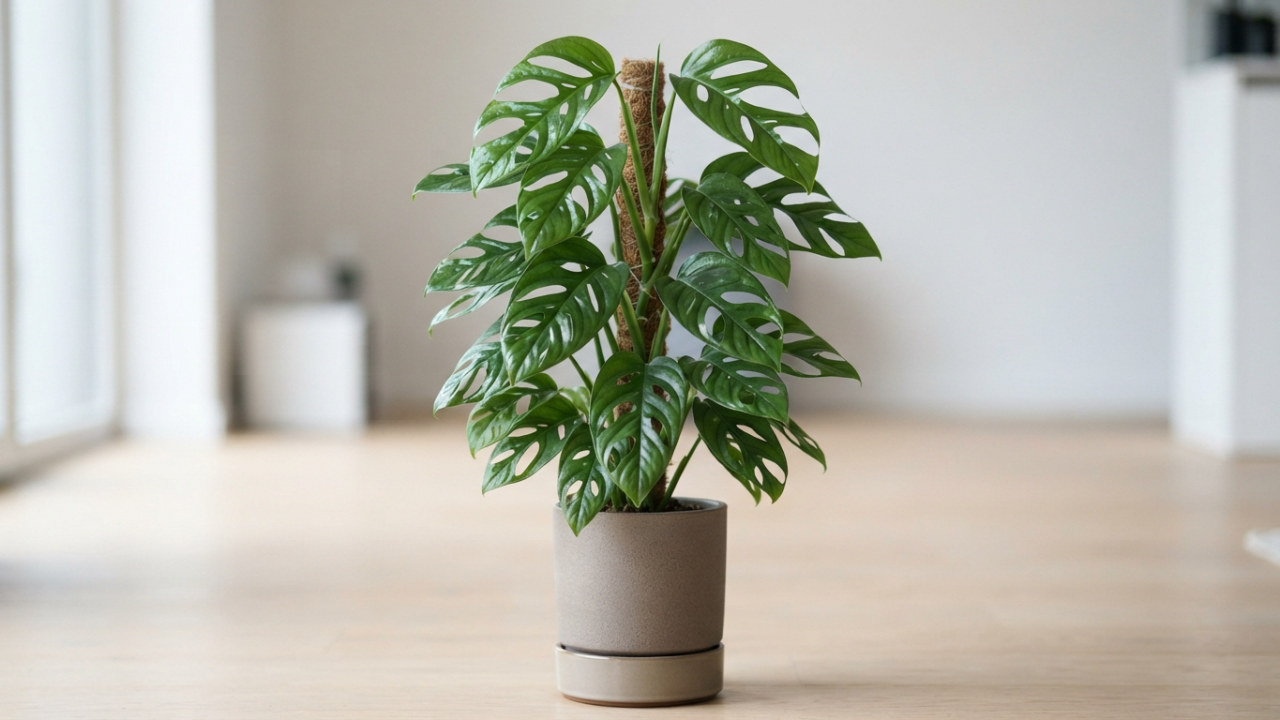
Marbled and sectored in white to cream on green, with new leaves opening almost white or pale jade and greening as they age. 'Albo Variegata' keeps steadier white sectors, and the plain green forms have no white at all.

Watering your Swiss Cheese Vine 'Archipelago'
Every 6 days
Water when the top few centimeters of substrate are dry, drain the pot fully, and never leave the roots standing in water.
How to know it needs water
- A finger pushed in to the first knuckle comes out dry
- The leaves look slightly less firm than usual

How much light a Swiss Cheese Vine 'Archipelago' needs
Bright indirect light
Bright indirect light, so the green tissue can feed the whole leaf, and no direct sun, which scorches the pale areas.
- Direct sun tolerated
- No direct sun
- Orientations that suit it
- North, North-east, East, South-east, South, South-west, West, North-west

Humidity and misting
50–70 %
Moderate to fairly high, between 50 and 70%, with a humidifier or a pebble tray in rooms with dry heating. Mist lightly every four days or so when the air is dry, early in the day so the droplets dry before evening.

Feeding and fertiliser
Every 28 days
Feed every four weeks from April to September, and pause in autumn and winter.
- Recommended feed
- A balanced liquid fertilizer for foliage plants, at half the dose given on the label. · 5-2-3

Repotting your Swiss Cheese Vine 'Archipelago'
Every 24 months
Move up by one pot size in a chunky aroid mix, and give the vine a moss pole or trellis to climb, or let it trail from a hanging pot.
- When
- Spring, between March and May.
- Potting mix
- All-purpose potting mix
- Mix in
- perlite, pine bark, coco fibre
The tell-tale signs
- Roots emerge from the drainage holes or wind around the inside of the pot
- The substrate dries out much faster than it used to

Pruning your Swiss Cheese Vine 'Archipelago'
Trim in spring or summer while growth is active, and remove any shoot that has reverted to plain green. Cut just below a node with clean shears, going back to the last well-marked leaf when a shoot turns plain green, and wear gloves because the sap irritates skin.

Through the year
Watering is not set once and for all: it follows the light and the growth. Allow 7 days between waterings in the depth of winter, against 5 in the growing season.
- 7 J
- 7 F
- 5 M
- 5 A
- 5 M
- 5 J
- 5 J
- 5 A
- 5 S
- 6 O
- 7 N
- 7 D
Active growth · Days between waterings

Toxicity
Toxic to cats and dogs, and irritating to people, if chewed or swallowed, because all parts contain calcium oxalate crystals that cause mouth irritation, swelling and vomiting.

Good to know
- A completely white leaf cannot make its own food, so it lives on sugars sent from the green parts of the plant.
- A variegated cultivar like this one is multiplied from stem cuttings, since seedlings would not reliably keep the pattern.

Frequently asked questions about the Swiss Cheese Vine 'Archipelago'
How do you care for a Swiss Cheese Vine 'Archipelago'?
Water it every 6 days. Give it bright indirect light. Ideal humidity: 50–70 %. Ideal temperature: 18–28 °C. Water when the top few centimeters of substrate are dry, drain the pot fully, and never leave the roots standing in water.
How often should you water a Swiss Cheese Vine 'Archipelago'?
Every 6 days Water when the top few centimeters of substrate are dry, drain the pot fully, and never leave the roots standing in water. How to know it needs water : A finger pushed in to the first knuckle comes out dry ; The leaves look slightly less firm than usual.
How much light does a Swiss Cheese Vine 'Archipelago' need?
Bright indirect light Bright indirect light, so the green tissue can feed the whole leaf, and no direct sun, which scorches the pale areas. No direct sun
Is the Swiss Cheese Vine 'Archipelago' toxic to cats and dogs?
Yes. Toxic to cats and dogs, and irritating to people, if chewed or swallowed, because all parts contain calcium oxalate crystals that cause mouth irritation, swelling and vomiting. Keep it out of reach of your pets and call a vet if any is swallowed.
Why are my Swiss Cheese Vine 'Archipelago' leaves turning yellow?
Yellowing most often comes from too much water: the mix stays wet and the roots suffocate. Check that the pot drains, empty the saucer, and let the mix dry before watering again. Too little light or a cold draught cause the same symptom.
When should you repot a Swiss Cheese Vine 'Archipelago'?
Repot every 24 months, ideally in spring, between march and may.. Move up by one pot size in a chunky aroid mix, and give the vine a moss pole or trellis to climb, or let it trail from a hanging pot.

At a glance
- Family
- Araceae
- Category
- Tropical
- Placement
- Indoor
- Mature height
- 3 m
- Growth
- Slow
- Temperature
- 18–28 °C
- Pot materials
- terracotta, ceramic, plastic
- Growth
- Reaches maturity in 3 years
These figures are for an average plant. In the app they are recalculated for yours, based on your room, its orientation and the season.
And for your plant, in your home?
In the app this plant becomes yours: a watering schedule tuned to your home, health tracking from photos, and reminders at the right moment.
In the same spirit
 Every 7 days


Air Plant
Tillandsia ionantha

 Every 6 days
Alocasia amazonica
Alocasia amazonica
 Every 7 days
Alocasia baginda
Alocasia baginda
 Every 4 days
Angel Wings
Caladium bicolor
