
Tropical · Apocynaceae
Australian Wax Plant
Hoya australis
A fast-growing twining hoya from Australia and Melanesia, with glossy oval leaves and sweetly scented, red-centered flowers.
- Every 7 daysWatering
- Bright indirect lightLight
- 40–60 %Humidity
- 15–28 °CTemperature


How to care for your Australian Wax Plant
Everything you need to keep your Australian Wax Plant healthy: watering, light, humidity, feeding, repotting and pruning.
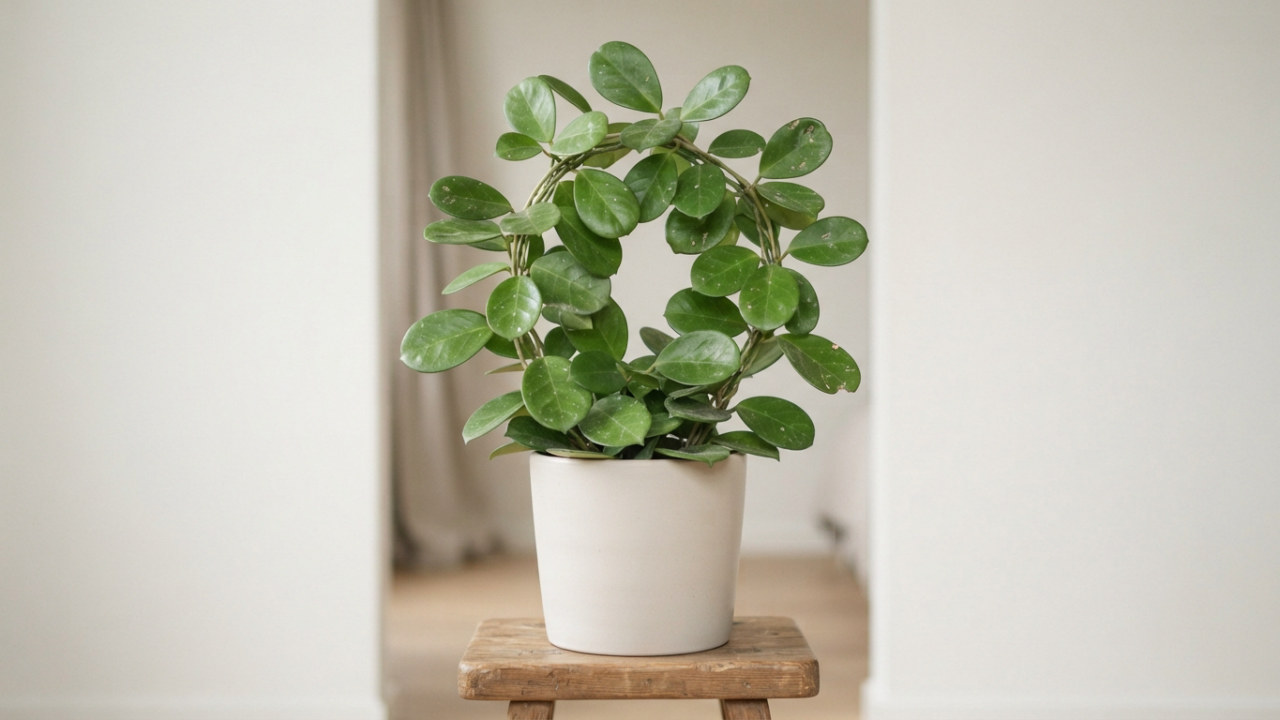
Hoya australis is a vigorous evergreen climber native to Australia, New Guinea and Melanesia, where it grows into a large vine. Its glossy, moderately thick leaves are oval to nearly round, flushed with red when young before turning deep green. It grows faster than most hoyas, and indoors it fills a trellis or a basket with stems of about two meters, bearing clusters of star-shaped, pinkish-white flowers with red centers whose sweet scent is strongest in the evening.

How to recognise Australian Wax Plant
Glossy, usually plain dark green leaves, oval to elliptic or nearly round, flushed with red when young, and flatter and thinner than the fleshy leaves of many Hoya carnosa forms. They are not heart-shaped like those of Hoya kerrii and are broader than the small leaves of Hoya bella and the narrow ones of Hoya linearis, while Hoya obovata has rounder, thicker, often speckled leaves and Hoya macrophylla much larger, prominently veined ones.

Watering your Australian Wax Plant
Every 7 days
Water thoroughly once the top half of the mix is dry, empty the saucer, and water less often in winter; its leaves are thinner than those of many hoyas, so they store less water.
How to know it needs water
- The top half of the mix is dry when you push in a finger
- The leaves feel a little less firm and the pot is noticeably lighter

How much light a Australian Wax Plant needs
Bright indirect light
Bright indirect light, with a few hours of soft morning or late-afternoon sun; hot midday sun can scorch its glossy leaves.
- Direct sun tolerated
- 0 to 3 h a day
- Orientations that suit it
- North, North-east, East, South-east, South, South-west, West, North-west

Humidity and misting
40–60 %
Ordinary indoor air, around 40 to 60%, is enough, though it grows better with a little more humidity. Misting is unnecessary and wet flower clusters can spoil; if the air is very dry, use a humidifier or group plants.

Feeding and fertiliser
Every 14 days
Feed about every two weeks from March to September, while it grows quickly, and not from October to February.
- Recommended feed
- A liquid fertilizer for flowering plants, richer in phosphorus than in nitrogen, diluted to half the label dose. · 1-2-1

Repotting your Australian Wax Plant
Every 36 months
Go up one pot size at most, into a coarse, draining mix of potting soil, perlite and bark, and give the vigorous stems a trellis or hoop to climb.
- When
- Spring, between March and May, as growth restarts.
- Potting mix
- All-purpose potting mix
- Mix in
- perlite, pine bark
The tell-tale signs
- Roots circle the pot or push out of the drainage holes
- The mix has broken down, or the pot dries out within a few days

Pruning your Australian Wax Plant
In spring or summer, after flowering or whenever the stems outgrow their space; keep the short flower stalks, which bloom again. Cut just above a node with clean shears, or train the long stems around a hoop; a piece with two or three nodes roots in water or damp moss.

Through the year
Watering is not set once and for all: it follows the light and the growth. Allow 11 days between waterings in the depth of winter, against 6 in the growing season.
- 11 J
- 9 F
- 7 M
- 6 A
- 6 M
- 6 J
- 6 J
- 6 A
- 7 S
- 8 O
- 9 N
- 11 D
Active growth · Days between waterings

Good to know
- The name australis means 'southern', fitting a wax plant native to Australia.
- Its young leaves often flush reddish before turning deep green, and the scent of its flowers is strongest in the evening.

Frequently asked questions about the Australian Wax Plant
How do you care for a Australian Wax Plant?
Water it every 7 days. Give it bright indirect light. Ideal humidity: 40–60 %. Ideal temperature: 15–28 °C. Water thoroughly once the top half of the mix is dry, empty the saucer, and water less often in winter; its leaves are thinner than those of many hoyas, so they store less water.
How often should you water a Australian Wax Plant?
Every 7 days Water thoroughly once the top half of the mix is dry, empty the saucer, and water less often in winter; its leaves are thinner than those of many hoyas, so they store less water. How to know it needs water : The top half of the mix is dry when you push in a finger ; The leaves feel a little less firm and the pot is noticeably lighter.
How much light does a Australian Wax Plant need?
Bright indirect light Bright indirect light, with a few hours of soft morning or late-afternoon sun; hot midday sun can scorch its glossy leaves. 0 to 3 h a day
Is the Australian Wax Plant toxic to cats and dogs?
No, the Australian Wax Plant is not listed as toxic to cats and dogs. That is still no reason to let your pets chew on it.
Why are my Australian Wax Plant leaves turning yellow?
Yellowing most often comes from too much water: the mix stays wet and the roots suffocate. Check that the pot drains, empty the saucer, and let the mix dry before watering again. Too little light or a cold draught cause the same symptom.
When should you repot a Australian Wax Plant?
Repot every 36 months, ideally in spring, between march and may, as growth restarts.. Go up one pot size at most, into a coarse, draining mix of potting soil, perlite and bark, and give the vigorous stems a trellis or hoop to climb.

At a glance
- Family
- Apocynaceae
- Category
- Tropical
- Placement
- Indoor
- Mature height
- 2 m
- Growth
- Fast
- Temperature
- 15–28 °C
- Pot materials
- terracotta, ceramic, plastic
- Growth
- Reaches maturity in 3 years
These figures are for an average plant. In the app they are recalculated for yours, based on your room, its orientation and the season.
And for your plant, in your home?
In the app this plant becomes yours: a watering schedule tuned to your home, health tracking from photos, and reminders at the right moment.
In the same spirit
 Every 7 days


Air Plant
Tillandsia ionantha

 Every 6 days
Alocasia amazonica
Alocasia amazonica
 Every 7 days
Alocasia baginda
Alocasia baginda
 Every 4 days
Angel Wings
Caladium bicolor
