Variety Climber · Araliaceae
Ivy 'Sulphur Heart'
Hedera colchica 'Sulphur Heart' · A variety of Persian ivy
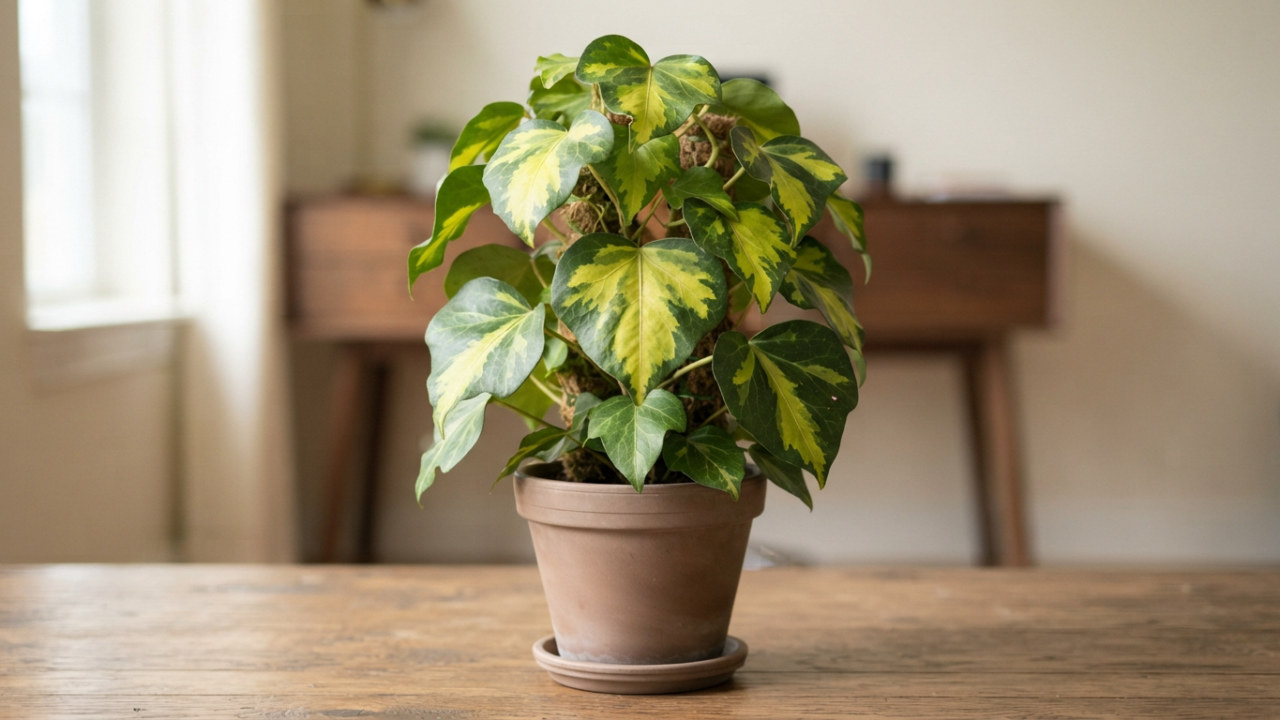
A Persian ivy with big dark green leaves splashed in the center with lemon yellow and lime, edged in green.
- Every 6 daysWatering
- Medium lightLight
- 50–60 %Humidity
- 5–24 °CTemperature


Other varieties 1
How to care for your Ivy 'Sulphur Heart'
Everything you need to keep your Ivy 'Sulphur Heart' healthy: watering, light, humidity, feeding, repotting and pruning.
'Sulphur Heart', also sold as 'Paddy's Pride', is a Persian ivy cultivar named in 1968 by a Dutch nursery, though a similar plant was reportedly known in Britain earlier. Its leathery heart-shaped leaves can reach 20 cm, each carrying an irregular splash of yellow and lime in the middle. Indoors it climbs by aerial roots on a trellis or trails from a high shelf, a little slower than the plain green form.

How to recognise Ivy 'Sulphur Heart'
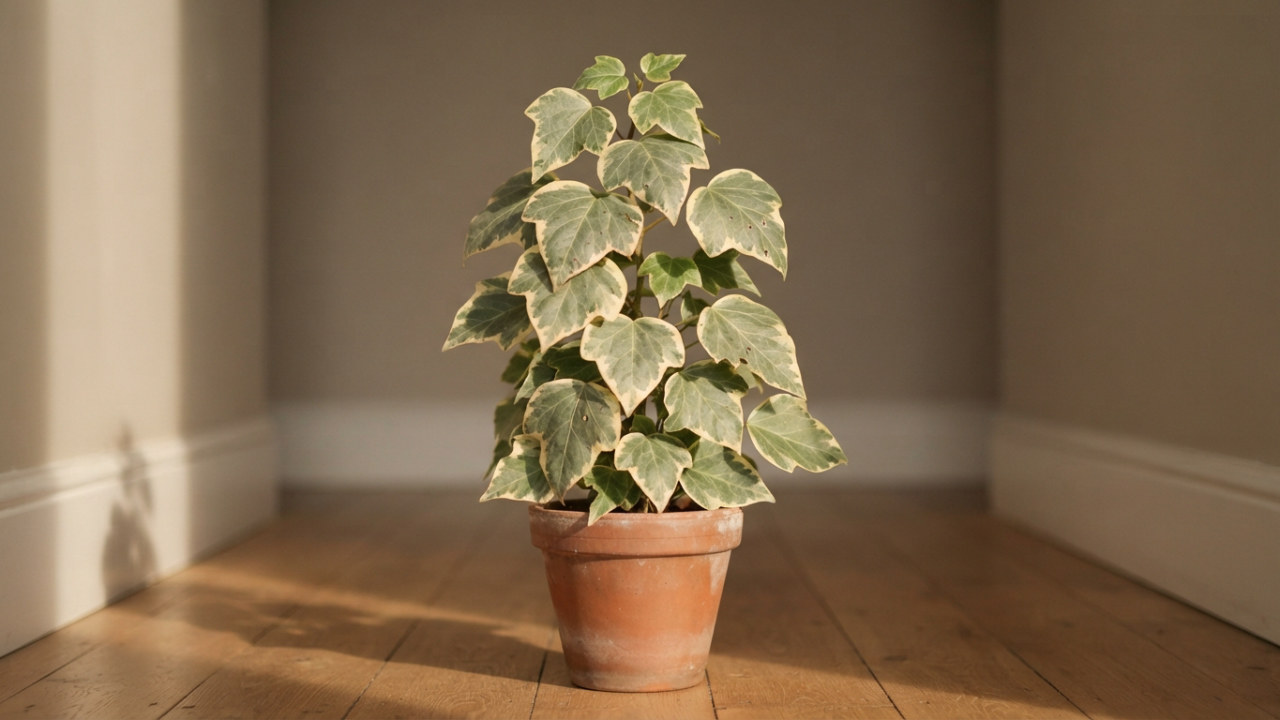
Large, leathery, heart-shaped leaves with a bold, irregular yellow and lime splash in the center and a dark green margin. 'Dentata Variegata' is the reverse, with a grey-green center and creamy margins. The plain Persian ivy is solid dark green, and English ivy (Hedera helix) has much smaller, lobed leaves.

Watering your Ivy 'Sulphur Heart'
Every 6 days
Water thoroughly when the top of the soil feels dry, let the excess drain, and never leave the pot standing in water.
How to know it needs water
- A finger pushed in two centimeters comes out without damp soil
- The glossy leaves look dull and droop slightly

How much light a Ivy 'Sulphur Heart' needs
Medium light
Give it medium to bright light without hot sun, since the yellow fades in deep shade and the pale zones scorch under the midday sun.
- Direct sun tolerated
- 0 to 2 h a day
- Orientations that suit it
- North, North-east, East, North-west, West

Humidity and misting
50–60 %
Average household air, around 50 to 60 percent, suits it well. Mist every few days in dry heated rooms, and wipe the big leaves with a damp cloth to keep them glossy.

Feeding and fertiliser
Every 28 days
Feed about once a month from April to September and skip it in the cooler months.
- Recommended feed
- A balanced liquid fertilizer for foliage plants. · 2-1-2

Repotting your Ivy 'Sulphur Heart'
Every 24 months
Move to a pot one size larger with fresh, well-drained potting mix and give the stems a support to climb.
- When
- Spring, as growth restarts.
- Potting mix
- All-purpose potting mix
- Mix in
- perlite, coco fibre
The tell-tale signs
- Roots circle the pot or push out of the drainage holes
- The soil dries out within a few days of watering

Pruning your Ivy 'Sulphur Heart'
In spring or after a flush of growth, whenever stems outgrow their space. Cut stems just above a leaf with clean shears, and trim back any shoot that turns plain green.

Through the year
Watering is not set once and for all: it follows the light and the growth. Allow 10 days between waterings in the depth of winter, against 5 in the growing season.
- 9 J
- 7 F
- 6 M
- 5 A
- 5 M
- 5 J
- 5 J
- 5 A
- 6 S
- 7 O
- 8 N
- 10 D
Active growth · Days between waterings

Toxicity
Saponins make it toxic to cats, dogs and people if eaten, and the sap can irritate the skin of sensitive people.

Good to know
- It was named 'Sulphur Heart' in 1968, but a plant like it was reportedly grown in Britain before 1940.
- It may be a sport of 'Dentata Variegata', the other variegated Persian ivy.

Frequently asked questions about the Ivy 'Sulphur Heart'
How do you care for a Ivy 'Sulphur Heart'?
Water it every 6 days. Give it medium light. Ideal humidity: 50–60 %. Ideal temperature: 5–24 °C. Water thoroughly when the top of the soil feels dry, let the excess drain, and never leave the pot standing in water.
How often should you water a Ivy 'Sulphur Heart'?
Every 6 days Water thoroughly when the top of the soil feels dry, let the excess drain, and never leave the pot standing in water. How to know it needs water : A finger pushed in two centimeters comes out without damp soil ; The glossy leaves look dull and droop slightly.
How much light does a Ivy 'Sulphur Heart' need?
Medium light Give it medium to bright light without hot sun, since the yellow fades in deep shade and the pale zones scorch under the midday sun. 0 to 2 h a day
Is the Ivy 'Sulphur Heart' toxic to cats and dogs?
Yes. Saponins make it toxic to cats, dogs and people if eaten, and the sap can irritate the skin of sensitive people. Keep it out of reach of your pets and call a vet if any is swallowed.
Why are my Ivy 'Sulphur Heart' leaves turning yellow?
Yellowing most often comes from too much water: the mix stays wet and the roots suffocate. Check that the pot drains, empty the saucer, and let the mix dry before watering again. Too little light or a cold draught cause the same symptom.
When should you repot a Ivy 'Sulphur Heart'?
Repot every 24 months, ideally in spring, as growth restarts.. Move to a pot one size larger with fresh, well-drained potting mix and give the stems a support to climb.

At a glance
- Family
- Araliaceae
- Category
- Climber
- Placement
- Indoor and outdoor
- Mature height
- 3 m
- Growth
- Moderate
- Temperature
- 5–24 °C
- Pot materials
- terracotta, ceramic, plastic
- Growth
- Reaches maturity in 5 years
These figures are for an average plant. In the app they are recalculated for yours, based on your room, its orientation and the season.
And for your plant, in your home?
In the app this plant becomes yours: a watering schedule tuned to your home, health tracking from photos, and reminders at the right moment.