
Epiphyte · Bromeliaceae
Guzmania
Guzmania lingulata
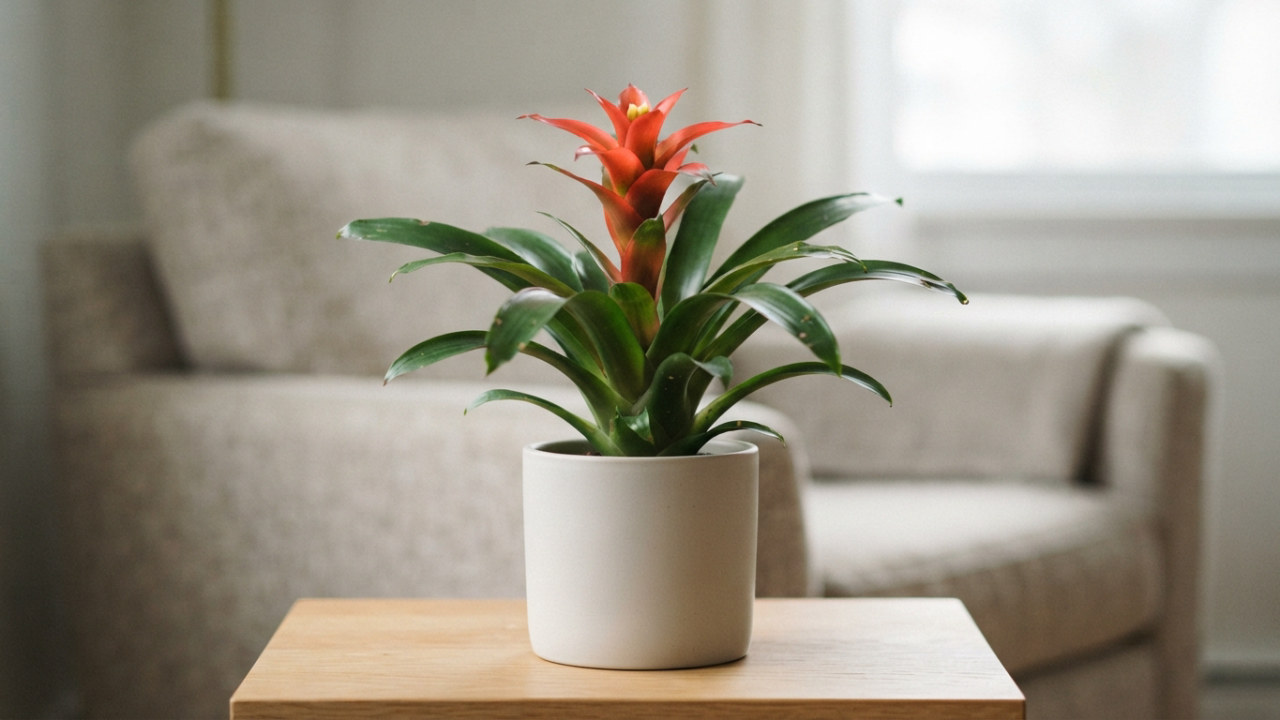
Guzmania lingulata is a stunning tropical epiphyte known for its vibrant, long-lasting floral bracts.
- Every 7 daysWatering
- Bright indirect lightLight
- 60–80 %Humidity
- 18–25 °CTemperature


How to care for your Guzmania
Everything you need to keep your Guzmania healthy: watering, light, humidity, feeding, repotting and pruning.
Guzmania lingulata, native to the rainforests of Central and South America, is a popular houseplant prized for its spectacular, colourful bracts that can last for several months. As an epiphyte, it naturally grows on trees, absorbing moisture and nutrients from the air and rain. It forms a central 'cup' or rosette that collects water, which is crucial for its survival. Easy to care for, it thrives in bright, indirect light and high humidity, making it an excellent choice for adding a splash of tropical colour to indoor spaces. After flowering, the mother plant gradually declines, but it produces 'pups' (offsets) that can be separated and grown into new plants.

How to recognise Guzmania
A rosette of glossy, smooth-edged, strap-shaped bright green leaves forming a funnel, with a star-shaped cluster of bright red, orange or pink bracts at the center. Vriesea splendens has leaves banded in dark purple and a flat, sword-like flower spike, and Aechmea fasciata has stiff, spiny, silver-banded leaves with a pink spike.

Watering your Guzmania
Every 7 days
Keep the central rosette (cup) filled with fresh, distilled or rainwater. Flush and refill it weekly to prevent stagnation. Water the substrate lightly when the top 2 to 3 cm are dry, about every 7 days in the growing season and every 10 days or so from November to February.
How to know it needs water
- Rosette water is low or stagnant
- Substrate dry to the touch
- Leaves appear dull or less vibrant

How much light a Guzmania needs
Bright indirect light
Bright indirect light; avoid direct sun which can scorch the leaves.
- Direct sun tolerated
- 0 to 1 h a day
- Orientations that suit it
- North, North-east, East, North-west

Humidity and misting
60–80 %
High (60 to 80%) Mist the foliage about every 4 days with soft water, especially in dry environments, or place the plant on a pebble tray set below the pot to maintain high humidity.

Feeding and fertiliser
Every 28 days
Apply a very diluted solution (1/4 strength) onto the leaves or the substrate about every 4 weeks from April to September. If you put it in the central cup, flush the cup afterwards. Do not fertilize in autumn and winter.
- Recommended feed
- Weak balanced NPK liquid fertilizer · 1-1-1

Repotting your Guzmania
The mother plant does not need repotting. Repot offsets (pups) when they are about one-third the size of the mother plant, in a small pot with a well-draining, airy substrate like an orchid mix.
- When
- Spring
- Potting mix
- Orchid mix
- Mix in
- pine bark, perlite, sphagnum moss
The tell-tale signs
- Offsets (pups) are large enough to be separated
- Mother plant has finished flowering and is declining
- Substrate is breaking down or compacted

Pruning your Guzmania
After the main plant has flowered and the bracts begin to fade and brown. Cut the spent flower stalk at its base with sterilised scissors or a sharp blade. Remove any yellowing or damaged leaves as needed.

Through the year
Watering is not set once and for all: it follows the light and the growth. Allow 7 days between waterings in the depth of winter, against 6 in the growing season.
- 7 J
- 7 F
- 6 M
- 6 A
- 6 M
- 6 J
- 6 J
- 6 A
- 6 S
- 7 O
- 7 N
- 7 D
Active growth · Days between waterings

Good to know
- This plant is an epiphyte, growing on other trees in its natural habitat.
- The plant flowers only once in its lifetime, producing a vibrant, long-lasting inflorescence.
- Its leaves absorb water and nutrients directly through specialized cells called trichomes.

Frequently asked questions about the Guzmania
How do you care for a Guzmania?
Water it every 7 days. Give it bright indirect light. Ideal humidity: 60–80 %. Ideal temperature: 18–25 °C. Keep the central rosette (cup) filled with fresh, distilled or rainwater. Flush and refill it weekly to prevent stagnation. Water the substrate lightly when the top 2 to 3 cm are dry, about every 7 days in the growing season and every 10 days or so from November to February.
How often should you water a Guzmania?
Every 7 days Keep the central rosette (cup) filled with fresh, distilled or rainwater. Flush and refill it weekly to prevent stagnation. Water the substrate lightly when the top 2 to 3 cm are dry, about every 7 days in the growing season and every 10 days or so from November to February. How to know it needs water : Rosette water is low or stagnant ; Substrate dry to the touch ; Leaves appear dull or less vibrant.
How much light does a Guzmania need?
Bright indirect light Bright indirect light; avoid direct sun which can scorch the leaves. 0 to 1 h a day
Is the Guzmania toxic to cats and dogs?
No, the Guzmania is not listed as toxic to cats and dogs. That is still no reason to let your pets chew on it.
Why are my Guzmania leaves turning yellow?
Yellowing most often comes from too much water: the mix stays wet and the roots suffocate. Check that the pot drains, empty the saucer, and let the mix dry before watering again. Too little light or a cold draught cause the same symptom.
When should you repot a Guzmania?
Repot , ideally in spring. The mother plant does not need repotting. Repot offsets (pups) when they are about one-third the size of the mother plant, in a small pot with a well-draining, airy substrate like an orchid mix.

At a glance
- Family
- Bromeliaceae
- Category
- Epiphyte
- Placement
- Indoor
- Mature height
- 40 cm
- Growth
- Moderate
- Temperature
- 18–25 °C
- Pot materials
- ceramic, plastic
- Growth
- Reaches maturity in 2 years
These figures are for an average plant. In the app they are recalculated for yours, based on your room, its orientation and the season.
And for your plant, in your home?
In the app this plant becomes yours: a watering schedule tuned to your home, health tracking from photos, and reminders at the right moment.
In the same spirit
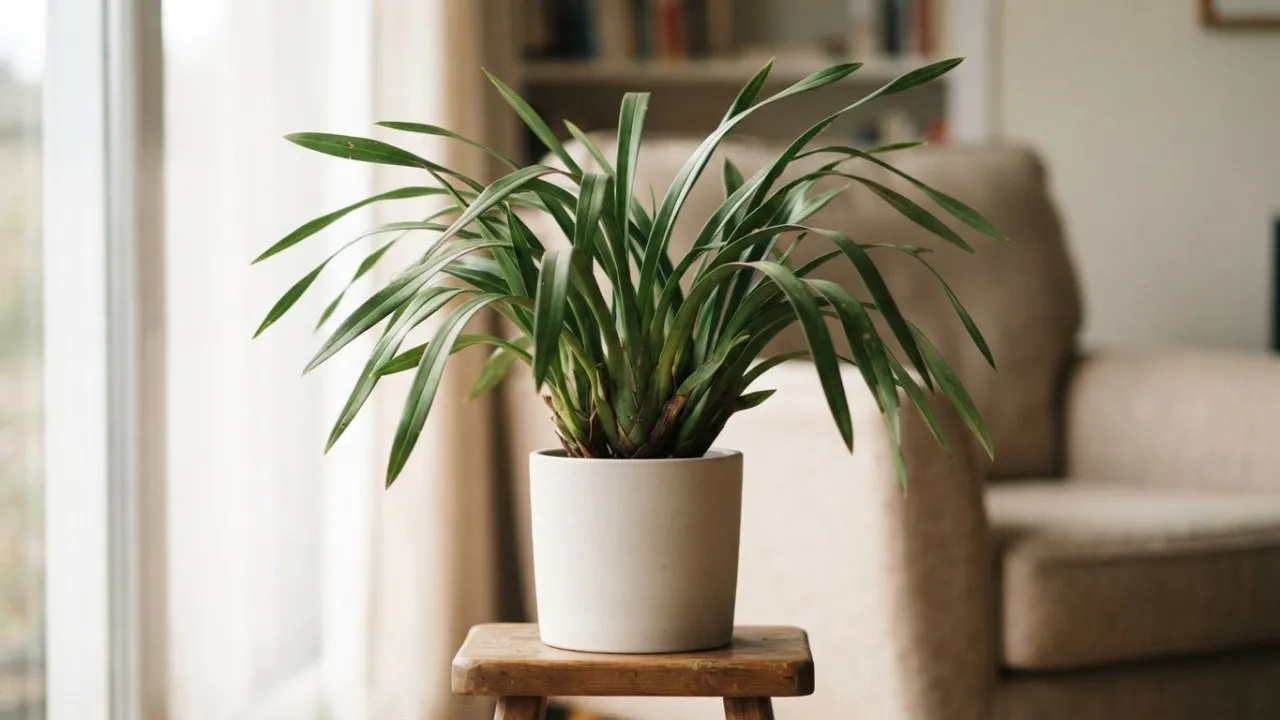 Every 5 days


Devon Cymbidium
Cymbidium devonianum

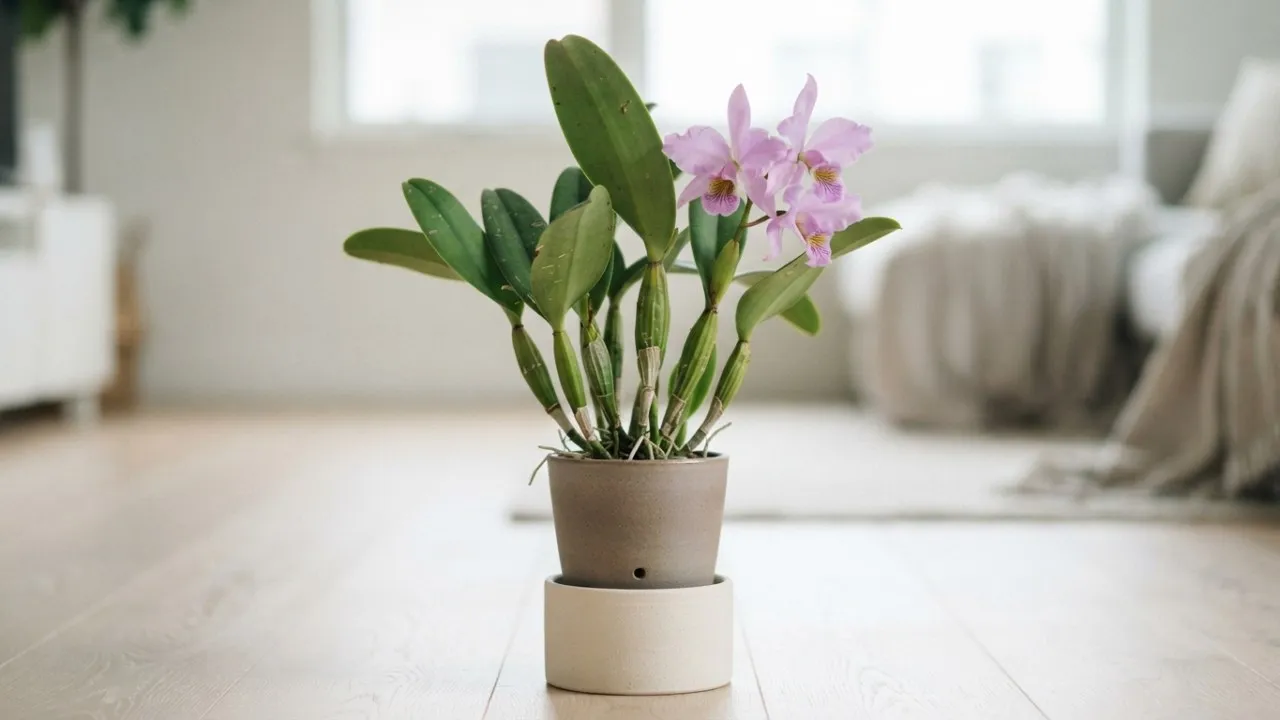 Every 7 days
Easter Orchid
Cattleya mossiae
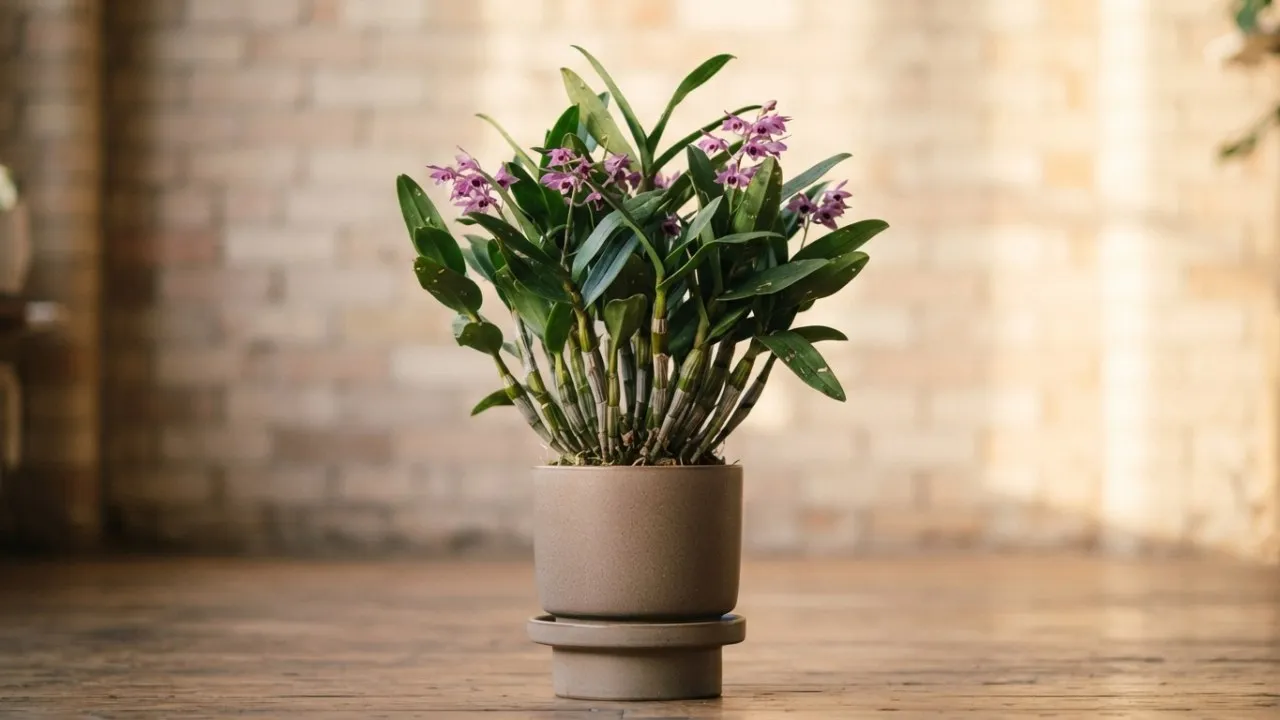 Every 6 days
Pink Rock Orchid
Dendrobium kingianum
 Every 5 days
Rose Grape
Medinilla magnifica
