
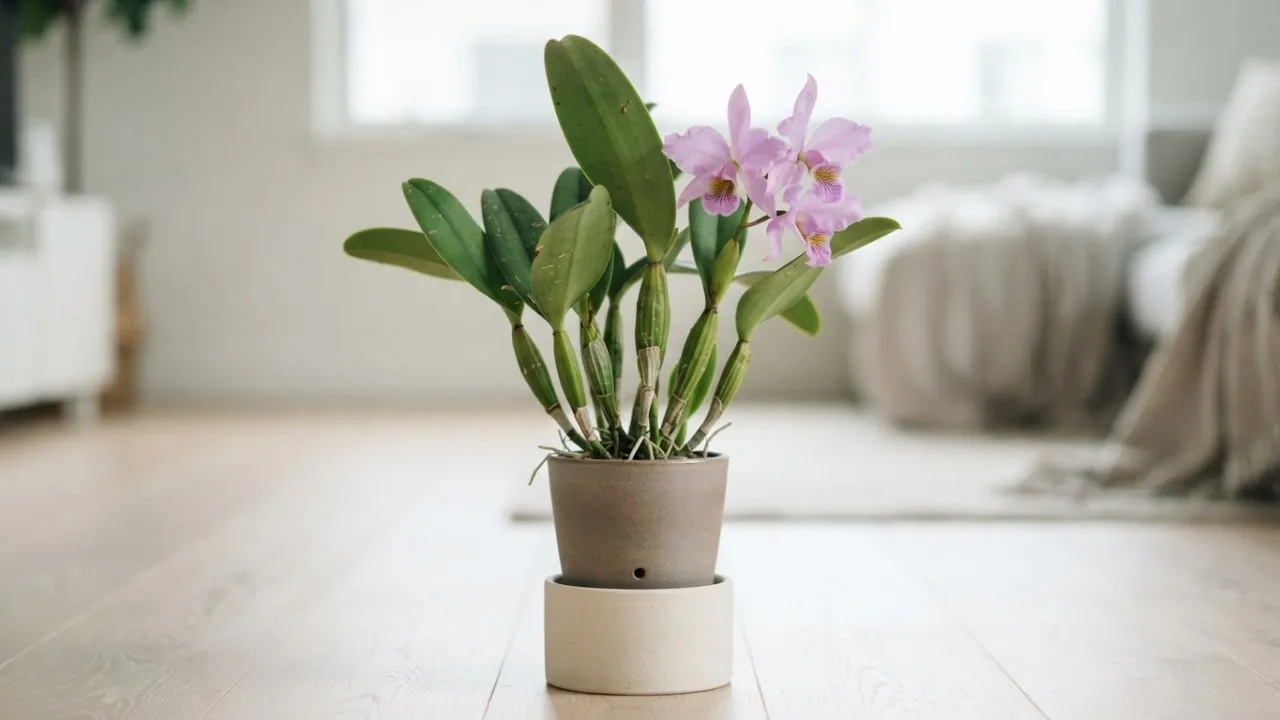
Easter Orchid
Cattleya mossiae
A classic Cattleya species known for its large, fragrant, delicate pink to lavender flowers with a frilly, yellow-marked lip.
The essentials at a glance
-
Watering
Every 7 days
-
Light
Bright indirect light
-
Humidity
50–70 %
-
Temperature
18–28 °C


How to care for your Easter Orchid
Everything you need to keep your Easter Orchid healthy: watering, light, humidity, feeding, repotting and pruning.
The Easter Orchid is a magnificent species, highly prized for its exceptionally large and fragrant blooms. Flowers typically feature delicate shades of pink or lavender, with a strikingly frilly lip adorned with yellow markings. It is a unifoliate Cattleya, meaning it has one leaf per pseudobulb. This orchid requires bright light, a distinct wet/dry cycle, and good air circulation to thrive and produce its spectacular spring display. It's a favorite among Cattleya enthusiasts for its beauty and ease of growth.

Watering your Easter Orchid
Every 7 days
Water thoroughly when the potting mix is completely dry; allow good air circulation.
How to know it needs water
- Potting mix is bone dry
- Pseudobulbs start to wrinkle slightly

How much light a Easter Orchid needs
Bright indirect light
Bright, indirect light with some filtered direct sun, especially in morning.
- Direct sun tolerated
- 1 to 4 h a day
- Orientations that suit it
- East, South-east, South, South-west, West, North-east, North-west

Humidity and misting
50–70 %
Moderate (50-70%). Misting can supplement humidity but avoid water on flowers.

Feeding and fertiliser
Every 14 days
Fertilize heavily during active growth; reduce frequency and strength in winter.
- Recommended feed
- Balanced orchid fertilizer (1/2 strength). · 20-20-20

Repotting your Easter Orchid
Every 24 months
Repot with coarse orchid bark mix; avoid deep planting and overpotting.
- When
- Spring, when new roots emerge from a new growth.
- Potting mix
- Orchid mix
- Mix in
- pine bark, sphagnum moss, perlite
The tell-tale signs
- Plant outgrowing pot
- Media decomposition

Pruning your Easter Orchid
After flowers fade. Cut spent flower spikes at the base; remove any yellowing or dead leaves.

Through the year
Watering is not set once and for all: it follows the light and the growth. Allow 11 days between waterings in the depth of winter, against 6 in the growing season.
- 11 J
- 8 F
- 6 M
- 6 A
- 6 M
- 6 J
- 6 J
- 6 A
- 6 S
- 7 O
- 8 N
- 11 D
Active growth · Days between waterings

Good to know
- Native to Venezuela, where it is the national flower.
- Traditionally blooms around Easter, hence its common name.

Frequently asked questions about the Easter Orchid
How do you care for a Easter Orchid?
Water it every 7 days. Give it bright indirect light. Ideal humidity: 50–70 %. Ideal temperature: 18–28 °C. Water thoroughly when the potting mix is completely dry; allow good air circulation.
How often should you water a Easter Orchid?
Every 7 days Water thoroughly when the potting mix is completely dry; allow good air circulation. How to know it needs water : Potting mix is bone dry ; Pseudobulbs start to wrinkle slightly.
How much light does a Easter Orchid need?
Bright indirect light Bright, indirect light with some filtered direct sun, especially in morning. 1 to 4 h a day
Is the Easter Orchid toxic to cats and dogs?
No, the Easter Orchid is not listed as toxic to cats and dogs. That is still no reason to let your pets chew on it.
Why are my Easter Orchid leaves turning yellow?
Yellowing most often comes from too much water: the mix stays wet and the roots suffocate. Check that the pot drains, empty the saucer, and let the mix dry before watering again. Too little light or a cold draught cause the same symptom.
When should you repot a Easter Orchid?
Repot every 24 months, ideally in spring, when new roots emerge from a new growth.. Repot with coarse orchid bark mix; avoid deep planting and overpotting.

At a glance
- Family
- Orchidaceae
- Category
- Epiphyte
- Placement
- Indoor
- Mature height
- 40 cm
- Growth
- Moderate
- Temperature
- 18–28 °C
- Pot materials
- terracotta, ceramic, plastic
- Growth
- Reaches maturity in 3 years
These figures are for an average plant. In the app they are recalculated for yours, based on your room, its orientation and the season.
And for your plant, in your home?
In the app this plant becomes yours: a watering schedule tuned to your home, health tracking from photos, and reminders at the right moment.
In the same spirit
 Every 5 days
 Devon Cymbidium
Cymbidium devonianum

 Every 7 days
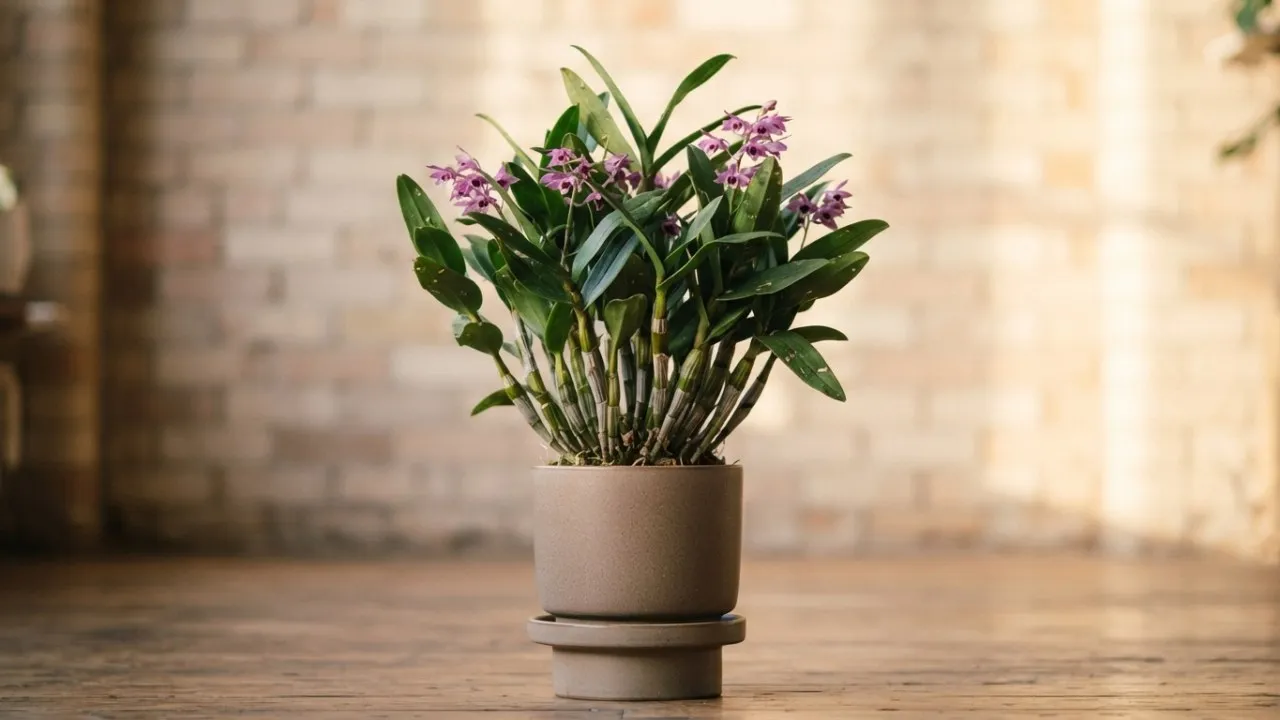
 Pink Rock Orchid
Dendrobium kingianum
 Every 7 days
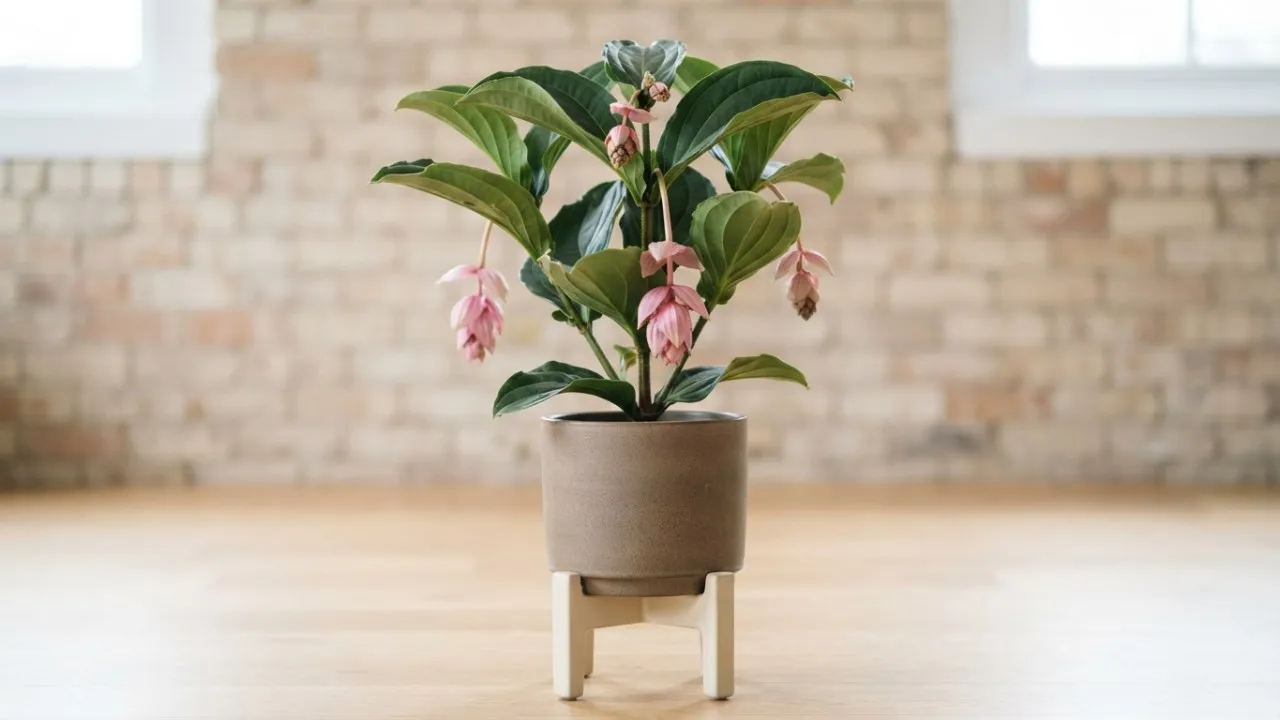
 Rose Grape
Medinilla magnifica
 Every 7 days
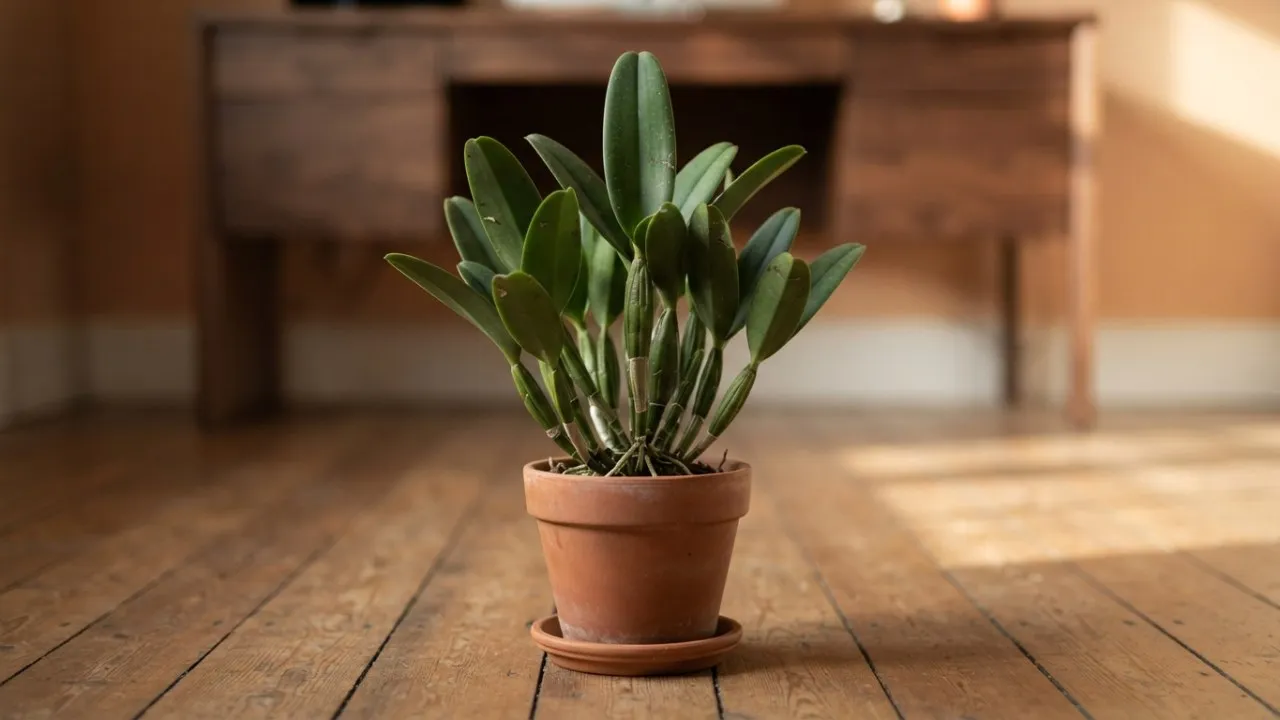
 Walker's Cattleya
Cattleya walkeriana