Climber · Moraceae
Trailing Fig
Ficus sagittata
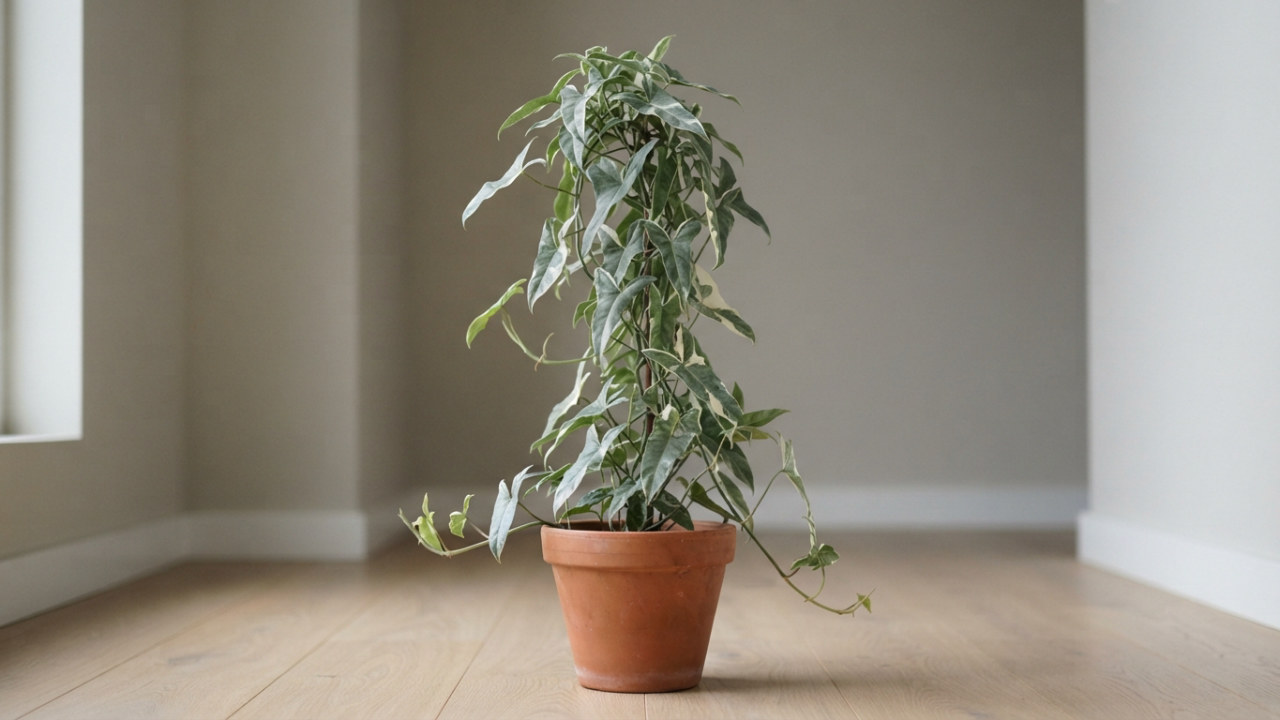
A slender trailing fig with narrow, arrow-shaped leaves, grown in hanging pots or trained up a support.
- Every 9 daysWatering
- Bright indirect lightLight
- 50–70 %Humidity
- 15–30 °CTemperature


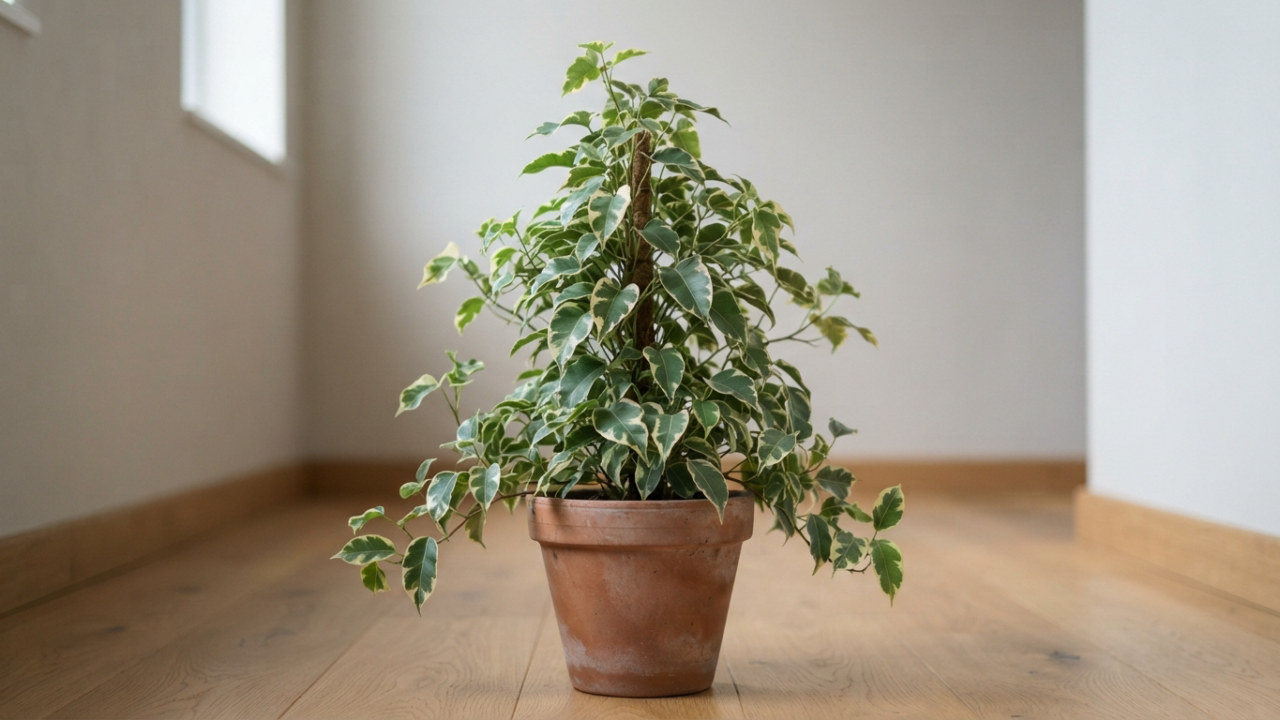
Its varieties 1
How to care for your Trailing Fig
Everything you need to keep your Trailing Fig healthy: watering, light, humidity, feeding, repotting and pruning.
Ficus sagittata, also sold as Ficus radicans, is a slender, fast-growing fig that trails from a hanging pot or climbs a support by rooting along its stems. Its leathery leaves are lance-shaped to arrow-shaped, 5 to 8 centimeters long. The species grows wild in the warm temperate and tropical parts of Asia, from India and southern China through Southeast Asia; its common variegated form is gray-green with irregular ivory-white marks.

How to recognise Trailing Fig
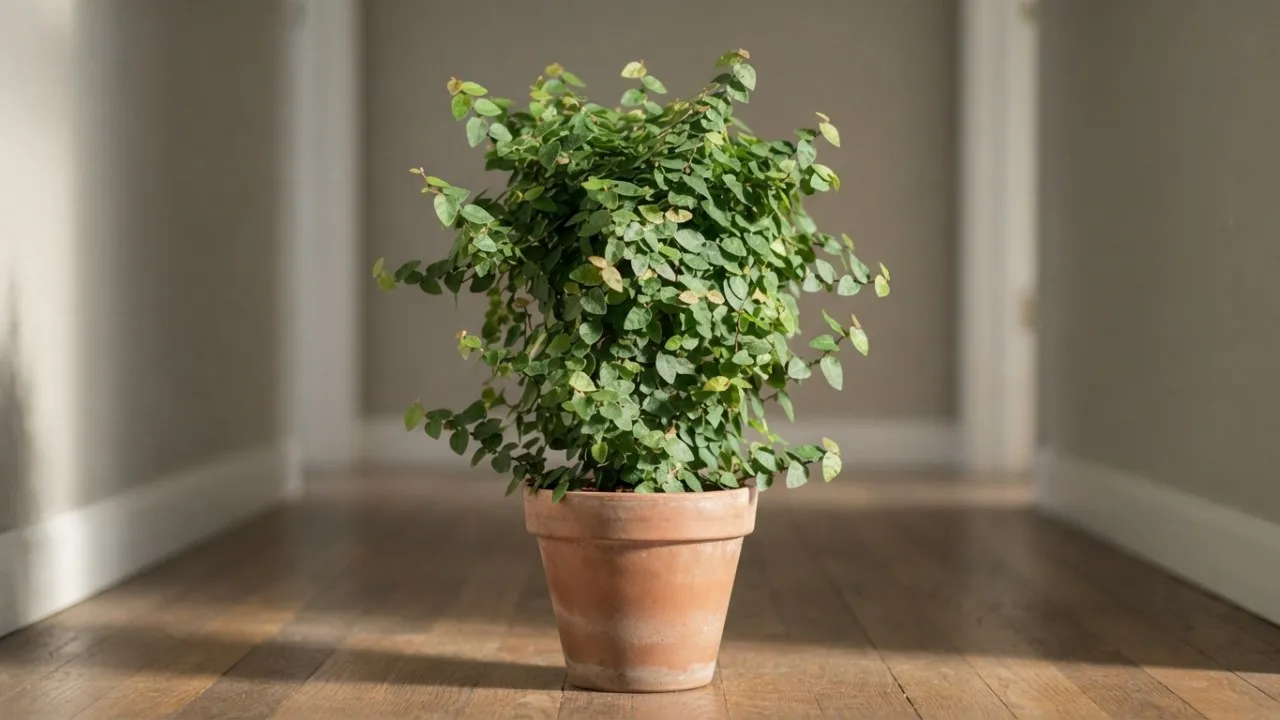
A slender trailing or climbing vine with leathery leaves 5 to 8 centimeters long, narrow, lance-shaped to arrow-shaped, plain green or, in the common variegated form, gray-green with ivory-white marks, on thin stems that root as they climb. Ficus pumila, its closest lookalike, has tiny heart-shaped juvenile leaves pressed flat to the support, while most other indoor figs are trees with much larger leaves.

Watering your Trailing Fig
Every 9 days
Water thoroughly, wait until the top few centimeters of the mix have dried, then water again; a small hanging pot dries faster than a tree's large container, so check it often.
How to know it needs water
- The top few centimeters of the mix are dry when a finger goes in
- The leathery leaves feel slightly limp and the small pot is much lighter

How much light a Trailing Fig needs
Bright indirect light
Bright, indirect light suits it, with up to two hours of gentle morning sun; the variegated form needs more light than the plain green one to keep its marks.
- Direct sun tolerated
- 0 to 2 h a day
- Orientations that suit it
- North, North-east, East, South-east, South, South-west, West, North-west

Humidity and misting
50–70 %
It likes fairly high humidity, 50 to 70 percent; in heated rooms, group it with other plants or run a humidifier nearby. Misting is not needed, since leathery leaves gain little from it; in heated rooms a humidifier or a group of plants raises the humidity far longer than a spray.

Feeding and fertiliser
Every 28 days
Feed about every four weeks from April to September, while it grows quickly, and not from October to March.
- Recommended feed
- A liquid fertilizer for green plants, richer in nitrogen than in phosphorus, diluted to half the label dose. · 3-1-2

Repotting your Trailing Fig
Every 24 months
Move up one pot size, into universal potting mix lightened with perlite or coco fiber, in a pot with drainage holes so the roots never sit in water.
- When
- Spring, from March to May.
- Potting mix
- All-purpose potting mix
- Mix in
- perlite, pine bark, coco fibre
The tell-tale signs
- Roots show at the drainage holes or fill the surface of the mix
- The pot dries out within a few days, or growth slows despite good light and feeding

Pruning your Trailing Fig
In spring and summer, whenever stems grow long and bare; pinching the tips gives a fuller plant. Pinch or cut the stem tips just above a leaf with clean shears, blot the milky sap and wear gloves; the cuttings root in water or damp mix.

Through the year
Watering is not set once and for all: it follows the light and the growth. Allow 13 days between waterings in the depth of winter, against 7 in the growing season.
- 12 J
- 11 F
- 9 M
- 8 A
- 7 M
- 7 J
- 7 J
- 8 A
- 9 S
- 10 O
- 12 N
- 13 D
Active growth · Days between waterings

Toxicity
The milky sap is mildly toxic if swallowed, for cats, dogs and people, and it can irritate the skin on contact, so wear gloves when pruning.

Good to know
- The name sagittata comes from the Latin word for arrow, after the leaf shape, and the older name radicans means rooting, after the roots along its climbing stems.
- Its wild range is vast, reaching from India and southern China to the Caroline Islands, in the western Pacific.

Frequently asked questions about the Trailing Fig
How do you care for a Trailing Fig?
Water it every 9 days. Give it bright indirect light. Ideal humidity: 50–70 %. Ideal temperature: 15–30 °C. Water thoroughly, wait until the top few centimeters of the mix have dried, then water again; a small hanging pot dries faster than a tree's large container, so check it often.
How often should you water a Trailing Fig?
Every 9 days Water thoroughly, wait until the top few centimeters of the mix have dried, then water again; a small hanging pot dries faster than a tree's large container, so check it often. How to know it needs water : The top few centimeters of the mix are dry when a finger goes in ; The leathery leaves feel slightly limp and the small pot is much lighter.
How much light does a Trailing Fig need?
Bright indirect light Bright, indirect light suits it, with up to two hours of gentle morning sun; the variegated form needs more light than the plain green one to keep its marks. 0 to 2 h a day
Is the Trailing Fig toxic to cats and dogs?
Yes. The milky sap is mildly toxic if swallowed, for cats, dogs and people, and it can irritate the skin on contact, so wear gloves when pruning. Keep it out of reach of your pets and call a vet if any is swallowed.
Why are my Trailing Fig leaves turning yellow?
Yellowing most often comes from too much water: the mix stays wet and the roots suffocate. Check that the pot drains, empty the saucer, and let the mix dry before watering again. Too little light or a cold draught cause the same symptom.
When should you repot a Trailing Fig?
Repot every 24 months, ideally in spring, from march to may.. Move up one pot size, into universal potting mix lightened with perlite or coco fiber, in a pot with drainage holes so the roots never sit in water.

At a glance
- Family
- Moraceae
- Category
- Climber
- Placement
- Indoor
- Mature height
- 1.5 m
- Growth
- Fast
- Temperature
- 15–30 °C
- Pot materials
- terracotta, ceramic, plastic
- Growth
- Reaches maturity in 3 years
These figures are for an average plant. In the app they are recalculated for yours, based on your room, its orientation and the season.
And for your plant, in your home?
In the app this plant becomes yours: a watering schedule tuned to your home, health tracking from photos, and reminders at the right moment.