
Tropical · Moraceae
Rusty Fig
Ficus rubiginosa
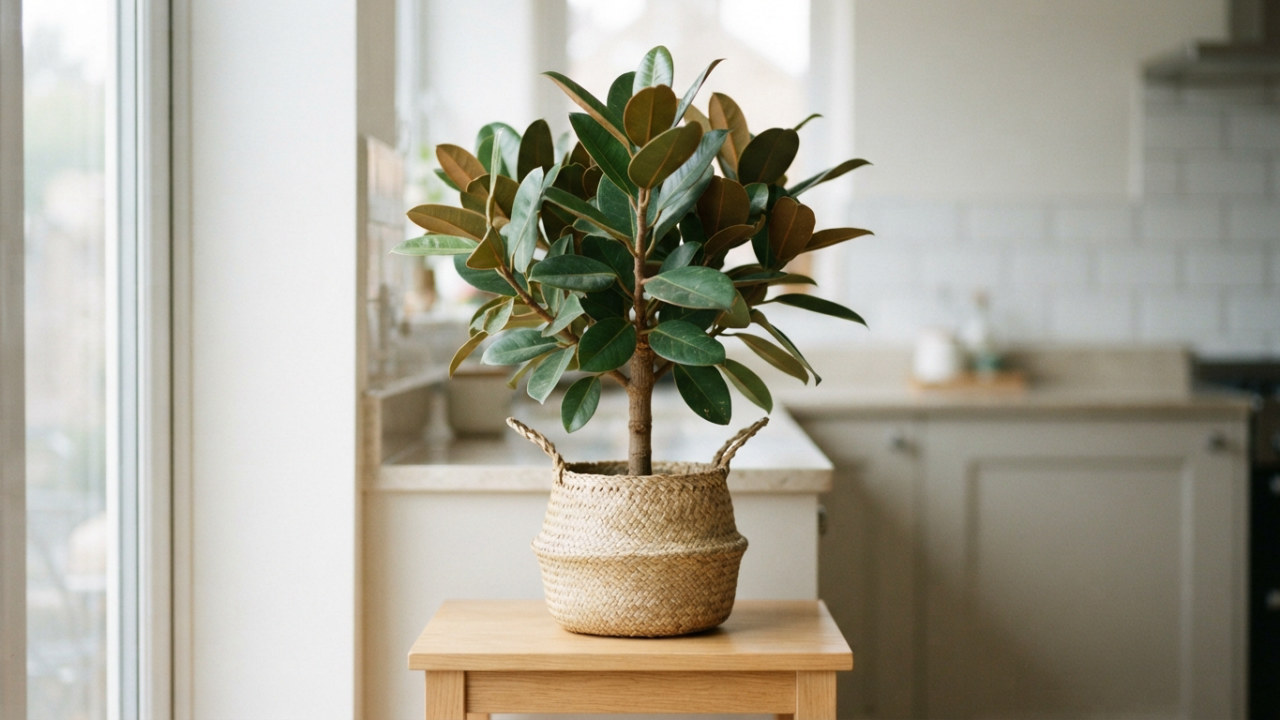
A leathery-leaved fig from eastern Australia, with oval dark green leaves that are rusty underneath.
- Every 9 daysWatering
- Bright indirect lightLight
- 50–60 %Humidity
- 15–30 °CTemperature


How to care for your Rusty Fig
Everything you need to keep your Rusty Fig healthy: watering, light, humidity, feeding, repotting and pruning.
Ficus rubiginosa grows wild along the east coast of Australia, from north Queensland to the south coast of New South Wales, and its name refers to the rust color of the fine hairs under its leaves. The oval, glossy leaves measure about 4 to 19 cm. Also called the Port Jackson fig, it is grown indoors as a tree of up to about 3 m or trained as a bonsai, and it cannot stand frost. A variegated form exists and needs brighter light to keep its colors.

How to recognise Rusty Fig
Oval, glossy dark green leaves, often rusty brown underneath from fine hairs. They are less pointed than those of Ficus benjamina, larger than those of Ficus microcarpa and shorter than those of Ficus elastica; Ficus umbellata has large heart-shaped leaves with no rusty reverse.

Watering your Rusty Fig
Every 9 days
Water moderately, once the top few centimeters of the mix have dried, and let the excess drain away.
How to know it needs water
- The top few centimeters of the mix feel dry to the touch
- The leaves lose some of their sheen and hang slightly

How much light a Rusty Fig needs
Bright indirect light
Bright indirect light suits it best, and it copes with medium or even low light at a slower pace; the variegated form needs brighter light to keep its colors.
- Direct sun tolerated
- 0 to 2 h a day
- Orientations that suit it
- North, North-east, East, South-east, South, South-west, West, North-west

Humidity and misting
50–60 %
Ordinary indoor air, around 50 to 60%, is enough. Misting is not needed; wipe the leaves with a damp cloth now and then to remove dust.

Feeding and fertiliser
Every 28 days
Feed about every four weeks from April to September, at half the label dose, and stop in winter.
- Recommended feed
- A liquid fertilizer for green plants, a little richer in nitrogen. · 3-1-2

Repotting your Rusty Fig
Every 24 months
Move up one pot size into a well-draining mix of potting soil, perlite and bark; wear gloves, because the sap irritates the skin.
- When
- Spring, from March to May, as growth restarts.
- Potting mix
- All-purpose potting mix
- Mix in
- perlite, pine bark, coco fibre
The tell-tale signs
- Roots appear at the drainage holes or circle the root ball
- Growth slows although light, water and feeding are right

Pruning your Rusty Fig
In spring, to control the size and shape of the tree; remove damaged branches whenever they appear. Cut just above a leaf with clean secateurs, wear gloves, and blot the milky sap with a damp cloth.

Through the year
Watering is not set once and for all: it follows the light and the growth. Allow 13 days between waterings in the depth of winter, against 7 in the growing season.
- 12 J
- 11 F
- 9 M
- 8 A
- 7 M
- 7 J
- 7 J
- 8 A
- 9 S
- 10 O
- 12 N
- 13 D
Active growth · Days between waterings

Toxicity
The milky sap irritates people's skin, and chewing the plant irritates the mouth and stomach of cats and dogs; wear gloves to prune it and keep pets from chewing it.

Good to know
- The name rubiginosa is Latin for rusty and refers to the color of the hairs under the leaves.
- Its native range follows the eastern coast of Australia, from north Queensland to the south coast of New South Wales.

Frequently asked questions about the Rusty Fig
How do you care for a Rusty Fig?
Water it every 9 days. Give it bright indirect light. Ideal humidity: 50–60 %. Ideal temperature: 15–30 °C. Water moderately, once the top few centimeters of the mix have dried, and let the excess drain away.
How often should you water a Rusty Fig?
Every 9 days Water moderately, once the top few centimeters of the mix have dried, and let the excess drain away. How to know it needs water : The top few centimeters of the mix feel dry to the touch ; The leaves lose some of their sheen and hang slightly.
How much light does a Rusty Fig need?
Bright indirect light Bright indirect light suits it best, and it copes with medium or even low light at a slower pace; the variegated form needs brighter light to keep its colors. 0 to 2 h a day
Is the Rusty Fig toxic to cats and dogs?
Yes. The milky sap irritates people's skin, and chewing the plant irritates the mouth and stomach of cats and dogs; wear gloves to prune it and keep pets from chewing it. Keep it out of reach of your pets and call a vet if any is swallowed.
Why are my Rusty Fig leaves turning yellow?
Yellowing most often comes from too much water: the mix stays wet and the roots suffocate. Check that the pot drains, empty the saucer, and let the mix dry before watering again. Too little light or a cold draught cause the same symptom.
When should you repot a Rusty Fig?
Repot every 24 months, ideally in spring, from march to may, as growth restarts.. Move up one pot size into a well-draining mix of potting soil, perlite and bark; wear gloves, because the sap irritates the skin.

At a glance
- Family
- Moraceae
- Category
- Tropical
- Placement
- Indoor
- Mature height
- 2.5 m
- Growth
- Moderate
- Temperature
- 15–30 °C
- Pot materials
- terracotta, ceramic, plastic
- Growth
- Reaches maturity in 10 years
These figures are for an average plant. In the app they are recalculated for yours, based on your room, its orientation and the season.
And for your plant, in your home?
In the app this plant becomes yours: a watering schedule tuned to your home, health tracking from photos, and reminders at the right moment.
In the same spirit
 Every 7 days


Air Plant
Tillandsia ionantha

 Every 6 days
Alocasia amazonica
Alocasia amazonica
 Every 7 days
Alocasia baginda
Alocasia baginda
 Every 4 days
Angel Wings
Caladium bicolor
