
Variety Tropical · Moraceae
Weeping Fig 'Reginald'
Ficus benjamina 'Reginald' · A variety of Weeping Fig
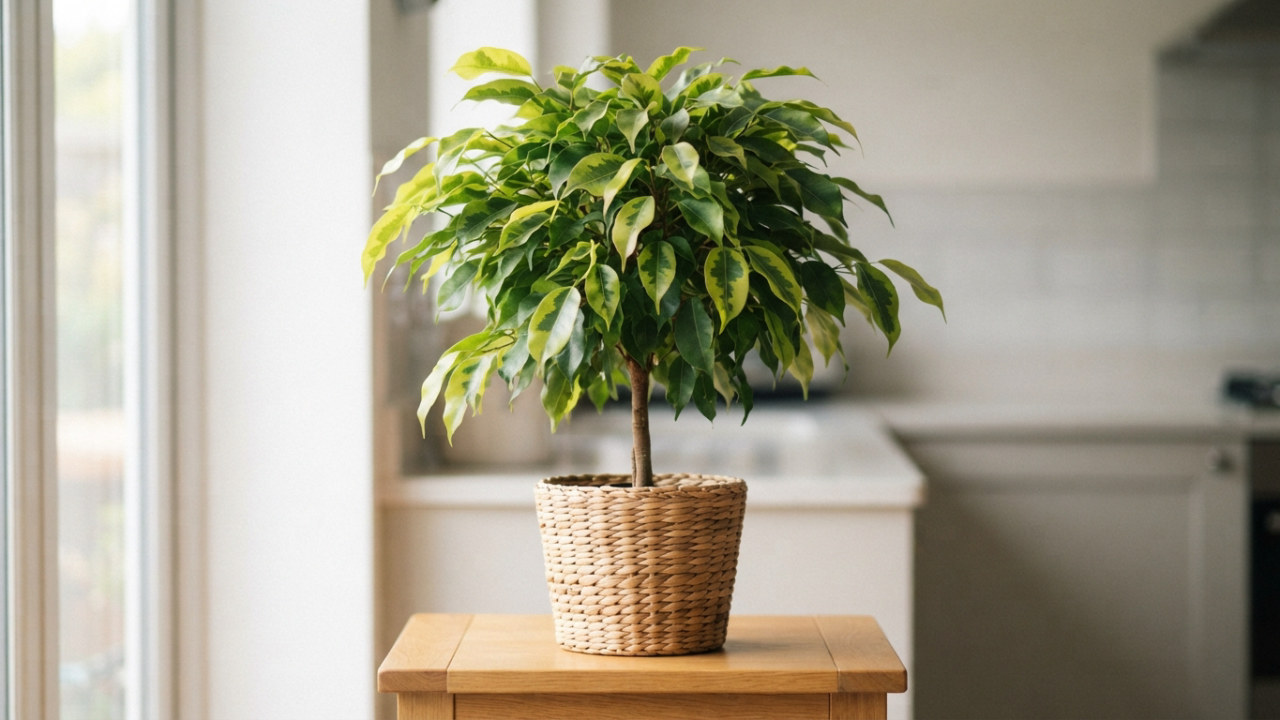
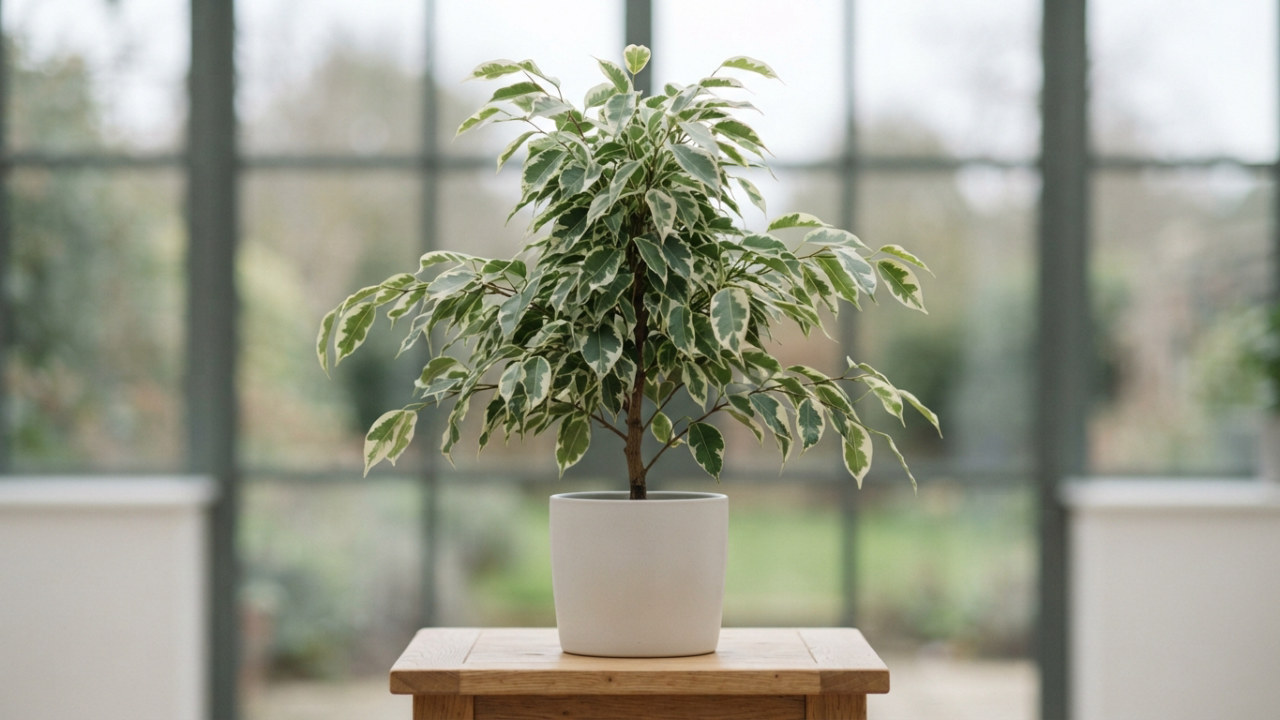
A variegated weeping fig whose glossy leaves open yellow-green with a dark green splash from the midrib.
- Every 7 daysWatering
- Bright indirect lightLight
- 50–70 %Humidity
- 15–28 °CTemperature


Other varieties 10
How to care for your Weeping Fig 'Reginald'
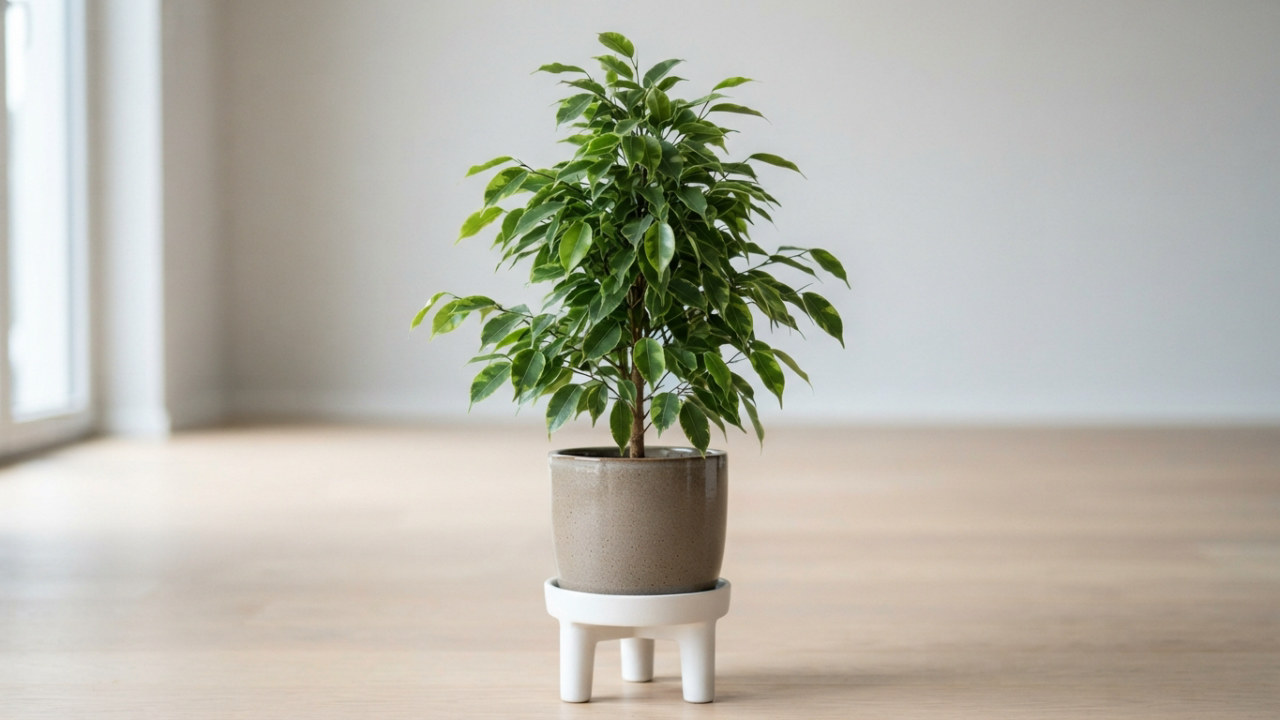
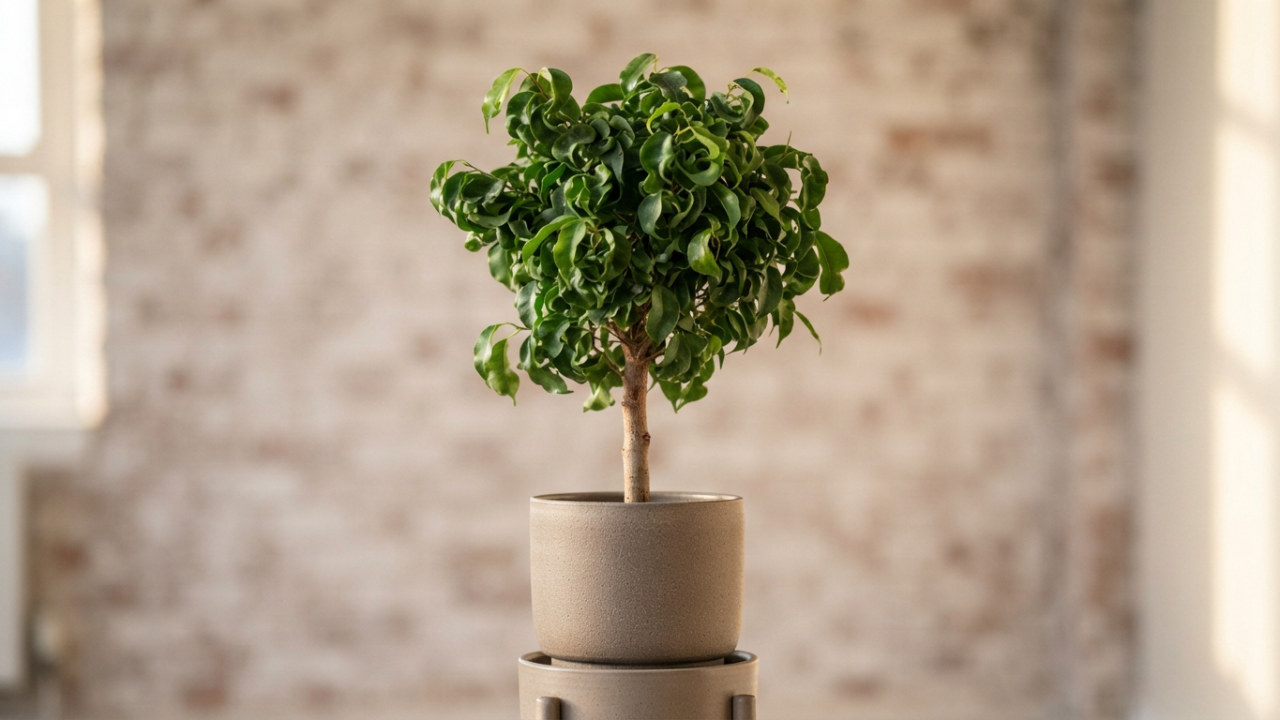
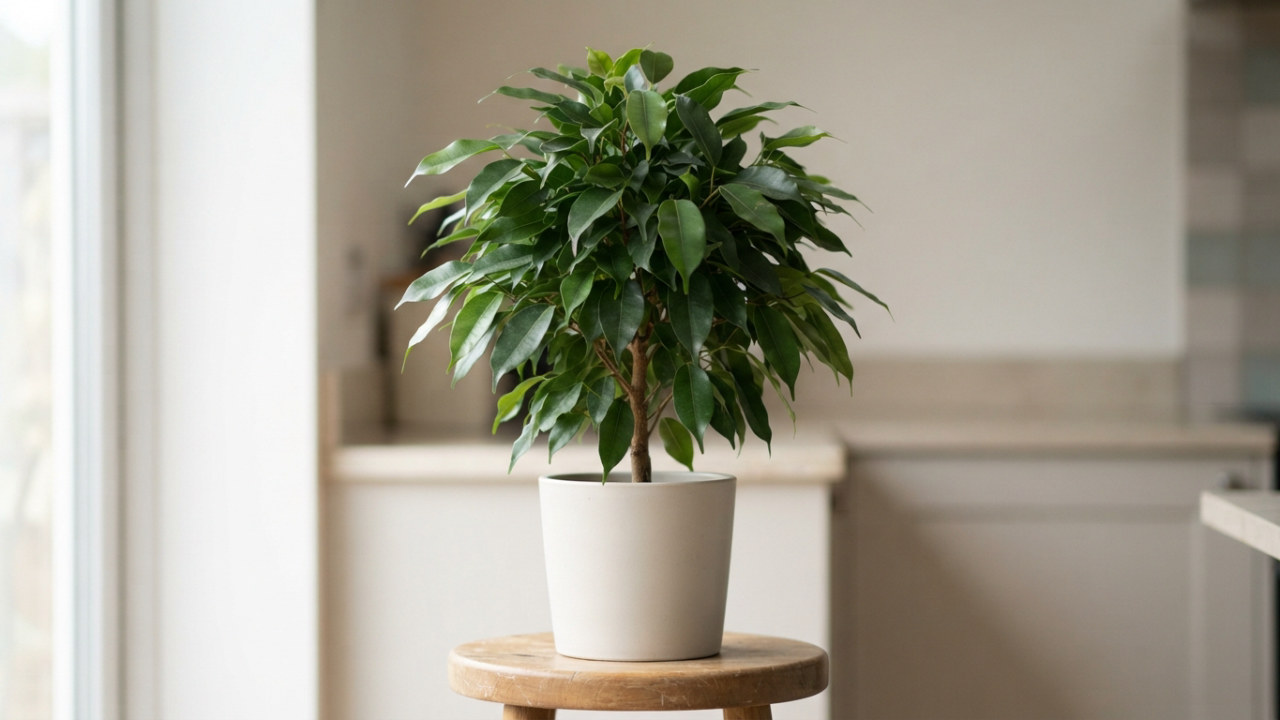
Everything you need to keep your Weeping Fig 'Reginald' healthy: watering, light, humidity, feeding, repotting and pruning.
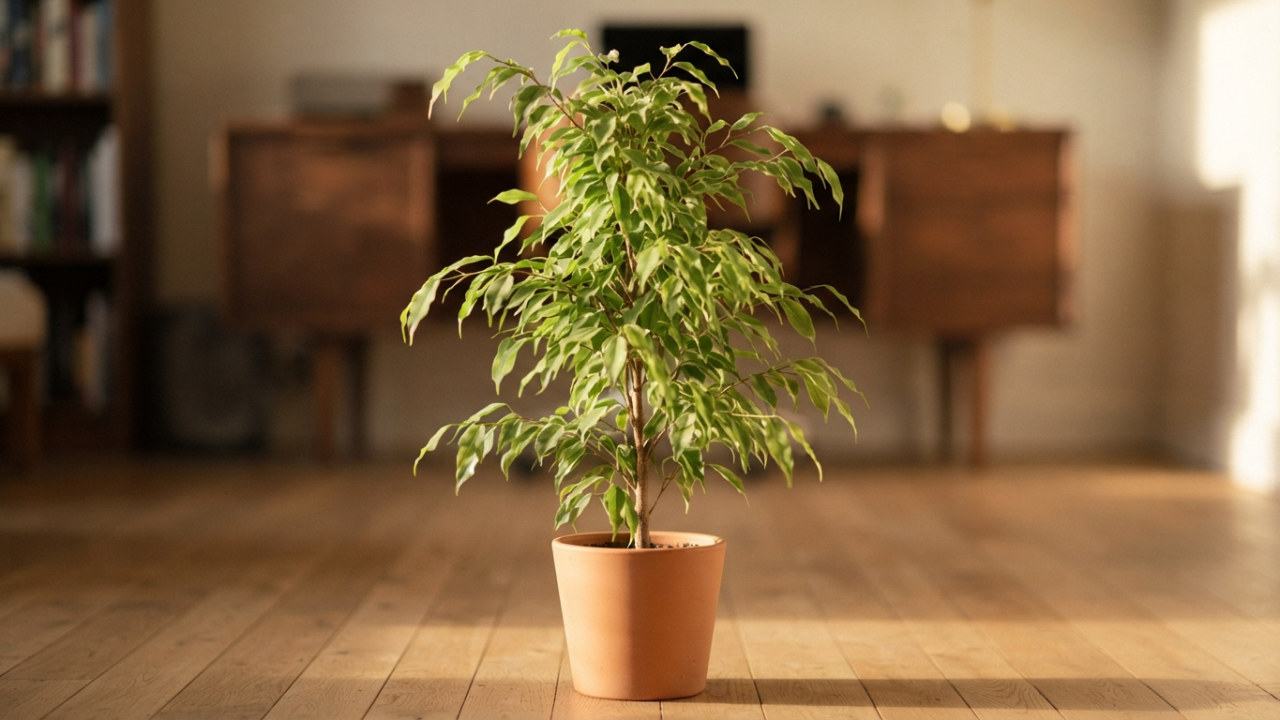
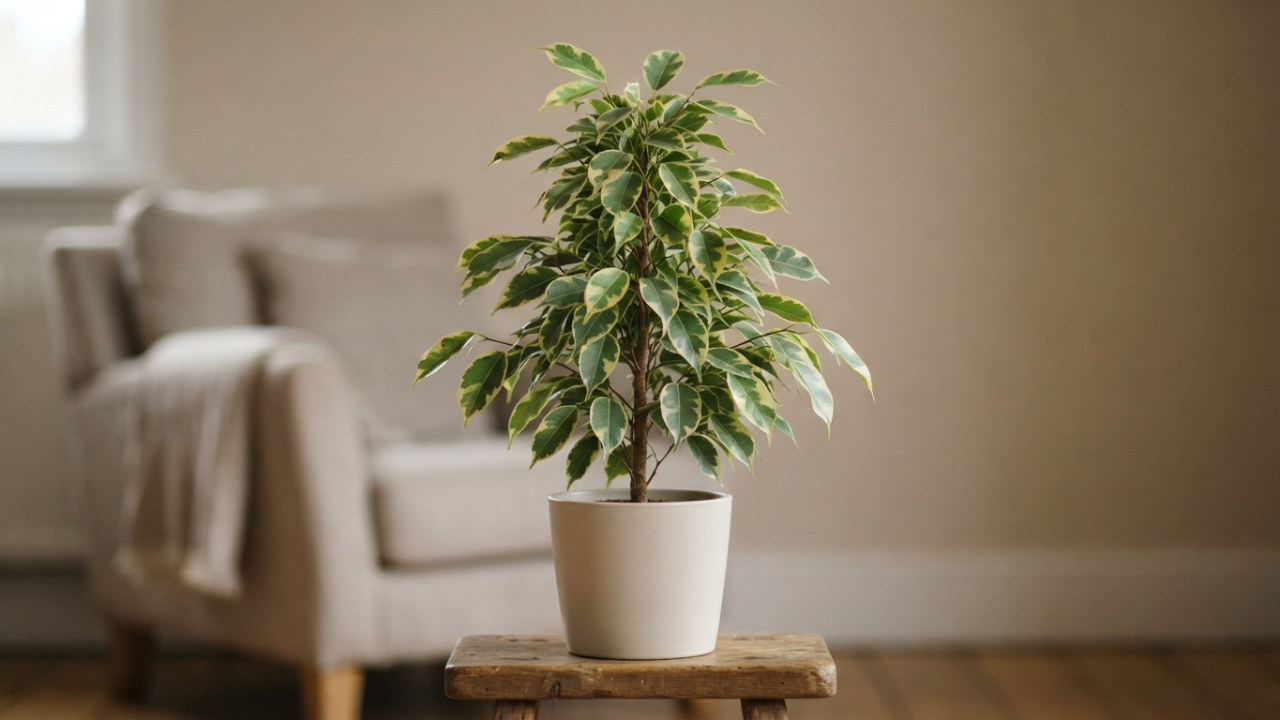
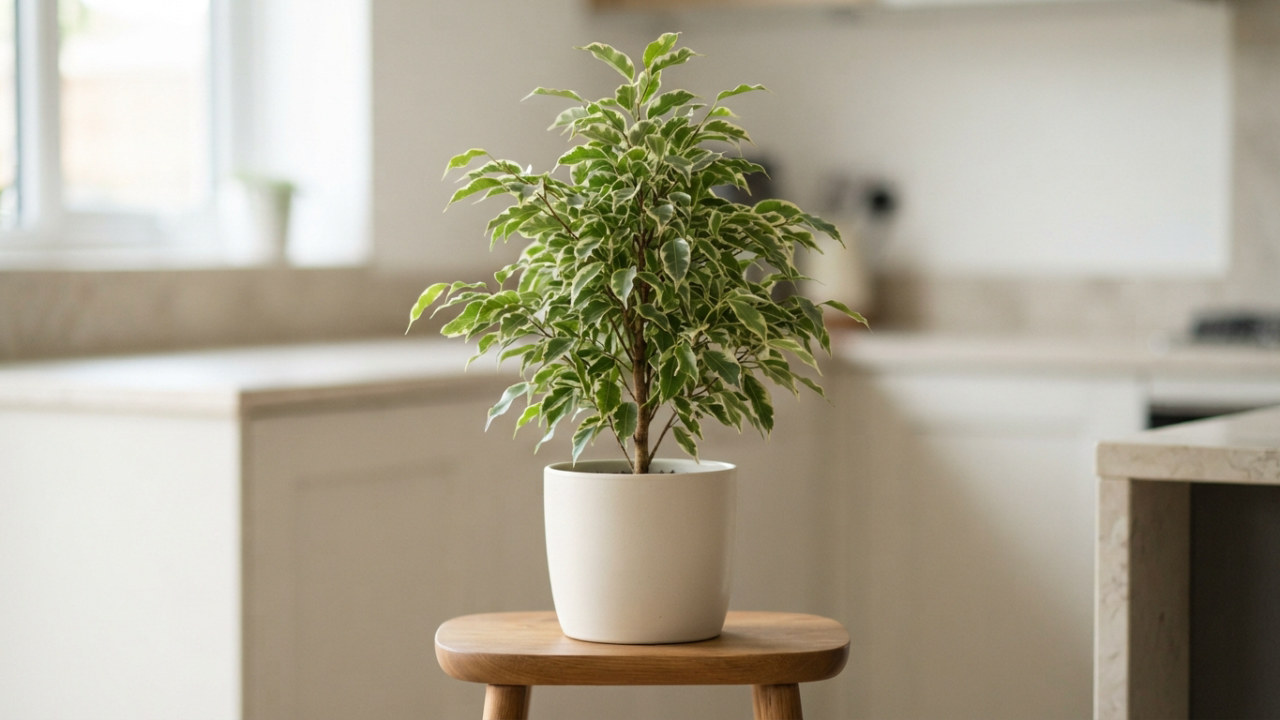
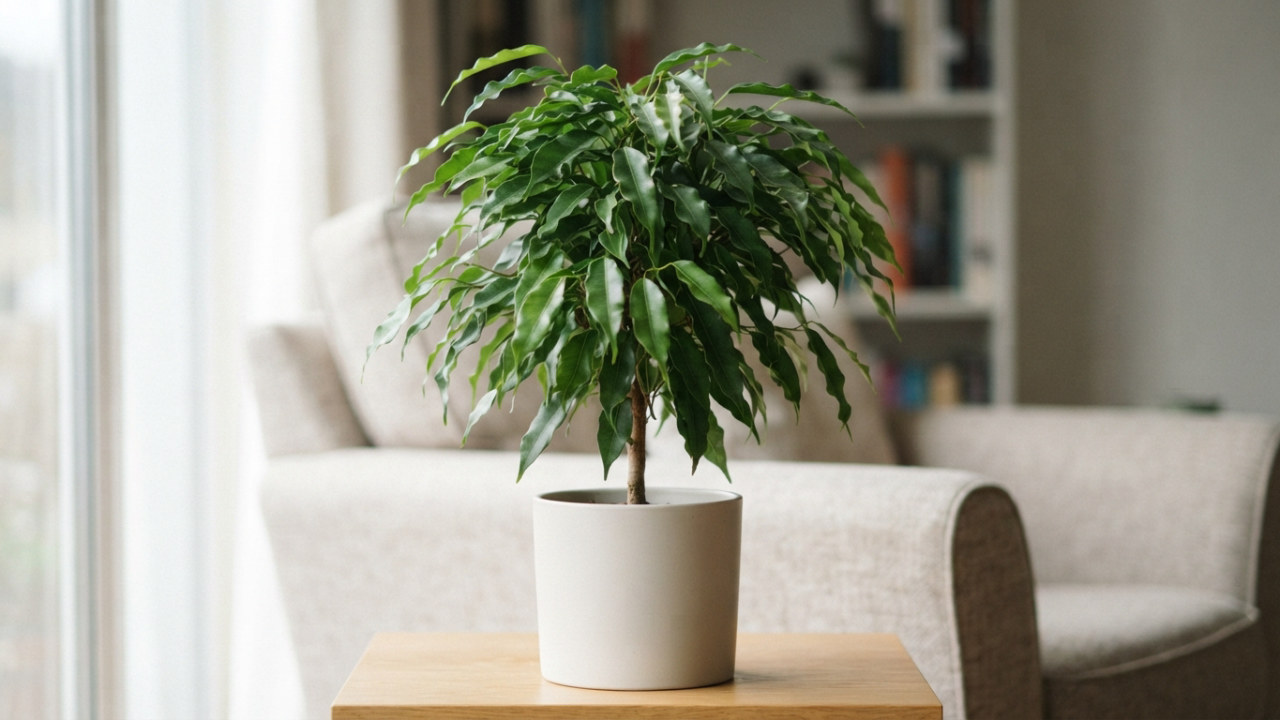
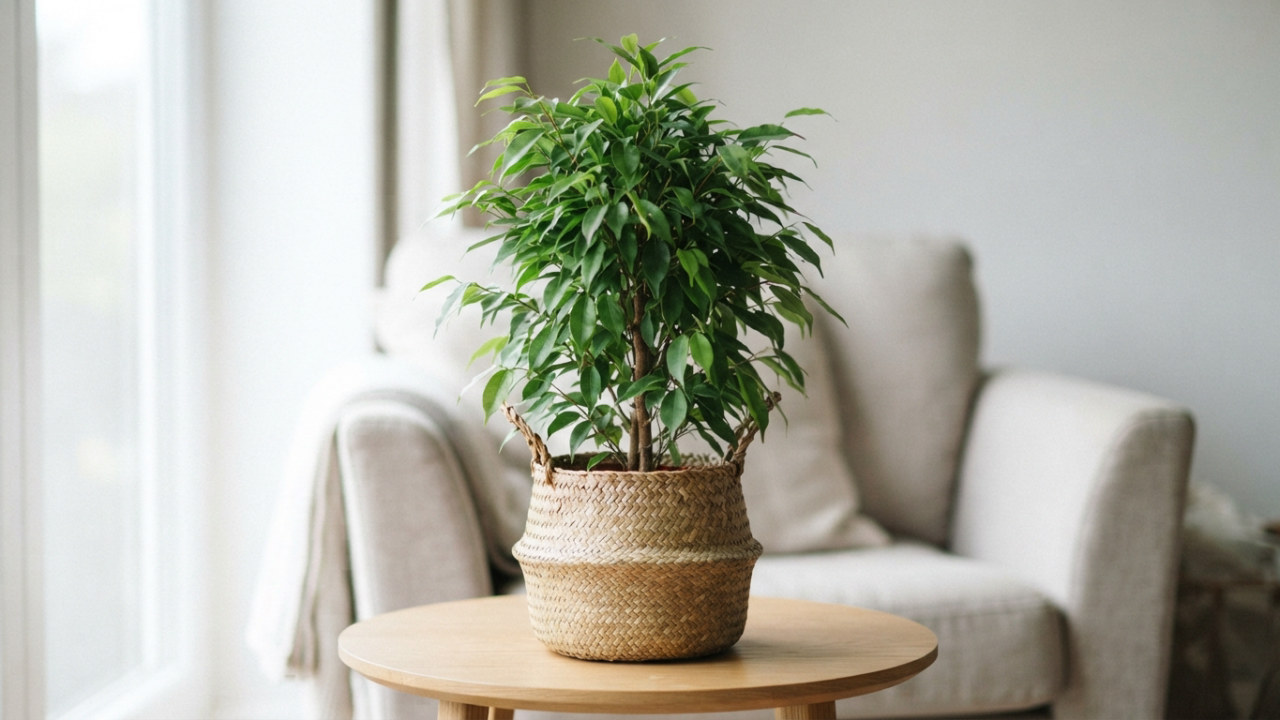
'Reginald' appeared as a spontaneous mutation of 'Exotica', discovered in 1986 by Reginald Deroose in a greenhouse in Evergem, Belgium. Its glossy oval leaves, sometimes slightly wavy, open yellow-green with an irregular dark green splash running out from the midrib, and turn a darker green with age. It has the usual weeping fig shape, with irregularly arching branches bent down at the tips, and grows at a steady pace.

How to recognise Weeping Fig 'Reginald'
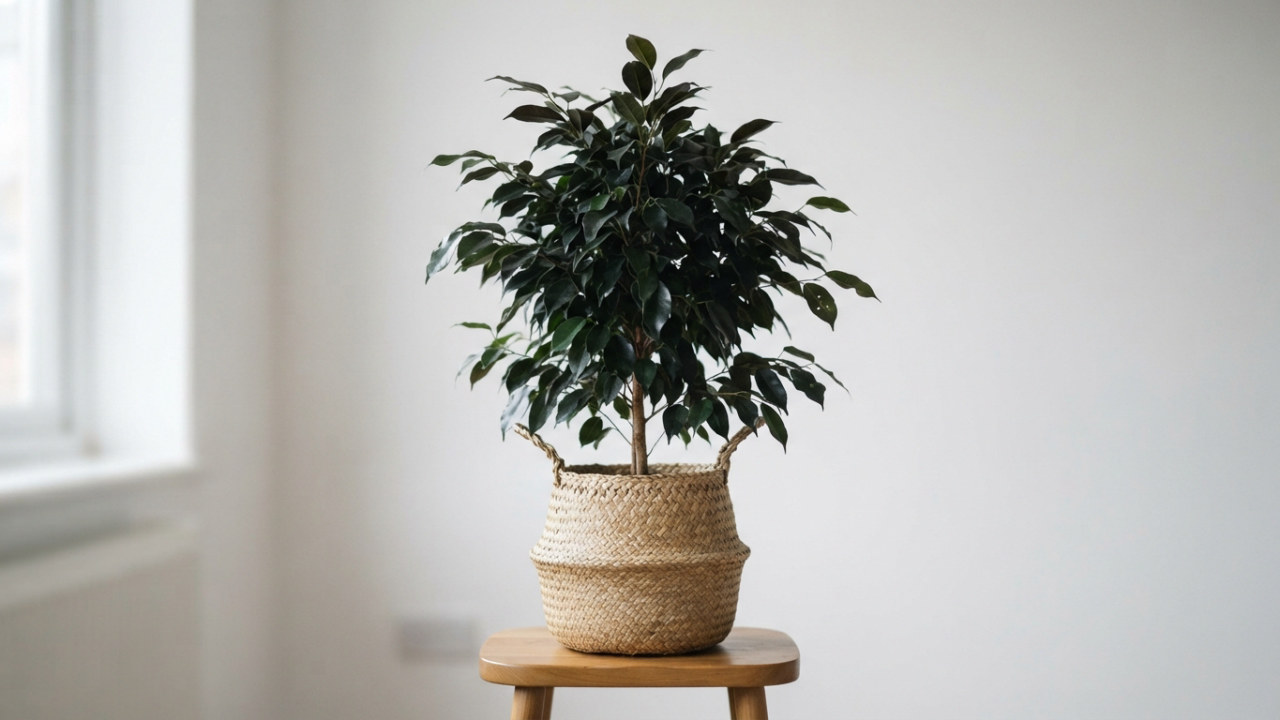
Young leaves are yellow-green with an irregular dark green splash running from the midrib, and the glossy, slightly wavy leaves turn greener as they age. 'Golden King' has the opposite pattern, a pale margin around a green center, 'Anastasia' stays in cooler greens, and Ficus microcarpa has thicker, rounder leaves.

Watering your Weeping Fig 'Reginald'
Every 7 days
Water thoroughly, then let the top two to three centimeters of mix dry before the next watering, about weekly from March to October and every 12 days or so in winter.
How to know it needs water
- The top two to three centimeters of mix are dry when tested with a finger
- The pot feels noticeably lighter than after the last watering

How much light a Weeping Fig 'Reginald' needs
Bright indirect light
Bright indirect light suits it, with no more than an hour of gentle direct sun, because its pale young leaves scorch more easily than deep green ones.
- Direct sun tolerated
- 0 to 1 h a day
- Orientations that suit it
- North, North-east, East, South-east, South, South-west, West, North-west

Humidity and misting
50–70 %
It likes 50 to 70% humidity and should be kept clear of radiators and warm drafts. Misting is not necessary; clean the glossy leaves with a damp cloth when dust builds up.

Feeding and fertiliser
Every 28 days
Apply it every four weeks from April to September, always on damp mix, and pause from October to March.
- Recommended feed
- A liquid foliage-plant fertilizer with a little more nitrogen than phosphorus, such as an NPK near 3-1-2. · 3-1-2

Repotting your Weeping Fig 'Reginald'
Every 24 months
Pot up one size into a light universal mix with perlite and coco fiber, and firm it gently around the root ball.
- When
- Spring, between March and May.
- Potting mix
- All-purpose potting mix
- Mix in
- perlite, coco fibre
The tell-tale signs
- Roots circle the pot or push through the drainage holes
- Growth stalls in the growing season although light and feeding are right

Pruning your Weeping Fig 'Reginald'
In spring when growth restarts, or lightly in summer to tidy the shape. Trim branch tips just above a leaf with clean shears and wear gloves, because the milky sap irritates the skin.

Through the year
Watering is not set once and for all: it follows the light and the growth. Allow 10 days between waterings in the depth of winter, against 6 in the growing season.
- 9 J
- 8 F
- 7 M
- 6 A
- 6 M
- 6 J
- 6 J
- 6 A
- 7 S
- 8 O
- 8 N
- 10 D
Active growth · Days between waterings

Toxicity
The milky sap irritates the skin of people, and if the sap or leaves are swallowed by a person, a cat or a dog, they can cause drooling, vomiting and stomach upset.

Good to know
- It arose as a spontaneous mutation of 'Exotica', discovered in 1986 in a greenhouse in Evergem, Belgium, by Reginald Deroose
- Its leaves start yellow-green and darken as they age, so one branch shows several shades at once

Frequently asked questions about the Weeping Fig 'Reginald'
How do you care for a Weeping Fig 'Reginald'?
Water it every 7 days. Give it bright indirect light. Ideal humidity: 50–70 %. Ideal temperature: 15–28 °C. Water thoroughly, then let the top two to three centimeters of mix dry before the next watering, about weekly from March to October and every 12 days or so in winter.
How often should you water a Weeping Fig 'Reginald'?
Every 7 days Water thoroughly, then let the top two to three centimeters of mix dry before the next watering, about weekly from March to October and every 12 days or so in winter. How to know it needs water : The top two to three centimeters of mix are dry when tested with a finger ; The pot feels noticeably lighter than after the last watering.
How much light does a Weeping Fig 'Reginald' need?
Bright indirect light Bright indirect light suits it, with no more than an hour of gentle direct sun, because its pale young leaves scorch more easily than deep green ones. 0 to 1 h a day
Is the Weeping Fig 'Reginald' toxic to cats and dogs?
Yes. The milky sap irritates the skin of people, and if the sap or leaves are swallowed by a person, a cat or a dog, they can cause drooling, vomiting and stomach upset. Keep it out of reach of your pets and call a vet if any is swallowed.
Why are my Weeping Fig 'Reginald' leaves turning yellow?
Yellowing most often comes from too much water: the mix stays wet and the roots suffocate. Check that the pot drains, empty the saucer, and let the mix dry before watering again. Too little light or a cold draught cause the same symptom.
When should you repot a Weeping Fig 'Reginald'?
Repot every 24 months, ideally in spring, between march and may.. Pot up one size into a light universal mix with perlite and coco fiber, and firm it gently around the root ball.

At a glance
- Family
- Moraceae
- Category
- Tropical
- Placement
- Indoor
- Mature height
- 2.5 m
- Growth
- Moderate
- Temperature
- 15–28 °C
- Pot materials
- terracotta, ceramic, plastic
- Growth
- Reaches maturity in 10 years
These figures are for an average plant. In the app they are recalculated for yours, based on your room, its orientation and the season.
And for your plant, in your home?
In the app this plant becomes yours: a watering schedule tuned to your home, health tracking from photos, and reminders at the right moment.
In the same spirit
 Every 7 days


Air Plant
Tillandsia ionantha

 Every 6 days
Alocasia amazonica
Alocasia amazonica
 Every 7 days
Alocasia baginda
Alocasia baginda
 Every 4 days
Angel Wings
Caladium bicolor
