
Tropical · Araceae
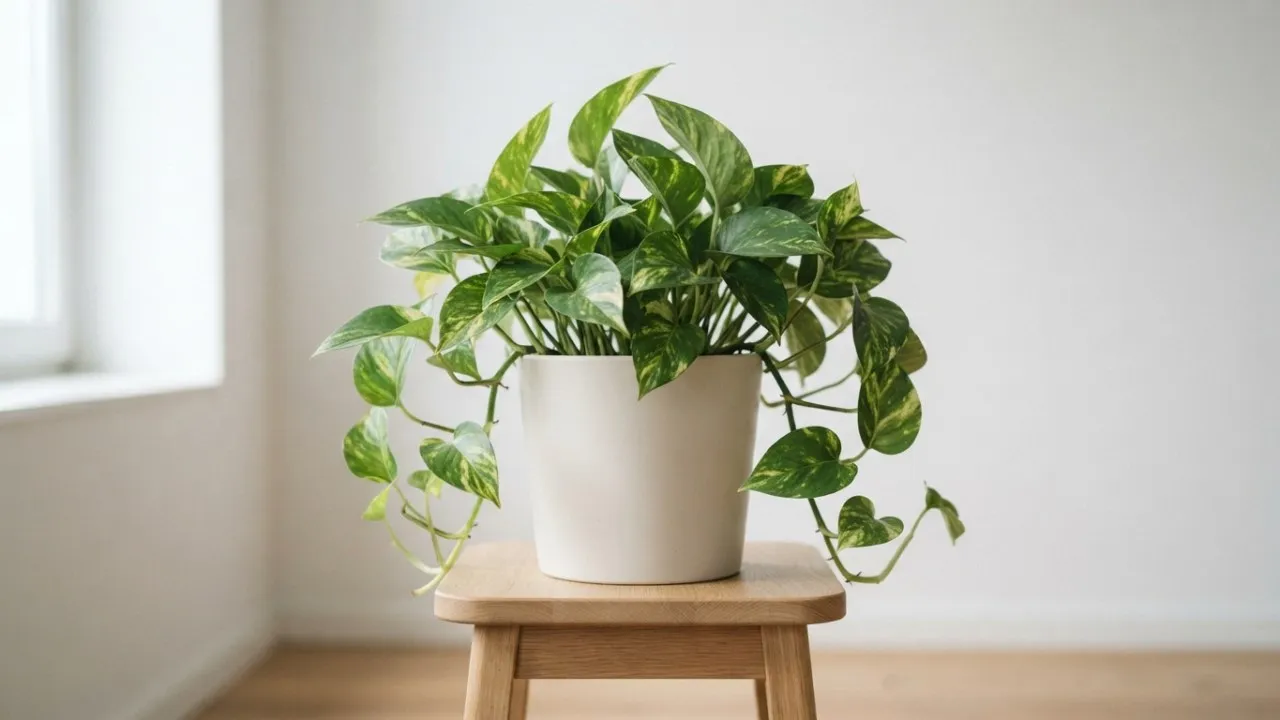
Golden Pothos
Epipremnum aureum
The Pothos is an almost indestructible climbing plant, ideal for beginners.
- Every 8 daysWatering
- Bright indirect lightLight
- 40–60 %Humidity
- 15–29 °CTemperature


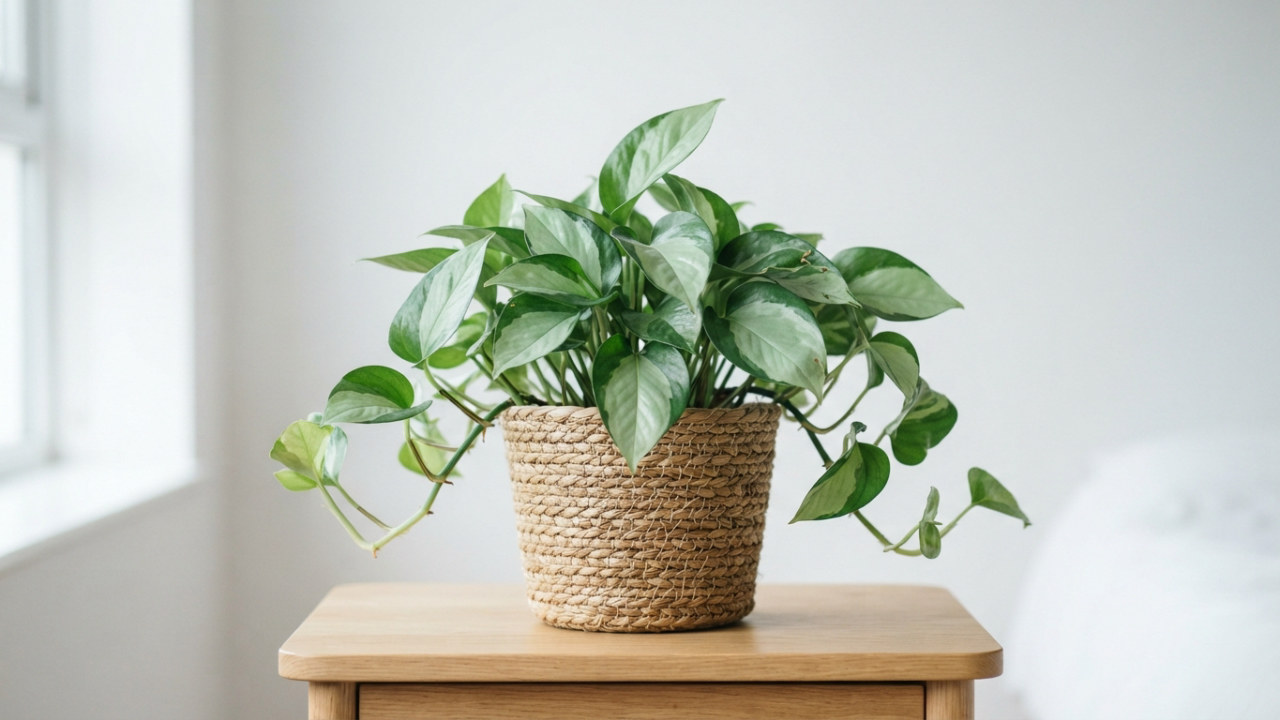
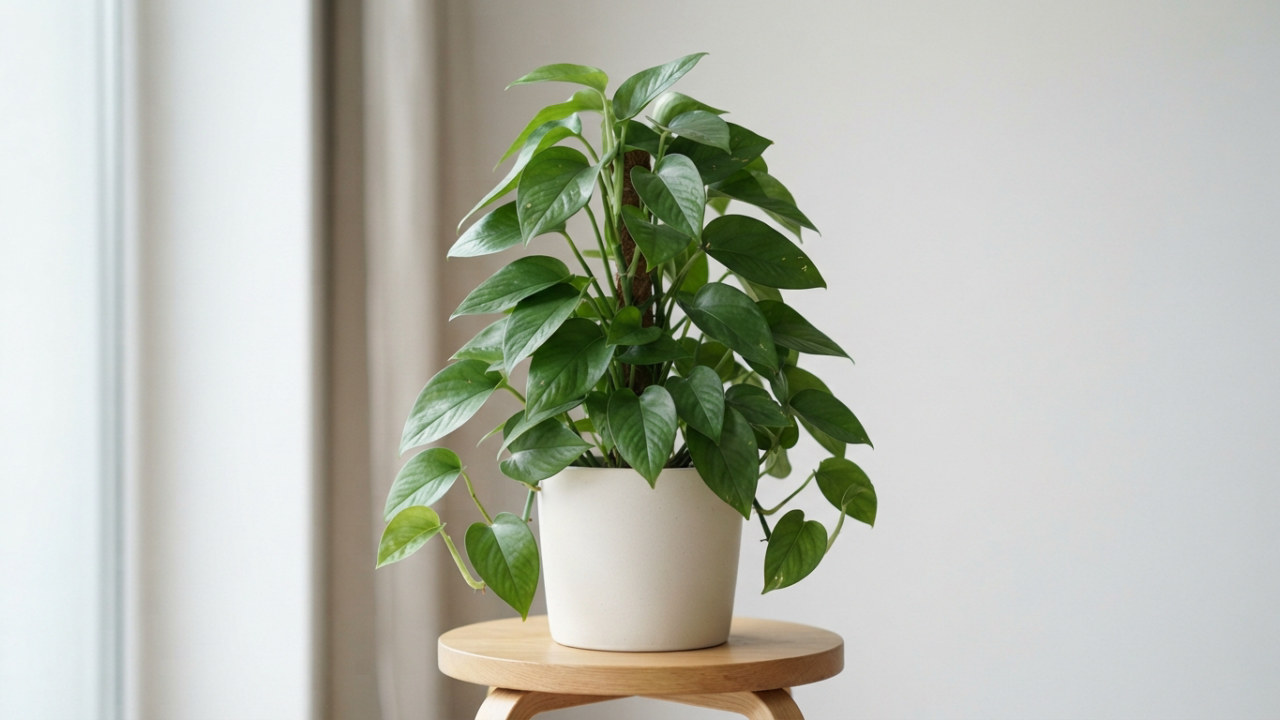
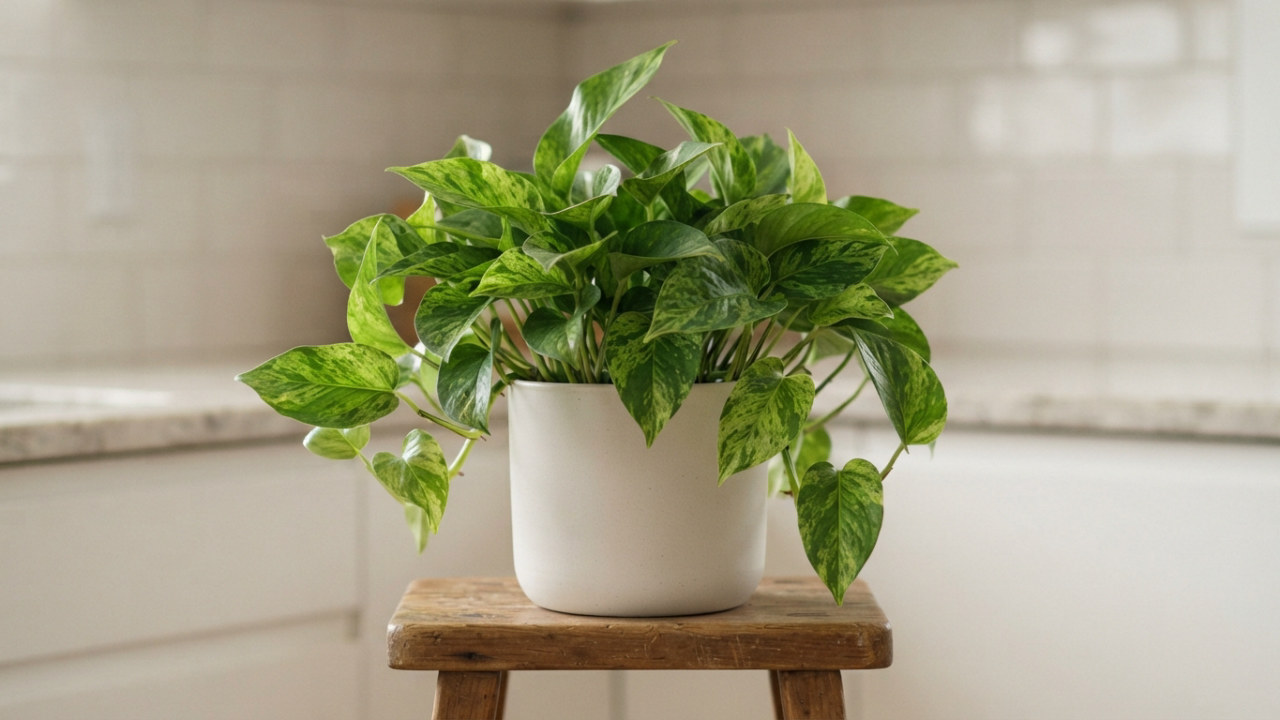
Its varieties 9
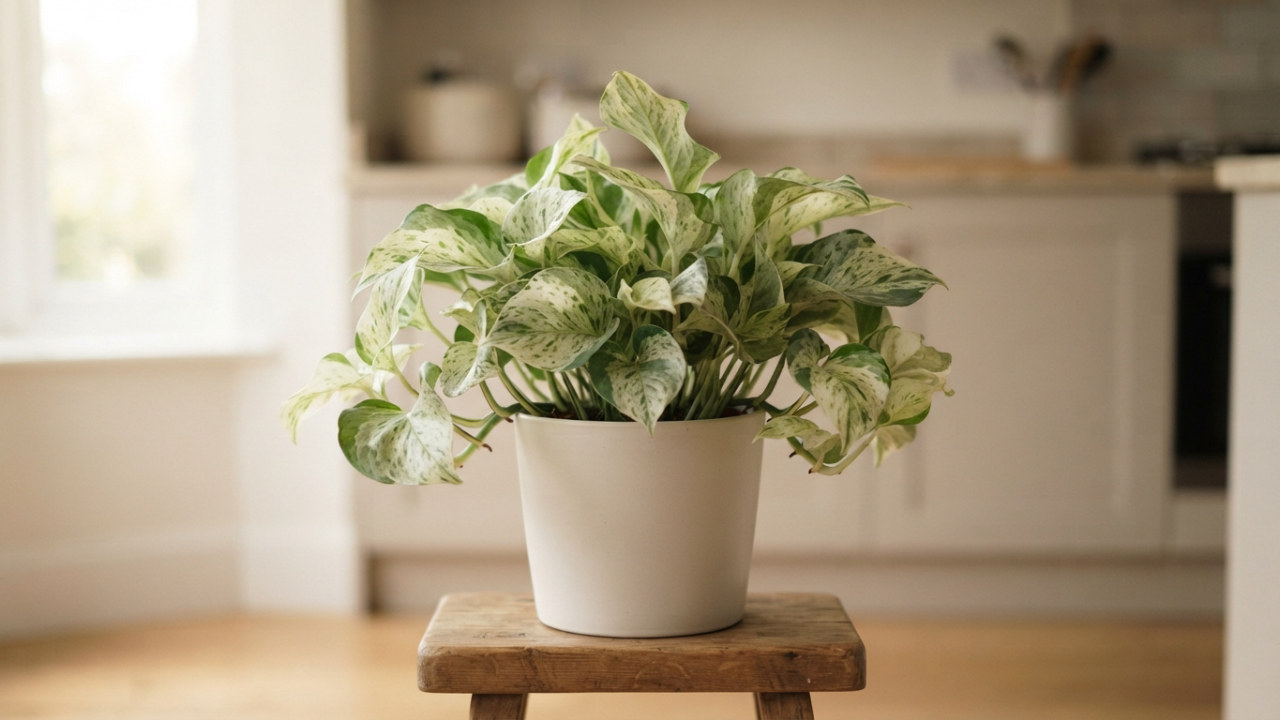
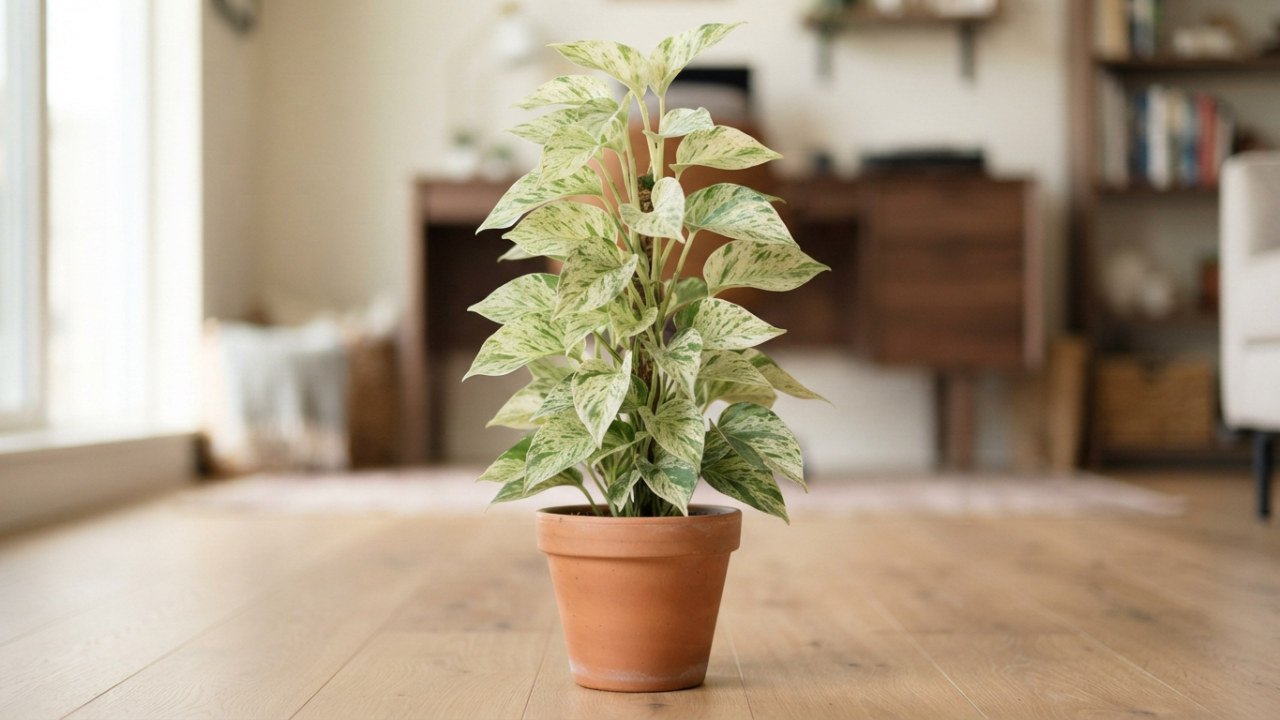
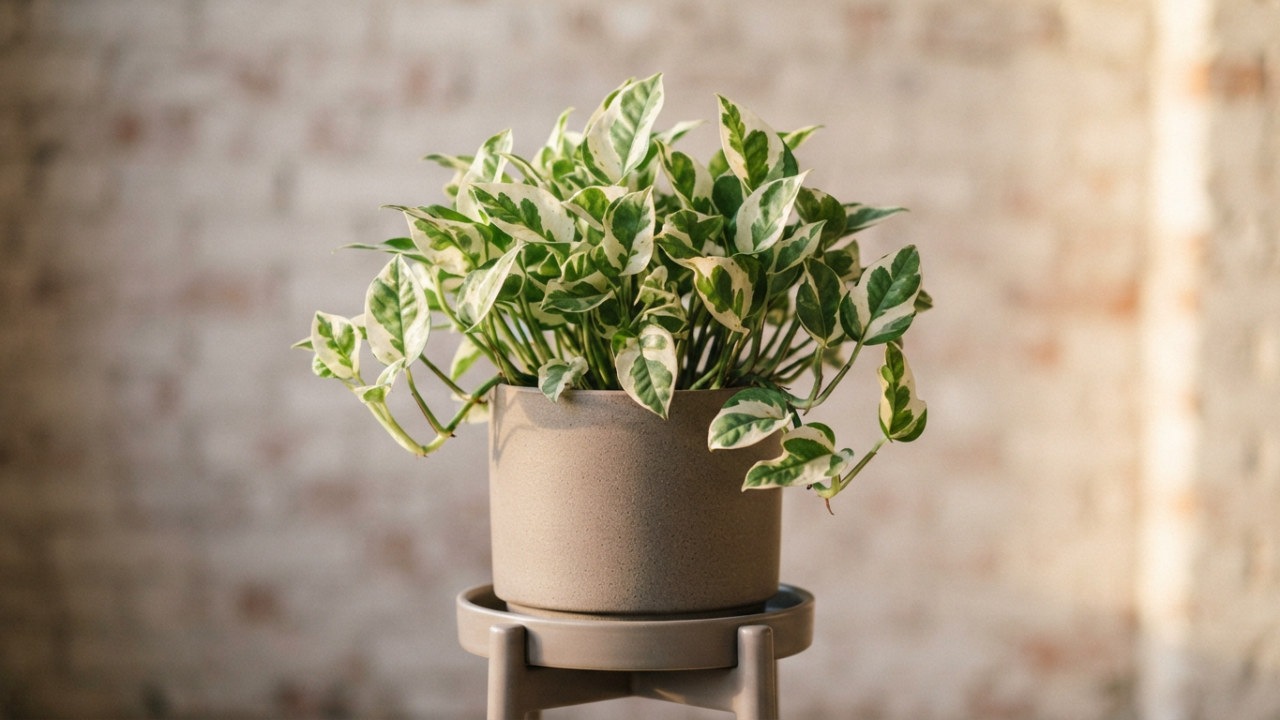
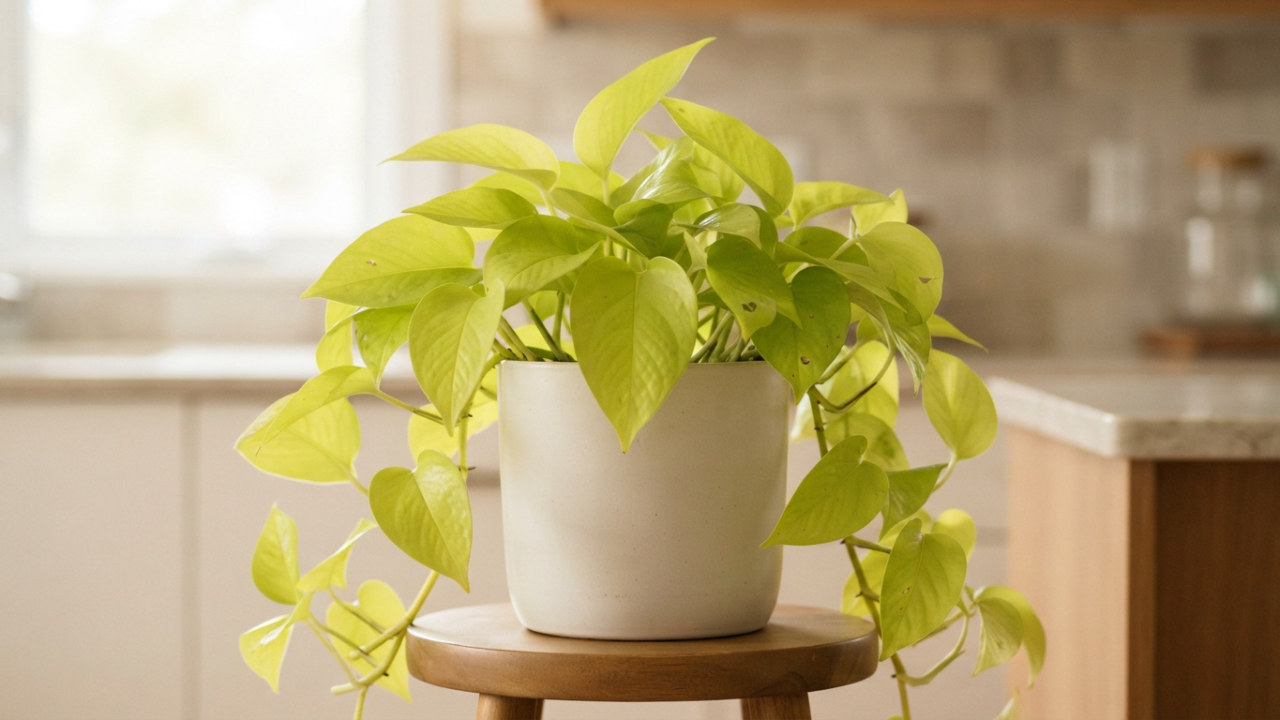
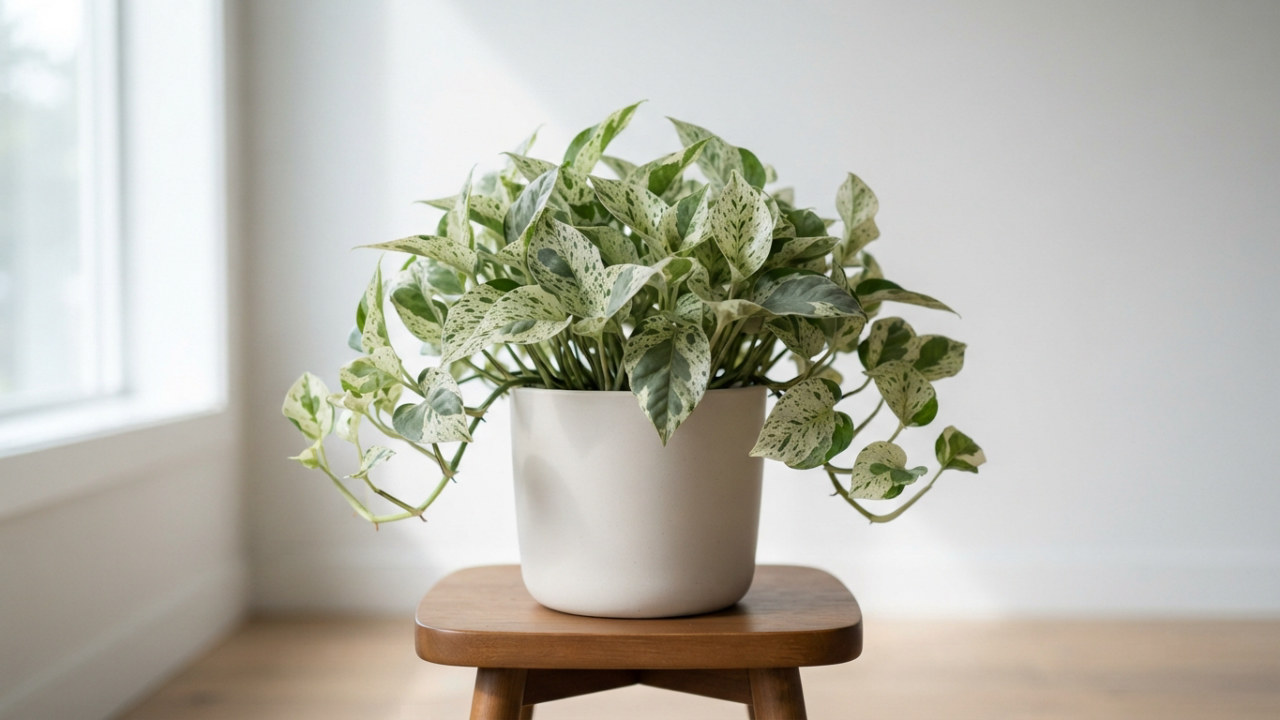
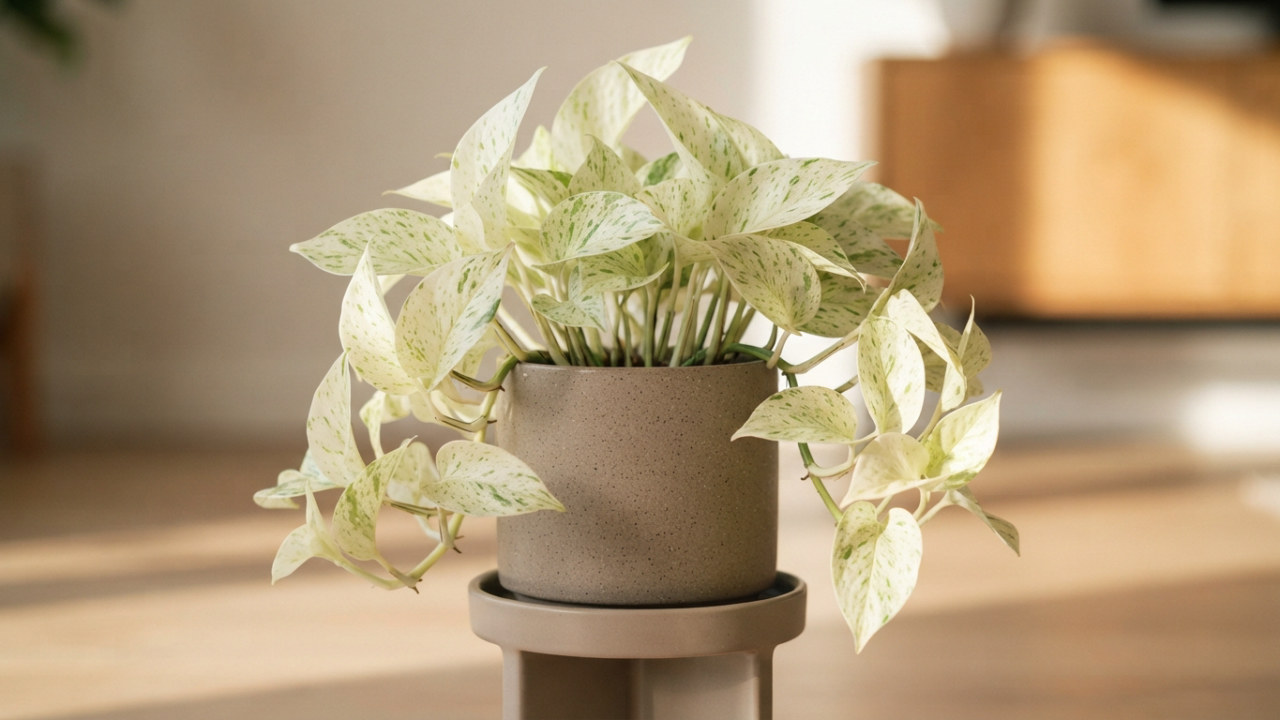
How to care for your Golden Pothos
Everything you need to keep your Golden Pothos healthy: watering, light, humidity, feeding, repotting and pruning.
The Pothos (Epipremnum aureum) is arguably the most tolerant houseplant there is. Native to Mo'orea in French Polynesia, it adapts to almost any condition: low light, missed watering, dry air. Its long trailing stems with heart-shaped leaves marbled green and yellow are very decorative. It's the perfect plant for poorly lit rooms or people who travel frequently. All parts are toxic if eaten, so keep it out of reach of pets and children.

How to recognise Golden Pothos
Trailing or climbing vines with glossy, waxy, heart-shaped leaves splashed with yellow or cream, and aerial roots at the nodes. Heartleaf philodendron has softer, matte, plain green leaves and papery sheaths at the nodes, which pothos lacks. Scindapsus pictus has velvety leaves with silver spots instead of yellow marbling.

Watering your Golden Pothos
Every 8 days
Water moderately; allow the top 4 to 5 cm of substrate to dry between waterings. Water less often in winter.
How to know it needs water
- Soil dry 4 to 5 cm deep
- Leaves beginning to curl slightly

How much light a Golden Pothos needs
Bright indirect light
Tolerates low to bright indirect light; very adaptable. Avoid prolonged direct sun, which bleaches the variegation.
- Direct sun tolerated
- 0 to 2 h a day
- Orientations that suit it
- North, North-east, East, South-east, South, South-west, West, North-west

Humidity and misting
40–60 %
Low to medium (40 to 60%) Misting is not needed: it tolerates dry air well. Wipe the leaves with a damp cloth now and then instead.

Feeding and fertiliser
Every 28 days
Feed every 4 weeks from April to October only; none in winter.
- Recommended feed
- Balanced liquid fertilizer diluted to half strength · 2-1-2

Repotting your Golden Pothos
Every 24 months
Move into a pot one size larger with a well-draining all-purpose potting mix.
- When
- Spring
- Potting mix
- All-purpose potting mix
- Mix in
- perlite, coco fibre, pine bark
The tell-tale signs
- Roots visible through drainage holes
- Very slow growth despite regular feeding

Pruning your Golden Pothos
Trim long stems to encourage denser, bushier growth at any time. Cut just above a leaf node with clean scissors to stimulate branching; cuttings root readily in water. Wear gloves, as the sap can irritate.

Through the year
Watering is not set once and for all: it follows the light and the growth. Allow 10 days between waterings in the depth of winter, against 6 in the growing season.
- 10 J
- 9 F
- 7 M
- 6 A
- 6 M
- 6 J
- 6 J
- 6 A
- 7 S
- 8 O
- 9 N
- 10 D
Active growth · Days between waterings

Toxicity
Toxic if ingested by humans or animals; contains insoluble calcium oxalate crystals causing oral irritation, excessive drooling and difficulty swallowing. The sap can irritate skin: wear gloves when pruning.

Good to know
- In the wild it climbs tree trunks and its adult leaves can exceed 50 cm, far larger than the leaves of a houseplant
- Can grow in a simple glass of water for months

Frequently asked questions about the Golden Pothos
How do you care for a Golden Pothos?
Water it every 8 days. Give it bright indirect light. Ideal humidity: 40–60 %. Ideal temperature: 15–29 °C. Water moderately; allow the top 4 to 5 cm of substrate to dry between waterings. Water less often in winter.
How often should you water a Golden Pothos?
Every 8 days Water moderately; allow the top 4 to 5 cm of substrate to dry between waterings. Water less often in winter. How to know it needs water : Soil dry 4 to 5 cm deep ; Leaves beginning to curl slightly.
How much light does a Golden Pothos need?
Bright indirect light Tolerates low to bright indirect light; very adaptable. Avoid prolonged direct sun, which bleaches the variegation. 0 to 2 h a day
Is the Golden Pothos toxic to cats and dogs?
Yes. Toxic if ingested by humans or animals; contains insoluble calcium oxalate crystals causing oral irritation, excessive drooling and difficulty swallowing. The sap can irritate skin: wear gloves when pruning. Keep it out of reach of your pets and call a vet if any is swallowed.
Why are my Golden Pothos leaves turning yellow?
Yellowing most often comes from too much water: the mix stays wet and the roots suffocate. Check that the pot drains, empty the saucer, and let the mix dry before watering again. Too little light or a cold draught cause the same symptom.
When should you repot a Golden Pothos?
Repot every 24 months, ideally in spring. Move into a pot one size larger with a well-draining all-purpose potting mix.

At a glance
- Family
- Araceae
- Category
- Tropical
- Placement
- Indoor
- Mature height
- 2 m
- Growth
- Fast
- Temperature
- 15–29 °C
- Pot materials
- terracotta, ceramic, plastic
- Growth
- Reaches maturity in 3 years
These figures are for an average plant. In the app they are recalculated for yours, based on your room, its orientation and the season.
And for your plant, in your home?
In the app this plant becomes yours: a watering schedule tuned to your home, health tracking from photos, and reminders at the right moment.
In the same spirit
 Every 7 days


Air Plant
Tillandsia ionantha

 Every 6 days
Alocasia amazonica
Alocasia amazonica
 Every 7 days
Alocasia baginda
Alocasia baginda
 Every 4 days
Angel Wings
Caladium bicolor
