
Tropical · Marantaceae
Ctenanthe setosa
Ctenanthe setosa
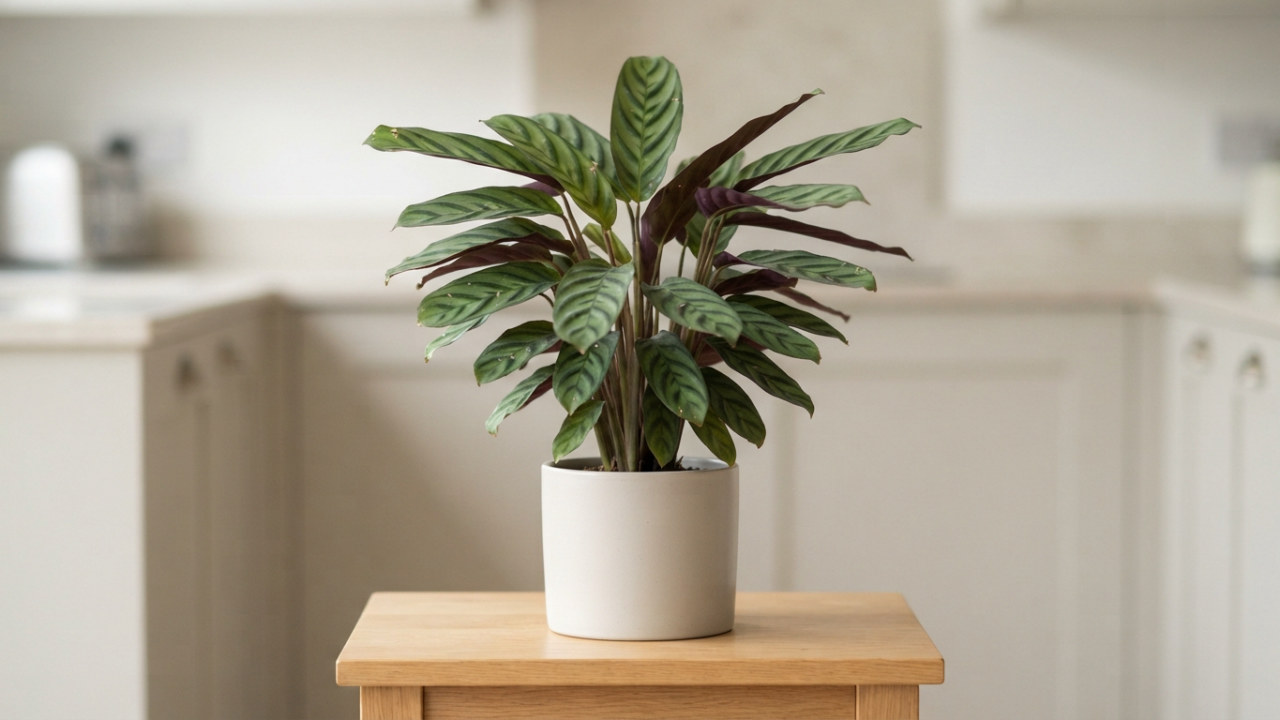
An elegant tropical perennial admired for its striking silver and green patterned foliage with rich purple undersides, growing in an upright clump.
- Every 5 daysWatering
- Bright indirect lightLight
- 60–85 %Humidity
- 18–27 °CTemperature


Its varieties 1
How to care for your Ctenanthe setosa
Everything you need to keep your Ctenanthe setosa healthy: watering, light, humidity, feeding, repotting and pruning.
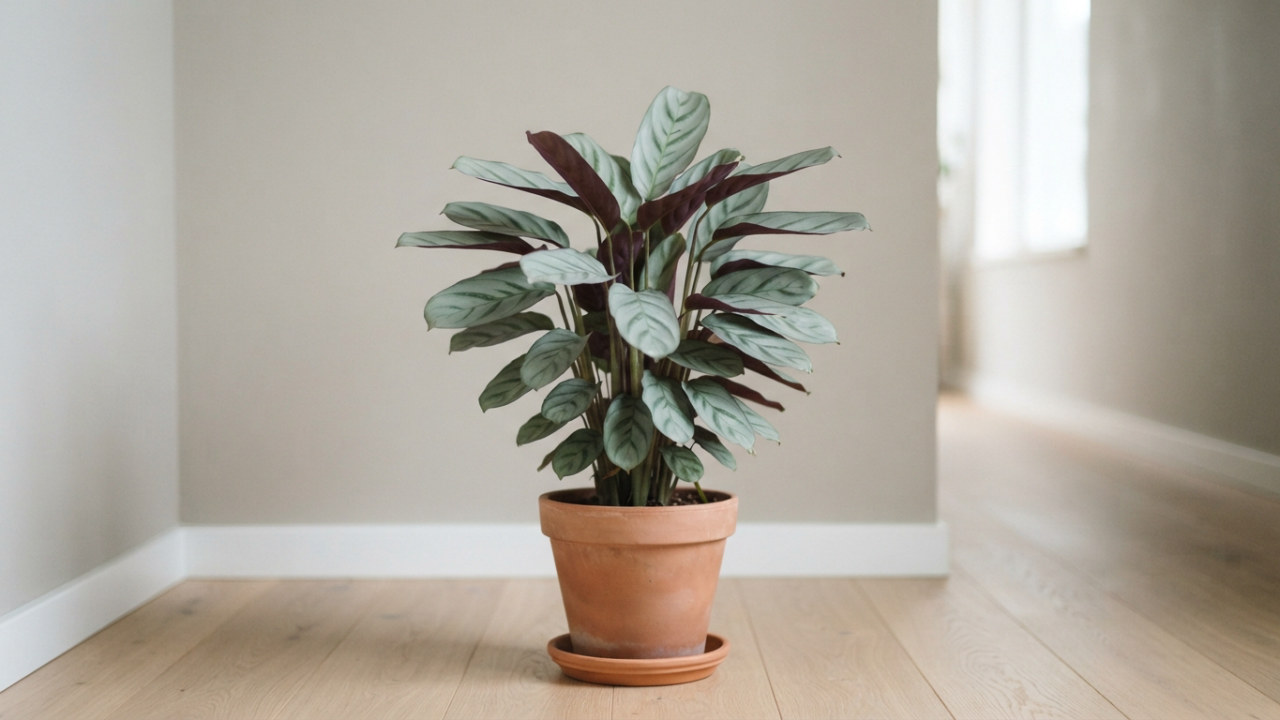
Ctenanthe setosa is an evergreen rhizomatous perennial belonging to the Marantaceae family, indigenous to southeastern Brazil. In its natural rainforest understorey habitat, it forms dense colonies in dappled shade and moist, humus-rich soil. Indoors, it reaches roughly a metre in height, displaying elongated, paper-textured leaves marked with silvery-grey bands and deep green veins running along the central axis. The leaf undersides boast an intense claret-purple hue, which is revealed each evening when the leaves fold vertically in classic prayer-plant fashion. While rewarding and safe around children and pets, it requires consistent moisture and elevated humidity to prevent leaf browning and preserve leaf luster.

How to recognise Ctenanthe setosa
Long oblong-lanceolate leaves with silvery-grey upper surfaces patterned with dark green herringbone veining, contrasting against wine-purple undersides and bristly, hairy petioles. Ctenanthe oppenheimiana (never-never plant) is larger, with bolder cream-white and green stripes, while Calathea lancifolia has wavy-edged leaves with alternating dark oval spots on a pale green ground.

Watering your Ctenanthe setosa
Every 5 days
Water thoroughly with room-temperature filtered water when the top two centimetres of potting soil feel dry to the touch, about every 5 days while it grows (March to October) and about every 10 days in the cooler months.
How to know it needs water
- Top two centimetres of the soil feel completely dry.
- Foliage begins to curl inward lengthwise along the midrib.
- Pot feels noticeably light when lifted.

How much light a Ctenanthe setosa needs
Bright indirect light
Thrives in bright to medium indirect light. Direct sunlight burns the delicate foliage and bleaches the vivid leaf patterns.
- Direct sun tolerated
- 0 to 1 h a day
- Orientations that suit it
- East, North-east, North, North-west

Humidity and misting
60–85 %
Prefers elevated relative humidity between 60 and 85 %; dry ambient air causes crispy brown leaf margins and curling. Mist the foliage about every 2 days with soft or filtered water, ideally in the morning so it dries by evening. A pebble tray or humidifier gives steadier humidity in dry air.

Feeding and fertiliser
Every 14 days
Feed about every four weeks from April to September with a balanced houseplant fertiliser diluted to half strength. No feeding from October to March.
- Recommended feed
- balanced liquid · 10-10-10

Repotting your Ctenanthe setosa
Every 24 months
Repot every 2 years in March or April. Carefully ease the root ball out, loosen congested outer roots gently, and place into a container 2 to 4 cm wider filled with airy, moisture-retentive potting mix.
- When
- Early spring (March to April)
- Potting mix
- All-purpose potting mix
- Mix in
- perlite, pine bark, sphagnum moss, coco fibre
The tell-tale signs
- Roots emerging densely from the drainage holes.
- Water rushes straight through without absorbing evenly.
- Noticeable slowing of new growth during the spring season.

Pruning your Ctenanthe setosa
Early spring or as damaged foliage appears Snip off browning, yellowing, or dead lower leaves at the base of the petiole using sharp, sterilised pruning shears.

Through the year
Watering is not set once and for all: it follows the light and the growth. Allow 7 days between waterings in the depth of winter, against 4 in the growing season.
- 7 J
- 7 F
- 6 M
- 5 A
- 4 M
- 4 J
- 4 J
- 4 A
- 5 S
- 5 O
- 7 N
- 7 D
Active growth · Days between waterings

Good to know
- Like its prayer-plant relatives, it raises its leaves upright at night via tiny cellular joints called pulvini.
- The botanical epithet setosa derives from the Latin seta, meaning bristle, referring to the fine hairs on leaf sheaths and stems.
- Native to the understorey of Brazilian rainforests, it relies on filtered canopy light and constant high humidity.

Frequently asked questions about the Ctenanthe setosa
How do you care for a Ctenanthe setosa?
Water it every 5 days. Give it bright indirect light. Ideal humidity: 60–85 %. Ideal temperature: 18–27 °C. Water thoroughly with room-temperature filtered water when the top two centimetres of potting soil feel dry to the touch, about every 5 days while it grows (March to October) and about every 10 days in the cooler months.
How often should you water a Ctenanthe setosa?
Every 5 days Water thoroughly with room-temperature filtered water when the top two centimetres of potting soil feel dry to the touch, about every 5 days while it grows (March to October) and about every 10 days in the cooler months. How to know it needs water : Top two centimetres of the soil feel completely dry. ; Foliage begins to curl inward lengthwise along the midrib. ; Pot feels noticeably light when lifted..
How much light does a Ctenanthe setosa need?
Bright indirect light Thrives in bright to medium indirect light. Direct sunlight burns the delicate foliage and bleaches the vivid leaf patterns. 0 to 1 h a day
Is the Ctenanthe setosa toxic to cats and dogs?
No, the Ctenanthe setosa is not listed as toxic to cats and dogs. That is still no reason to let your pets chew on it.
Why are my Ctenanthe setosa leaves turning yellow?
Yellowing most often comes from too much water: the mix stays wet and the roots suffocate. Check that the pot drains, empty the saucer, and let the mix dry before watering again. Too little light or a cold draught cause the same symptom.
When should you repot a Ctenanthe setosa?
Repot every 24 months, ideally in early spring (march to april). Repot every 2 years in March or April. Carefully ease the root ball out, loosen congested outer roots gently, and place into a container 2 to 4 cm wider filled with airy, moisture-retentive potting mix.

At a glance
- Family
- Marantaceae
- Category
- Tropical
- Placement
- Indoor
- Mature height
- 95 cm
- Growth
- Moderate
- Temperature
- 18–27 °C
- Pot materials
- plastic, ceramic
- Growth
- Reaches maturity in 3 years
These figures are for an average plant. In the app they are recalculated for yours, based on your room, its orientation and the season.
And for your plant, in your home?
In the app this plant becomes yours: a watering schedule tuned to your home, health tracking from photos, and reminders at the right moment.
In the same spirit
 Every 7 days


Air Plant
Tillandsia ionantha

 Every 6 days
Alocasia amazonica
Alocasia amazonica
 Every 7 days
Alocasia baginda
Alocasia baginda
 Every 4 days
Angel Wings
Caladium bicolor
