
Tropical · Marantaceae
Bamburanta
Ctenanthe lubbersiana
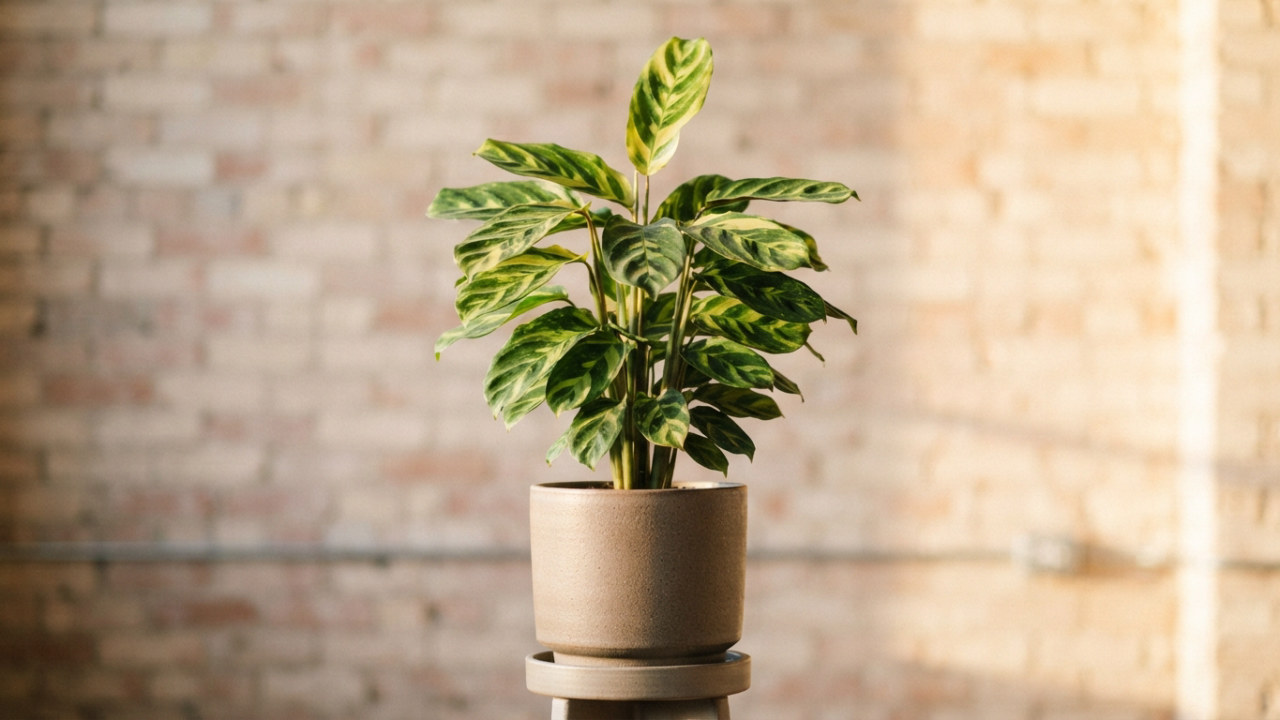
An upright, bushy Marantaceae with bamboo-like stems and green leaves mottled with cream and yellow-green.
- Every 5 daysWatering
- Medium lightLight
- 50–70 %Humidity
- 16–27 °CTemperature


How to care for your Bamburanta
Everything you need to keep your Bamburanta healthy: watering, light, humidity, feeding, repotting and pruning.
Ctenanthe lubbersiana grows wild in the forests of Brazil, in Minas Gerais and Santa Catarina. It forms an upright clump of bamboo-like stems with oblong leaves about 15 cm long, dark green streaked and patched with cream or yellowish green. The undersides are pale green. Indoors it reaches 60 to 90 cm at a moderate pace and seldom flowers. It is also sold as Golden Mosaic.

How to recognise Bamburanta
Oblong leaves about 15 cm long, dark green with cream or yellow-green patches and plain pale green undersides, on bamboo-like stems. It differs from Ctenanthe oppenheimiana (silver stripes, purple undersides), burle-marxii (fishbone stripes) and Goeppertia, whose leaves are larger and more regular.

Watering your Bamburanta
Every 5 days
Water when the top few centimeters have dried, with filtered or rain water, and empty the saucer afterward.
How to know it needs water
- The top 2 or 3 cm of the mix feel dry to the touch.
- The leaves curl inward or the tips turn brown and crisp.

How much light a Bamburanta needs
Medium light
Bright to medium indirect light keeps the mottling vivid, and direct sun scorches the leaves.
- Direct sun tolerated
- No direct sun
- Orientations that suit it
- North, North-east, East, North-west

Humidity and misting
50–70 %
Moderate to high humidity, around 50 to 70 percent, keeps the leaf edges intact. Mist every few days in the growing season with soft water, or stand the pot on a tray of damp pebbles.

Feeding and fertiliser
Every 28 days
Feed about once a month from spring to early fall, and stop in late fall and winter.
- Recommended feed
- A balanced liquid houseplant fertilizer at half strength suits it. · 3-1-2

Repotting your Bamburanta
Every 24 months
Move up one pot size every two years, or divide the clump, in a light, airy mix that drains well.
- When
- Repot in spring, when growth restarts.
- Potting mix
- All-purpose potting mix
- Mix in
- perlite, coco fibre, pine bark
The tell-tale signs
- Roots circle the inside of the pot or show at the drainage holes.
- The clump is crowded and the mix dries out within a day or two.

Pruning your Bamburanta
Trim at any time during the growing season. Cut damaged or brown leaves and stems at the base with clean scissors.

Through the year
Watering is not set once and for all: it follows the light and the growth. Allow 7 days between waterings in the depth of winter, against 4 in the growing season.
- 6 J
- 6 F
- 5 M
- 4 A
- 4 M
- 4 J
- 4 J
- 4 A
- 5 S
- 5 O
- 6 N
- 7 D
Active growth · Days between waterings

Good to know
- Its stems look like small bamboo canes, which explains the name Bamburanta.
- Like other prayer plants, its leaves fold upward at night.

Frequently asked questions about the Bamburanta
How do you care for a Bamburanta?
Water it every 5 days. Give it medium light. Ideal humidity: 50–70 %. Ideal temperature: 16–27 °C. Water when the top few centimeters have dried, with filtered or rain water, and empty the saucer afterward.
How often should you water a Bamburanta?
Every 5 days Water when the top few centimeters have dried, with filtered or rain water, and empty the saucer afterward. How to know it needs water : The top 2 or 3 cm of the mix feel dry to the touch. ; The leaves curl inward or the tips turn brown and crisp..
How much light does a Bamburanta need?
Medium light Bright to medium indirect light keeps the mottling vivid, and direct sun scorches the leaves. No direct sun
Is the Bamburanta toxic to cats and dogs?
No, the Bamburanta is not listed as toxic to cats and dogs. That is still no reason to let your pets chew on it.
Why are my Bamburanta leaves turning yellow?
Yellowing most often comes from too much water: the mix stays wet and the roots suffocate. Check that the pot drains, empty the saucer, and let the mix dry before watering again. Too little light or a cold draught cause the same symptom.
When should you repot a Bamburanta?
Repot every 24 months, ideally in repot in spring, when growth restarts.. Move up one pot size every two years, or divide the clump, in a light, airy mix that drains well.

At a glance
- Family
- Marantaceae
- Category
- Tropical
- Placement
- Indoor
- Mature height
- 75 cm
- Growth
- Moderate
- Temperature
- 16–27 °C
- Pot materials
- ceramic, plastic
- Growth
- Reaches maturity in 3 years
These figures are for an average plant. In the app they are recalculated for yours, based on your room, its orientation and the season.
And for your plant, in your home?
In the app this plant becomes yours: a watering schedule tuned to your home, health tracking from photos, and reminders at the right moment.
In the same spirit
 Every 7 days


Air Plant
Tillandsia ionantha

 Every 6 days
Alocasia amazonica
Alocasia amazonica
 Every 7 days
Alocasia baginda
Alocasia baginda
 Every 4 days
Angel Wings
Caladium bicolor
