
Variety Tropical · Asparagaceae
Cordyline 'Tricolor'
Cordyline fruticosa 'Tricolor' · A variety of Cordyline
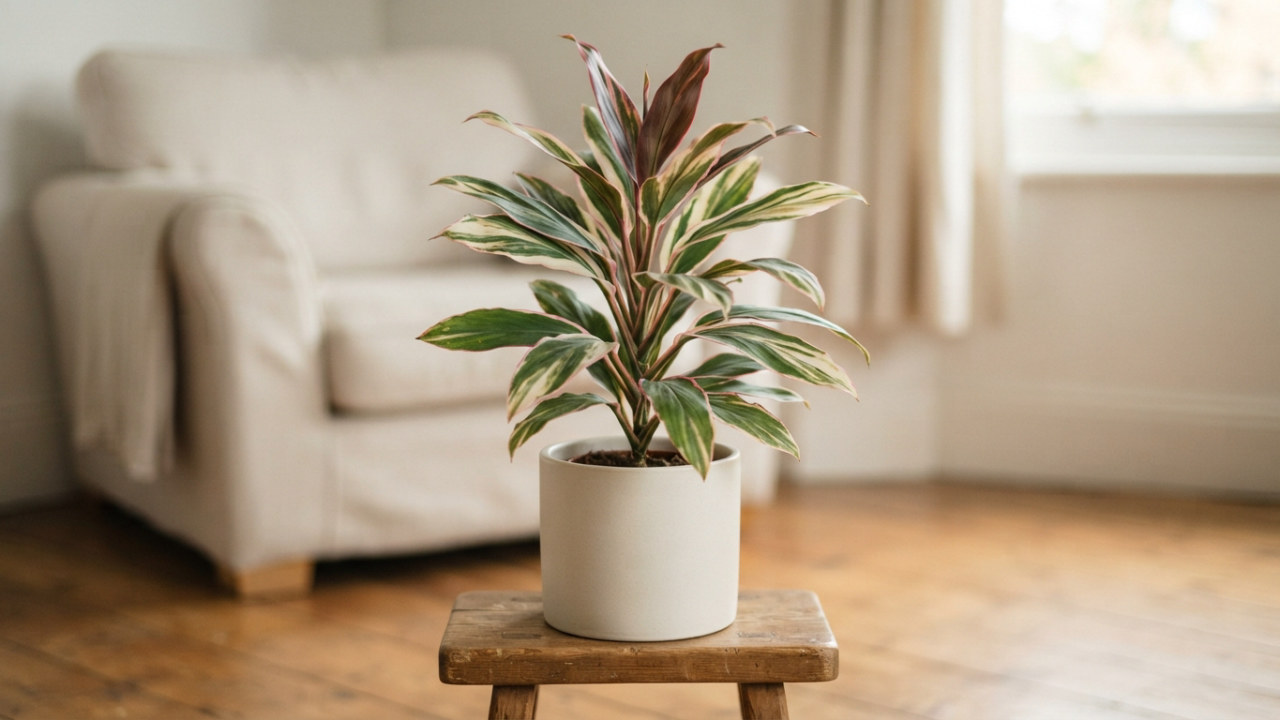
A ti plant whose lance-shaped leaves mix green, cream, pink and maroon in bold stripes with a wavy edge.
- Every 7 daysWatering
- Bright indirect lightLight
- 50–70 %Humidity
- 18–26 °CTemperature


Other varieties 2
How to care for your Cordyline 'Tricolor'
Everything you need to keep your Cordyline 'Tricolor' healthy: watering, light, humidity, feeding, repotting and pruning.
'Tricolor' is a cultivar of Cordyline fruticosa, the ti plant of tropical Asia and the Pacific, grown for its three-color leaves: green striped and edged in cream and pink, with purple or maroon tones on new growth. The lance-shaped leaves have a slightly wavy margin and form an upright, clumping plant of three to six feet indoors. Its pale areas carry little chlorophyll, so it grows slowly and keeps its colors best in bright light without hot sun.

How to recognise Cordyline 'Tricolor'
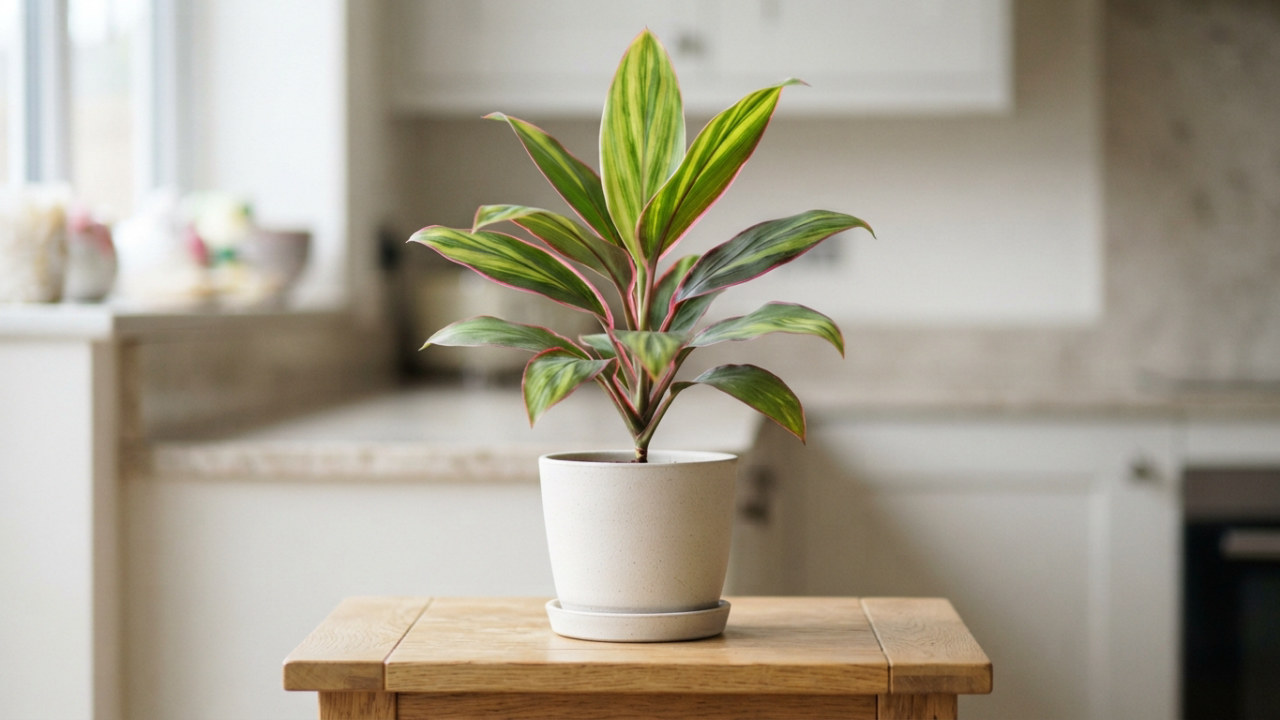
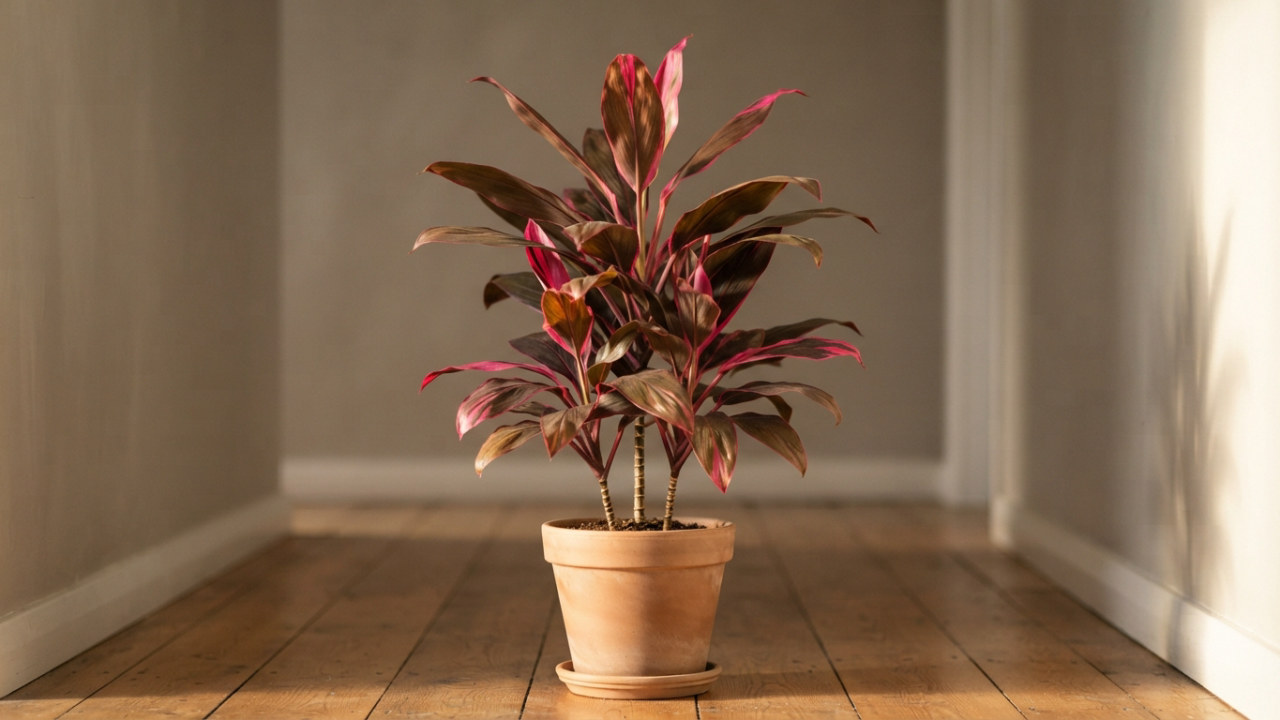
Green leaves striped and edged in cream, white and pink, with maroon new growth, so cream is always present. 'Red Sister' is burgundy and pink with no cream; 'Kiwi' is green and yellow-lime with a pink margin and little maroon.

Watering your Cordyline 'Tricolor'
Every 7 days
Water until it drains, then wait until the top 2 to 3 cm of mix has dried before watering again.
How to know it needs water
- The top 2 to 3 cm of mix feel dry
- The pot is clearly lighter and the leaves look a little dull

How much light a Cordyline 'Tricolor' needs
Bright indirect light
Bright indirect light keeps the stripes vivid; direct sun burns the pale areas, and dim light makes the colors fade toward green.
- Direct sun tolerated
- 0 to 1 h a day
- Orientations that suit it
- North, North-east, East, North-west

Humidity and misting
50–70 %
Average to fairly humid air, around 50 to 70%. Mist every day or two when the air is dry, or stand the pot on a tray of damp clay pebbles.

Feeding and fertiliser
Every 30 days
Feed about once a month from March to September and stop in winter.
- Recommended feed
- A balanced liquid fertilizer for foliage plants, diluted. · 5-10-5

Repotting your Cordyline 'Tricolor'
Every 24 months
Move it to a pot 2 to 5 cm wider with a light, well-draining mix, handling the roots gently.
- When
- Spring, in March or April.
- Potting mix
- All-purpose potting mix
- Mix in
- perlite, coco fibre
The tell-tale signs
- Roots push out of the drainage holes
- Water runs straight through and the mix dries within a few days

Pruning your Cordyline 'Tricolor'
Remove spent lower leaves whenever they brown, and shorten tall canes in spring. Cut a leaf at its base or a cane just above a node, with clean scissors or a sharp blade.

Through the year
Watering is not set once and for all: it follows the light and the growth. Allow 13 days between waterings in the depth of winter, against 6 in the growing season.
- 11 J
- 8 F
- 7 M
- 6 A
- 6 M
- 6 J
- 6 J
- 6 A
- 7 S
- 8 O
- 11 N
- 13 D
Active growth · Days between waterings

Toxicity
The saponins in the plant can cause vomiting, drooling and a lost appetite in cats and dogs that chew it; it is not listed as toxic to people.

Good to know
- The cream and pink parts of the leaf make little chlorophyll, which is why variegated forms grow more slowly.
- Like other ti plants, its ancestors were carried across Pacific islands and used there for leaf wraps and thatch.

Frequently asked questions about the Cordyline 'Tricolor'
How do you care for a Cordyline 'Tricolor'?
Water it every 7 days. Give it bright indirect light. Ideal humidity: 50–70 %. Ideal temperature: 18–26 °C. Water until it drains, then wait until the top 2 to 3 cm of mix has dried before watering again.
How often should you water a Cordyline 'Tricolor'?
Every 7 days Water until it drains, then wait until the top 2 to 3 cm of mix has dried before watering again. How to know it needs water : The top 2 to 3 cm of mix feel dry ; The pot is clearly lighter and the leaves look a little dull.
How much light does a Cordyline 'Tricolor' need?
Bright indirect light Bright indirect light keeps the stripes vivid; direct sun burns the pale areas, and dim light makes the colors fade toward green. 0 to 1 h a day
Is the Cordyline 'Tricolor' toxic to cats and dogs?
Yes. The saponins in the plant can cause vomiting, drooling and a lost appetite in cats and dogs that chew it; it is not listed as toxic to people. Keep it out of reach of your pets and call a vet if any is swallowed.
Why are my Cordyline 'Tricolor' leaves turning yellow?
Yellowing most often comes from too much water: the mix stays wet and the roots suffocate. Check that the pot drains, empty the saucer, and let the mix dry before watering again. Too little light or a cold draught cause the same symptom.
When should you repot a Cordyline 'Tricolor'?
Repot every 24 months, ideally in spring, in march or april.. Move it to a pot 2 to 5 cm wider with a light, well-draining mix, handling the roots gently.

At a glance
- Family
- Asparagaceae
- Category
- Tropical
- Placement
- Indoor and outdoor
- Mature height
- 1.5 m
- Growth
- Slow
- Temperature
- 18–26 °C
- Pot materials
- ceramic, plastic, terracotta
- Growth
- Reaches maturity in 5 years
These figures are for an average plant. In the app they are recalculated for yours, based on your room, its orientation and the season.
And for your plant, in your home?
In the app this plant becomes yours: a watering schedule tuned to your home, health tracking from photos, and reminders at the right moment.
In the same spirit
 Every 7 days


Air Plant
Tillandsia ionantha

 Every 6 days
Alocasia amazonica
Alocasia amazonica
 Every 7 days
Alocasia baginda
Alocasia baginda
 Every 4 days
Angel Wings
Caladium bicolor
