
Tropical · Araceae
Taro
Colocasia esculenta
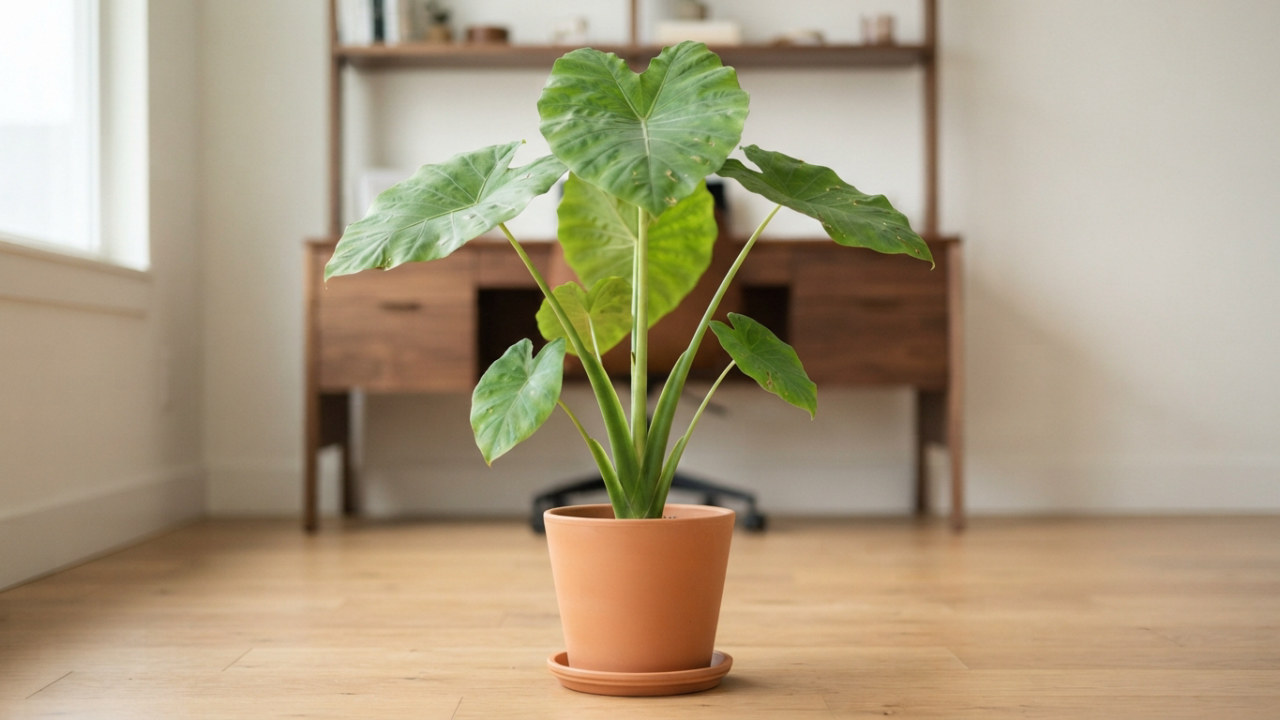
A clumping aroid with big, drooping heart-shaped leaves on tall stalks, grown for its foliage and its edible corm.
- Every 3 daysWatering
- Bright indirect lightLight
- 60–80 %Humidity
- 18–30 °CTemperature


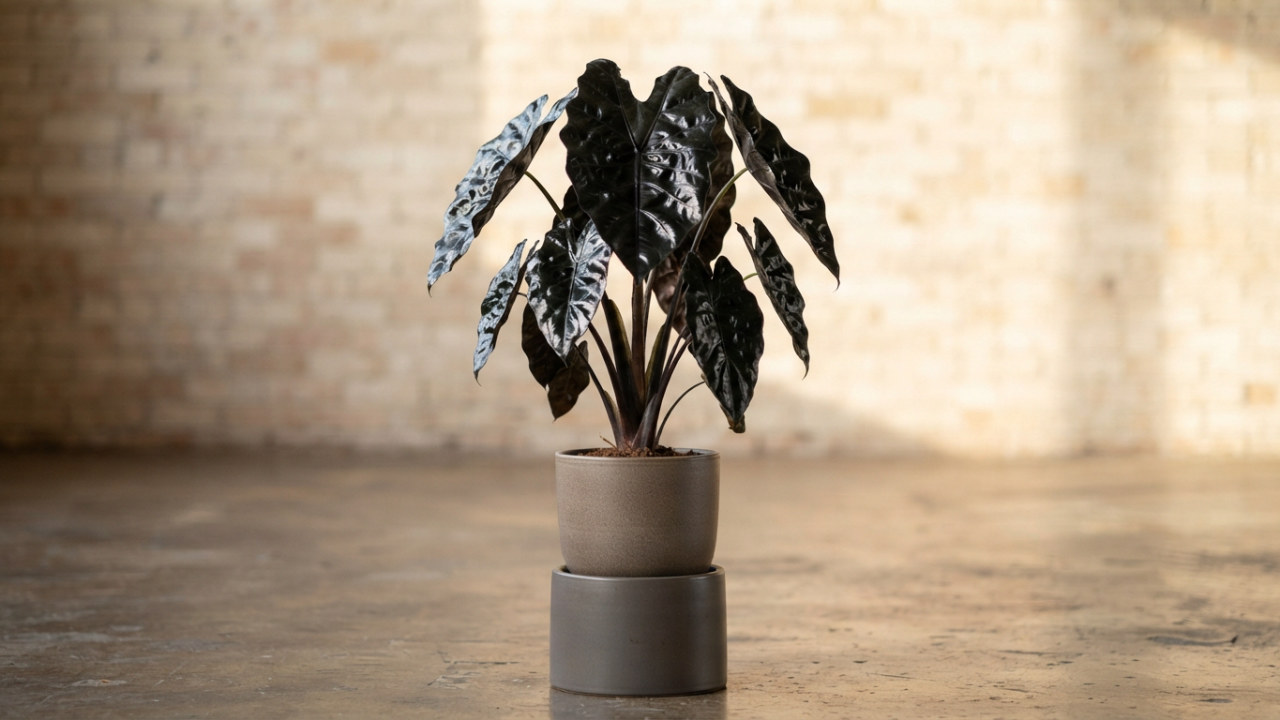
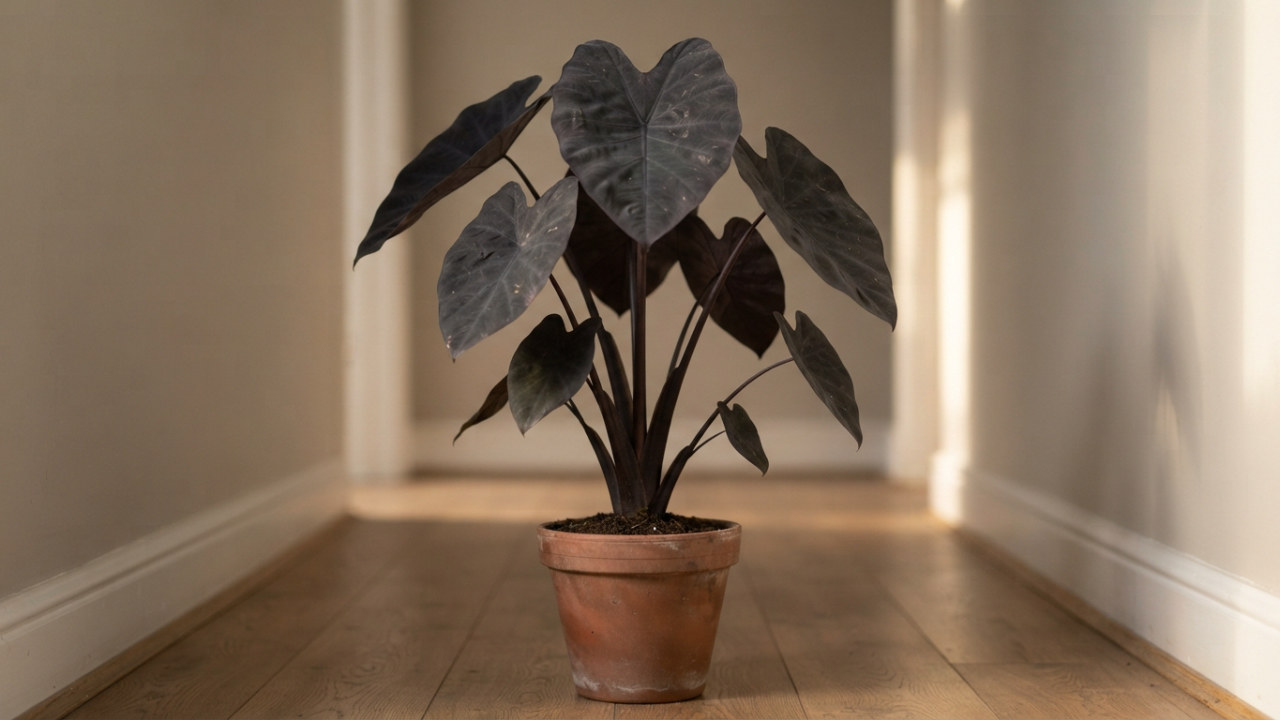
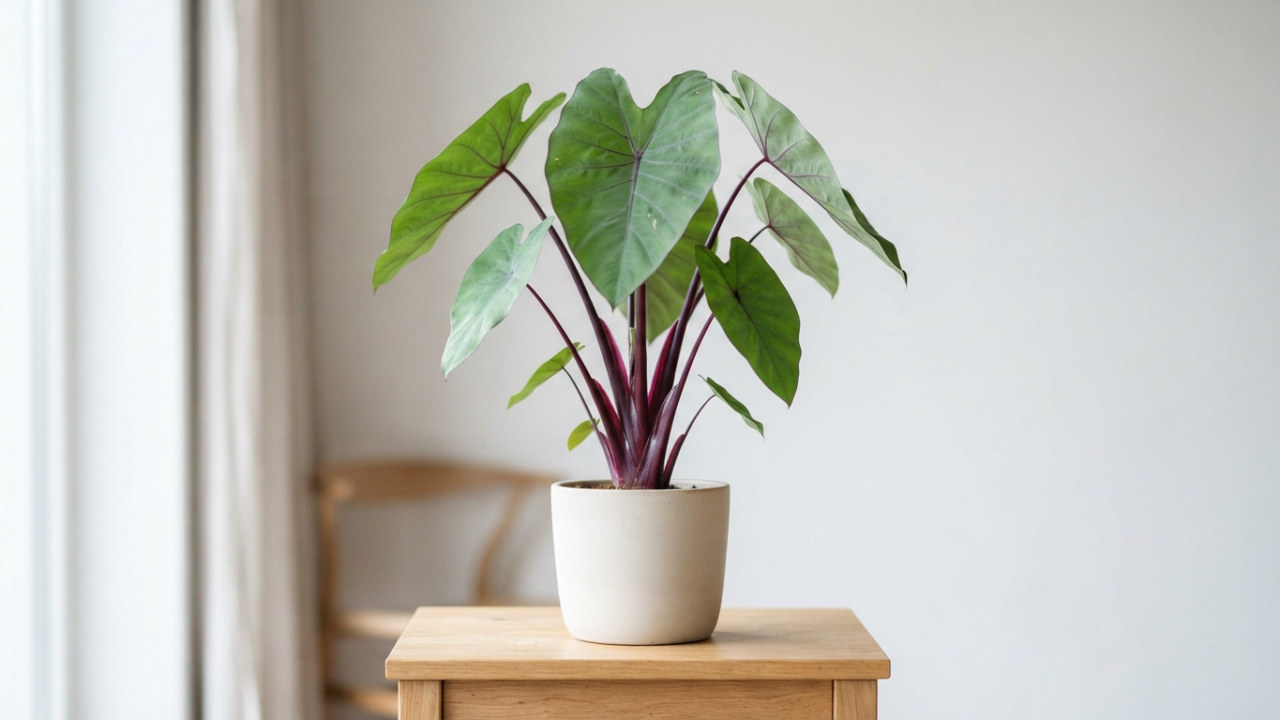
Its varieties 9
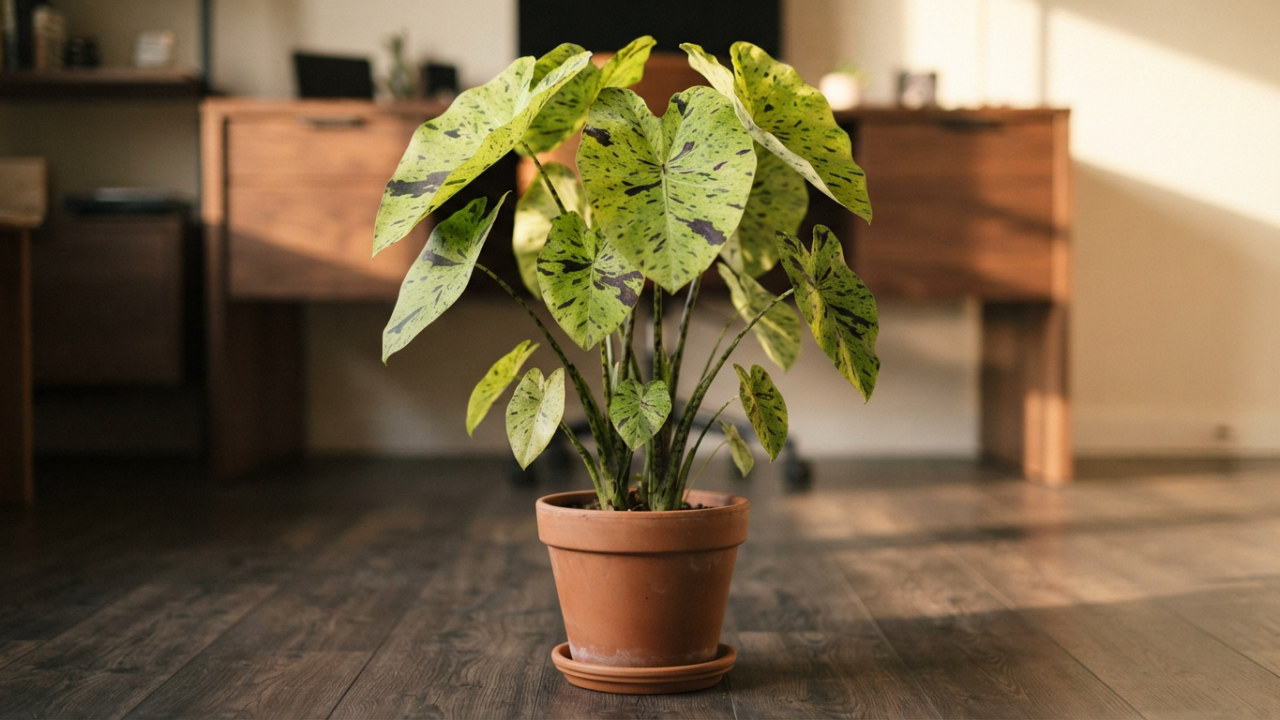
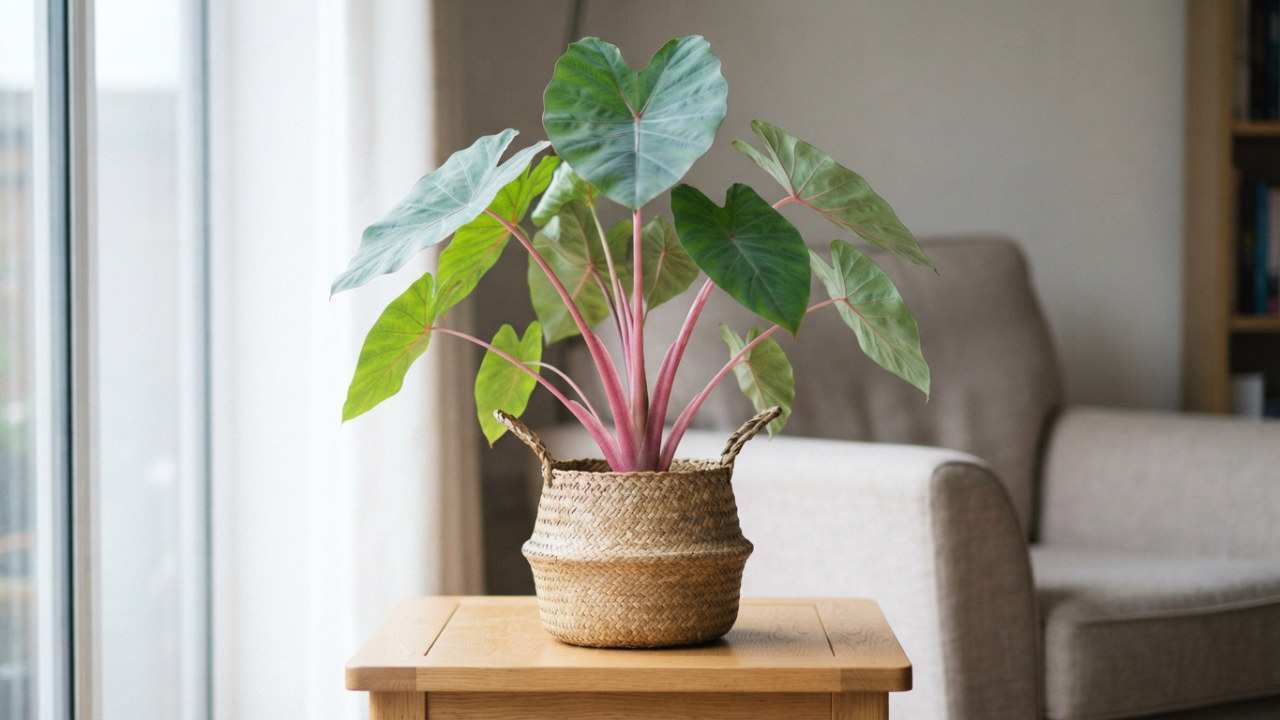
How to care for your Taro
Everything you need to keep your Taro healthy: watering, light, humidity, feeding, repotting and pruning.
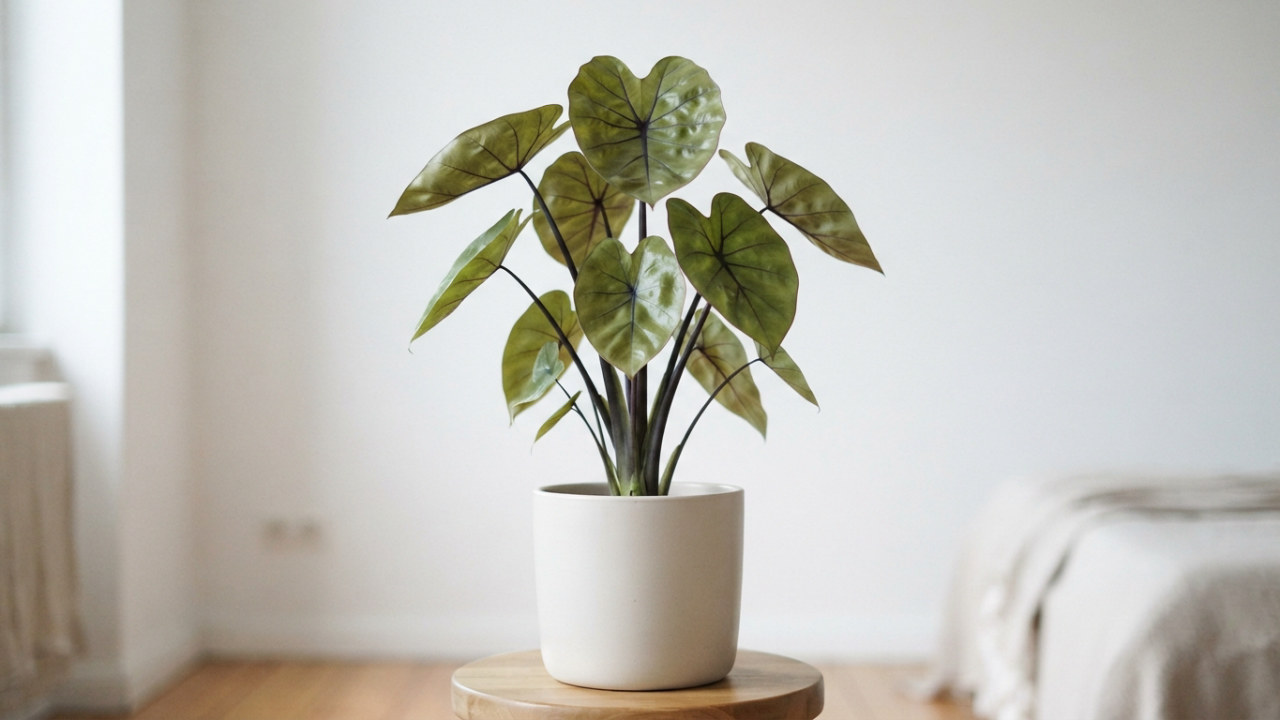
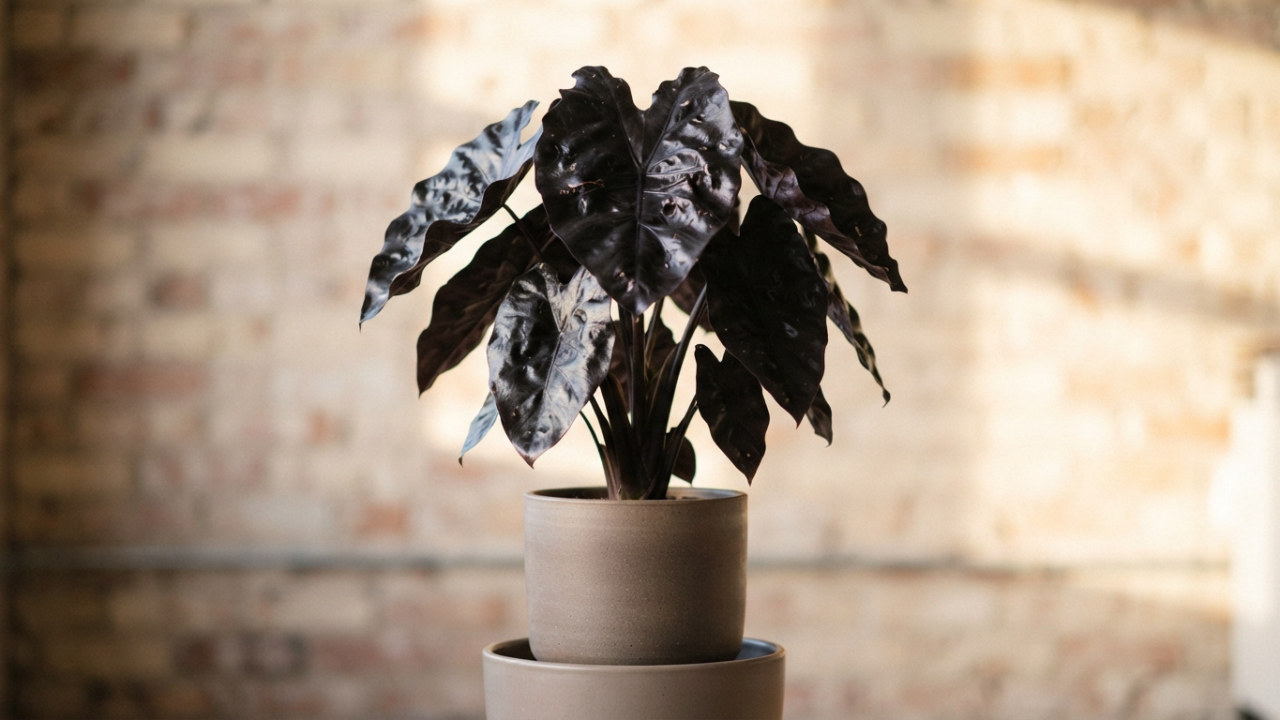
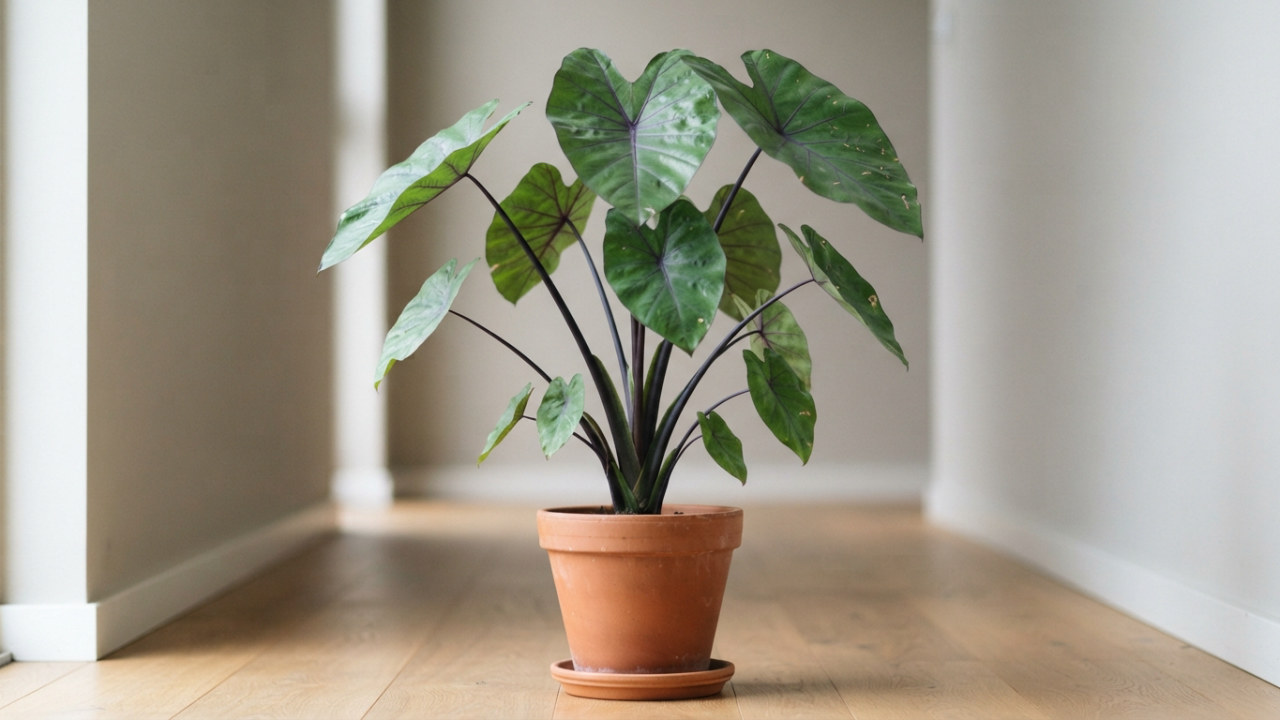
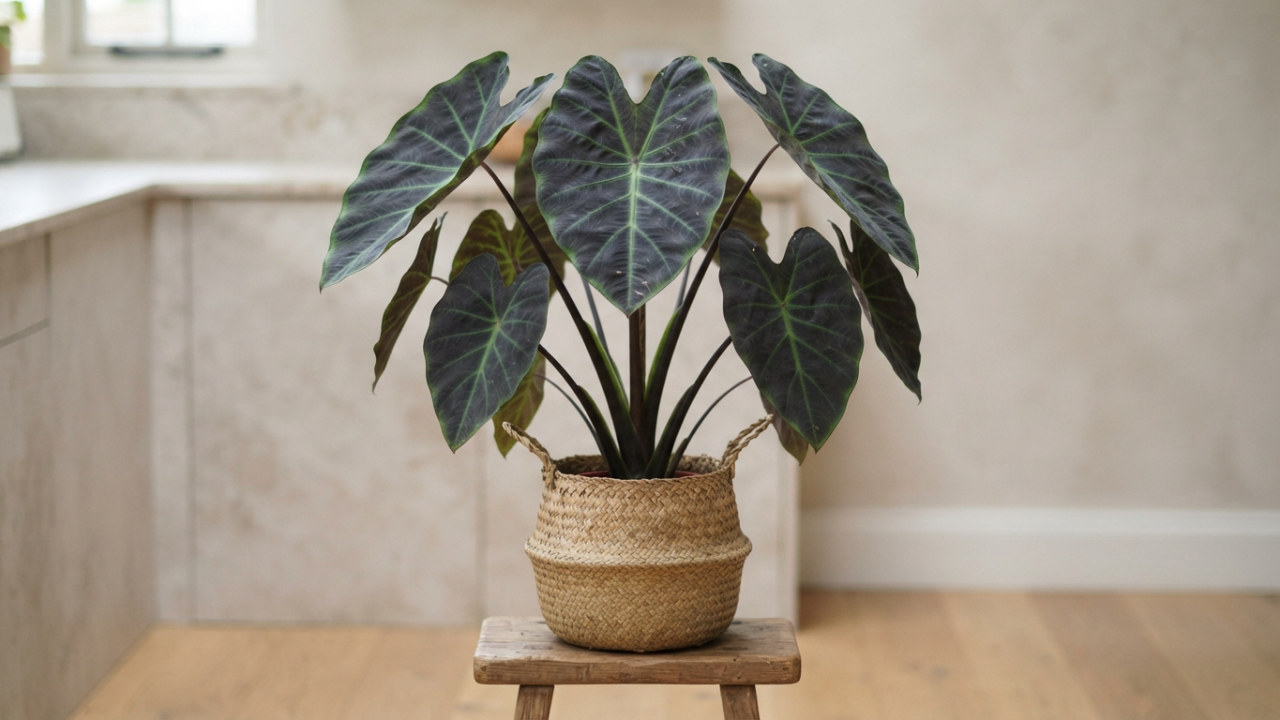
Taro, Colocasia esculenta, also called dasheen or elephant ear, is thought to come from southern India and Southeast Asia, and it is among the oldest food crops in the world. From a starchy corm it sends up a clump of long stalks, each carrying one large, heart-shaped leaf that hangs down, green in most forms and nearly black in some cultivars. On a terrace or in a big pot it grows fast through summer, loves constantly wet soil, and can die back in winter.

How to recognise Taro
Peltate, heart-shaped leaves that hang down from long stalks, bright green in most forms, with the stalk meeting the blade inside its edge, not at the notch. Leucocasia gigantea, the closest lookalike, has far larger, matte gray-green leaves held more erect, while Xanthosoma sagittifolium and Alocasia macrorrhizos have the stalk at the notch, the Alocasia with glossier, thicker, upright leaves.

Watering your Taro
Every 3 days
Keep the mix constantly moist and water as soon as the surface begins to dry; in warm weather it tolerates a saucer of water, but empty the saucer when it turns cool.
How to know it needs water
- The surface of the mix starts to look dry
- The big leaves sag and the stalks lose their firmness

How much light a Taro needs
Bright indirect light
Anything from partial shade to full sun on a terrace suits it, provided the mix stays constantly wet; bring it into strong sun gradually, and indoors give it bright light, since a dim spot leaves it lean and sparse.
- Direct sun tolerated
- 0 to 12 h a day
- Orientations that suit it
- North, North-east, East, South-east, South, South-west, West, North-west

Humidity and misting
60–80 %
Humid air, from 60 to 80%, keeps the leaf edges green; in dry rooms they turn brown and spider mites move in. Mist about every 4 days in dry or heated rooms; the leaves shed water, so the effect is brief, and a humidifier does more.

Feeding and fertiliser
Every 14 days
Feed about every 14 days from April to October, since it is a hungry plant while growing, and stop in winter when it rests.
- Recommended feed
- A liquid fertilizer for foliage plants, with about twice as much nitrogen and potassium as phosphorus, at half strength. · 2-1-2

Repotting your Taro
Every 12 months
Move it to a pot one size up, or divide the clump, in a rich mix that holds water, with the top of the corm just below the surface.
- When
- Spring, from March to May, as the corm wakes up.
- Potting mix
- All-purpose potting mix
- Mix in
- perlite, coco fibre, pine bark
The tell-tale signs
- Roots poke out of the drainage holes or circle the surface
- The pot dries out within a day or two and new leaves come smaller

Pruning your Taro
Whenever a leaf turns yellow or ragged, and in autumn if the plant dies back. Cut the stalk off at its base with clean shears, and wear gloves, as the sap can irritate the skin.

Through the year
Watering is not set once and for all: it follows the light and the growth. Allow 5 days between waterings in the depth of winter, against 2 in the growing season.
- 5 J
- 4 F
- 3 M
- 3 A
- 2 M
- 2 J
- 2 J
- 3 A
- 3 S
- 3 O
- 4 N
- 5 D
Active growth · Days between waterings

Toxicity
Every part contains calcium oxalate crystals that burn the mouth and throat of people, cats and dogs if chewed raw, causing drooling, swelling and vomiting; keep the plant out of reach.

Good to know
- Its species name esculenta means edible in Latin, and the corm has fed people for thousands of years, but only once thoroughly cooked.
- The leaf surface repels water, which beads up and rolls off instead of soaking in.

Frequently asked questions about the Taro
How do you care for a Taro?
Water it every 3 days. Give it bright indirect light. Ideal humidity: 60–80 %. Ideal temperature: 18–30 °C. Keep the mix constantly moist and water as soon as the surface begins to dry; in warm weather it tolerates a saucer of water, but empty the saucer when it turns cool.
How often should you water a Taro?
Every 3 days Keep the mix constantly moist and water as soon as the surface begins to dry; in warm weather it tolerates a saucer of water, but empty the saucer when it turns cool. How to know it needs water : The surface of the mix starts to look dry ; The big leaves sag and the stalks lose their firmness.
How much light does a Taro need?
Bright indirect light Anything from partial shade to full sun on a terrace suits it, provided the mix stays constantly wet; bring it into strong sun gradually, and indoors give it bright light, since a dim spot leaves it lean and sparse. 0 to 12 h a day
Is the Taro toxic to cats and dogs?
Yes. Every part contains calcium oxalate crystals that burn the mouth and throat of people, cats and dogs if chewed raw, causing drooling, swelling and vomiting; keep the plant out of reach. Keep it out of reach of your pets and call a vet if any is swallowed.
Why are my Taro leaves turning yellow?
Yellowing most often comes from too much water: the mix stays wet and the roots suffocate. Check that the pot drains, empty the saucer, and let the mix dry before watering again. Too little light or a cold draught cause the same symptom.
When should you repot a Taro?
Repot every 12 months, ideally in spring, from march to may, as the corm wakes up.. Move it to a pot one size up, or divide the clump, in a rich mix that holds water, with the top of the corm just below the surface.

At a glance
- Family
- Araceae
- Category
- Tropical
- Placement
- Indoor and outdoor
- Mature height
- 1.4 m
- Growth
- Fast
- Temperature
- 18–30 °C
- Pot materials
- ceramic, plastic, fabric
- Growth
- Reaches maturity in 2 years
These figures are for an average plant. In the app they are recalculated for yours, based on your room, its orientation and the season.
And for your plant, in your home?
In the app this plant becomes yours: a watering schedule tuned to your home, health tracking from photos, and reminders at the right moment.
In the same spirit
 Every 7 days


Air Plant
Tillandsia ionantha

 Every 6 days
Alocasia amazonica
Alocasia amazonica
 Every 7 days
Alocasia baginda
Alocasia baginda
 Every 4 days
Angel Wings
Caladium bicolor
