
Tropical · Lamiaceae
Cuban oregano
Coleus amboinicus
A fleshy, softly hairy herb whose leaves smell strongly of oregano and thyme when rubbed.
- Every 6 daysWatering
- Bright indirect lightLight
- 50–70 %Humidity
- 15–28 °CTemperature


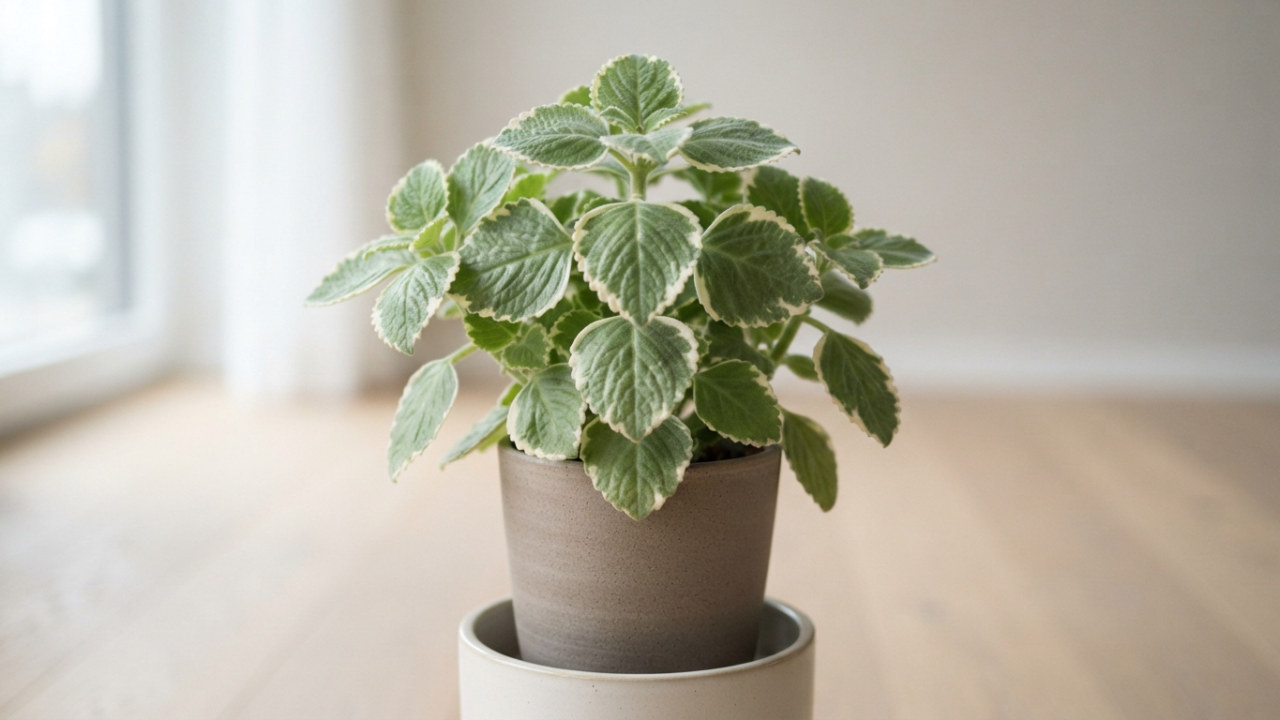
Its varieties 1
How to care for your Cuban oregano
Everything you need to keep your Cuban oregano healthy: watering, light, humidity, feeding, repotting and pruning.
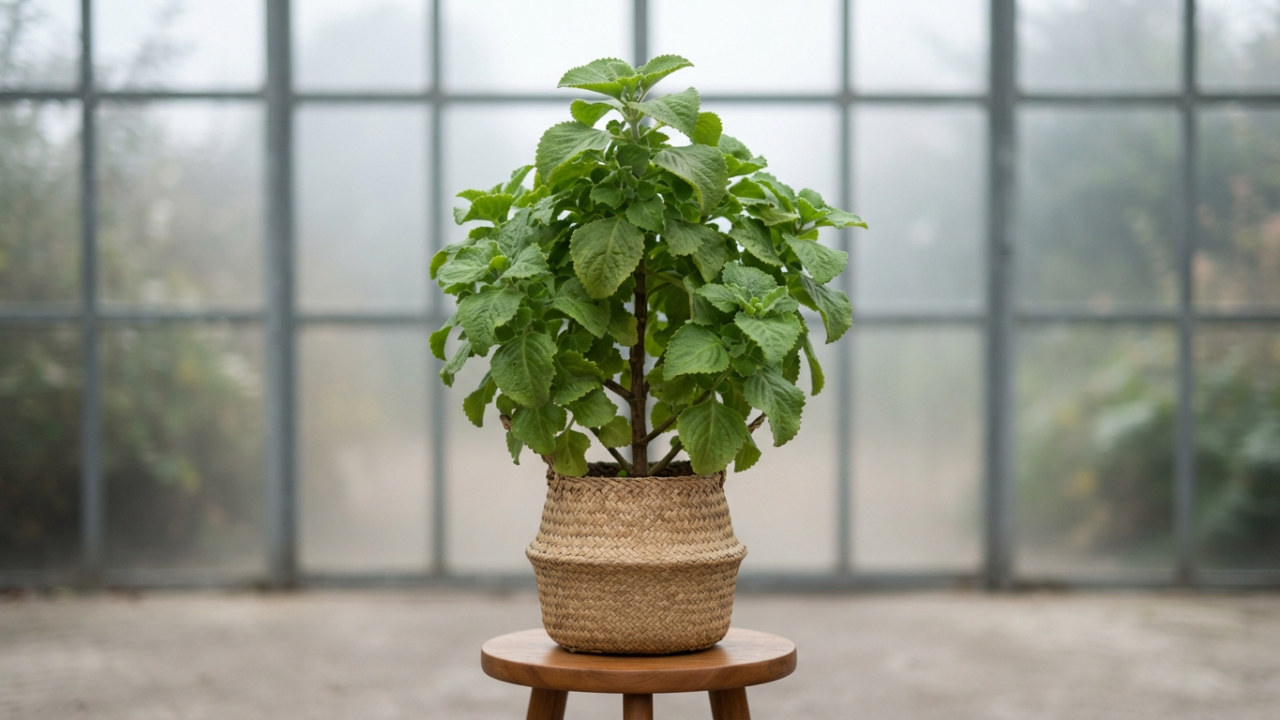
Cuban oregano, also sold as Indian borage or Spanish thyme, is a fast, semi-succulent herb. Its thick, velvety, light green leaves have toothed edges and smell of oregano and thyme when rubbed. The stems sprawl and scramble up to about a meter, so it suits a pot on a bright sill. It is thought to come from southern and eastern Africa, Arabia and India, and it rarely flowers indoors.

How to recognise Cuban oregano
Thick, fleshy, light green leaves covered in short dense hairs, with a strong oregano scent when rubbed and a sprawling habit. Coleus scutellarioides has thin, colorful leaves with little scent, and Plectranthus verticillatus has smooth, glossy, rounded leaves; Pilea and Peperomia have no such scent.

Watering your Cuban oregano
Every 6 days
Water well when the top inch of mix is dry, then let it drain; the fleshy leaves store water.
How to know it needs water
- The top inch of mix is dry
- The fleshy leaves feel slightly soft and less plump

How much light a Cuban oregano needs
Bright indirect light
Bright indirect light for several hours a day keeps the leaves thick and compact.
- Direct sun tolerated
- 0 to 2 h a day
- Orientations that suit it
- North, North-east, East, South-east, South, South-west, West, North-west

Humidity and misting
50–70 %
Ordinary room humidity, around 50 to 70 percent, is enough for its fleshy leaves. Skip misting, because wet hairy leaves invite rot and the plant does not need it.

Feeding and fertiliser
Every 14 days
Feed every two weeks from April to September while growth is fast, and stop in winter.
- Recommended feed
- A balanced liquid fertilizer for foliage plants, at half strength. · 2-1-2

Repotting your Cuban oregano
Every 12 months
Use a pot one size larger with a free-draining mix, or root cuttings to replace a tired plant.
- When
- Spring, from March to May.
- Potting mix
- All-purpose potting mix
- Mix in
- perlite, coco fibre
The tell-tale signs
- Roots circle the pot or appear at the drainage holes
- Stems sprawl and the pot tips over

Pruning your Cuban oregano
Pinch back in spring and summer to keep it bushy and to harvest leaves. Pinch or cut stem tips above a pair of leaves so the plant branches, and root the pieces in water or damp mix.

Through the year
Watering is not set once and for all: it follows the light and the growth. Allow 7 days between waterings in the depth of winter, against 5 in the growing season.
- 7 J
- 7 F
- 5 M
- 5 A
- 5 M
- 5 J
- 5 J
- 5 A
- 5 S
- 6 O
- 7 N
- 7 D
Active growth · Days between waterings

Toxicity
Its essential oils are documented as toxic to cats, dogs and horses, causing vomiting, diarrhea and depression if eaten; it is not listed as toxic to people.

Good to know
- Its species name comes from Ambon Island in Indonesia, where the specimen used for its description was found.
- It was named by the Portuguese Jesuit João de Loureiro in 1790.

Frequently asked questions about the Cuban oregano
How do you care for a Cuban oregano?
Water it every 6 days. Give it bright indirect light. Ideal humidity: 50–70 %. Ideal temperature: 15–28 °C. Water well when the top inch of mix is dry, then let it drain; the fleshy leaves store water.
How often should you water a Cuban oregano?
Every 6 days Water well when the top inch of mix is dry, then let it drain; the fleshy leaves store water. How to know it needs water : The top inch of mix is dry ; The fleshy leaves feel slightly soft and less plump.
How much light does a Cuban oregano need?
Bright indirect light Bright indirect light for several hours a day keeps the leaves thick and compact. 0 to 2 h a day
Is the Cuban oregano toxic to cats and dogs?
Yes. Its essential oils are documented as toxic to cats, dogs and horses, causing vomiting, diarrhea and depression if eaten; it is not listed as toxic to people. Keep it out of reach of your pets and call a vet if any is swallowed.
Why are my Cuban oregano leaves turning yellow?
Yellowing most often comes from too much water: the mix stays wet and the roots suffocate. Check that the pot drains, empty the saucer, and let the mix dry before watering again. Too little light or a cold draught cause the same symptom.
When should you repot a Cuban oregano?
Repot every 12 months, ideally in spring, from march to may.. Use a pot one size larger with a free-draining mix, or root cuttings to replace a tired plant.

At a glance
- Family
- Lamiaceae
- Category
- Tropical
- Placement
- Indoor and outdoor
- Mature height
- 1 m
- Growth
- Fast
- Temperature
- 15–28 °C
- Pot materials
- ceramic, plastic
- Growth
- Reaches maturity in 1 years
These figures are for an average plant. In the app they are recalculated for yours, based on your room, its orientation and the season.
And for your plant, in your home?
In the app this plant becomes yours: a watering schedule tuned to your home, health tracking from photos, and reminders at the right moment.
In the same spirit
 Every 7 days


Air Plant
Tillandsia ionantha

 Every 6 days
Alocasia amazonica
Alocasia amazonica
 Every 7 days
Alocasia baginda
Alocasia baginda
 Every 4 days
Angel Wings
Caladium bicolor
