
Variety Tropical · Commelinaceae
Striped inch plant
Callisia gentlei var. elegans · A variety of Callisia gentlei
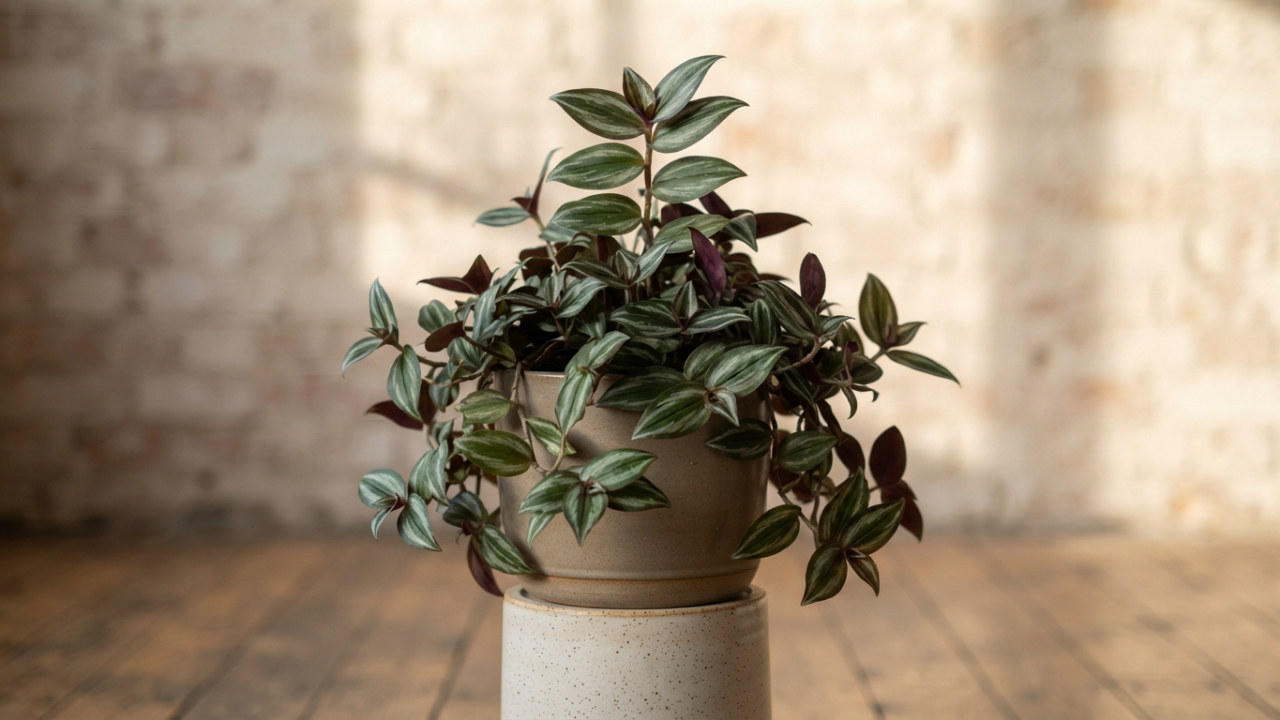
A creeping Callisia with thick, dark green leaves marked by silver stripes, purple underneath, sold as Callisia elegans.
- Every 6 daysWatering
- Bright indirect lightLight
- 40–60 %Humidity
- 18–27 °CTemperature


How to care for your Striped inch plant
Everything you need to keep your Striped inch plant healthy: watering, light, humidity, feeding, repotting and pruning.
This variety of Callisia gentlei was described as Callisia elegans by Alexander ex H.E. Moore in 1958, and it is still sold under that name. It comes from southern Mexico (Oaxaca and Chiapas), Guatemala and Honduras. The thick, lance-shaped leaves are dark green with parallel silver-white stripes above and purple below. The stems creep and trail, reaching about 15 cm in height and spreading to around 60 cm, which suits a hanging basket. The small white flowers are easy to overlook.

How to recognise Striped inch plant
Thick, dark green, lance-shaped leaves with fine parallel silver-white stripes and a purple underside, on creeping stems. It is the form sold as Callisia elegans, so it looks much like Callisia gentlei itself. Tradescantia zebrina has thinner leaves with two broad silver bands, Callisia fragrans a large plain green rosette, and Callisia repens tiny rounded leaves.

Watering your Striped inch plant
Every 6 days
Water when the top inch of the mix is dry and let it dry slightly between waterings, since wet roots rot easily.
How to know it needs water
- The top inch of the mix feels dry.
- The thick leaves lose their gloss and the stems droop a little.

How much light a Striped inch plant needs
Bright indirect light
Bright indirect light or light shade, with at most a little gentle direct sun, keeps the silver stripes crisp.
- Direct sun tolerated
- 0 to 2 h a day
- Orientations that suit it
- North, North-east, East, South-east, South, South-west, West, North-west

Humidity and misting
40–60 %
Moderate room humidity, about 40 to 60 percent, is enough. Misting is not needed, and water on the velvety leaves can leave spots.

Feeding and fertiliser
Every 28 days
Feed about once a month from April to September, during active growth.
- Recommended feed
- A balanced liquid houseplant fertilizer. · 10-10-10

Repotting your Striped inch plant
Every 12 months
Move it to a slightly larger pot with fresh, airy mix, and spread the trailing stems over the surface.
- When
- Repot in spring, when growth restarts.
- Potting mix
- All-purpose potting mix
- Mix in
- perlite, coco fibre
The tell-tale signs
- Roots circle the pot or poke out of the drainage holes.
- The mix dries out within a few days and growth slows.

Pruning your Striped inch plant
Trim in spring and summer, when stems become long and bare. Cut stems just above a node to thicken the plant; the cuttings root easily in water or moist mix.

Through the year
Watering is not set once and for all: it follows the light and the growth. Allow 11 days between waterings in the depth of winter, against 5 in the growing season.
- 9 J
- 7 F
- 6 M
- 5 A
- 5 M
- 5 J
- 5 J
- 5 A
- 6 S
- 7 O
- 9 N
- 11 D
Active growth · Days between waterings

Toxicity
The sap can irritate the skin of people and pets, and chewing it may upset the digestion of an animal or a person, so wear gloves when pruning and keep it out of reach.

Good to know
- It was published as Callisia elegans in 1958, and that name is still the one on most plant labels.
- A single plant can spread to about 60 cm, so it fills a hanging basket.

Frequently asked questions about the Striped inch plant
How do you care for a Striped inch plant?
Water it every 6 days. Give it bright indirect light. Ideal humidity: 40–60 %. Ideal temperature: 18–27 °C. Water when the top inch of the mix is dry and let it dry slightly between waterings, since wet roots rot easily.
How often should you water a Striped inch plant?
Every 6 days Water when the top inch of the mix is dry and let it dry slightly between waterings, since wet roots rot easily. How to know it needs water : The top inch of the mix feels dry. ; The thick leaves lose their gloss and the stems droop a little..
How much light does a Striped inch plant need?
Bright indirect light Bright indirect light or light shade, with at most a little gentle direct sun, keeps the silver stripes crisp. 0 to 2 h a day
Is the Striped inch plant toxic to cats and dogs?
Yes. The sap can irritate the skin of people and pets, and chewing it may upset the digestion of an animal or a person, so wear gloves when pruning and keep it out of reach. Keep it out of reach of your pets and call a vet if any is swallowed.
Why are my Striped inch plant leaves turning yellow?
Yellowing most often comes from too much water: the mix stays wet and the roots suffocate. Check that the pot drains, empty the saucer, and let the mix dry before watering again. Too little light or a cold draught cause the same symptom.
When should you repot a Striped inch plant?
Repot every 12 months, ideally in repot in spring, when growth restarts.. Move it to a slightly larger pot with fresh, airy mix, and spread the trailing stems over the surface.

At a glance
- Family
- Commelinaceae
- Category
- Tropical
- Placement
- Indoor and outdoor
- Mature height
- 20 cm
- Growth
- Fast
- Temperature
- 18–27 °C
- Pot materials
- plastic, ceramic, terracotta
- Growth
- Reaches maturity in 1 years
These figures are for an average plant. In the app they are recalculated for yours, based on your room, its orientation and the season.
And for your plant, in your home?
In the app this plant becomes yours: a watering schedule tuned to your home, health tracking from photos, and reminders at the right moment.
In the same spirit
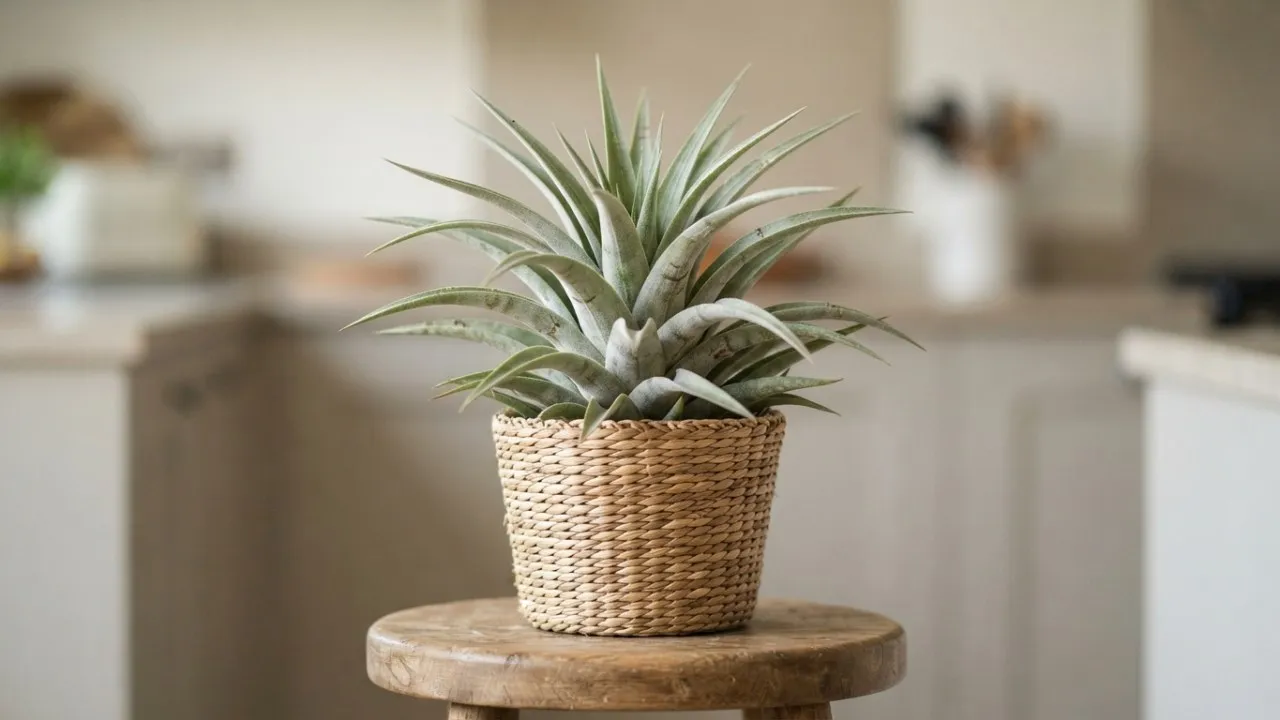 Every 7 days


Air Plant
Tillandsia ionantha

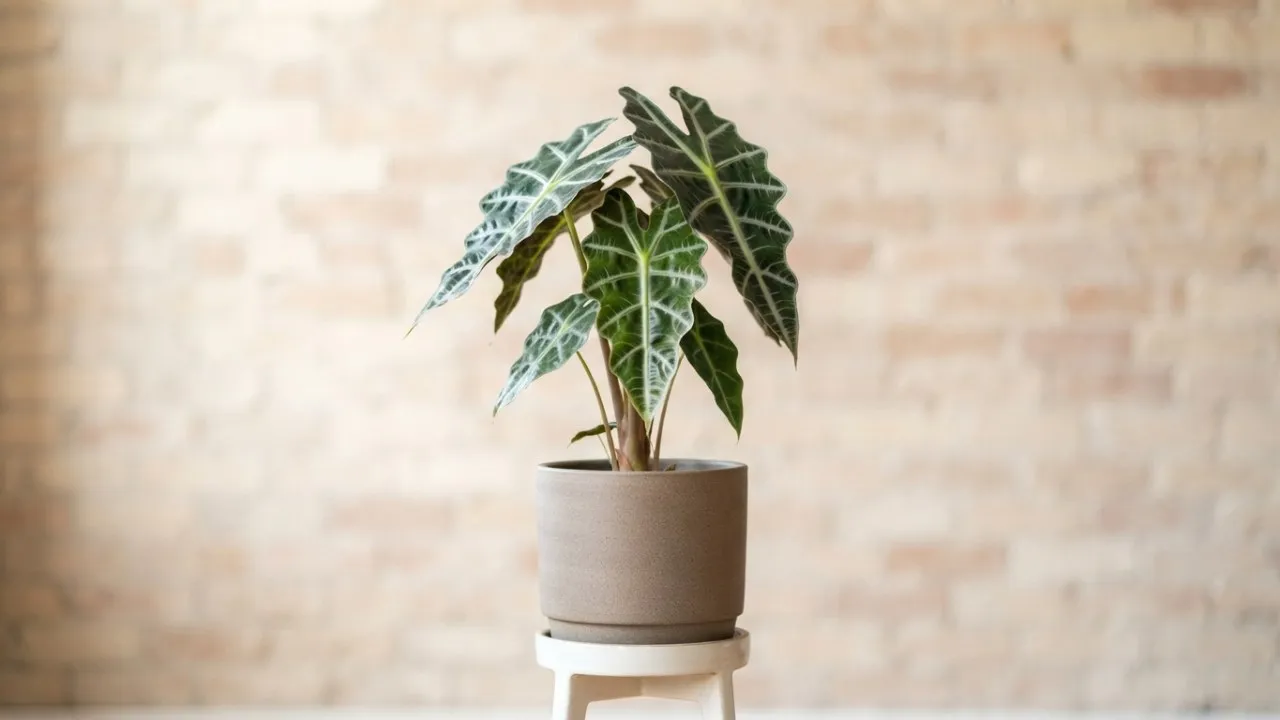 Every 6 days
Alocasia amazonica
Alocasia amazonica
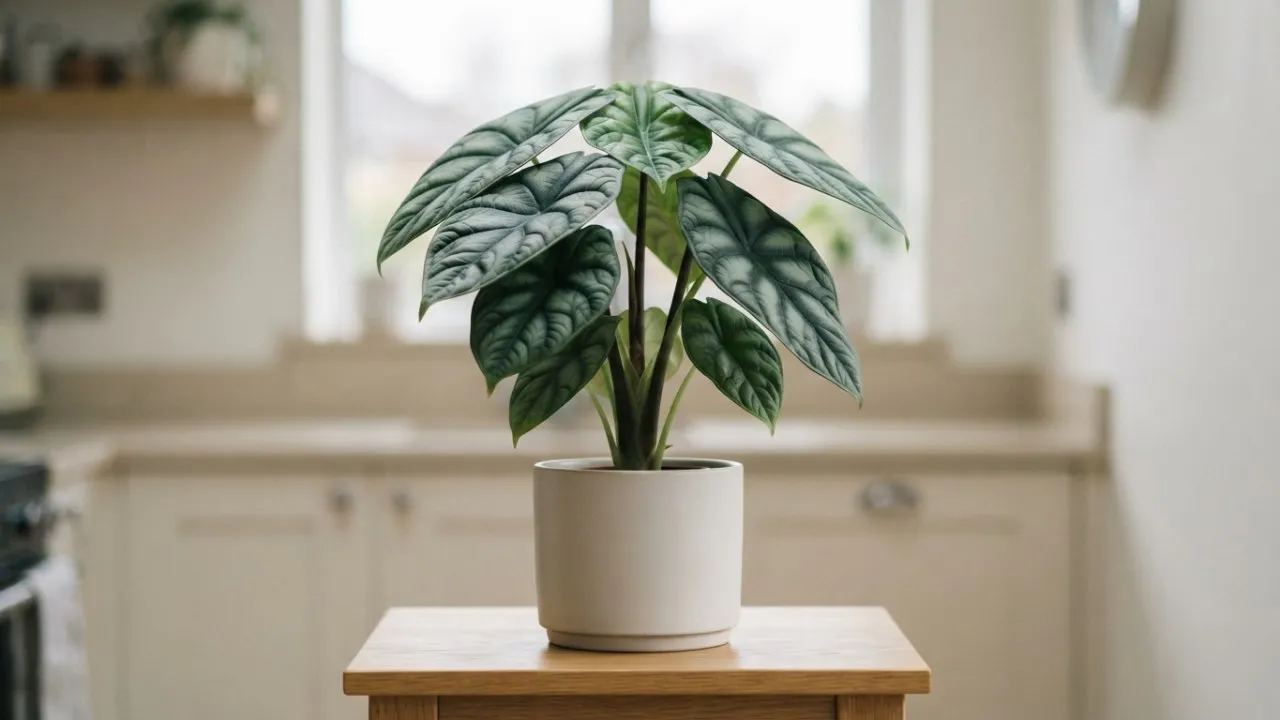 Every 7 days
Alocasia baginda
Alocasia baginda
 Every 4 days
Angel Wings
Caladium bicolor
