
Tropical · Commelinaceae
Basket plant
Callisia fragrans
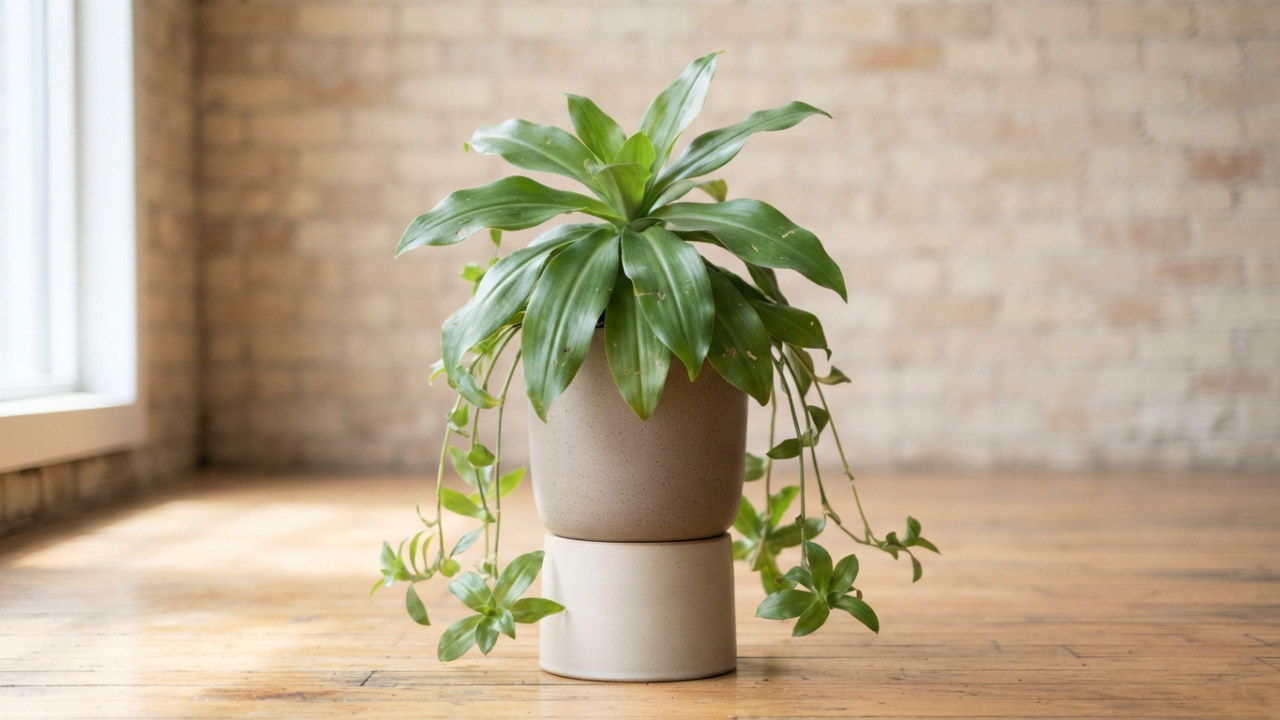
A rosette of large glossy leaves that sends out long hanging runners and bears small, fragrant white flowers.
- Every 6 daysWatering
- Bright indirect lightLight
- 40–60 %Humidity
- 12–27 °CTemperature


Its varieties 1
How to care for your Basket plant
Everything you need to keep your Basket plant healthy: watering, light, humidity, feeding, repotting and pruning.
Callisia fragrans comes from Mexico and has been grown indoors since the early 1900s. It forms a central rosette of waxy, lance-shaped leaves up to 25 cm long, glossy green and tinged reddish purple in strong light. From the rosette, long runners trail well over a meter and carry young plantlets, which suits a hanging basket. The small white flowers are fragrant, though each one fades by midday. It is also sold as golden whiskers or golden mustache plant.

How to recognise Basket plant
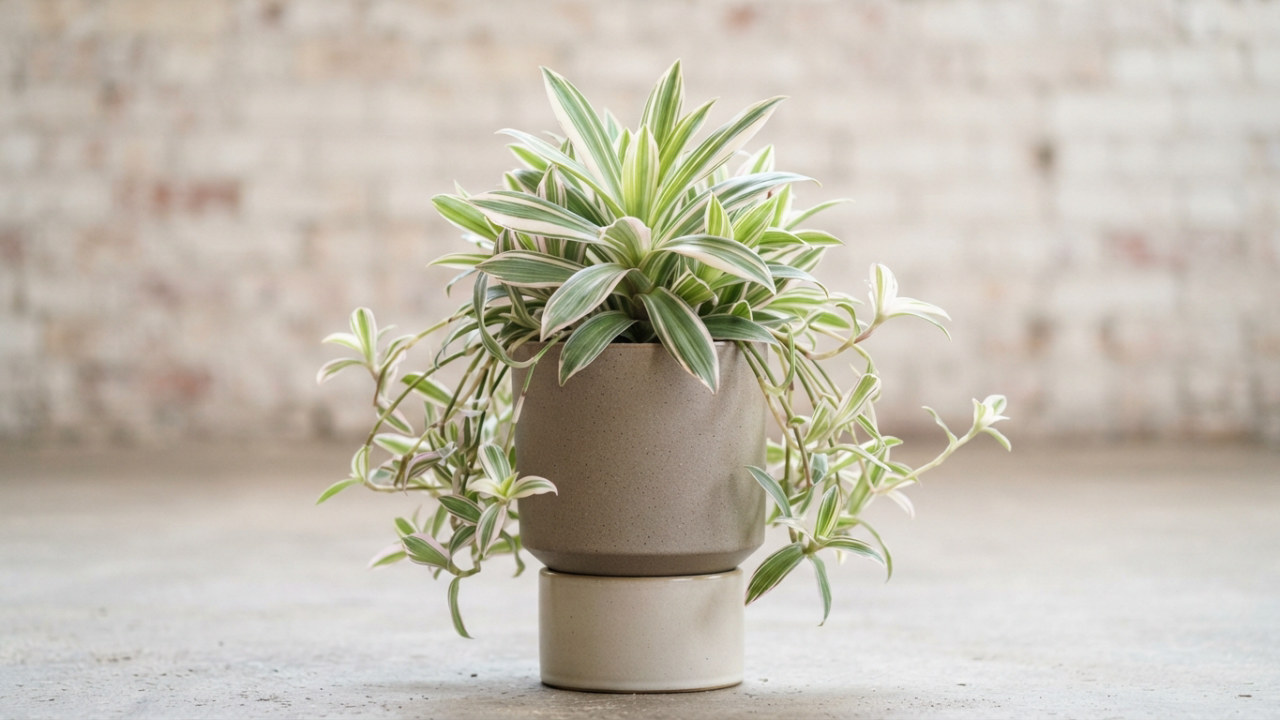
A rosette of large, plain green, glossy leaves with long trailing runners. Callisia navicularis has tiny, stacked boat-shaped leaves, Callisia gentlei has smaller leaves with silver stripes, and Callisia repens has small rounded leaves on a creeping mat. Tradescantia spathacea is an upright rosette with purple-backed leaves and no long runners.

Watering your Basket plant
Every 6 days
Water thoroughly when the top inch of the mix is dry, let the excess drain away, and water less in winter.
How to know it needs water
- The top inch of the mix feels dry.
- The glossy leaves lose some of their sheen and turn slightly limp.

How much light a Basket plant needs
Bright indirect light
Bright light with a few hours of direct sun keeps it compact and brings out purple tints; a bright window with morning sun suits it.
- Direct sun tolerated
- 1 to 3 h a day
- Orientations that suit it
- North, North-east, East, South-east, South, South-west, West, North-west

Humidity and misting
40–60 %
Average room humidity, about 40 to 60 percent, is enough. Misting is not necessary; it copes well with ordinary household air.

Feeding and fertiliser
Every 28 days
Feed about once a month from April to September, while it grows actively.
- Recommended feed
- A balanced liquid houseplant fertilizer. · 10-10-10

Repotting your Basket plant
Every 12 months
Move it to a slightly larger pot with fresh, airy mix, keeping the rosette at the same depth.
- When
- Repot in spring, before the main growth flush.
- Potting mix
- All-purpose potting mix
- Mix in
- perlite, coco fibre
The tell-tale signs
- Roots fill the pot and push out of the drainage holes.
- The rosette tips over or the mix dries out within a few days.

Pruning your Basket plant
Trim in spring or summer, when runners grow too long or the rosette looks tired. Cut back long runners or pot up the plantlets at their tips; they root readily in moist mix.

Through the year
Watering is not set once and for all: it follows the light and the growth. Allow 11 days between waterings in the depth of winter, against 5 in the growing season.
- 9 J
- 7 F
- 6 M
- 5 A
- 5 M
- 5 J
- 5 J
- 5 A
- 6 S
- 7 O
- 9 N
- 11 D
Active growth · Days between waterings

Toxicity
The sap can cause contact dermatitis in people and pets, so handle it with gloves and keep it away from animals that chew plants.

Good to know
- Its runners can reach over 35 inches, with a plantlet forming at the tip.
- Its fragrant flowers are short-lived and often wilt by midday.

Frequently asked questions about the Basket plant
How do you care for a Basket plant?
Water it every 6 days. Give it bright indirect light. Ideal humidity: 40–60 %. Ideal temperature: 12–27 °C. Water thoroughly when the top inch of the mix is dry, let the excess drain away, and water less in winter.
How often should you water a Basket plant?
Every 6 days Water thoroughly when the top inch of the mix is dry, let the excess drain away, and water less in winter. How to know it needs water : The top inch of the mix feels dry. ; The glossy leaves lose some of their sheen and turn slightly limp..
How much light does a Basket plant need?
Bright indirect light Bright light with a few hours of direct sun keeps it compact and brings out purple tints; a bright window with morning sun suits it. 1 to 3 h a day
Is the Basket plant toxic to cats and dogs?
Yes. The sap can cause contact dermatitis in people and pets, so handle it with gloves and keep it away from animals that chew plants. Keep it out of reach of your pets and call a vet if any is swallowed.
Why are my Basket plant leaves turning yellow?
Yellowing most often comes from too much water: the mix stays wet and the roots suffocate. Check that the pot drains, empty the saucer, and let the mix dry before watering again. Too little light or a cold draught cause the same symptom.
When should you repot a Basket plant?
Repot every 12 months, ideally in repot in spring, before the main growth flush.. Move it to a slightly larger pot with fresh, airy mix, keeping the rosette at the same depth.

At a glance
- Family
- Commelinaceae
- Category
- Tropical
- Placement
- Indoor and outdoor
- Mature height
- 22 cm
- Growth
- Fast
- Temperature
- 12–27 °C
- Pot materials
- plastic, ceramic, terracotta
- Growth
- Reaches maturity in 1 years
These figures are for an average plant. In the app they are recalculated for yours, based on your room, its orientation and the season.
And for your plant, in your home?
In the app this plant becomes yours: a watering schedule tuned to your home, health tracking from photos, and reminders at the right moment.
In the same spirit
 Every 7 days


Air Plant
Tillandsia ionantha

 Every 6 days
Alocasia amazonica
Alocasia amazonica
 Every 7 days
Alocasia baginda
Alocasia baginda
 Every 4 days
Angel Wings
Caladium bicolor
