
Variety Tropical · Araceae
Caladium 'Candidum'
Caladium bicolor 'Candidum' · A variety of Angel Wings
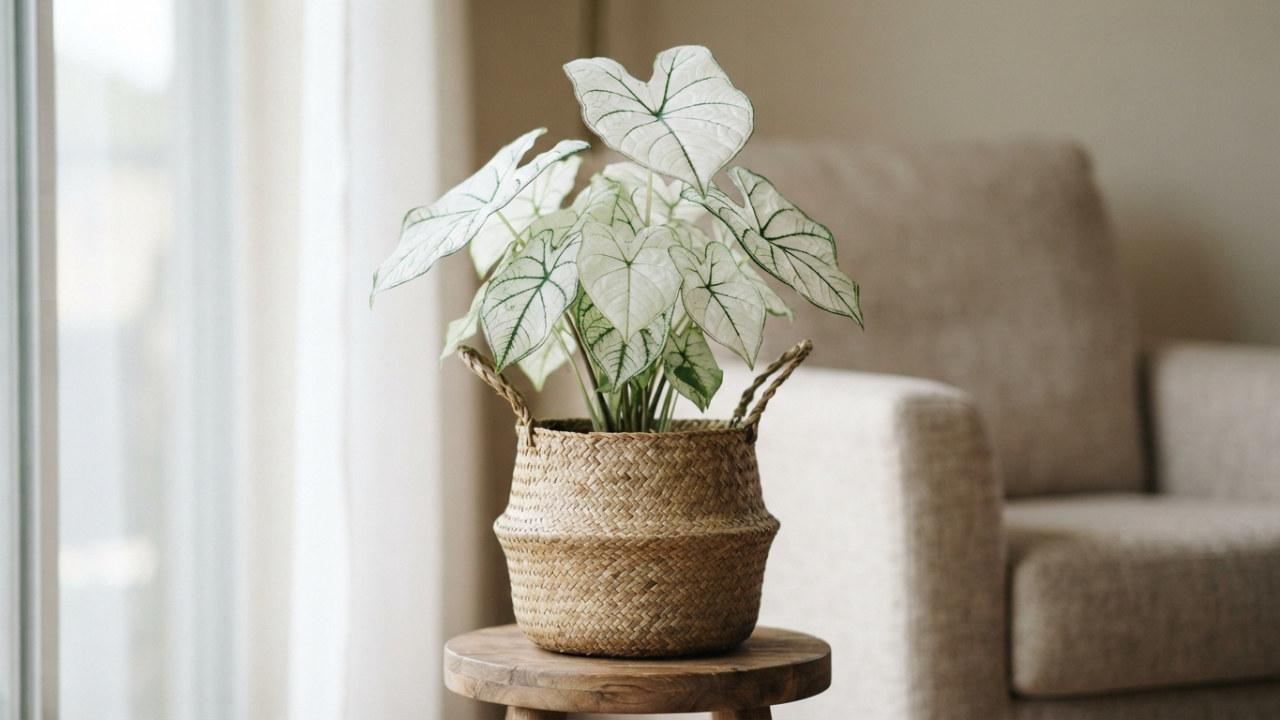
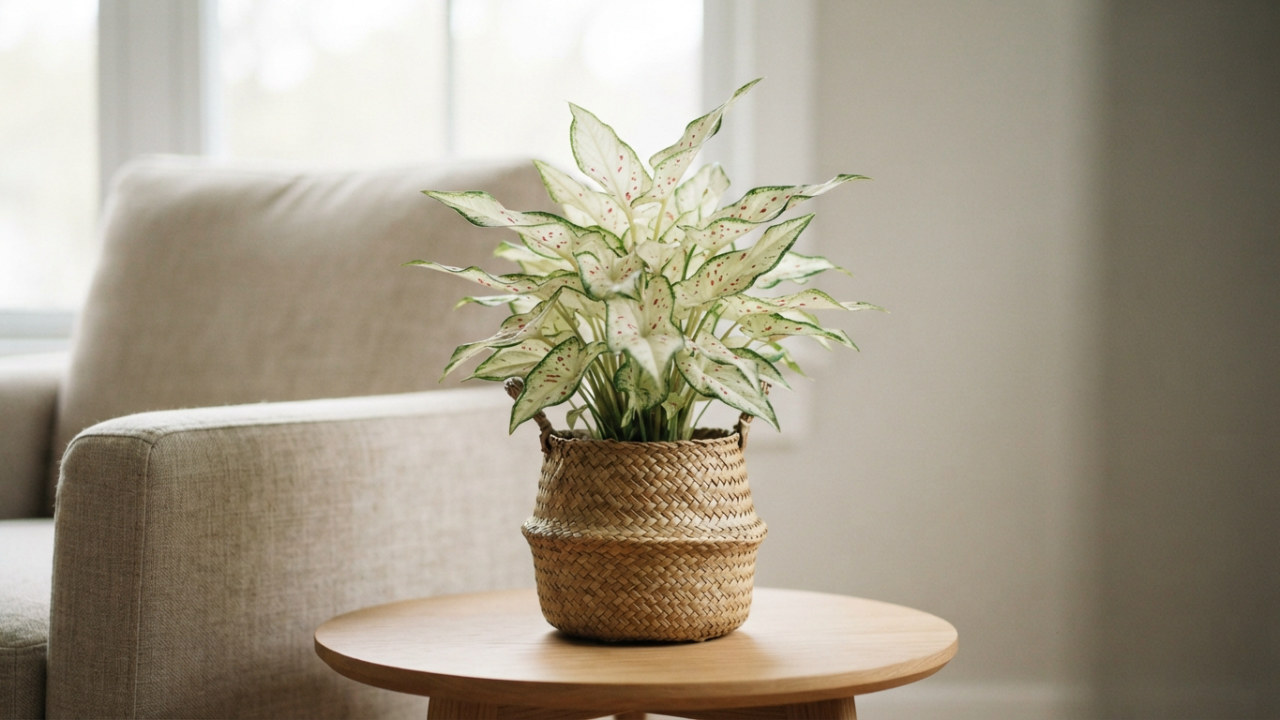
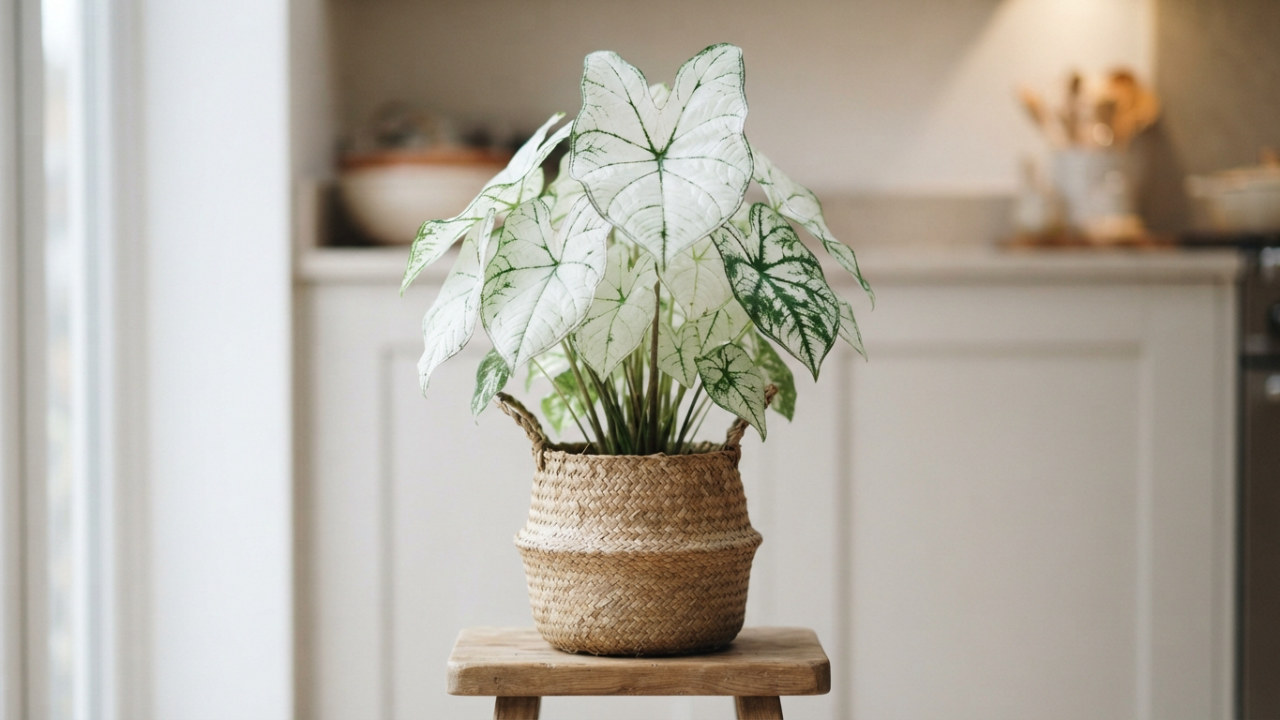
A classic caladium with large, papery white leaves netted in dark green veins and edged with a thin green line.
- Every 4 daysWatering
- Bright indirect lightLight
- 60–80 %Humidity
- 18–28 °CTemperature


Other varieties 11
How to care for your Caladium 'Candidum'
Everything you need to keep your Caladium 'Candidum' healthy: watering, light, humidity, feeding, repotting and pruning.
Caladium 'Candidum' is a cultivar credited to the French breeder Alfred Bleu, probably after 1867, and it has been grown for more than a century. Each large, heart-shaped leaf rises on its own stalk from the tuber and is almost pure white, with dark green main and side veins and only a thin green edge. The upright clump reaches 60 cm at most indoors. With so little chlorophyll in the leaf, it wants bright light without direct sun and warm, humid air.

How to recognise Caladium 'Candidum'
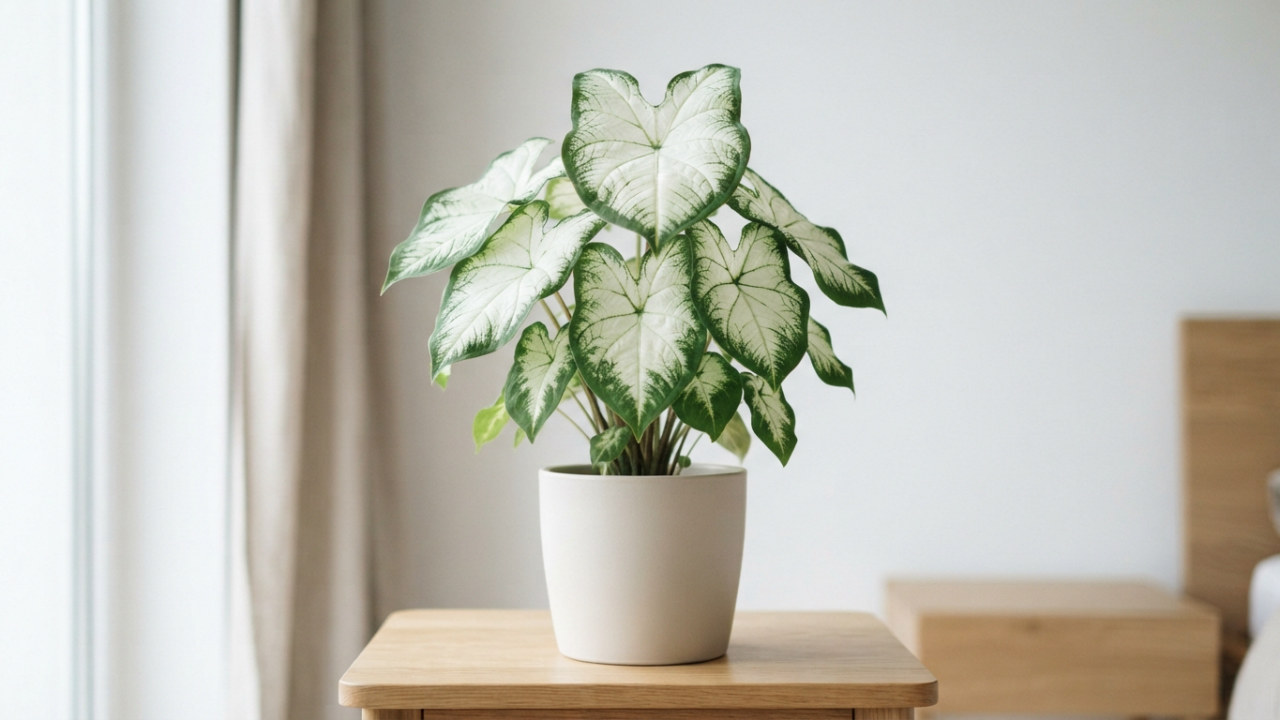
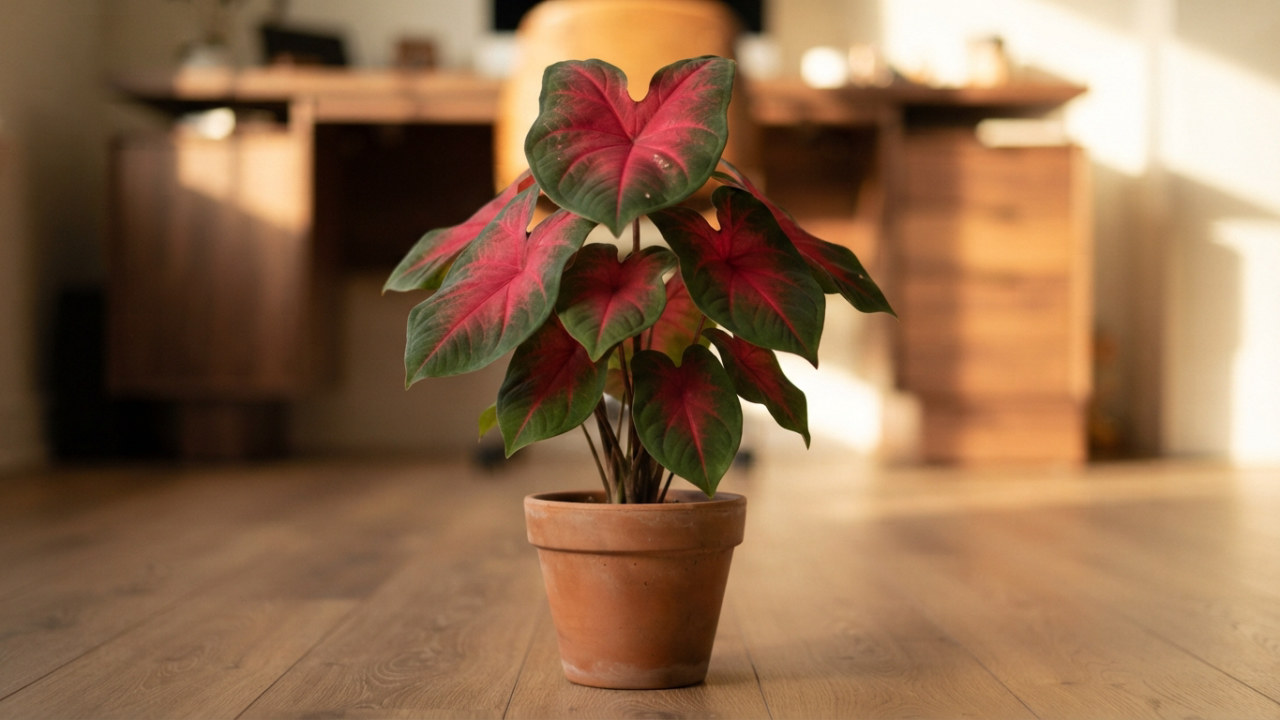
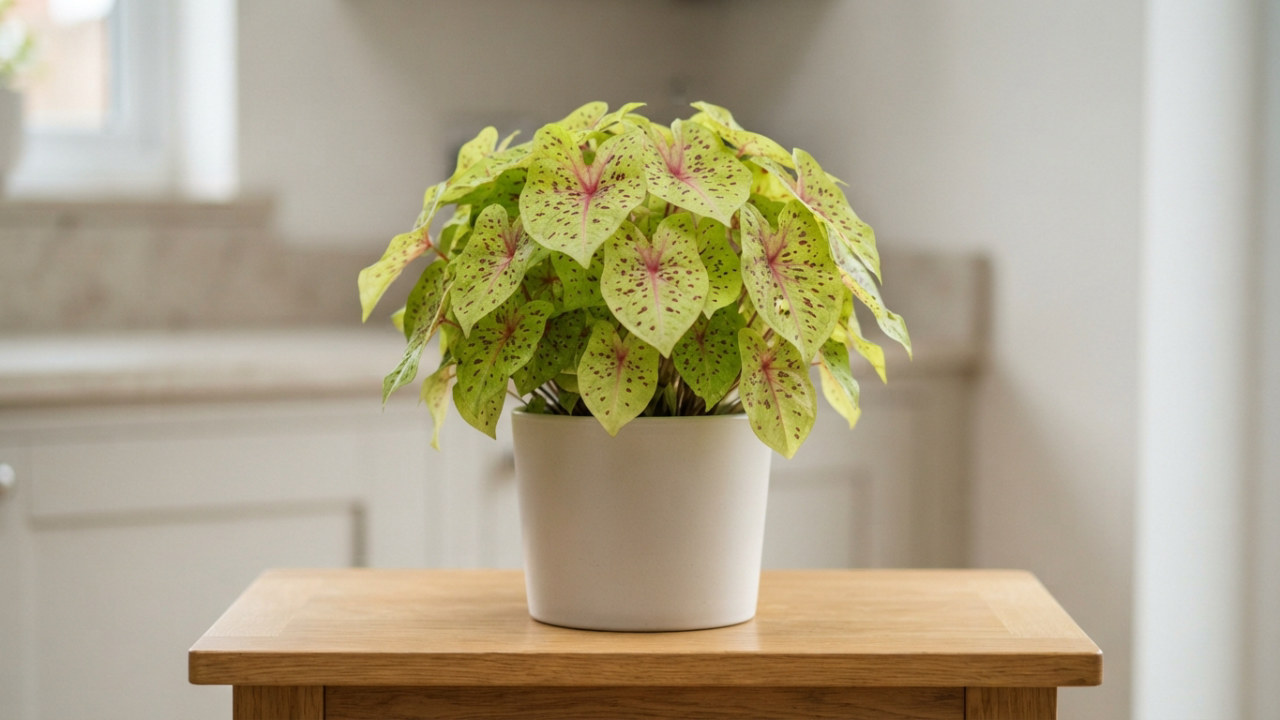
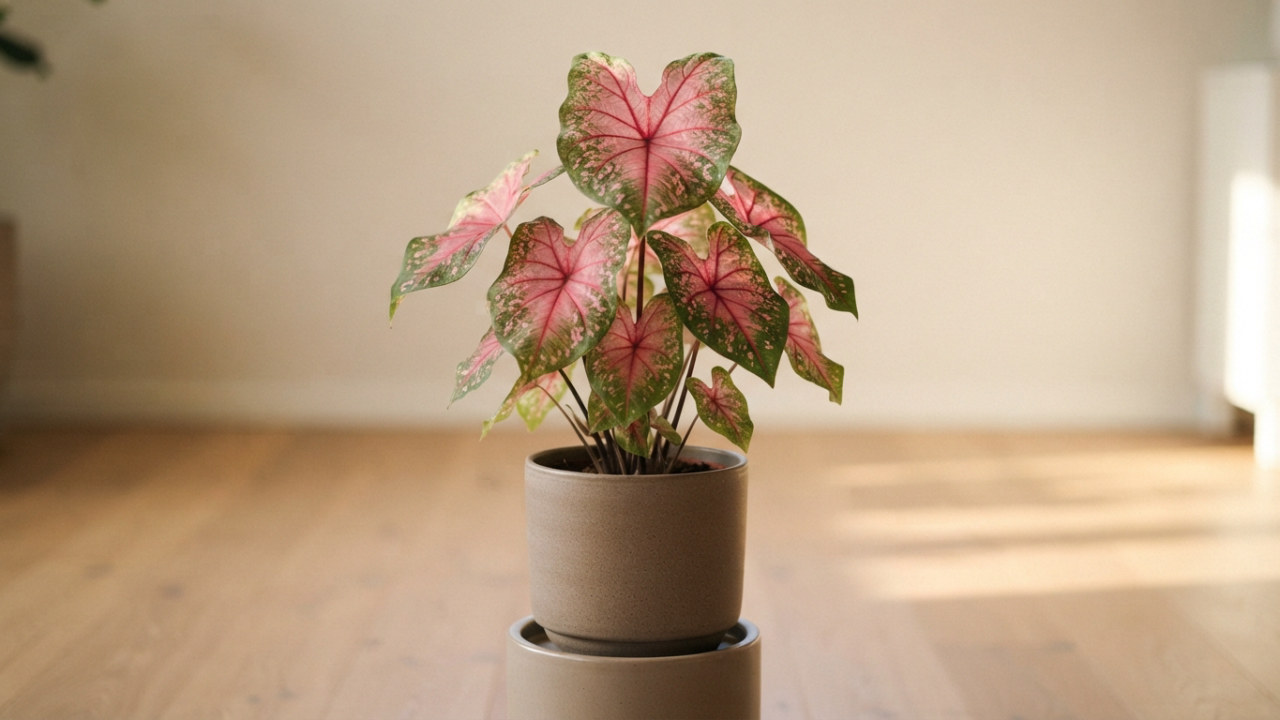
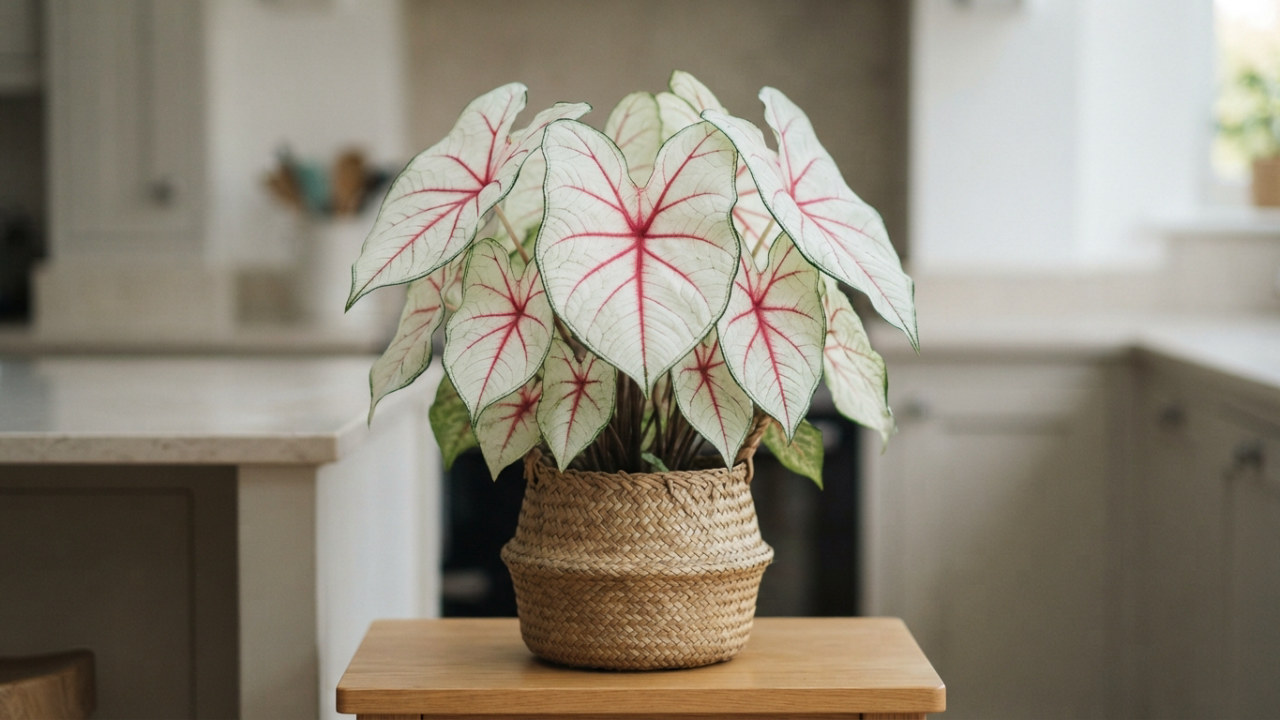
Papery white heart-shaped leaves with dark green main and side veins and a thin green edge, the white staying clean between the veins. The closest lookalike is 'White Christmas', which spills green past the veins; 'White Queen' has red veins and 'Aaron' has white veins inside a wide dark green border.

Watering your Caladium 'Candidum'
Every 4 days
As soon as the surface of the mix begins to dry, water evenly with room-temperature water so it stays lightly damp, and empty the saucer so the tuber never sits in water.
How to know it needs water
- The surface of the mix feels just dry under a fingertip.
- The large leaves lose their firmness and begin to tilt.

How much light a Caladium 'Candidum' needs
Bright indirect light
Bright, filtered light with no direct sun, because the mostly white leaf holds little chlorophyll and scorches quickly in unfiltered rays; a sheer curtain, or a spot set back from an east or north window, suits it.
- Direct sun tolerated
- No direct sun
- Orientations that suit it
- North, North-east, East, North-west

Humidity and misting
60–80 %
Humid air between 60 and 80% suits it best, though ordinary room air is tolerated. Misting is not needed and can mark the thin white leaf; if the room is very dry, stand the pot on a saucer of damp clay pebbles instead.

Feeding and fertiliser
Every 14 days
Feed every two weeks from May to August, then stop as the leaves tire, and give nothing while the tuber rests.
- Recommended feed
- A liquid foliage-plant fertilizer with a little more nitrogen and potassium than phosphorus (about 2-1-2), used at half the dose on the label. · 2-1-2

Repotting your Caladium 'Candidum'
Every 12 months
Plant the tubers 2 to 3 cm deep with their knobbier, bud-bearing side up, in a light mix of potting soil, perlite and coco fiber, and detach small side tubers to start new plants.
- When
- Spring, in March or April, when the tubers wake from their rest.
- Potting mix
- All-purpose potting mix
- Mix in
- perlite, coco fibre
The tell-tale signs
- The tubers have multiplied and fill the pot to the rim.
- The leaves came out smaller than last season's.

Pruning your Caladium 'Candidum'
Whenever a leaf fades or tears, and again in autumn, once the foliage has yellowed and died back by itself. Cut the stalk of the spent leaf at its base with clean scissors, and wear gloves because the sap can irritate skin.

Through the year
Watering is not set once and for all: it follows the light and the growth. Allow 10 days between waterings in the depth of winter, against 3 in the growing season.
- 10 J
- 10 F
- 7 M
- 4 A
- 3 M
- 3 J
- 3 J
- 3 A
- 4 S
- 6 O
- 8 N
- 10 D
Active growth · Days between waterings

Toxicity
Every part, tuber included, contains calcium oxalate crystals that burn and swell the mouth and throat and cause drooling and vomiting in cats, dogs and people if chewed or swallowed; the sap can also irritate skin.

Good to know
- Candidum is the Latin word for shining white, a fair description of a leaf this pale.
- Like every caladium, it grows from a tuber, loses all its leaves in autumn and sprouts again in spring.

Frequently asked questions about the Caladium 'Candidum'
How do you care for a Caladium 'Candidum'?
Water it every 4 days. Give it bright indirect light. Ideal humidity: 60–80 %. Ideal temperature: 18–28 °C. As soon as the surface of the mix begins to dry, water evenly with room-temperature water so it stays lightly damp, and empty the saucer so the tuber never sits in water.
How often should you water a Caladium 'Candidum'?
Every 4 days As soon as the surface of the mix begins to dry, water evenly with room-temperature water so it stays lightly damp, and empty the saucer so the tuber never sits in water. How to know it needs water : The surface of the mix feels just dry under a fingertip. ; The large leaves lose their firmness and begin to tilt..
How much light does a Caladium 'Candidum' need?
Bright indirect light Bright, filtered light with no direct sun, because the mostly white leaf holds little chlorophyll and scorches quickly in unfiltered rays; a sheer curtain, or a spot set back from an east or north window, suits it. No direct sun
Is the Caladium 'Candidum' toxic to cats and dogs?
Yes. Every part, tuber included, contains calcium oxalate crystals that burn and swell the mouth and throat and cause drooling and vomiting in cats, dogs and people if chewed or swallowed; the sap can also irritate skin. Keep it out of reach of your pets and call a vet if any is swallowed.
Why are my Caladium 'Candidum' leaves turning yellow?
Yellowing most often comes from too much water: the mix stays wet and the roots suffocate. Check that the pot drains, empty the saucer, and let the mix dry before watering again. Too little light or a cold draught cause the same symptom.
When should you repot a Caladium 'Candidum'?
Repot every 12 months, ideally in spring, in march or april, when the tubers wake from their rest.. Plant the tubers 2 to 3 cm deep with their knobbier, bud-bearing side up, in a light mix of potting soil, perlite and coco fiber, and detach small side tubers to start new plants.

At a glance
- Family
- Araceae
- Category
- Tropical
- Placement
- Indoor
- Mature height
- 60 cm
- Growth
- Moderate
- Temperature
- 18–28 °C
- Pot materials
- plastic, ceramic
- Growth
- Reaches maturity in 2 years
These figures are for an average plant. In the app they are recalculated for yours, based on your room, its orientation and the season.
And for your plant, in your home?
In the app this plant becomes yours: a watering schedule tuned to your home, health tracking from photos, and reminders at the right moment.
In the same spirit
 Every 7 days


Air Plant
Tillandsia ionantha

 Every 6 days
Alocasia amazonica
Alocasia amazonica
 Every 7 days
Alocasia baginda
Alocasia baginda
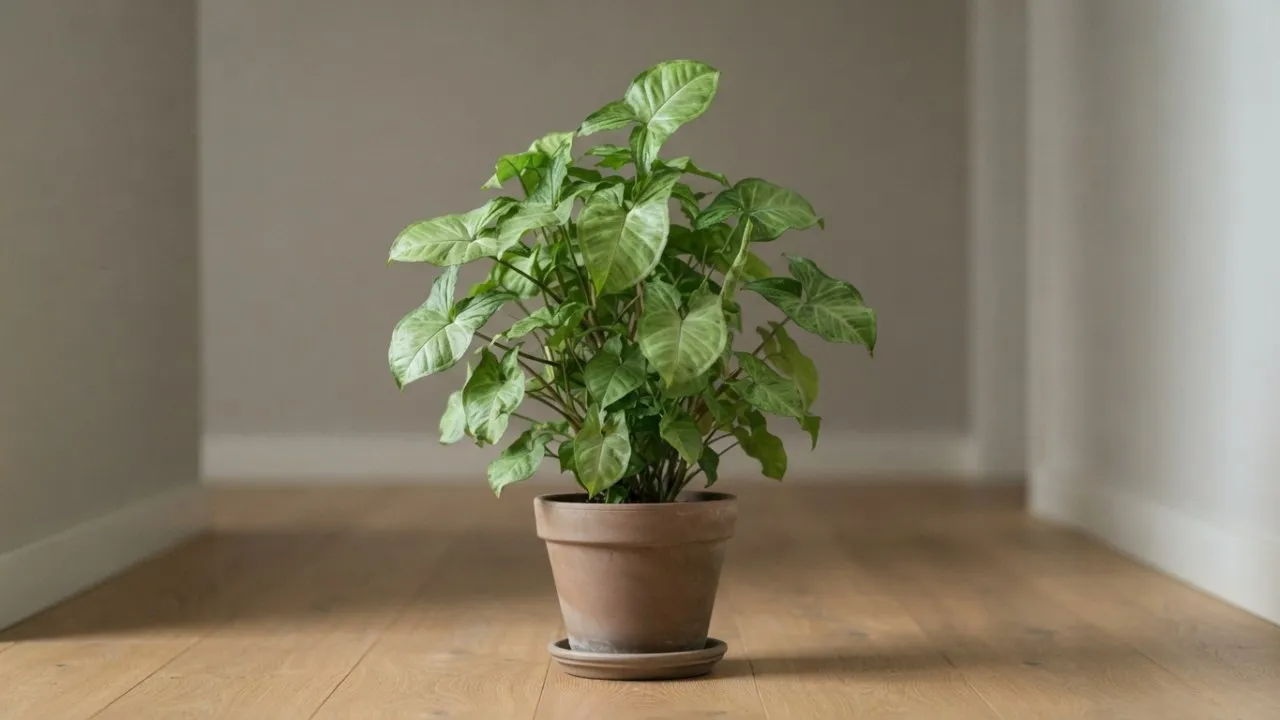 Every 7 days
Arrowhead Plant
Syngonium podophyllum
