
Variety Tropical · Begoniaceae
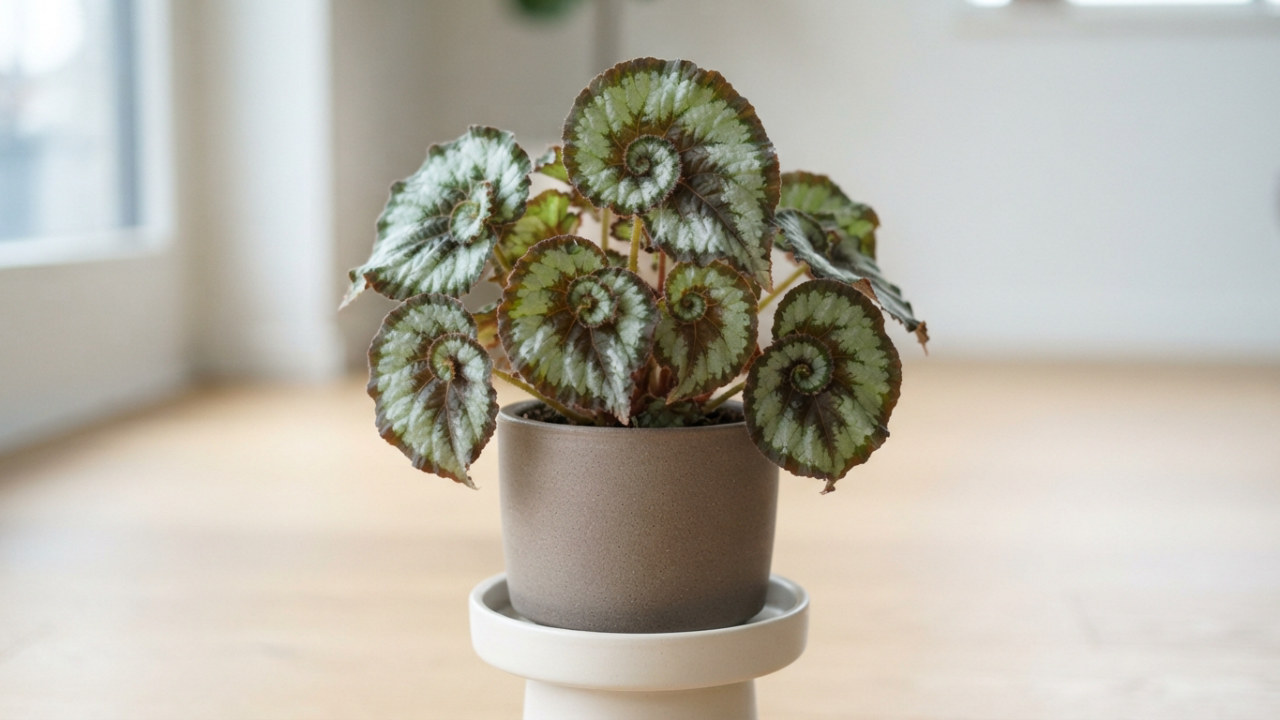
Begonia 'Escargot'
Begonia rex-cultorum 'Escargot' · A variety of Rex Begonia
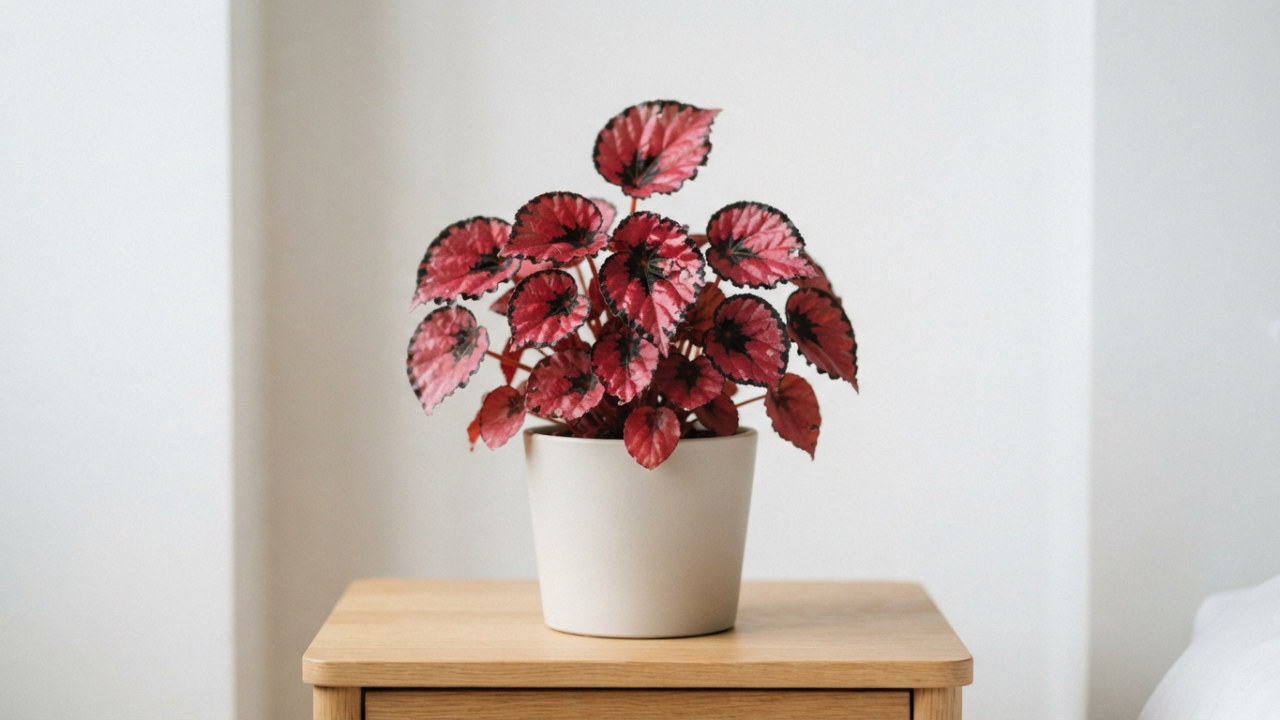
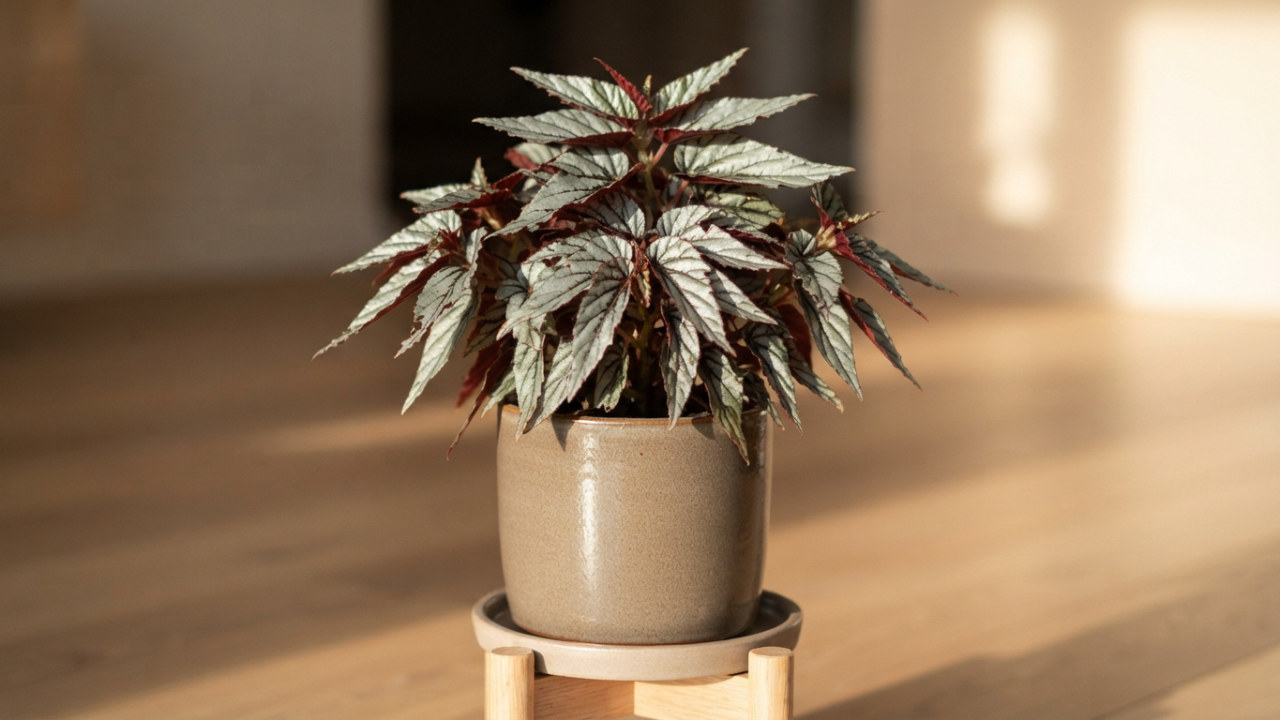
A rex begonia whose leaves coil into a snail-shell spiral at the base, banded in silver, green and chocolate.
- Every 6 daysWatering
- Bright indirect lightLight
- 60–70 %Humidity
- 16–26 °CTemperature


Other varieties 5
How to care for your Begonia 'Escargot'
Everything you need to keep your Begonia 'Escargot' healthy: watering, light, humidity, feeding, repotting and pruning.
'Escargot' is a rex-cultorum hybrid grown for the spiral that winds each lopsided leaf into a shell shape near the stalk. Silver, green and chocolate-brown bands follow that coil, over a fine, slightly fuzzy surface. Its breeder and date are not documented. It forms a low, mounding rhizomatous clump, about 15 to 30 cm tall, happy in a shallow pot, in humid air and bright light without direct sun.

How to recognise Begonia 'Escargot'
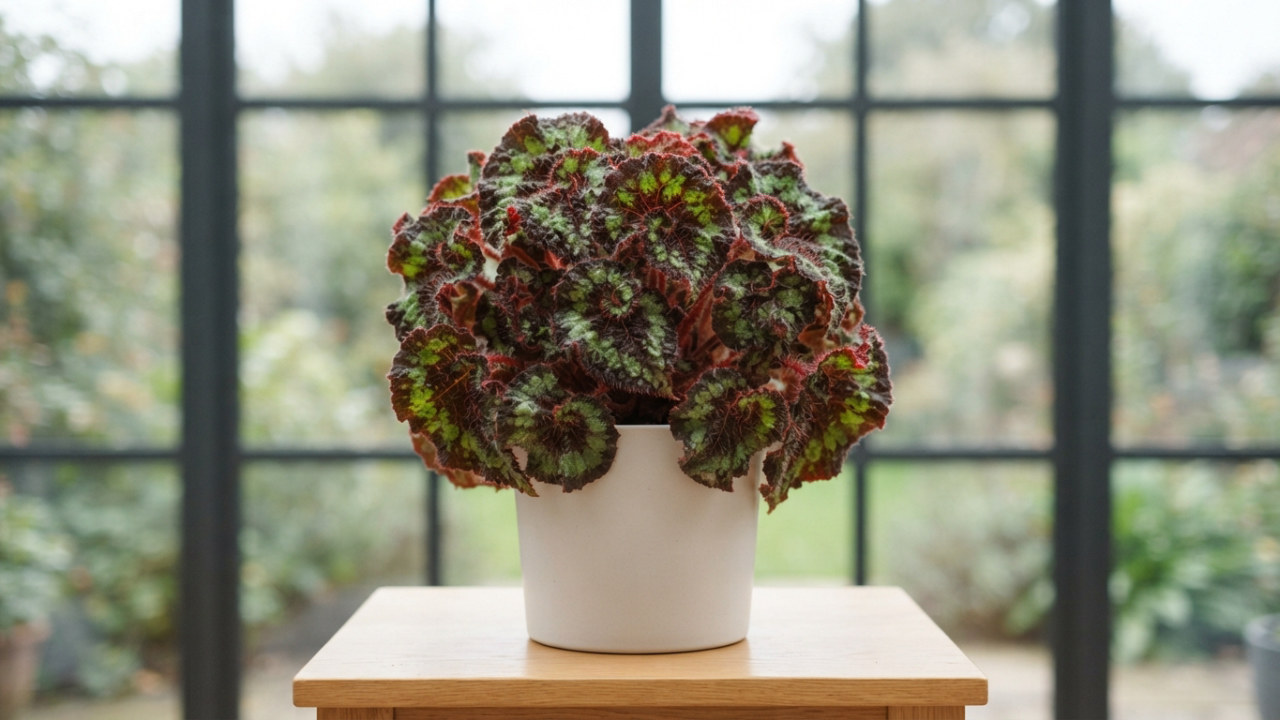
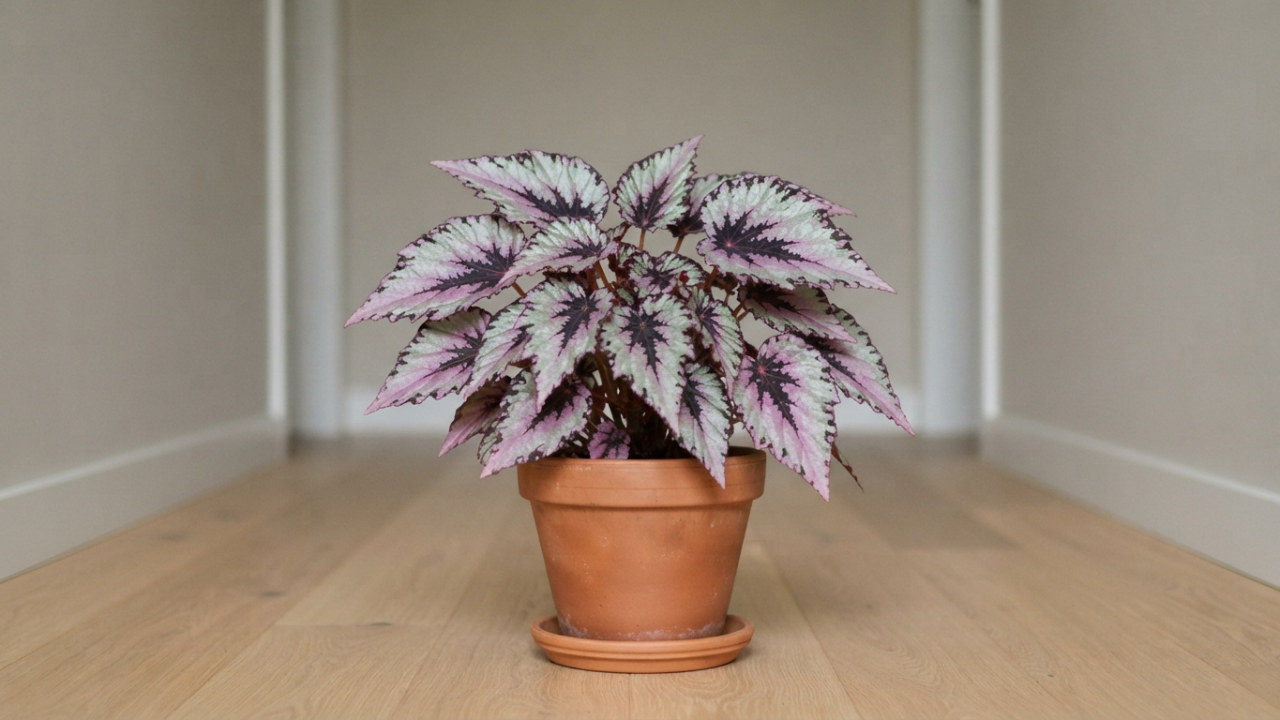
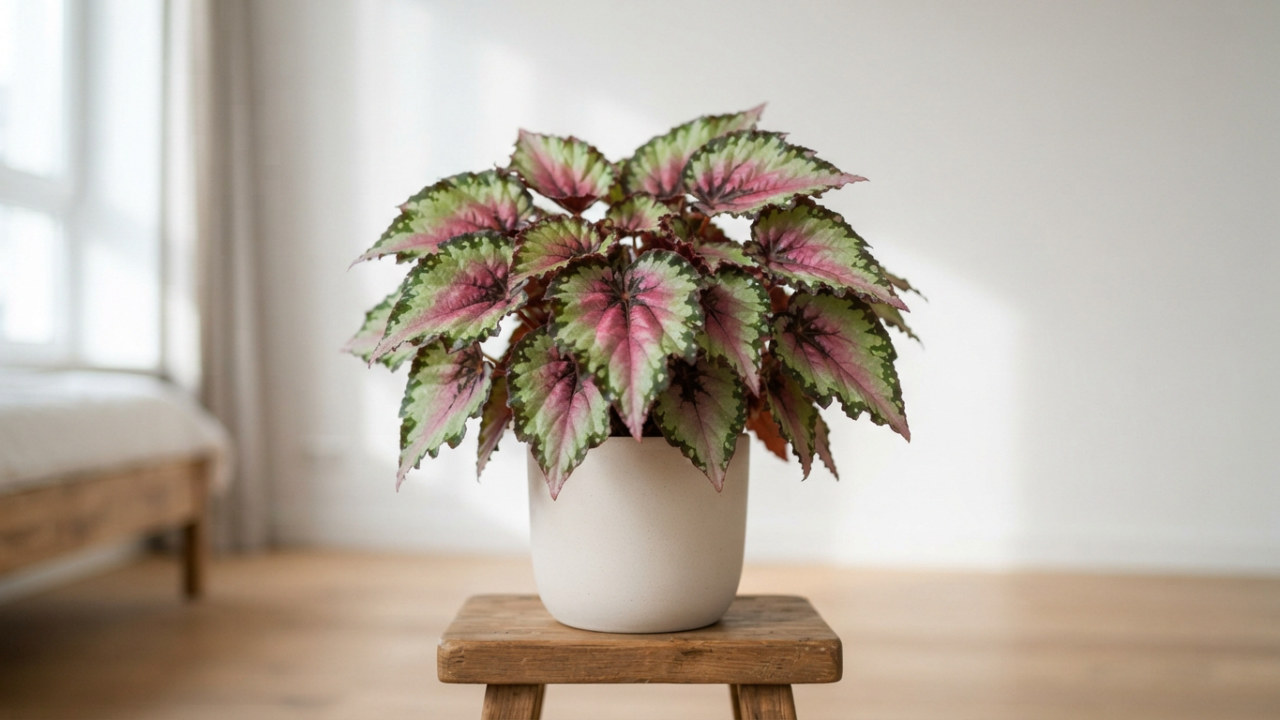
The leaf base coils into a snail-shell spiral, and the silver, green and chocolate bands follow it; other rex cultivars here have flat leaves. 'Curly Fireflush' also spirals, but it is green and maroon and covered in red hairs.

Watering your Begonia 'Escargot'
Every 6 days
Water when the top centimeters of mix are dry, pouring at the pot's edge or from below so the fuzzy leaves stay dry.
How to know it needs water
- The top centimeters of mix feel dry to the touch
- Leaves lose their firmness and the pot feels light

How much light a Begonia 'Escargot' needs
Bright indirect light
Bright indirect light, away from direct sun, which fades the silver bands and scorches the leaves.
- Direct sun tolerated
- No direct sun
- Orientations that suit it
- North, North-east, East, North-west

Humidity and misting
60–70 %
High, around 60 to 70 percent; a tray of damp pebbles under the pot helps. Do not mist: water left on the fuzzy leaves spots them and invites mildew; raise the humidity with a pebble tray instead.

Feeding and fertiliser
Every 21 days
Feed about every three weeks from March to September, then stop for the cooler months.
- Recommended feed
- Balanced liquid fertilizer, diluted by half. · 2-1-2

Repotting your Begonia 'Escargot'
Every 12 months
Move into a shallow, slightly wider pot of light, airy mix, keeping the rhizome at the surface rather than buried.
- When
- Spring, between March and May.
- Potting mix
- All-purpose potting mix
- Mix in
- perlite, coco fibre
The tell-tale signs
- The rhizome crowds over the rim of the pot
- Roots show at the drainage holes

Pruning your Begonia 'Escargot'
Any time, removing tired or damaged leaves, ideally in the growing season. Cut the leaf stalk close to the rhizome with clean scissors.

Through the year
Watering is not set once and for all: it follows the light and the growth. Allow 10 days between waterings in the depth of winter, against 5 in the growing season.
- 9 J
- 7 F
- 6 M
- 5 A
- 5 M
- 5 J
- 5 J
- 5 A
- 6 S
- 7 O
- 8 N
- 10 D
Active growth · Days between waterings

Toxicity
Toxic to cats and dogs, mostly in the underground rhizomes, causing drooling and vomiting; the calcium oxalates also irritate the mouth and throat of people who chew it.

Good to know
- The name is French for snail, after the spiral at the base of each leaf.
- Like other rex begonias, it can be multiplied from leaf cuttings laid on moist mix.

Frequently asked questions about the Begonia 'Escargot'
How do you care for a Begonia 'Escargot'?
Water it every 6 days. Give it bright indirect light. Ideal humidity: 60–70 %. Ideal temperature: 16–26 °C. Water when the top centimeters of mix are dry, pouring at the pot's edge or from below so the fuzzy leaves stay dry.
How often should you water a Begonia 'Escargot'?
Every 6 days Water when the top centimeters of mix are dry, pouring at the pot's edge or from below so the fuzzy leaves stay dry. How to know it needs water : The top centimeters of mix feel dry to the touch ; Leaves lose their firmness and the pot feels light.
How much light does a Begonia 'Escargot' need?
Bright indirect light Bright indirect light, away from direct sun, which fades the silver bands and scorches the leaves. No direct sun
Is the Begonia 'Escargot' toxic to cats and dogs?
Yes. Toxic to cats and dogs, mostly in the underground rhizomes, causing drooling and vomiting; the calcium oxalates also irritate the mouth and throat of people who chew it. Keep it out of reach of your pets and call a vet if any is swallowed.
Why are my Begonia 'Escargot' leaves turning yellow?
Yellowing most often comes from too much water: the mix stays wet and the roots suffocate. Check that the pot drains, empty the saucer, and let the mix dry before watering again. Too little light or a cold draught cause the same symptom.
When should you repot a Begonia 'Escargot'?
Repot every 12 months, ideally in spring, between march and may.. Move into a shallow, slightly wider pot of light, airy mix, keeping the rhizome at the surface rather than buried.

At a glance
- Family
- Begoniaceae
- Category
- Tropical
- Placement
- Indoor
- Mature height
- 23 cm
- Growth
- Moderate
- Temperature
- 16–26 °C
- Pot materials
- ceramic, plastic
- Growth
- Reaches maturity in 2 years
These figures are for an average plant. In the app they are recalculated for yours, based on your room, its orientation and the season.
And for your plant, in your home?
In the app this plant becomes yours: a watering schedule tuned to your home, health tracking from photos, and reminders at the right moment.
In the same spirit
 Every 7 days


Air Plant
Tillandsia ionantha

 Every 6 days
Alocasia amazonica
Alocasia amazonica
 Every 7 days
Alocasia baginda
Alocasia baginda
 Every 4 days
Angel Wings
Caladium bicolor
