
Variety Tropical · Begoniaceae
Begonia 'Lucerna'
Begonia 'Lucerna' · A variety of Begonia
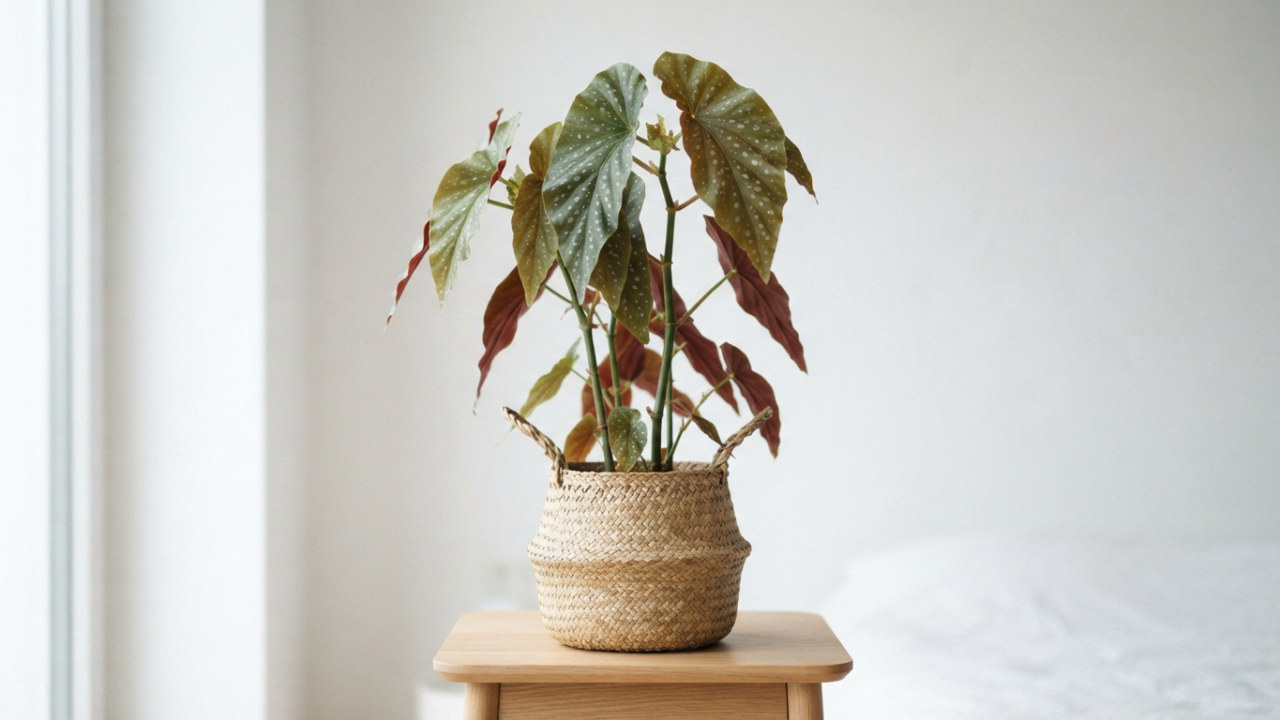
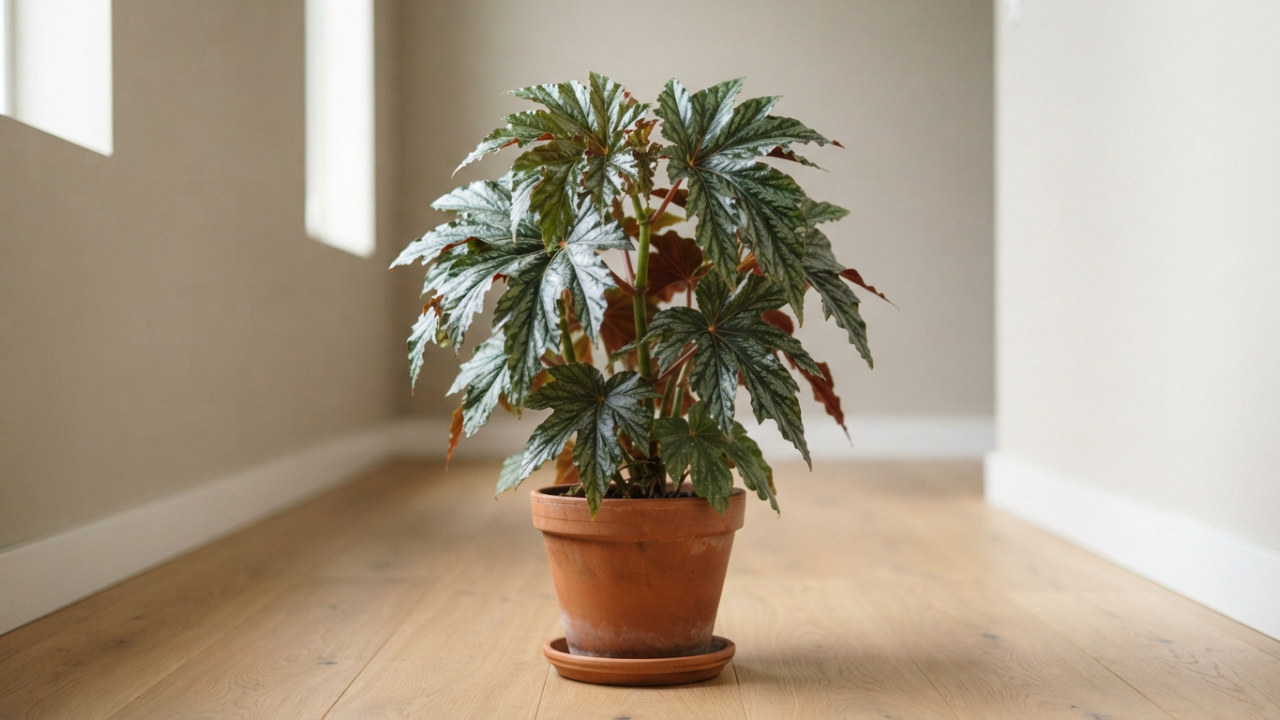
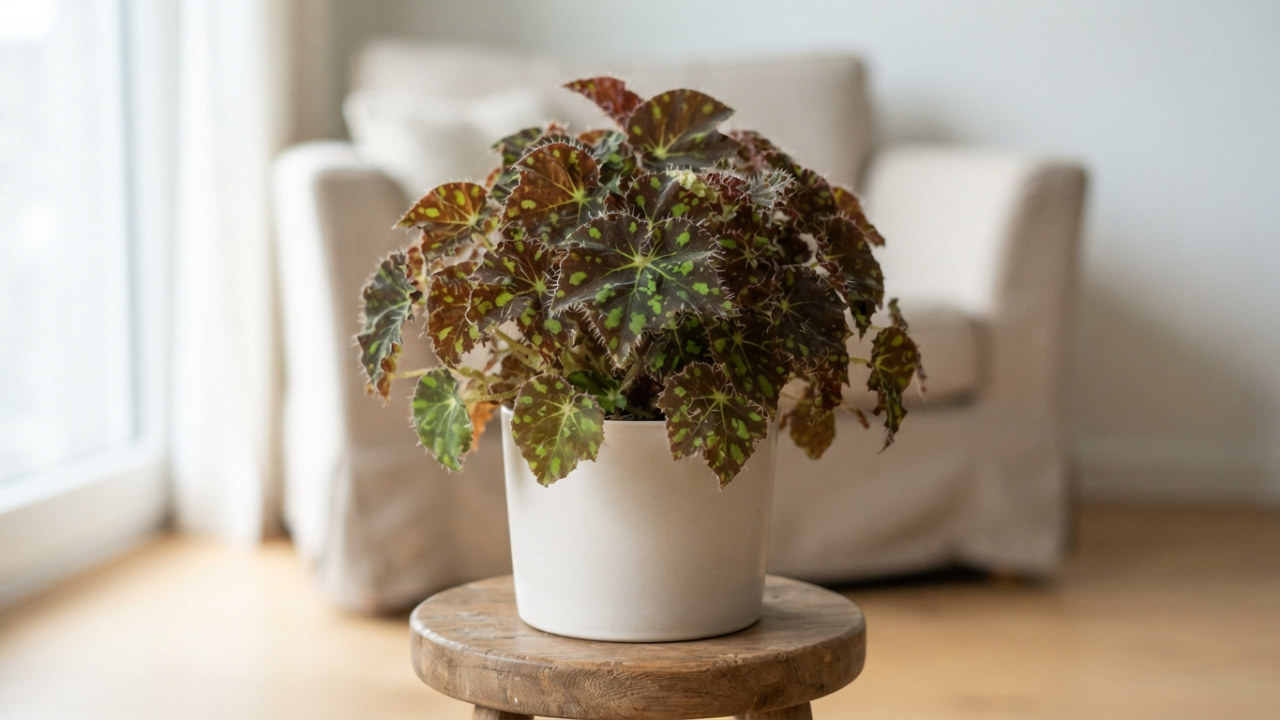
An angel-wing cane begonia with silver-spotted olive leaves, red beneath, and drooping clusters of coral-pink flowers.
- Every 6 daysWatering
- Bright indirect lightLight
- 50–70 %Humidity
- 18–26 °CTemperature


Other varieties 8
How to care for your Begonia 'Lucerna'
Everything you need to keep your Begonia 'Lucerna' healthy: watering, light, humidity, feeding, repotting and pruning.
Begonia 'Lucerna' is an old hybrid of Begonia teuscheri and Begonia coccinea, bred in 1892 by Wettstein in Lucerne, Switzerland, and first sold as 'Corallina de Lucerna'. It forms upright, bamboo-like canes carrying long wing-shaped leaves, and in good light it bears large hanging clusters of pink to rosy-red flowers over much of the year. Indoors it grows quickly and tolerates pruning to keep a tidy shape.

How to recognise Begonia 'Lucerna'
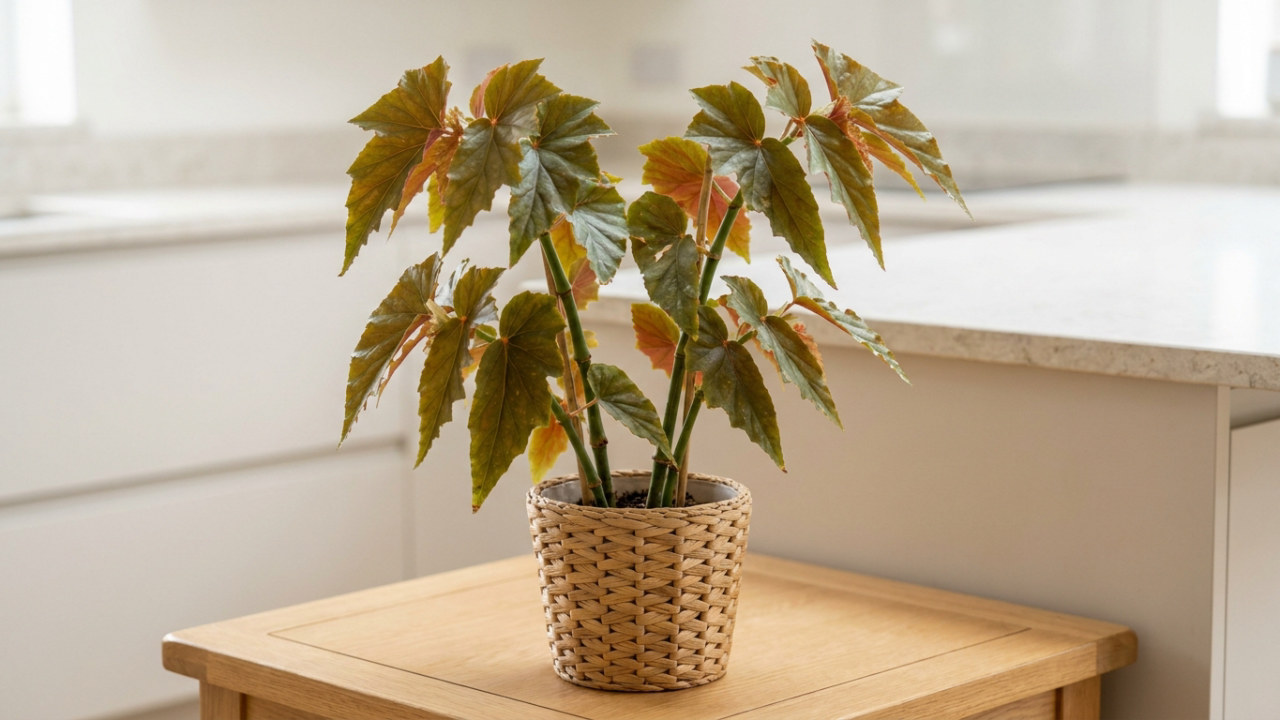
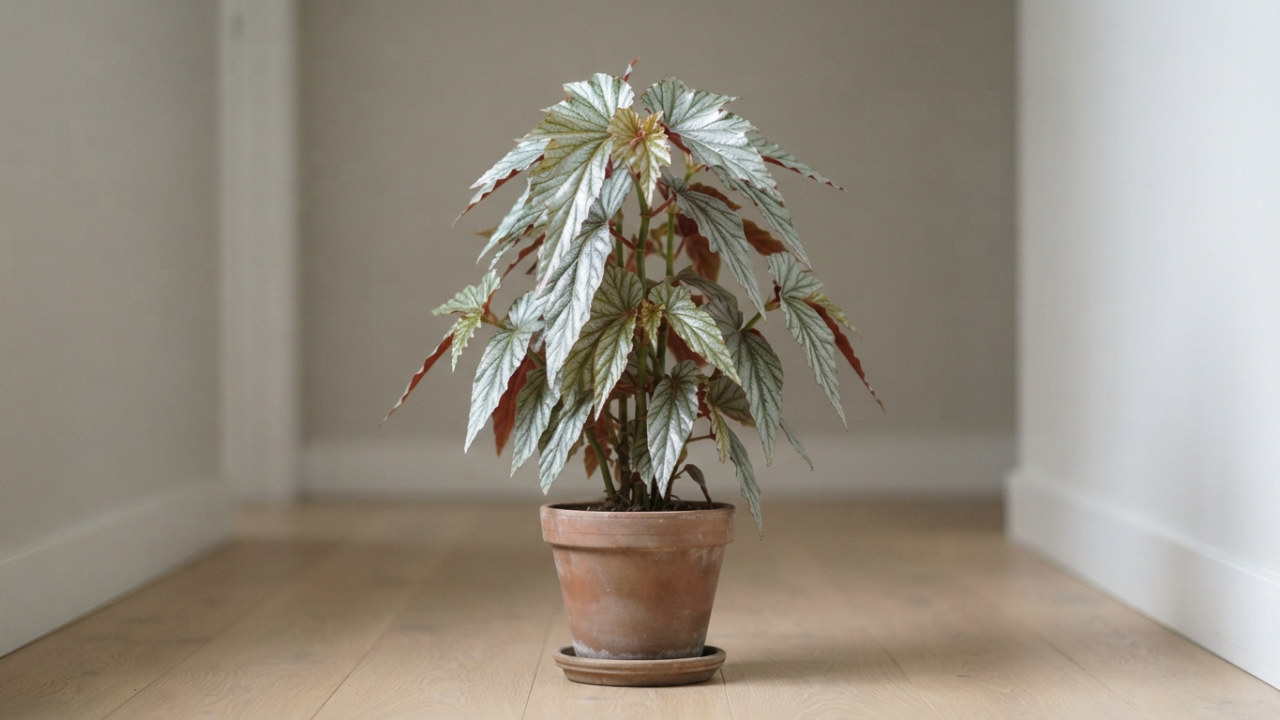
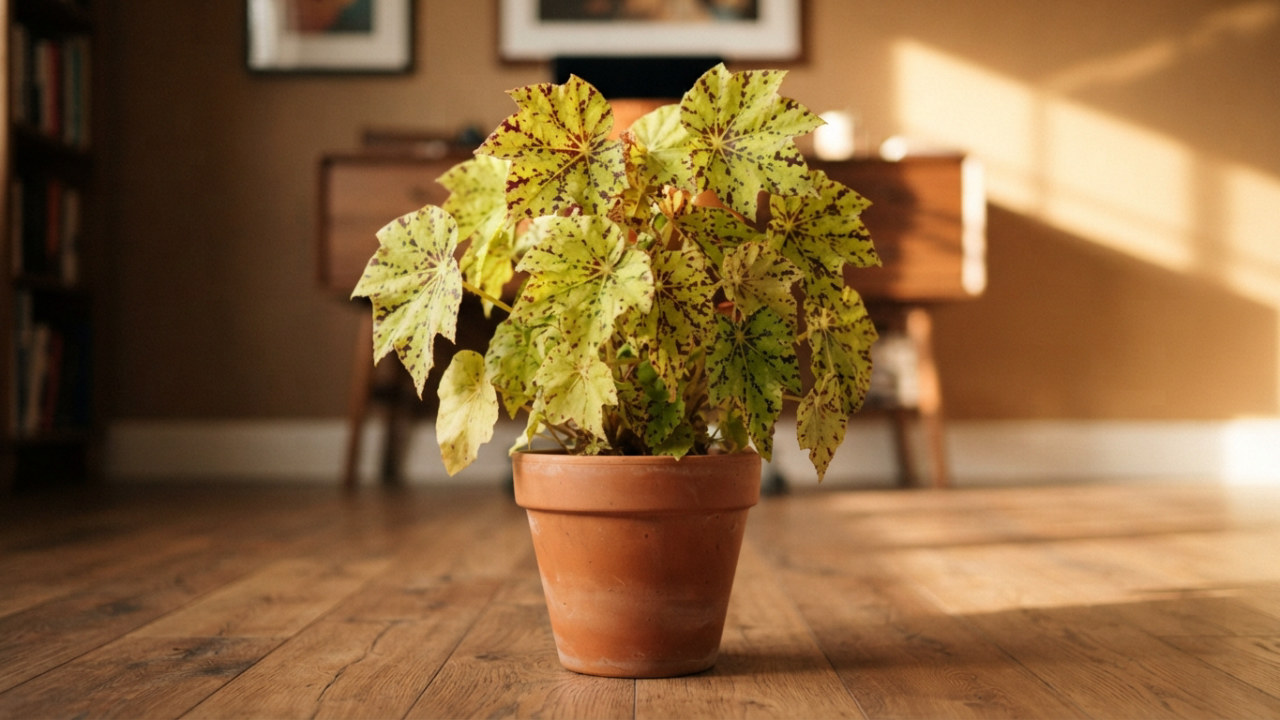
Wing-shaped olive-green leaves up to 20 cm long, evenly dotted with small silver spots above and red to burgundy beneath, on tall jointed canes. Far taller than rhizomatous 'Tiger Paws' or 'Cleopatra', and unlike 'Looking Glass' it is not solid silver.

Watering your Begonia 'Lucerna'
Every 6 days
Water when the top two to three centimeters of mix are dry, empty the saucer, and keep the mix evenly damp but never soggy, because the roots rot in standing water.
How to know it needs water
- The top two to three centimeters of mix feel dry to the touch
- The wing-shaped leaves droop slightly and the pot feels light

How much light a Begonia 'Lucerna' needs
Bright indirect light
Give it bright light without direct sun, such as a spot near an east window; in dim light the canes stretch and flowering stops, and midday sun scorches the leaves.
- Direct sun tolerated
- 0 to 1 h a day
- Orientations that suit it
- North, North-east, East

Humidity and misting
50–70 %
Moderate, about 50 to 70%; a humidifier or neighboring plants help when heating dries the air. Do not mist: water left on the leaves marks them with spots and invites mildew, so raise the humidity around the plant instead.

Feeding and fertiliser
Every 21 days
Feed about every three weeks from March to September, then stop for autumn and winter.
- Recommended feed
- A balanced liquid fertilizer, or one rich in potassium to favor flowers, at half the dose on the label. · 5-10-5

Repotting your Begonia 'Lucerna'
Every 12 months
Move into a pot one size larger, heavy enough to balance the tall canes, with a light mix of potting soil, perlite and coco fiber.
- When
- Spring, from March to May, when new canes start to grow.
- Potting mix
- All-purpose potting mix
- Mix in
- perlite, coco fibre
The tell-tale signs
- Roots circle the pot or come out of the drainage holes
- The tall canes tip the pot over, or the mix dries within a few days

Pruning your Begonia 'Lucerna'
In spring, cut back tall or bare canes to make the plant branch, and trim off spent flower clusters through the year. Cut with clean shears just above a node, at a height of your choice; the cut canes root easily in water or moist mix.

Through the year
Watering is not set once and for all: it follows the light and the growth. Allow 8 days between waterings in the depth of winter, against 5 in the growing season.
- 7 J
- 7 F
- 5 M
- 5 A
- 5 M
- 5 J
- 5 J
- 5 A
- 5 S
- 6 O
- 7 N
- 8 D
Active growth · Days between waterings

Toxicity
Soluble calcium oxalates make it toxic to cats, dogs and people if eaten, causing a burning mouth and throat, drooling and vomiting; the roots are the most harmful part.

Good to know
- Its first name, 'Corallina de Lucerna', refers to the coral-colored flowers and to Lucerne, where it was bred in 1892.
- The red underside of the leaves is typical of angel-wing begonias and shows when the long canes arch.

Frequently asked questions about the Begonia 'Lucerna'
How do you care for a Begonia 'Lucerna'?
Water it every 6 days. Give it bright indirect light. Ideal humidity: 50–70 %. Ideal temperature: 18–26 °C. Water when the top two to three centimeters of mix are dry, empty the saucer, and keep the mix evenly damp but never soggy, because the roots rot in standing water.
How often should you water a Begonia 'Lucerna'?
Every 6 days Water when the top two to three centimeters of mix are dry, empty the saucer, and keep the mix evenly damp but never soggy, because the roots rot in standing water. How to know it needs water : The top two to three centimeters of mix feel dry to the touch ; The wing-shaped leaves droop slightly and the pot feels light.
How much light does a Begonia 'Lucerna' need?
Bright indirect light Give it bright light without direct sun, such as a spot near an east window; in dim light the canes stretch and flowering stops, and midday sun scorches the leaves. 0 to 1 h a day
Is the Begonia 'Lucerna' toxic to cats and dogs?
Yes. Soluble calcium oxalates make it toxic to cats, dogs and people if eaten, causing a burning mouth and throat, drooling and vomiting; the roots are the most harmful part. Keep it out of reach of your pets and call a vet if any is swallowed.
Why are my Begonia 'Lucerna' leaves turning yellow?
Yellowing most often comes from too much water: the mix stays wet and the roots suffocate. Check that the pot drains, empty the saucer, and let the mix dry before watering again. Too little light or a cold draught cause the same symptom.
When should you repot a Begonia 'Lucerna'?
Repot every 12 months, ideally in spring, from march to may, when new canes start to grow.. Move into a pot one size larger, heavy enough to balance the tall canes, with a light mix of potting soil, perlite and coco fiber.

At a glance
- Family
- Begoniaceae
- Category
- Tropical
- Placement
- Indoor
- Mature height
- 1.1 m
- Growth
- Fast
- Temperature
- 18–26 °C
- Pot materials
- terracotta, ceramic, plastic
- Growth
- Reaches maturity in 3 years
These figures are for an average plant. In the app they are recalculated for yours, based on your room, its orientation and the season.
And for your plant, in your home?
In the app this plant becomes yours: a watering schedule tuned to your home, health tracking from photos, and reminders at the right moment.
In the same spirit
 Every 7 days


Air Plant
Tillandsia ionantha

 Every 6 days
Alocasia amazonica
Alocasia amazonica
 Every 7 days
Alocasia baginda
Alocasia baginda
 Every 4 days
Angel Wings
Caladium bicolor
