
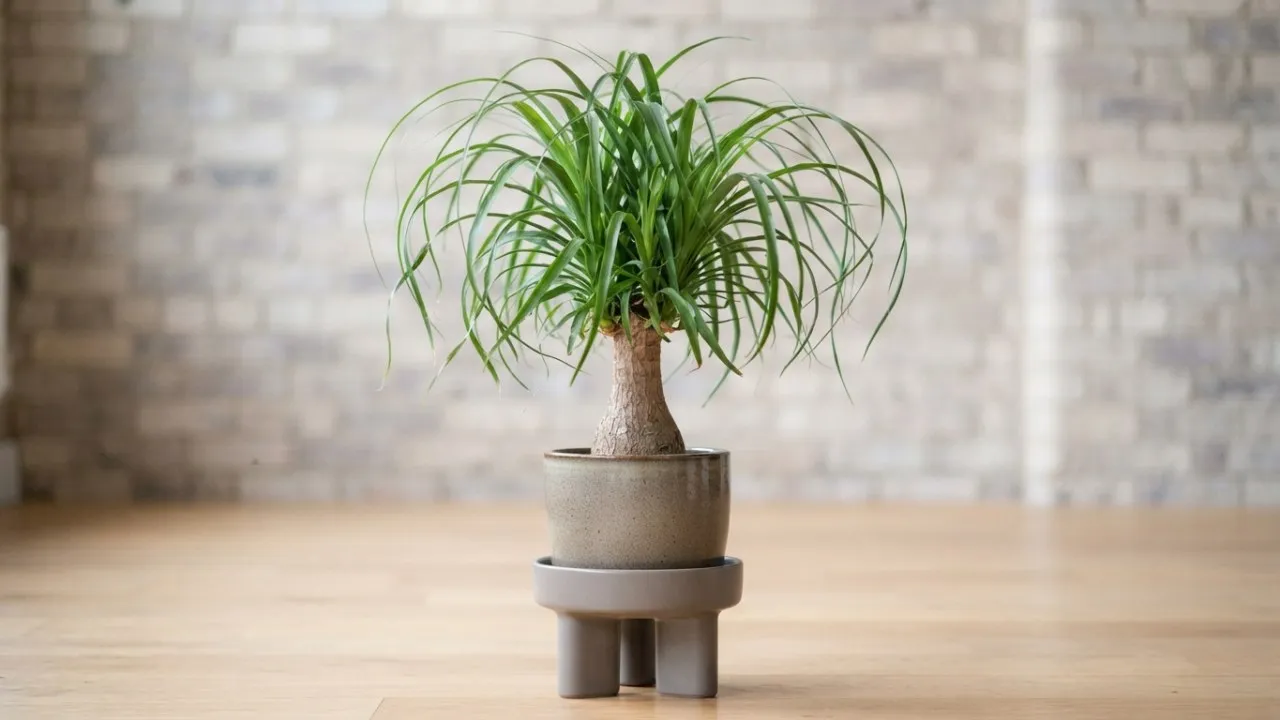
Ponytail Palm
Beaucarnea recurvata
A sculptural plant with a swollen trunk that serves as a water reserve and cascading foliage, resilient and very low-maintenance.
The essentials at a glance
-
Watering
Every 14 days
-
Light
Full sun
-
Humidity
30–50 %
-
Temperature
10–30 °C


How to care for your Ponytail Palm
Everything you need to keep your Ponytail Palm healthy: watering, light, humidity, feeding, repotting and pruning.
Beaucarnea recurvata is a succulent tree-like plant native to the semi-arid regions of Mexico. Its swollen caudex at the base, which earns it the "elephant foot" nickname, acts as a natural cistern storing water for drought periods. From this characteristic trunk springs a tuft of long, thin, cascading leaves resembling a ponytail, hence its English name "Ponytail Palm". It is one of the most resilient and neglect-tolerant houseplants, ideal for beginner gardeners or those who are often away.

Watering your Ponytail Palm
Every 14 days
Water thoroughly then allow the substrate to dry out completely. The caudex (swollen trunk base) stores substantial water reserves. In winter, once a month is sufficient. Overwatering is the primary cause of death.
How to know it needs water
- Substrate completely dry throughout
- Caudex feeling slightly softer to the touch
- Leaves curling inward

How much light a Ponytail Palm needs
Full sun
Bright to full sun. Tolerates direct sun. Indoors, place near the brightest window. Tolerates moderate light but growth will be very slow.
- Direct sun tolerated
- 4 to 10 h a day
- Orientations that suit it
- South, South-east, South-west, East, West, North-east, North-west

Humidity and misting
30–50 %
30–50% No misting necessary. Beaucarnea tolerates the dry air of heated interiors perfectly, making it an ideal apartment plant.

Feeding and fertiliser
Every 30 days
Fertilize once a month from April to September only. Beaucarnea has modest nutritional needs and naturally grows in poor soils. Excess fertilizer can damage the roots.
- Recommended feed
- Liquid fertilizer for cacti and succulents, diluted to half dose. · 5-10-5

Repotting your Ponytail Palm
Every 36 months
Use a very well-draining cactus substrate or a blend of compost, coarse sand, and perlite. Choose a wide but not too deep pot with excellent drainage. Do not bury the caudex deeper than before.
- When
- Spring (April–May)
- Potting mix
- Cactus and succulent mix
- Mix in
- perlite, coarse sand, pumice
The tell-tale signs
- Caudex overflowing the pot
- Roots very cramped
- Pot cracking under pressure from the caudex

Pruning your Ponytail Palm
Rarely necessary. Remove dry leaves from the base of the tuft. Gently pull dry, brown leaves from the base. Never cut the leaf tuft at the top. If the trunk is cut, it will generally not resprout.

Through the year
Watering is not set once and for all: it follows the light and the growth. Allow 28 days between waterings in the depth of winter, against 11 in the growing season.
- 25 J
- 21 F
- 14 M
- 13 A
- 11 M
- 11 J
- 11 J
- 13 A
- 14 S
- 17 O
- 21 N
- 28 D
Active growth · Days between waterings

Good to know
- Despite its nickname 'ponytail palm' and palm-like appearance, the beaucarnea is neither a palm nor a tree: it is actually a member of the asparagus family.
- In its natural habitat in Mexico, beaucarnea can reach 9 metres tall and live several hundred years, with a caudex over one metre in diameter.

Frequently asked questions about the Ponytail Palm
How do you care for a Ponytail Palm?
Water it every 14 days. Give it full sun. Ideal humidity: 30–50 %. Ideal temperature: 10–30 °C. Water thoroughly then allow the substrate to dry out completely. The caudex (swollen trunk base) stores substantial water reserves. In winter, once a month is sufficient. Overwatering is the primary cause of death.
How often should you water a Ponytail Palm?
Every 14 days Water thoroughly then allow the substrate to dry out completely. The caudex (swollen trunk base) stores substantial water reserves. In winter, once a month is sufficient. Overwatering is the primary cause of death. How to know it needs water : Substrate completely dry throughout ; Caudex feeling slightly softer to the touch ; Leaves curling inward.
How much light does a Ponytail Palm need?
Full sun Bright to full sun. Tolerates direct sun. Indoors, place near the brightest window. Tolerates moderate light but growth will be very slow. 4 to 10 h a day
Is the Ponytail Palm toxic to cats and dogs?
No, the Ponytail Palm is not listed as toxic to cats and dogs. That is still no reason to let your pets chew on it.
Why are my Ponytail Palm leaves turning yellow?
Yellowing most often comes from too much water: the mix stays wet and the roots suffocate. Check that the pot drains, empty the saucer, and let the mix dry before watering again. Too little light or a cold draught cause the same symptom.
When should you repot a Ponytail Palm?
Repot every 36 months, ideally in spring (april–may). Use a very well-draining cactus substrate or a blend of compost, coarse sand, and perlite. Choose a wide but not too deep pot with excellent drainage. Do not bury the caudex deeper than before.

At a glance
- Family
- Asparagaceae
- Category
- Tropical
- Placement
- Indoor
- Mature height
- 1.8 m
- Growth
- Slow
- Temperature
- 10–30 °C
- Pot materials
- terracotta, ceramic
- Growth
- Reaches maturity in 15 years
These figures are for an average plant. In the app they are recalculated for yours, based on your room, its orientation and the season.
And for your plant, in your home?
In the app this plant becomes yours: a watering schedule tuned to your home, health tracking from photos, and reminders at the right moment.
In the same spirit
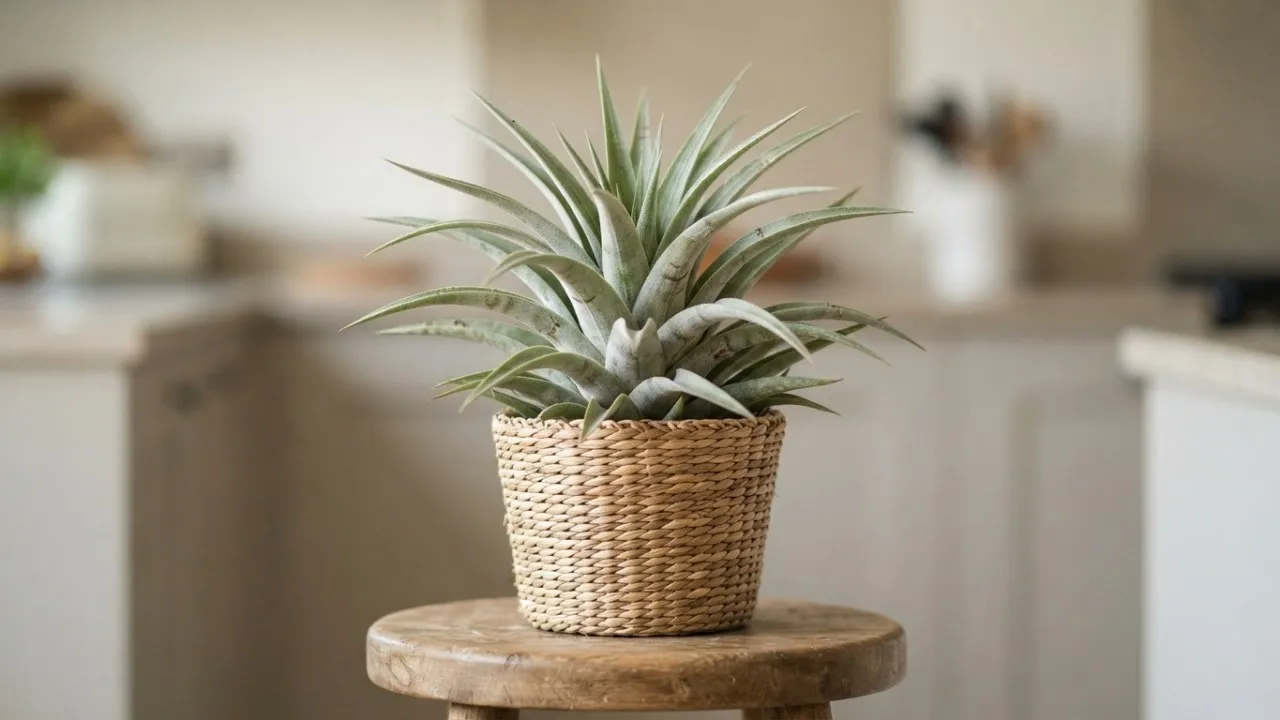 Every 4 days
 Air Plant
Tillandsia ionantha

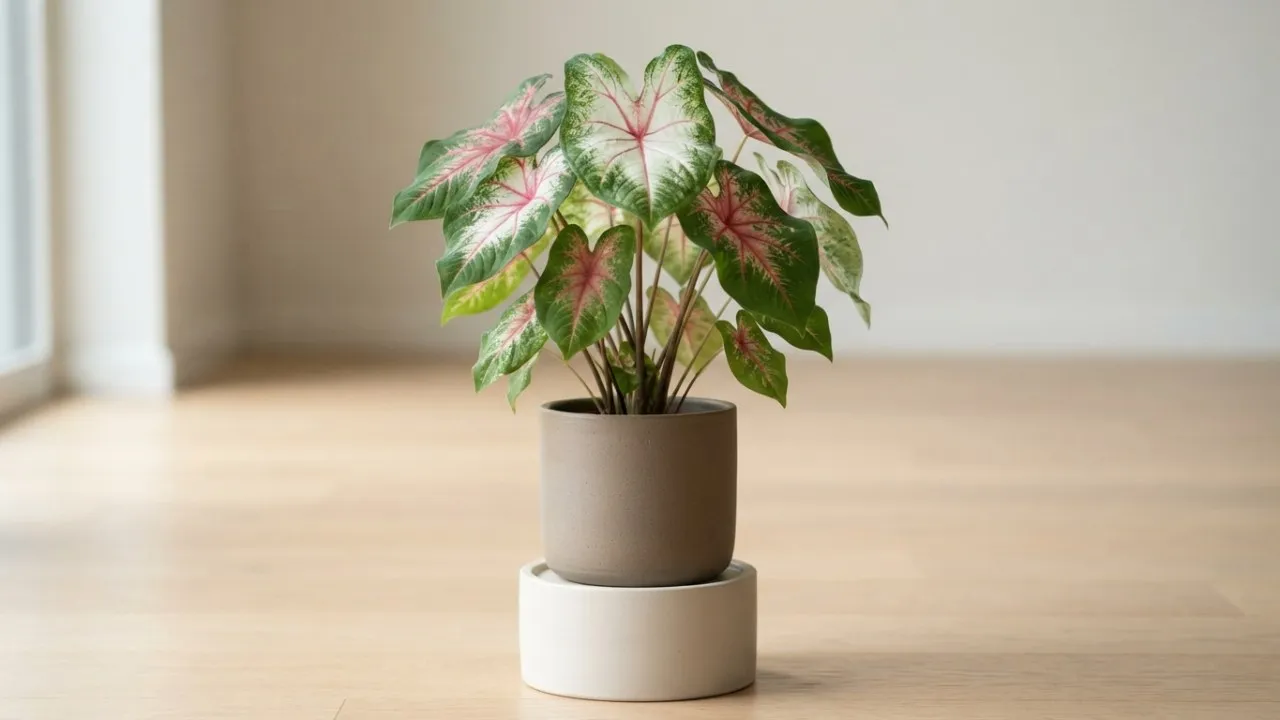 Every 3 days
 Angel Wings
Caladium bicolor
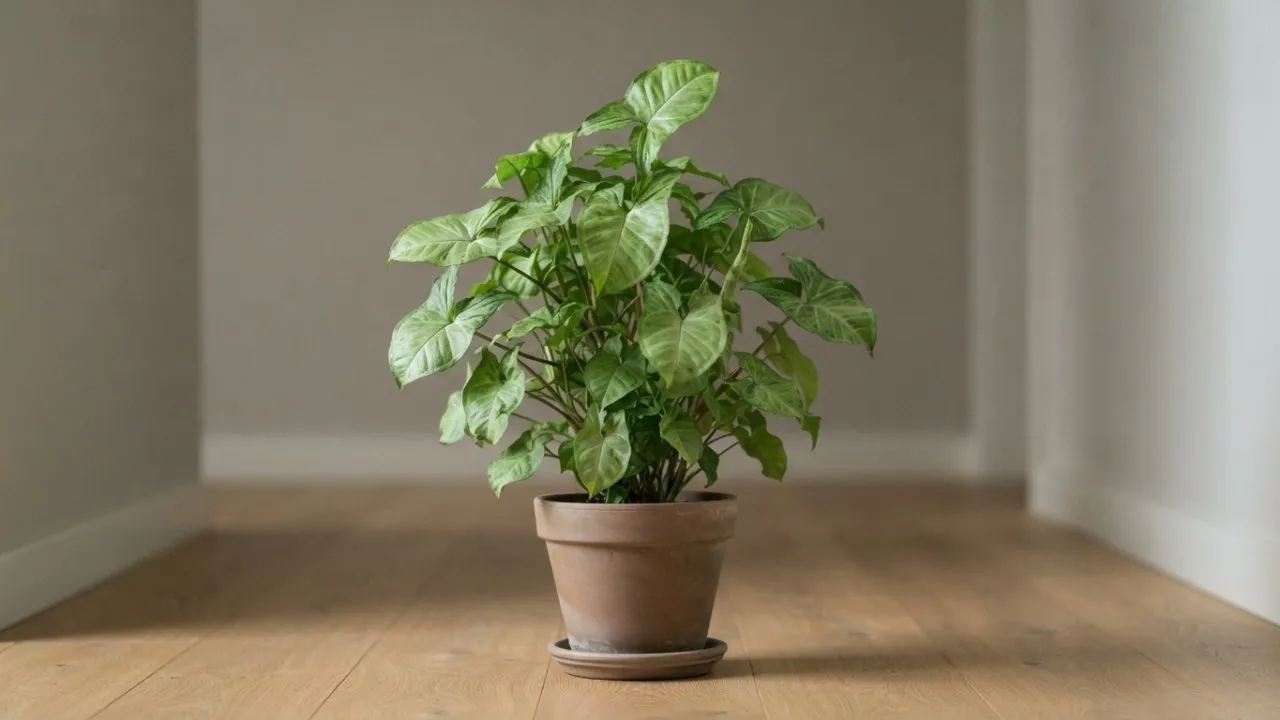 Every 7 days
 Arrowhead Plant
Syngonium podophyllum
 Every 10 days
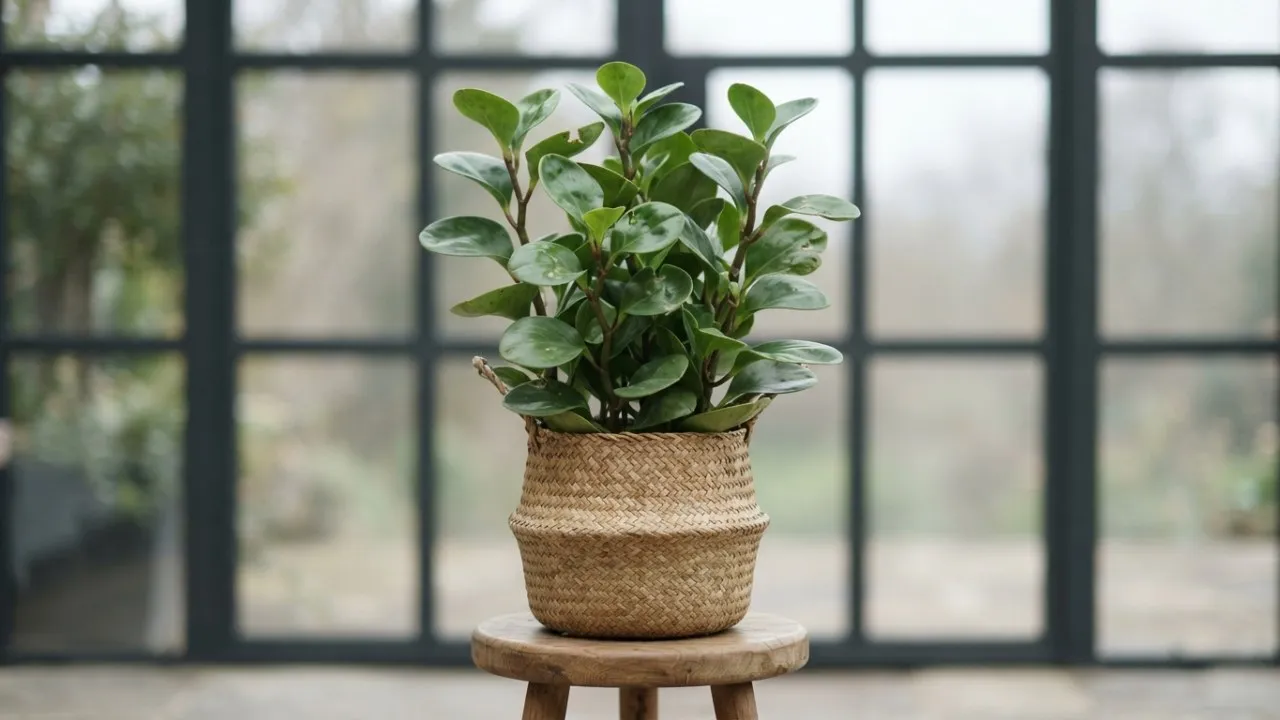
 Baby Rubber Plant
Peperomia obtusifolia