
Tropical · Araceae
Anthurium Magnificum
Anthurium magnificum
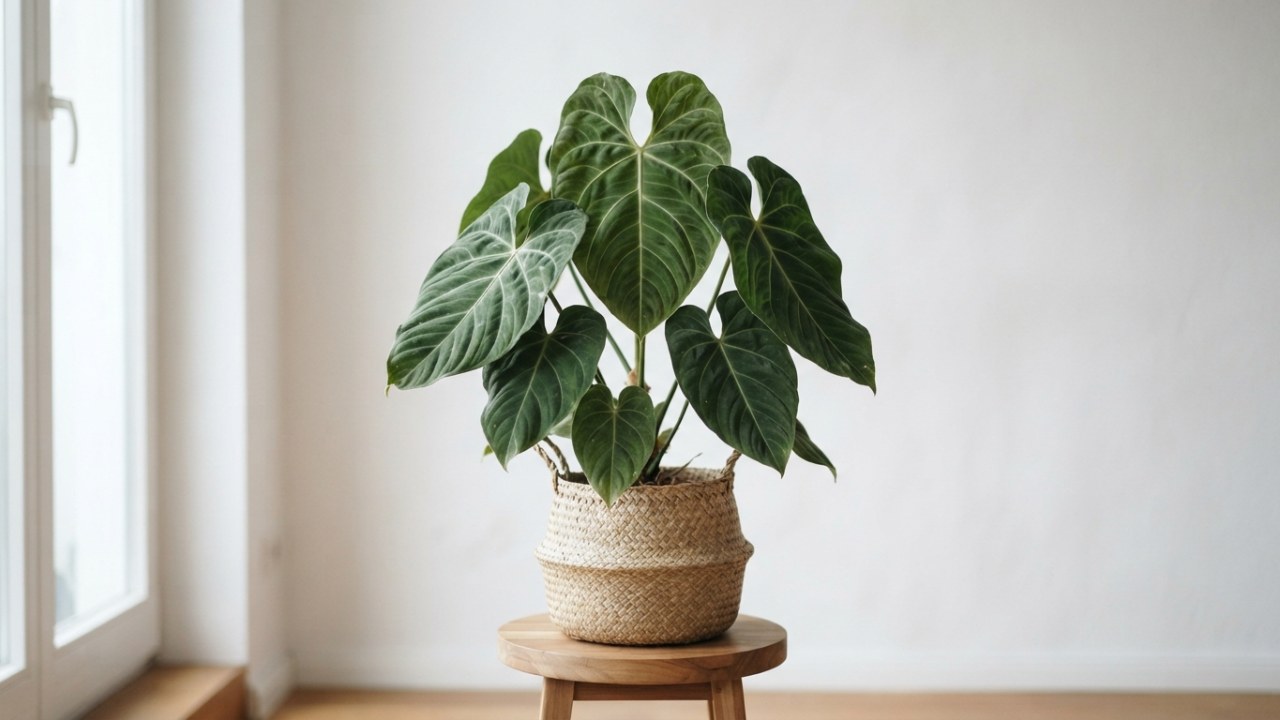
Anthurium magnificum is a stunning tropical plant prized for its large, velvety, dark green leaves with striking white venation.
- Every 7 daysWatering
- Bright indirect lightLight
- 60–80 %Humidity
- 18–27 °CTemperature


How to care for your Anthurium Magnificum
Everything you need to keep your Anthurium Magnificum healthy: watering, light, humidity, feeding, repotting and pruning.
Anthurium magnificum, native to the humid cloud forests of Colombia, is a highly sought-after aroid among plant enthusiasts. Its most distinguishing feature is its magnificent foliage: large, heart-shaped leaves with a rich, velvety texture and contrasting pale green to white veins. This plant thrives in conditions mimicking its natural habitat, requiring high humidity, consistent moisture, and bright, indirect light. While it can be challenging for beginners, providing the right environment will reward growers with a truly spectacular display of tropical beauty. It typically grows as an epiphyte or hemiepiphyte in its natural environment, climbing on trees.

How to recognise Anthurium Magnificum
Anthurium magnificum forms a short-stemmed plant with large, velvety, dark green, heart-shaped leaves marked by broad, pale green to white veins, carried on petioles that are four-sided (squared) in section. It is often confused with Anthurium crystallinum, whose leaves are rounder and thinner with a rounded petiole, and with Anthurium clarinervium, whose leaves are smaller, thicker and more leathery. The squared petiole and the large, elongated, very velvety blade are the quickest ways to tell magnificum apart.

Watering your Anthurium Magnificum
Every 7 days
Water thoroughly when the upper half of the substrate is dry to the touch, then empty the saucer. Water less often from November to February. Ensure good drainage to prevent root rot.
How to know it needs water
- Upper half of the substrate dry to the touch
- Leaves appear slightly dull
- Pot feels lighter than usual

How much light a Anthurium Magnificum needs
Bright indirect light
Bright indirect light; avoid direct sun which can scorch its leaves.
- Direct sun tolerated
- 0 to 1 h a day
- Orientations that suit it
- North, North-east, East, North-west

Humidity and misting
60–80 %
High (60-80%) Do not mist: water left on the velvety leaves marks them and invites gray mold. Raise the humidity with a humidifier or by grouping plants, and keep the leaves dry.

Feeding and fertiliser
Every 21 days
Apply every 3 weeks from April to October; none from November to March.
- Recommended feed
- Balanced liquid fertilizer diluted to half strength · 5-5-5

Repotting your Anthurium Magnificum
Every 24 months
Repot every 2 years in spring into a slightly larger pot (2 to 4 cm wider) with a well-draining, airy aroid mix.
- When
- Spring
- Potting mix
- Orchid mix
- Mix in
- perlite, pine bark, coco fibre, sphagnum moss
The tell-tale signs
- Roots emerging from drainage holes
- Growth has slowed significantly
- Substrate compacts and dries out too quickly

Pruning your Anthurium Magnificum
Remove yellowing, damaged, or dead leaves as needed throughout the year. Use clean, sharp scissors or a knife to cut the petiole close to the base of the plant.

Through the year
Watering is not set once and for all: it follows the light and the growth. Allow 13 days between waterings in the depth of winter, against 6 in the growing season.
- 11 J
- 8 F
- 7 M
- 6 A
- 6 M
- 6 J
- 6 J
- 6 A
- 7 S
- 8 O
- 11 N
- 13 D
Active growth · Days between waterings

Toxicity
Toxic to cats, dogs and humans if ingested: calcium oxalate crystals cause mouth irritation, swelling and digestive upset. The sap can irritate skin and eyes, so wear gloves when pruning or repotting and wash your hands afterwards. Keep out of reach of pets and children.

Good to know
- Known for its large, velvety, heart-shaped leaves with prominent white veins
- Native to the rainforests of Colombia, where it grows as an epiphyte or hemiepiphyte
- The 'flowers' are actually modified leaves called spathes, with a central spadix

Frequently asked questions about the Anthurium Magnificum
How do you care for a Anthurium Magnificum?
Water it every 7 days. Give it bright indirect light. Ideal humidity: 60–80 %. Ideal temperature: 18–27 °C. Water thoroughly when the upper half of the substrate is dry to the touch, then empty the saucer. Water less often from November to February. Ensure good drainage to prevent root rot.
How often should you water a Anthurium Magnificum?
Every 7 days Water thoroughly when the upper half of the substrate is dry to the touch, then empty the saucer. Water less often from November to February. Ensure good drainage to prevent root rot. How to know it needs water : Upper half of the substrate dry to the touch ; Leaves appear slightly dull ; Pot feels lighter than usual.
How much light does a Anthurium Magnificum need?
Bright indirect light Bright indirect light; avoid direct sun which can scorch its leaves. 0 to 1 h a day
Is the Anthurium Magnificum toxic to cats and dogs?
Yes. Toxic to cats, dogs and humans if ingested: calcium oxalate crystals cause mouth irritation, swelling and digestive upset. The sap can irritate skin and eyes, so wear gloves when pruning or repotting and wash your hands afterwards. Keep out of reach of pets and children. Keep it out of reach of your pets and call a vet if any is swallowed.
Why are my Anthurium Magnificum leaves turning yellow?
Yellowing most often comes from too much water: the mix stays wet and the roots suffocate. Check that the pot drains, empty the saucer, and let the mix dry before watering again. Too little light or a cold draught cause the same symptom.
When should you repot a Anthurium Magnificum?
Repot every 24 months, ideally in spring. Repot every 2 years in spring into a slightly larger pot (2 to 4 cm wider) with a well-draining, airy aroid mix.

At a glance
- Family
- Araceae
- Category
- Tropical
- Placement
- Indoor
- Mature height
- 90 cm
- Growth
- Moderate
- Temperature
- 18–27 °C
- Pot materials
- ceramic, plastic
- Growth
- Reaches maturity in 5 years
These figures are for an average plant. In the app they are recalculated for yours, based on your room, its orientation and the season.
And for your plant, in your home?
In the app this plant becomes yours: a watering schedule tuned to your home, health tracking from photos, and reminders at the right moment.
In the same spirit
 Every 7 days


Air Plant
Tillandsia ionantha

 Every 6 days
Alocasia amazonica
Alocasia amazonica
 Every 7 days
Alocasia baginda
Alocasia baginda
 Every 4 days
Angel Wings
Caladium bicolor
