
Fern · Pteridaceae
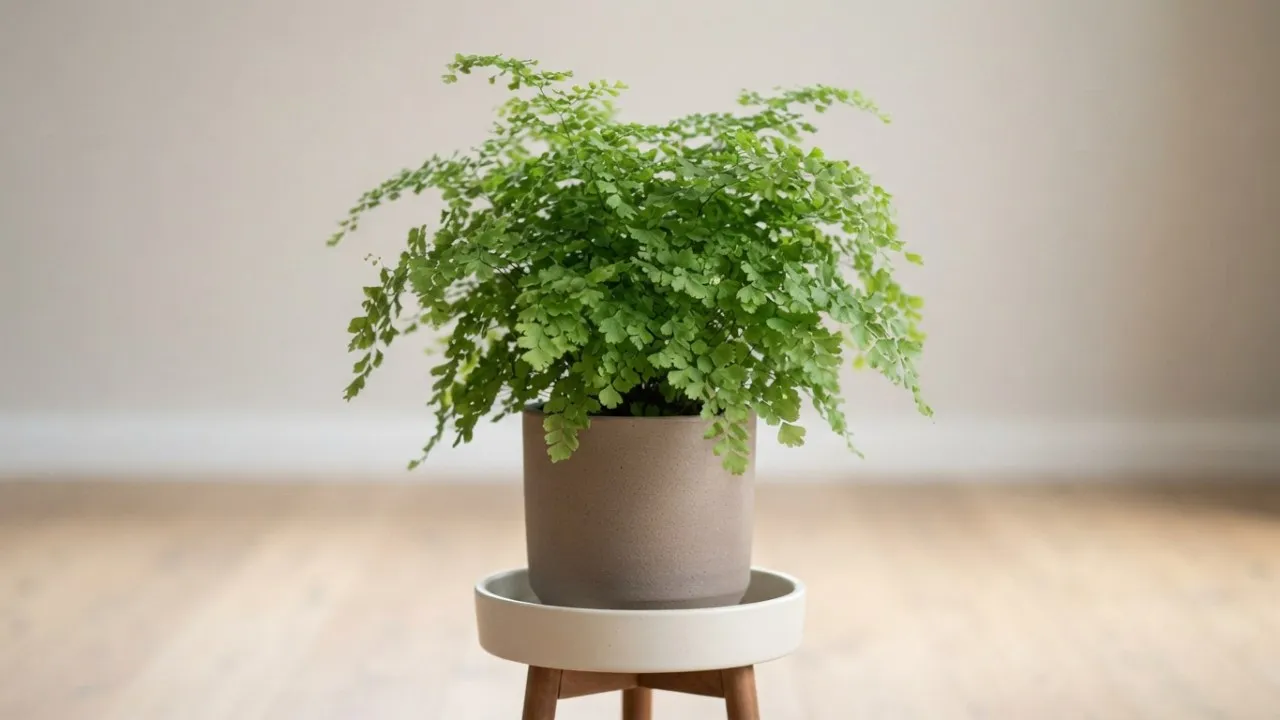
Maidenhair Fern
Adiantum raddianum
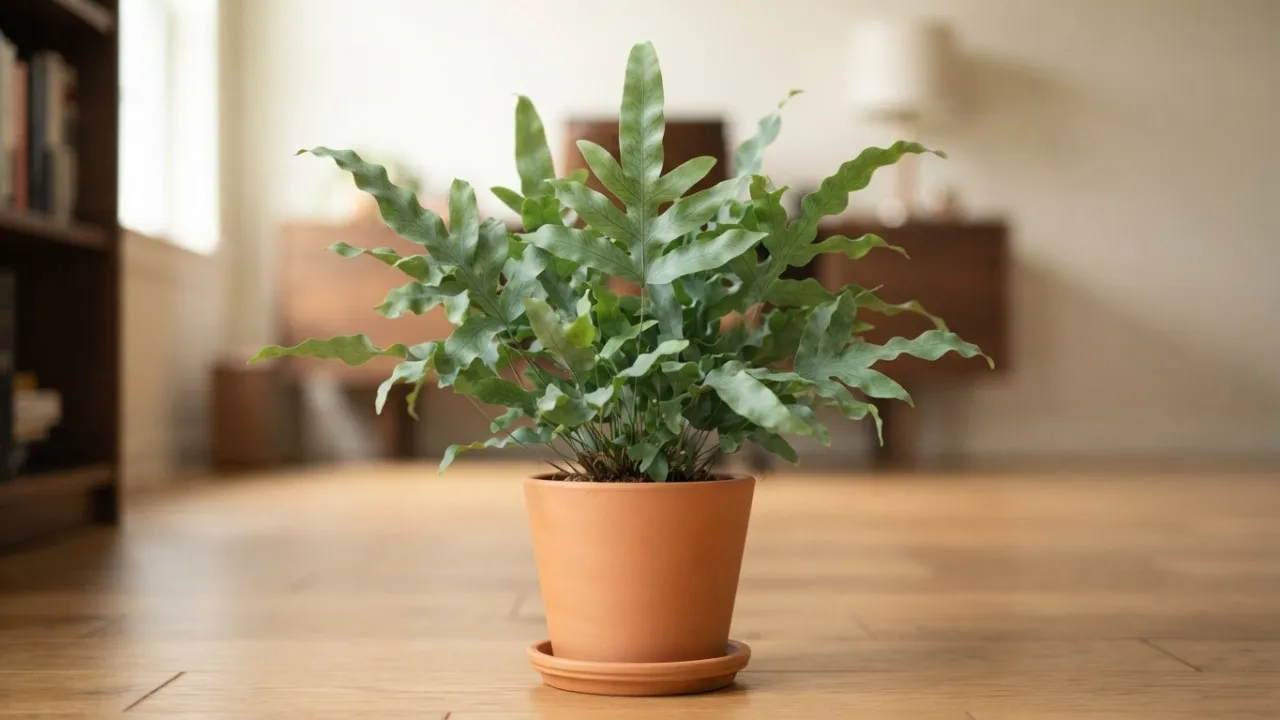
An extremely delicate fern with airy fronds composed of tiny tender green leaflets carried on black, hair-thin petioles.
- Every 3 daysWatering
- Medium lightLight
- 60–80 %Humidity
- 15–25 °CTemperature


How to care for your Maidenhair Fern
Everything you need to keep your Maidenhair Fern healthy: watering, light, humidity, feeding, repotting and pruning.
Adiantum raddianum is a tropical fern renowned for its exceptionally fine and lightweight foliage. Its delicate fronds are composed of tiny fan-shaped leaflets in luminous tender green, carried on glossy black petioles as thin as hair. It is one of the most demanding houseplants, requiring consistently high humidity and a never-dry substrate. However, for those who take on the challenge, it offers a botanical display of unmatched grace, transforming any space into a small corner of tropical forest.

How to recognise Maidenhair Fern
A tufted fern with triangular, lacy fronds divided two or three times into small wedge-shaped leaflets with lobed outer edges, carried on thin, glossy black stalks. The wild European maidenhair (Adiantum capillus-veneris) has fewer, larger, more deeply lobed leaflets, and asparagus fern (Asparagus setaceus) has needle-like foliage on green, thorny stems.

Watering your Maidenhair Fern
Every 3 days
Keep the substrate constantly moist but never waterlogged, watering about every 3 days in the growing season and a little less often in winter. Never allow it to dry out completely: even a single drying episode can kill the fronds. Water the substrate rather than the fronds, with water at room temperature, ideally non-calcareous.
How to know it needs water
- Top of substrate beginning to dry
- Fronds beginning to curl
- Leaflets becoming crispy and brittle

How much light a Maidenhair Fern needs
Medium light
Moderate to diffused indirect light. Never expose to direct sun which instantly scorches the delicate fronds. Ideal in a bright bathroom or near a north-facing window.
- Direct sun tolerated
- No direct sun
- Orientations that suit it
- North, North-east, East, North-west

Humidity and misting
60–80 %
High to very high (60 to 80 %). This is the primary requirement of this fern. Dry air is its worst enemy. Mist about every 3 days with water at room temperature, more often in a heatwave or when the heating is on. A tray of damp clay pebbles or a humidifier is strongly recommended.

Feeding and fertiliser
Every 28 days
Fertilize very lightly, about once a month from April to September. Adiantum roots are very sensitive to fertilizer burn. Do not fertilize in winter.
- Recommended feed
- Liquid foliage plant fertilizer diluted to a quarter of the recommended dose. · 1-1-1

Repotting your Maidenhair Fern
Every 12 months
Use a plastic pot (retains moisture better than terracotta). Rich, humus-rich substrate: potting soil, peat, perlite, and a little sphagnum moss. Do not compact. Keep moist after repotting.
- When
- Spring
- Potting mix
- All-purpose potting mix
- Mix in
- perlite, sphagnum moss, coco fibre
The tell-tale signs
- Black fibrous roots filling the pot
- Substrate drying out very quickly
- Plant producing far fewer new fronds

Pruning your Maidenhair Fern
Remove dry or scorched fronds as they appear. Cut damaged or dry fronds at the base with clean scissors. If the plant is severely degraded, all fronds can be cut back to the base. New growth will emerge if the roots are healthy and the substrate stays moist.

Through the year
Watering is not set once and for all: it follows the light and the growth. Allow 4 days between waterings in the depth of winter, against 2 in the growing season.
- 4 J
- 3 F
- 3 M
- 2 A
- 2 M
- 2 J
- 2 J
- 2 A
- 3 S
- 3 O
- 3 N
- 4 D
Active growth · Days between waterings

Good to know
- The name Adiantum comes from the Greek adiantos meaning 'unwettable': the ultra-fine leaflets are so water-repellent that water beads on their surface without ever wetting them.
- Like all ferns it reproduces by spores, produced in small patches under the rolled-over edges of the leaflet tips.

Frequently asked questions about the Maidenhair Fern
How do you care for a Maidenhair Fern?
Water it every 3 days. Give it medium light. Ideal humidity: 60–80 %. Ideal temperature: 15–25 °C. Keep the substrate constantly moist but never waterlogged, watering about every 3 days in the growing season and a little less often in winter. Never allow it to dry out completely: even a single drying episode can kill the fronds. Water the substrate rather than the fronds, with water at room temperature, ideally non-calcareous.
How often should you water a Maidenhair Fern?
Every 3 days Keep the substrate constantly moist but never waterlogged, watering about every 3 days in the growing season and a little less often in winter. Never allow it to dry out completely: even a single drying episode can kill the fronds. Water the substrate rather than the fronds, with water at room temperature, ideally non-calcareous. How to know it needs water : Top of substrate beginning to dry ; Fronds beginning to curl ; Leaflets becoming crispy and brittle.
How much light does a Maidenhair Fern need?
Medium light Moderate to diffused indirect light. Never expose to direct sun which instantly scorches the delicate fronds. Ideal in a bright bathroom or near a north-facing window. No direct sun
Is the Maidenhair Fern toxic to cats and dogs?
No, the Maidenhair Fern is not listed as toxic to cats and dogs. That is still no reason to let your pets chew on it.
Why are my Maidenhair Fern leaves turning yellow?
Yellowing most often comes from too much water: the mix stays wet and the roots suffocate. Check that the pot drains, empty the saucer, and let the mix dry before watering again. Too little light or a cold draught cause the same symptom.
When should you repot a Maidenhair Fern?
Repot every 12 months, ideally in spring. Use a plastic pot (retains moisture better than terracotta). Rich, humus-rich substrate: potting soil, peat, perlite, and a little sphagnum moss. Do not compact. Keep moist after repotting.

At a glance
- Family
- Pteridaceae
- Category
- Fern
- Placement
- Indoor
- Mature height
- 45 cm
- Growth
- Moderate
- Temperature
- 15–25 °C
- Pot materials
- ceramic, plastic
- Growth
- Reaches maturity in 3 years
These figures are for an average plant. In the app they are recalculated for yours, based on your room, its orientation and the season.
And for your plant, in your home?
In the app this plant becomes yours: a watering schedule tuned to your home, health tracking from photos, and reminders at the right moment.
In the same spirit
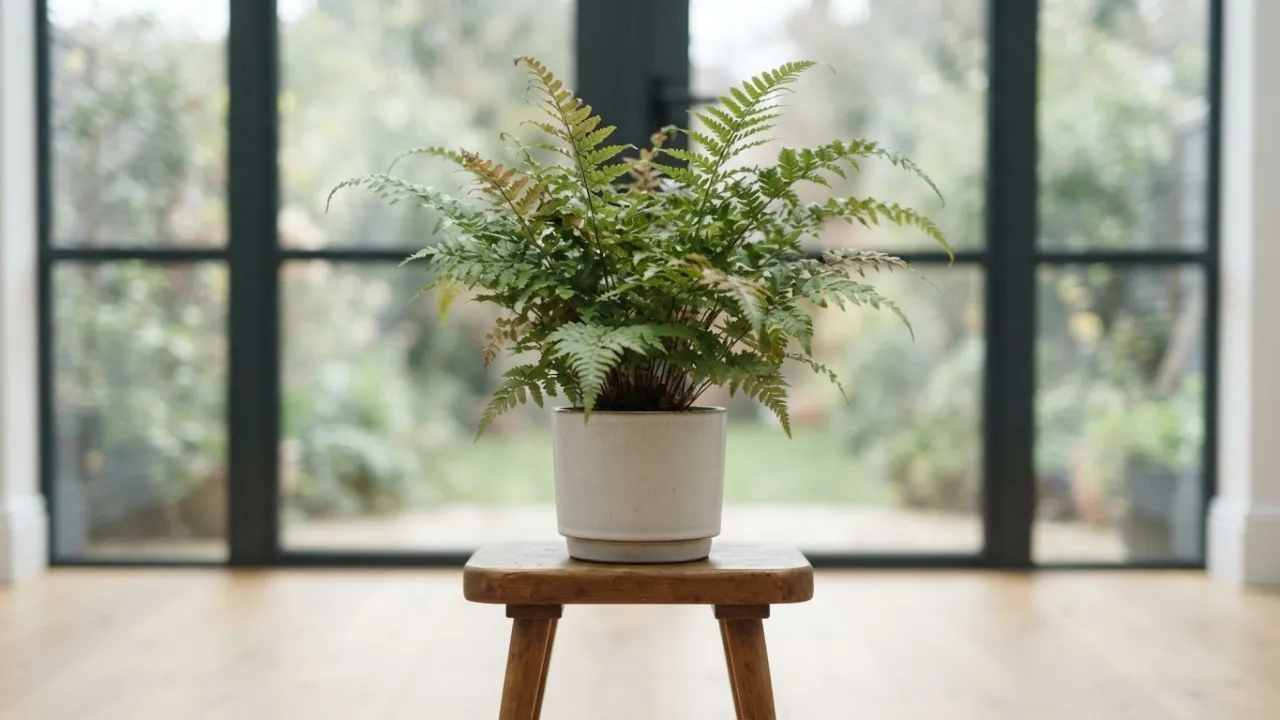 Every 4 days


Autumn Fern
Dryopteris erythrosora

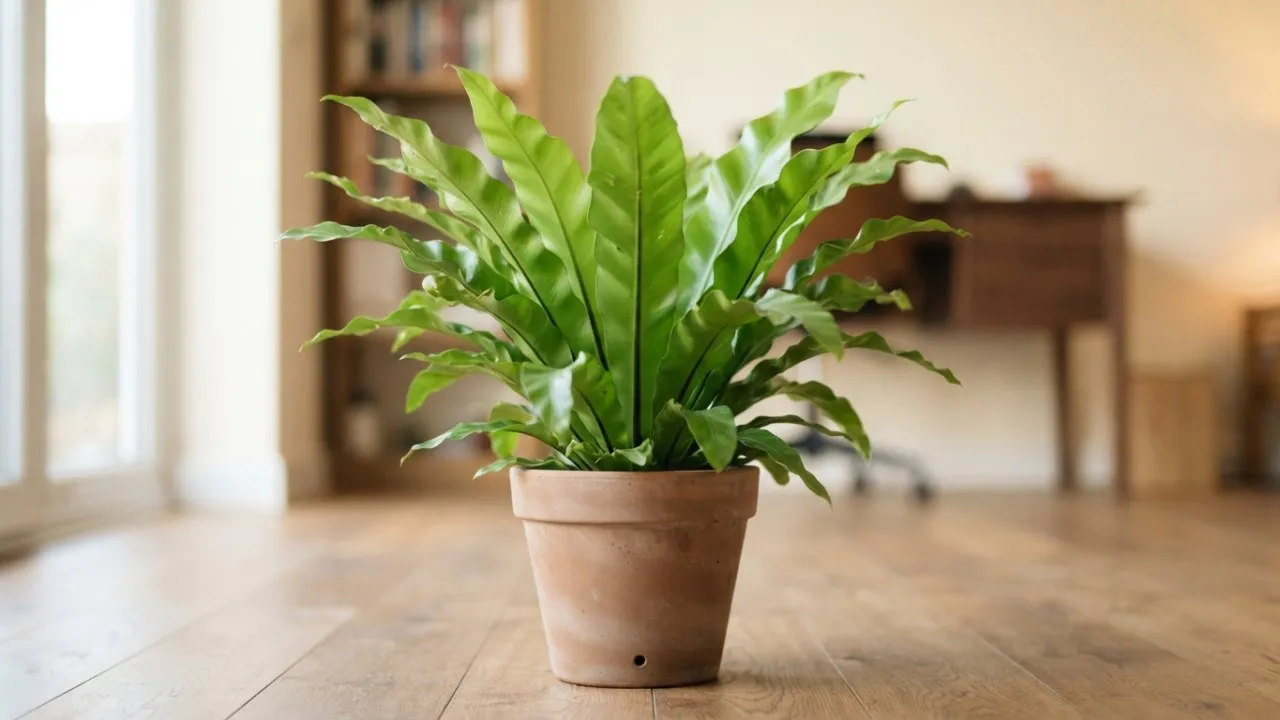 Every 6 days
Bird's Nest Fern
Asplenium antiquum
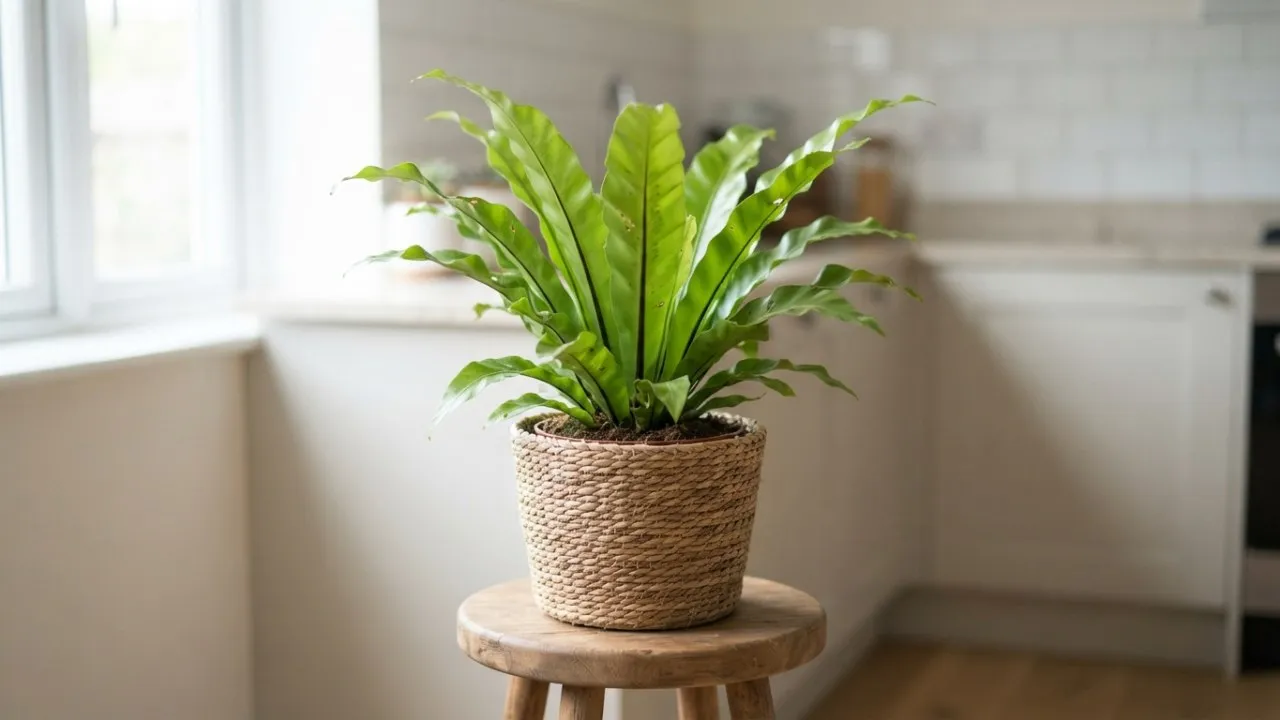 Every 6 days
Bird's Nest Fern
Asplenium nidus
 Every 6 days
Blue Star Fern
Phlebodium aureum
