Perennial · Sarraceniaceae
Yellow Pitcher Plant
Sarracenia flava
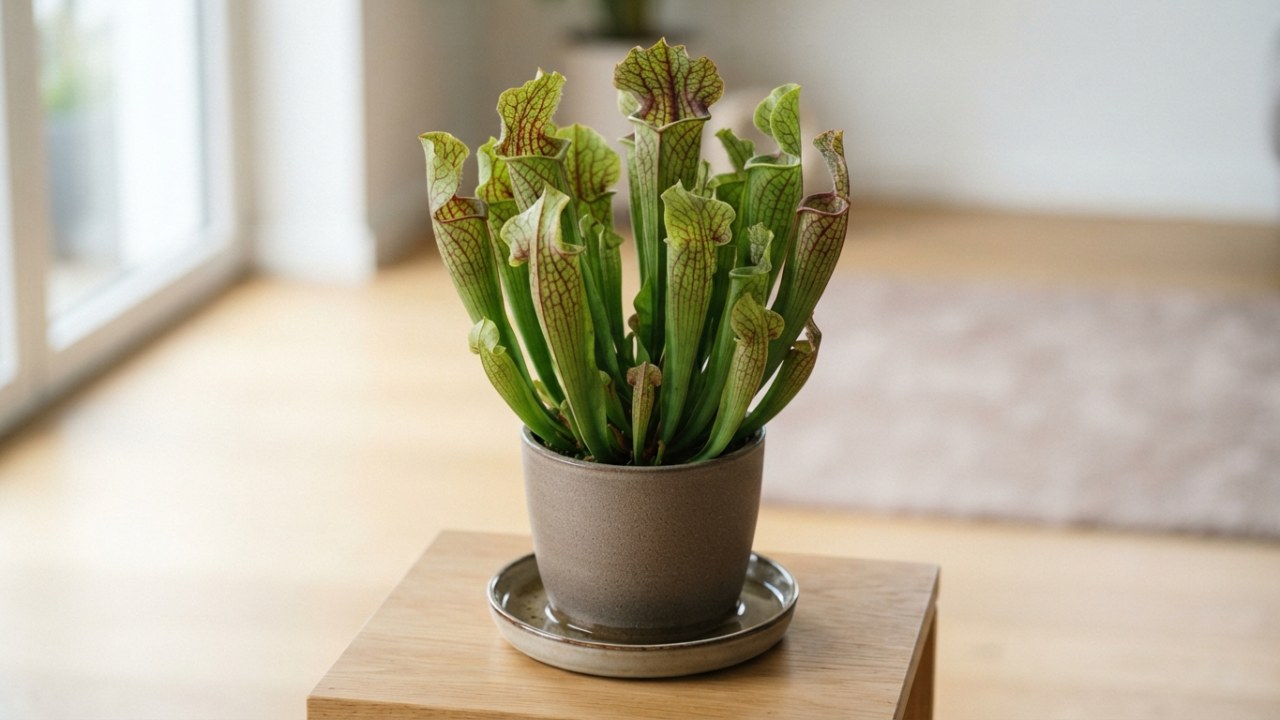
Sarracenia flava, the Yellow Pitcher Plant, is a striking carnivorous plant known for its tall, vibrant yellow pitchers.
- Every 2 daysWatering
- Full sunLight
- 50–80 %Humidity
- -6–35 °CTemperature


How to care for your Yellow Pitcher Plant
Everything you need to keep your Yellow Pitcher Plant healthy: watering, light, humidity, feeding, repotting and pruning.
Sarracenia flava is a captivating carnivorous plant native to the bogs and wetlands of the southeastern United States. It produces tall, erect, trumpet-shaped pitchers that are typically bright yellow-green, often with red venation or a red throat patch. These pitchers are modified leaves that act as pitfall traps, luring insects with nectar secretions and a sweet scent, then trapping them inside where they are digested. This plant requires full sun, high humidity and a specific nutrient-poor, acidic substrate. It also needs a cold winter dormancy to thrive long-term. It is frost hardy to about -6 °C or a little lower while dormant; in a pot the roots freeze faster than in the ground, so shelter the pot against a wall in winter and insulate it. It is best grown outdoors in a bog garden or in pots on a sunny balcony.

How to recognise Yellow Pitcher Plant
Tall, upright, trumpet-shaped pitchers 50 to 90 cm high, yellow-green with red-purple veins and often a dark throat blotch, topped by a rounded, erect lid, with nodding yellow flowers in spring. It can be confused with Sarracenia alata, which has shorter pitchers and a hooded lid arching over the opening, and with Sarracenia leucophylla, whose pitcher tops are white with red veins.

Watering your Yellow Pitcher Plant
Every 2 days
Tray method: the pot stands in 2 to 3 cm of rainwater, distilled or reverse-osmosis water from spring to autumn; never use tap water. In winter dormancy, keep the substrate just moist, removing the tray.
How to know it needs water
- Tray is dry
- Substrate feels light
- Pitchers appear less turgid

How much light a Yellow Pitcher Plant needs
Full sun
Full sun, ideally outdoors or on a sunny balcony: 6 hours of direct sun or more.
- Direct sun tolerated
- 6 to 12 h a day
- Orientations that suit it
- South, South-east, South-west, East, West

Humidity and misting
50–80 %
Medium to high (50 to 80%) Misting is not necessary for Sarracenia flava, which grows best outdoors in humid air.

Feeding and fertiliser
Never fertilize the substrate or the pitchers. Carnivorous plants obtain nutrients from insects, and fertilizer can kill them.
- Recommended feed
- None · 0-0-0

Repotting your Yellow Pitcher Plant
Every 24 months
Repot every 2 to 3 years at the end of winter, into a mix of sphagnum peat and perlite or silica sand (1:1 ratio). Divide large clumps then.
- When
- Late winter to early spring
- Potting mix
- carnivorous
- Mix in
- perlite, coarse sand
The tell-tale signs
- Roots emerging from drainage holes
- Plant has outgrown its pot
- Substrate has broken down or compacted

Pruning your Yellow Pitcher Plant
Late winter, before new growth begins. Cut back all dead or browning pitchers cleanly at their base with sterilised scissors.

Through the year
Watering is not set once and for all: it follows the light and the growth. Allow 5 days between waterings in the depth of winter, against 2 in the growing season.
- 5 J
- 5 F
- 2 M
- 2 A
- 2 M
- 2 J
- 2 J
- 2 A
- 2 S
- 2 O
- 4 N
- 5 D
Active growth · Days between waterings

Good to know
- Its tall, yellow pitchers attract insects with nectar and scent.
- The nodding yellow flowers open in early spring, before the new pitchers are fully grown.
- It is native to the southeastern United States, where it thrives in boggy, nutrient-poor soils.

Frequently asked questions about the Yellow Pitcher Plant
How do you care for a Yellow Pitcher Plant?
Water it every 2 days. Give it full sun. Ideal humidity: 50–80 %. Ideal temperature: -6–35 °C. Tray method: the pot stands in 2 to 3 cm of rainwater, distilled or reverse-osmosis water from spring to autumn; never use tap water. In winter dormancy, keep the substrate just moist, removing the tray.
How often should you water a Yellow Pitcher Plant?
Every 2 days Tray method: the pot stands in 2 to 3 cm of rainwater, distilled or reverse-osmosis water from spring to autumn; never use tap water. In winter dormancy, keep the substrate just moist, removing the tray. How to know it needs water : Tray is dry ; Substrate feels light ; Pitchers appear less turgid.
How much light does a Yellow Pitcher Plant need?
Full sun Full sun, ideally outdoors or on a sunny balcony: 6 hours of direct sun or more. 6 to 12 h a day
Is the Yellow Pitcher Plant toxic to cats and dogs?
No, the Yellow Pitcher Plant is not listed as toxic to cats and dogs. That is still no reason to let your pets chew on it.
Why are my Yellow Pitcher Plant leaves turning yellow?
Yellowing most often comes from too much water: the mix stays wet and the roots suffocate. Check that the pot drains, empty the saucer, and let the mix dry before watering again. Too little light or a cold draught cause the same symptom.
When should you repot a Yellow Pitcher Plant?
Repot every 24 months, ideally in late winter to early spring. Repot every 2 to 3 years at the end of winter, into a mix of sphagnum peat and perlite or silica sand (1:1 ratio). Divide large clumps then.

At a glance
- Family
- Sarraceniaceae
- Category
- Perennial
- Placement
- Outdoor
- Mature height
- 90 cm
- Growth
- Moderate
- Temperature
- -6–35 °C
- Pot materials
- plastic, ceramic
- Growth
- Reaches maturity in 3 years
These figures are for an average plant. In the app they are recalculated for yours, based on your room, its orientation and the season.
And for your plant, in your home?
In the app this plant becomes yours: a watering schedule tuned to your home, health tracking from photos, and reminders at the right moment.