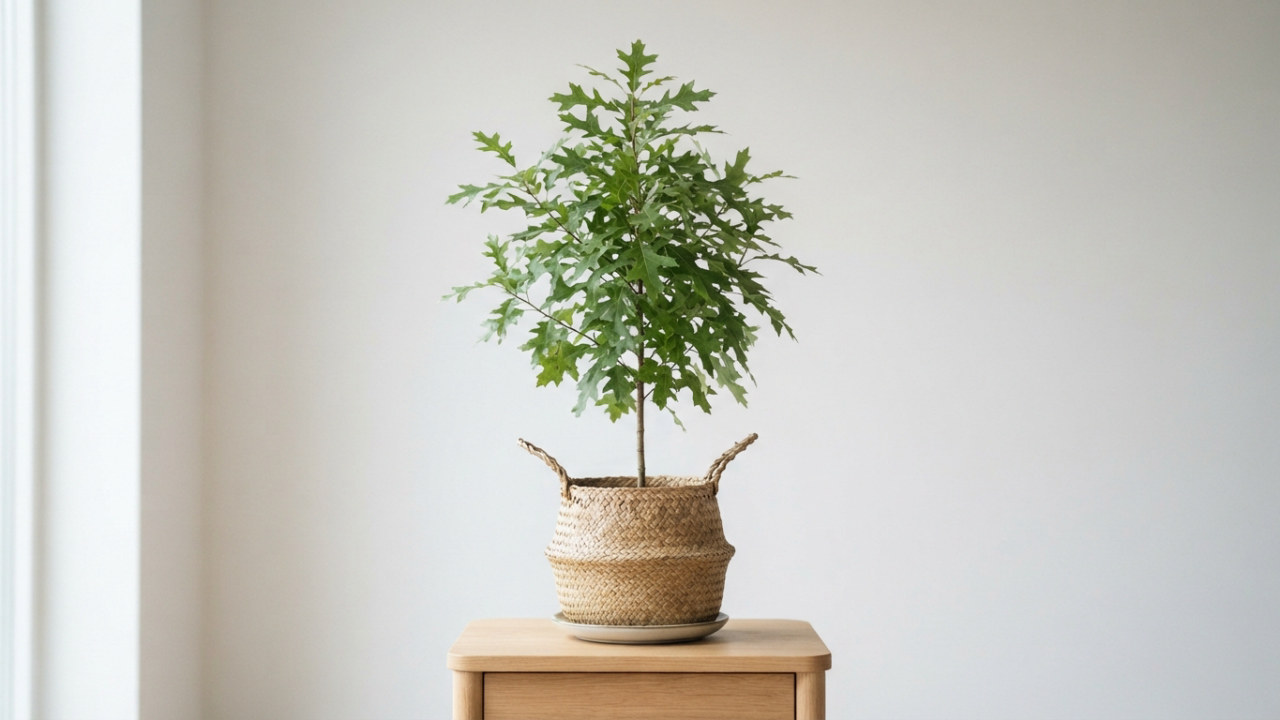
Perennial · Fagaceae
Pin Oak
Quercus palustris
The Pin Oak (Quercus palustris) is a stately, fast-growing deciduous tree native to eastern North America, prized for its pyramidal shape and glossy green leaves. It is very frost hardy.
- Every 4 daysWatering
- Full sunLight
- 40–60 %Humidity
- -29–32 °CTemperature


How to care for your Pin Oak
Everything you need to keep your Pin Oak healthy: watering, light, humidity, feeding, repotting and pruning.
Quercus palustris, commonly known as Pin Oak, is a popular ornamental tree in temperate climates. It is characterized by its deeply lobed, glossy green leaves that turn vibrant shades of red and bronze in autumn, often persisting on the tree into winter. Pin Oaks thrive in moist, acidic soils and full sun, and tend to turn yellow (chlorosis) on chalky soil, making them an excellent choice for parks, large gardens, and street plantings. They are hardy to about -29 °C. They develop a strong central leader and a distinctive branching pattern, with lower branches drooping, middle branches horizontal, and upper branches ascending. Young trees kept in a pot need winter protection, since roots freeze more easily than in the ground; young trees also benefit from regular watering and occasional pruning to develop a strong structure.

How to recognise Pin Oak
A tall tree with a pyramidal crown whose lower branches droop. The glossy leaves have five to seven deep lobes ending in bristles, and turn red-bronze in autumn. The acorns are small and round, with a shallow saucer-shaped cup. It can be confused with the scarlet oak (Quercus coccinea), whose lower branches do not droop and whose larger acorns have a deeper cup, or with the red oak (Quercus rubra), whose lobes are much shallower.

Watering your Pin Oak
Every 4 days
Water deeply every few days in the growing season, especially during the first few years after planting and during dry spells. Water much less in the leafless rest, from October to March. Keep the soil moist but not waterlogged.
How to know it needs water
- Top 5-10 cm of soil dry
- Leaves showing signs of wilting
- Soil pulling away from pot edges

How much light a Pin Oak needs
Full sun
Full sun for optimal growth and health. Tolerates very light shade but will be less vigorous.
- Direct sun tolerated
- 6 to 12 h a day
- Orientations that suit it
- South, South-east, South-west, East, West

Humidity and misting
40–60 %
Moderate (40-60%) Not applicable; this is an outdoor tree.

Feeding and fertiliser
Every 56 days
Established Pin Oaks generally do not need fertilizer. If growth is poor, apply a balanced slow-release fertilizer once, in early spring.
- Recommended feed
- Not typically required for established trees · 10-10-10

Repotting your Pin Oak
Every 24 months
Repot young trees into a larger container (or plant directly into the ground) using a rich, well-draining soil mix. Ensure the root ball is not disturbed excessively.
- When
- Early spring
- Potting mix
- All-purpose potting mix
- Mix in
- pine bark
The tell-tale signs
- Roots circling the pot
- Water running straight through the pot
- Noticeably slowed growth

Pruning your Pin Oak
Late winter to early spring, before new growth begins. Remove dead, damaged, or crossing branches. Prune to maintain a strong central leader and good branch structure. Use sharp, sterilized pruning tools.

Through the year
Watering is not set once and for all: it follows the light and the growth. Allow 6 days between waterings in the depth of winter, against 3 in the growing season.
- 6 J
- 5 F
- 3 M
- 3 A
- 3 M
- 3 J
- 3 J
- 3 A
- 3 S
- 4 O
- 5 N
- 6 D
Active growth · Days between waterings

Toxicity
Acorns and leaves contain tannins that can be toxic to pets (especially horses, cattle, and dogs) if ingested in large quantities, causing gastrointestinal upset and kidney damage. They are not considered toxic to humans, though raw acorns can upset the stomach.

Good to know
- Pin Oaks are known for their distinctive lower branches that droop downwards.
- The name 'pin' refers to the many short, peg-like twigs along the branches.
- They are fast-growing trees, often used in landscaping for their attractive fall foliage.

Frequently asked questions about the Pin Oak
How do you care for a Pin Oak?
Water it every 4 days. Give it full sun. Ideal humidity: 40–60 %. Ideal temperature: -29–32 °C. Water deeply every few days in the growing season, especially during the first few years after planting and during dry spells. Water much less in the leafless rest, from October to March. Keep the soil moist but not waterlogged.
How often should you water a Pin Oak?
Every 4 days Water deeply every few days in the growing season, especially during the first few years after planting and during dry spells. Water much less in the leafless rest, from October to March. Keep the soil moist but not waterlogged. How to know it needs water : Top 5-10 cm of soil dry ; Leaves showing signs of wilting ; Soil pulling away from pot edges.
How much light does a Pin Oak need?
Full sun Full sun for optimal growth and health. Tolerates very light shade but will be less vigorous. 6 to 12 h a day
Is the Pin Oak toxic to cats and dogs?
Yes. Acorns and leaves contain tannins that can be toxic to pets (especially horses, cattle, and dogs) if ingested in large quantities, causing gastrointestinal upset and kidney damage. They are not considered toxic to humans, though raw acorns can upset the stomach. Keep it out of reach of your pets and call a vet if any is swallowed.
Why are my Pin Oak leaves turning yellow?
Yellowing most often comes from too much water: the mix stays wet and the roots suffocate. Check that the pot drains, empty the saucer, and let the mix dry before watering again. Too little light or a cold draught cause the same symptom.
When should you repot a Pin Oak?
Repot every 24 months, ideally in early spring. Repot young trees into a larger container (or plant directly into the ground) using a rich, well-draining soil mix. Ensure the root ball is not disturbed excessively.

At a glance
- Family
- Fagaceae
- Category
- Perennial
- Placement
- Outdoor
- Mature height
- 25 m
- Growth
- Fast
- Temperature
- -29–32 °C
- Pot materials
- fabric, wood, ceramic
- Growth
- Reaches maturity in 30 years
These figures are for an average plant. In the app they are recalculated for yours, based on your room, its orientation and the season.
And for your plant, in your home?
In the app this plant becomes yours: a watering schedule tuned to your home, health tracking from photos, and reminders at the right moment.