

Orchid · Orchidaceae
Moth Orchid
Phalaenopsis amabilis
The Moth Orchid is a graceful epiphyte known for its elegant, long-lasting flowers that resemble moths in flight.
- Every 7 daysWatering
- Bright indirect lightLight
- 60–80 %Humidity
- 18–29 °CTemperature


How to care for your Moth Orchid
Everything you need to keep your Moth Orchid healthy: watering, light, humidity, feeding, repotting and pruning.
Phalaenopsis amabilis, commonly known as the Moth Orchid, is a stunning and popular houseplant native to tropical regions of Southeast Asia and northern Australia, where it grows on trees. Its beautiful, long-lasting flowers, which can bloom for several months, are white in the species. This epiphyte thrives on bright, indirect light and high humidity, making it a rewarding plant for indoor growers. With proper care, including watering only when the potting medium is dry and regular feeding in the growing season, it can rebloom year after year.

How to recognise Moth Orchid
The Moth Orchid has a few broad, thick, glossy leaves arranged in two rows, thick silvery-green aerial roots, and an arching flower spike carrying wide, flat, rounded white flowers with a small lip. It is often confused with the many colored hybrids sold in shops and with Phalaenopsis aphrodite, which is very similar. Look at the flowers: the species amabilis is pure white with a yellow and red lip, while hybrids come in many colors and patterns.

Watering your Moth Orchid
Every 7 days
Water thoroughly when the potting medium is dry, and less often in winter. Allow water to drain completely; do not let the plant sit in standing water.
How to know it needs water
- Potting medium dry throughout
- Roots appear silvery-grey
- Pot feels light

How much light a Moth Orchid needs
Bright indirect light
Bright indirect light; avoid direct sun which can scorch leaves.
- Direct sun tolerated
- 0 to 1 h a day
- Orientations that suit it
- North, North-east, East, North-west, West

Humidity and misting
60–80 %
High (60 to 80 %) Do not mist: water collecting in the crown or on the flowers can cause rot and spots. Raise the humidity with a humidity tray, a humidifier or by grouping plants.

Feeding and fertiliser
Every 14 days
Apply a quarter-strength solution every two weeks from March to October. Do not feed from November to February.
- Recommended feed
- Balanced orchid-specific liquid fertilizer · 20-20-20

Repotting your Moth Orchid
Every 24 months
Repot into a slightly larger pot using fresh orchid bark mix. Trim any dead or mushy roots.
- When
- Spring, after flowering
- Potting mix
- Orchid mix
- Mix in
- pine bark, sphagnum moss
The tell-tale signs
- Roots growing outside the pot
- Potting medium has decomposed
- Plant has outgrown its container

Pruning your Moth Orchid
After flowering, cut the flower spike above a node or at the base if it's completely brown. Use sterile scissors or a blade to make clean cuts. Remove any yellowing or damaged leaves at their base.

Through the year
Watering is not set once and for all: it follows the light and the growth. Allow 7 days between waterings in the depth of winter, against 6 in the growing season.
- 7 J
- 7 F
- 6 M
- 6 A
- 6 M
- 6 J
- 6 J
- 6 A
- 6 S
- 7 O
- 7 N
- 7 D
Active growth · Days between waterings

Good to know
- One of the most popular orchids for beginners
- Can rebloom from old flower spikes
- Native to Southeast Asia and northern Australia

Frequently asked questions about the Moth Orchid
How do you care for a Moth Orchid?
Water it every 7 days. Give it bright indirect light. Ideal humidity: 60–80 %. Ideal temperature: 18–29 °C. Water thoroughly when the potting medium is dry, and less often in winter. Allow water to drain completely; do not let the plant sit in standing water.
How often should you water a Moth Orchid?
Every 7 days Water thoroughly when the potting medium is dry, and less often in winter. Allow water to drain completely; do not let the plant sit in standing water. How to know it needs water : Potting medium dry throughout ; Roots appear silvery-grey ; Pot feels light.
How much light does a Moth Orchid need?
Bright indirect light Bright indirect light; avoid direct sun which can scorch leaves. 0 to 1 h a day
Is the Moth Orchid toxic to cats and dogs?
No, the Moth Orchid is not listed as toxic to cats and dogs. That is still no reason to let your pets chew on it.
Why are my Moth Orchid leaves turning yellow?
Yellowing most often comes from too much water: the mix stays wet and the roots suffocate. Check that the pot drains, empty the saucer, and let the mix dry before watering again. Too little light or a cold draught cause the same symptom.
When should you repot a Moth Orchid?
Repot every 24 months, ideally in spring, after flowering. Repot into a slightly larger pot using fresh orchid bark mix. Trim any dead or mushy roots.

At a glance
- Family
- Orchidaceae
- Category
- Orchid
- Placement
- Indoor
- Mature height
- 60 cm
- Growth
- Moderate
- Temperature
- 18–29 °C
- Pot materials
- plastic, ceramic
- Growth
- Reaches maturity in 3 years
These figures are for an average plant. In the app they are recalculated for yours, based on your room, its orientation and the season.
And for your plant, in your home?
In the app this plant becomes yours: a watering schedule tuned to your home, health tracking from photos, and reminders at the right moment.
In the same spirit
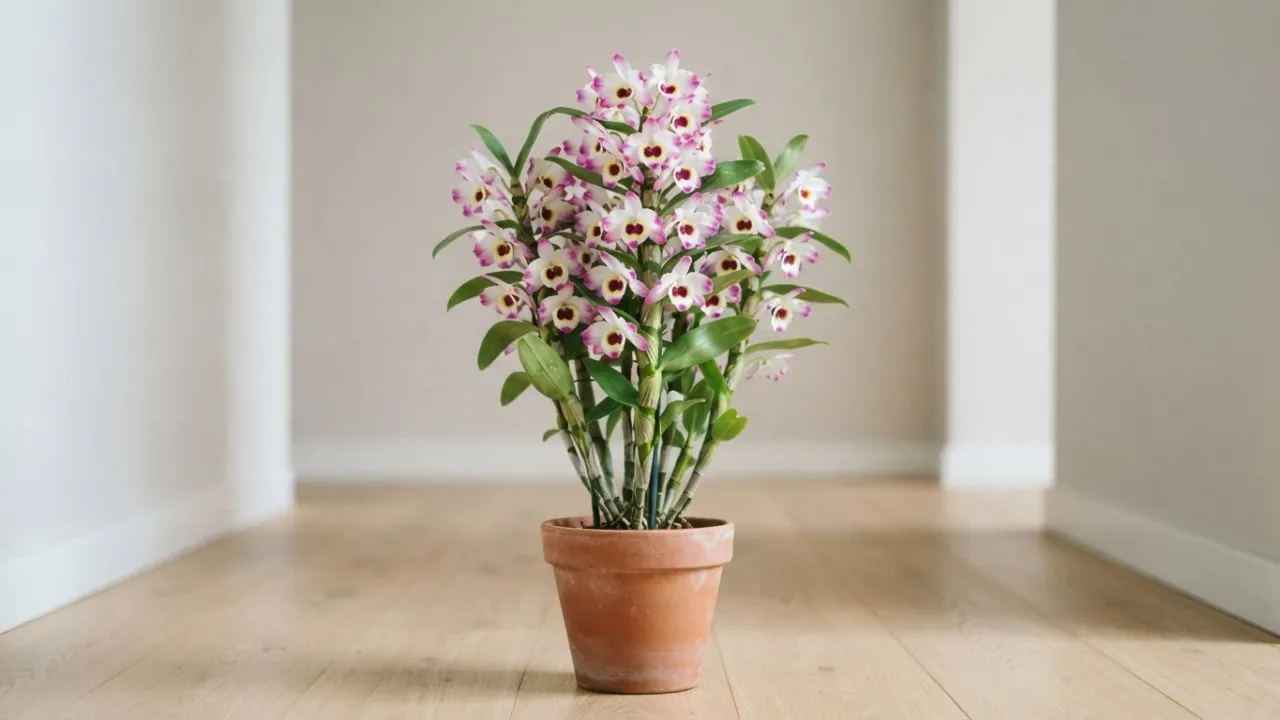 Every 6 days


Dendrobium Orchid
Dendrobium nobile

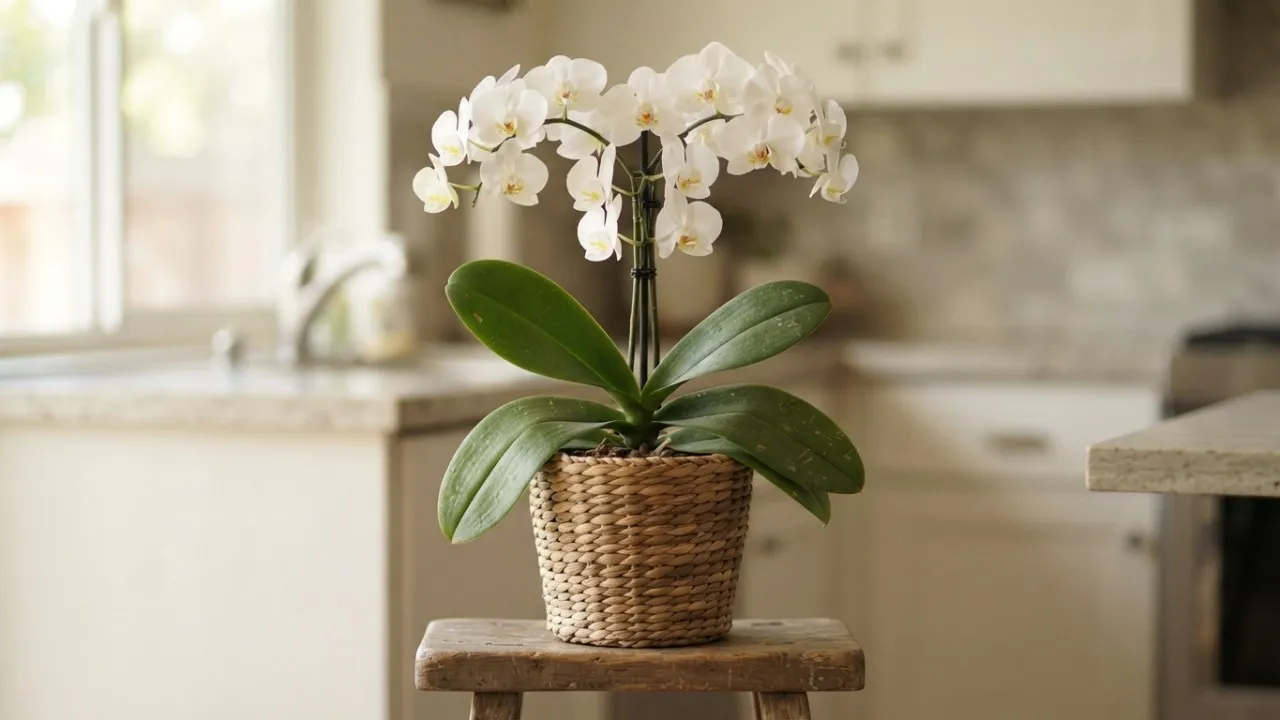 Every 7 days
Moth Orchid
Phalaenopsis
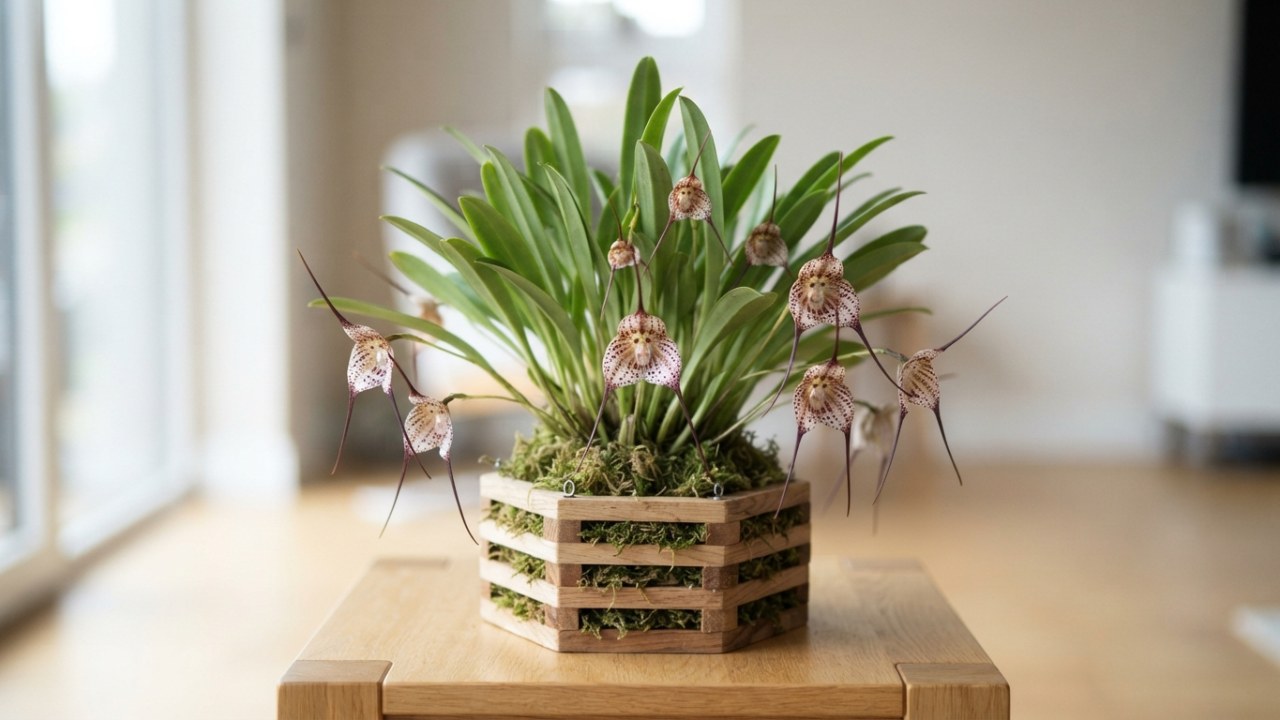 Every 3 days
Monkey Orchid
Dracula simia
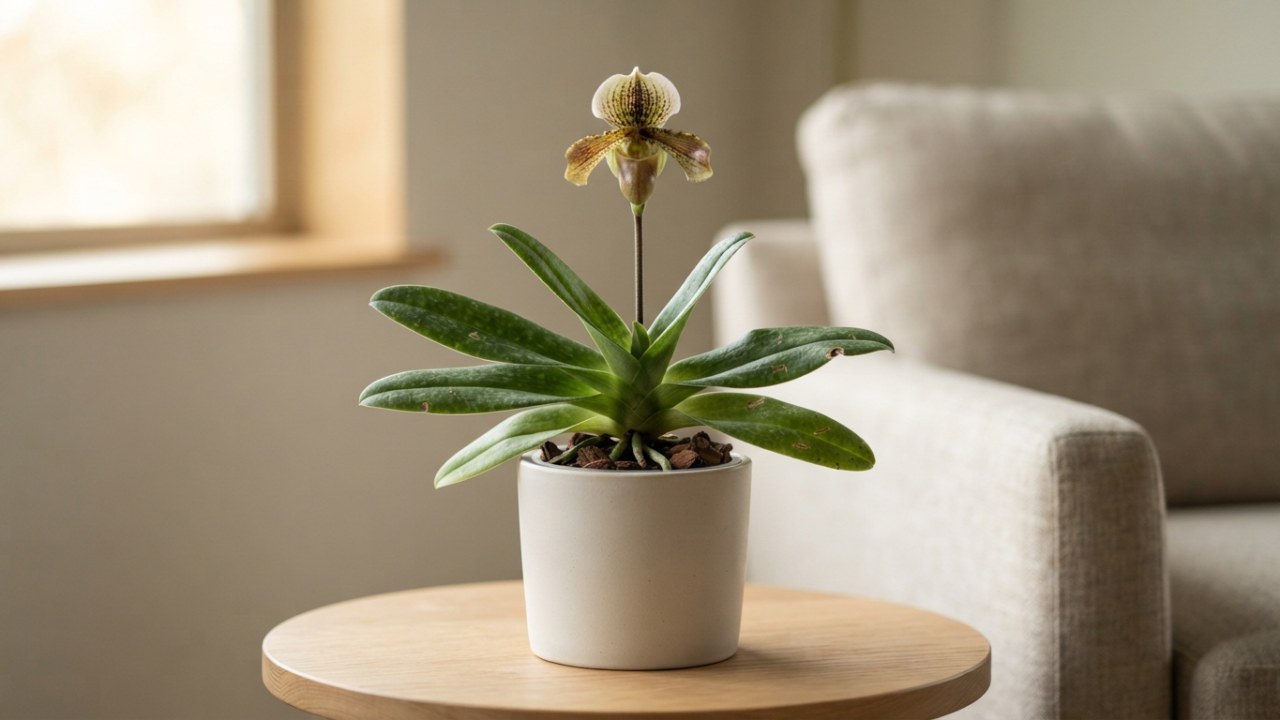 Every 6 days
Slipper Orchid
Paphiopedilum
