
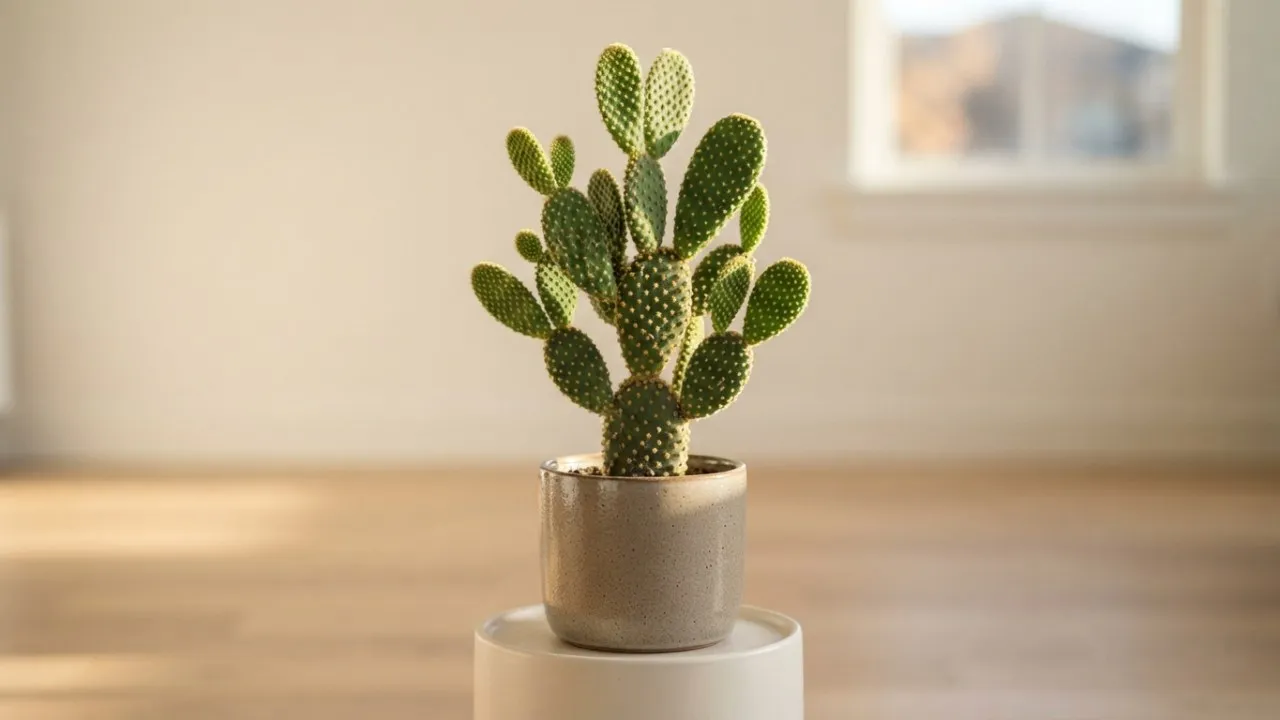
Bunny Ears Cactus
Opuntia microdasys
A Mexican cactus with oval pads covered in regular tufts of golden glochids, resembling bunny ears.
The essentials at a glance
-
Watering
Every 21 days
-
Light
Full sun
-
Humidity
10–30 %
-
Temperature
5–35 °C


How to care for your Bunny Ears Cactus
Everything you need to keep your Bunny Ears Cactus healthy: watering, light, humidity, feeding, repotting and pruning.
Opuntia microdasys is an iconic ornamental cactus native to central and northern Mexico. Its flat, oval pads, devoid of large spines, are dotted with regular tufts of golden, white, or red glochids depending on the variety. Its branching, shrub-like silhouette can reach 60 cm in a pot. Despite its harmless and almost fuzzy appearance, its glochids are real barbed micro-spines that embed in skin at the slightest touch and are very difficult to remove.

Watering your Bunny Ears Cactus
Every 21 days
Water very sparingly when the substrate is completely dry. The pads store a lot of water. In winter, water only once a month or less if temperatures are low.
How to know it needs water
- Substrate completely dry for more than a week
- Pads becoming very slightly soft
- Pot very light

How much light a Bunny Ears Cactus needs
Full sun
Full sun. At least 6 hours of direct sunlight daily. Can be moved outdoors in summer. Insufficient light causes the pads to etiolate and weaken.
- Direct sun tolerated
- 6 to 12 h a day
- Orientations that suit it
- South, South-east, South-west, East, West

Humidity and misting
10–30 %
Very low to low (10–30%). Prefers very dry air. Never mist. Moisture promotes fungal diseases on this arid-zone cactus.

Feeding and fertiliser
Every 30 days
Fertilize once a month in spring and summer. Stop from autumn. Excess fertilizer is harmful.
- Recommended feed
- Liquid cactus fertilizer diluted to half strength. · 5-10-10

Repotting your Bunny Ears Cactus
Every 24 months
Wear thick leather gloves — glochids are very difficult to remove from skin. Use folded newspaper to grasp the pads. Very well-draining and mineral cactus substrate. Terracotta pot with drainage.
- When
- Spring
- Potting mix
- Cactus and succulent mix
- Mix in
- perlite, pumice, coarse sand
The tell-tale signs
- Cactus unstable or leaning
- Roots completely filling the pot
- No new pads forming for a long time

Pruning your Bunny Ears Cactus
In spring if pads are unsightly or to control the shape. Detach pads at the joint with a clean knife, wearing thick gloves. Detached pads can be dried for a week then laid on dry substrate to root.

Through the year
Watering is not set once and for all: it follows the light and the growth. Allow 32 days between waterings in the depth of winter, against 15 in the growing season.
- 32 J
- 32 F
- 25 M
- 17 A
- 15 M
- 15 J
- 15 J
- 15 A
- 17 S
- 25 O
- 32 N
- 32 D
Active growth · Days between waterings

Good to know
- The glochids of Opuntia microdasys are tiny barbed spines nearly invisible to the naked eye that detach at the slightest touch — they are more formidable than large spines because they are very difficult to remove from skin.
- In Mexico, certain Opuntia species are cultivated on a large scale for their edible fruits (prickly pears) and their pads (nopales) eaten as a vegetable.

Frequently asked questions about the Bunny Ears Cactus
How do you care for a Bunny Ears Cactus?
Water it every 21 days. Give it full sun. Ideal humidity: 10–30 %. Ideal temperature: 5–35 °C. Water very sparingly when the substrate is completely dry. The pads store a lot of water. In winter, water only once a month or less if temperatures are low.
How often should you water a Bunny Ears Cactus?
Every 21 days Water very sparingly when the substrate is completely dry. The pads store a lot of water. In winter, water only once a month or less if temperatures are low. How to know it needs water : Substrate completely dry for more than a week ; Pads becoming very slightly soft ; Pot very light.
How much light does a Bunny Ears Cactus need?
Full sun Full sun. At least 6 hours of direct sunlight daily. Can be moved outdoors in summer. Insufficient light causes the pads to etiolate and weaken. 6 to 12 h a day
Is the Bunny Ears Cactus toxic to cats and dogs?
No, the Bunny Ears Cactus is not listed as toxic to cats and dogs. That is still no reason to let your pets chew on it.
Why are my Bunny Ears Cactus leaves turning yellow?
Yellowing most often comes from too much water: the mix stays wet and the roots suffocate. Check that the pot drains, empty the saucer, and let the mix dry before watering again. Too little light or a cold draught cause the same symptom.
When should you repot a Bunny Ears Cactus?
Repot every 24 months, ideally in spring. Wear thick leather gloves — glochids are very difficult to remove from skin. Use folded newspaper to grasp the pads. Very well-draining and mineral cactus substrate. Terracotta pot with drainage.

At a glance
- Family
- Cactaceae
- Category
- Cactus
- Placement
- Indoor and outdoor
- Mature height
- 60 cm
- Growth
- Moderate
- Temperature
- 5–35 °C
- Pot materials
- terracotta, ceramic
- Growth
- Reaches maturity in 5 years
These figures are for an average plant. In the app they are recalculated for yours, based on your room, its orientation and the season.
And for your plant, in your home?
In the app this plant becomes yours: a watering schedule tuned to your home, health tracking from photos, and reminders at the right moment.
In the same spirit
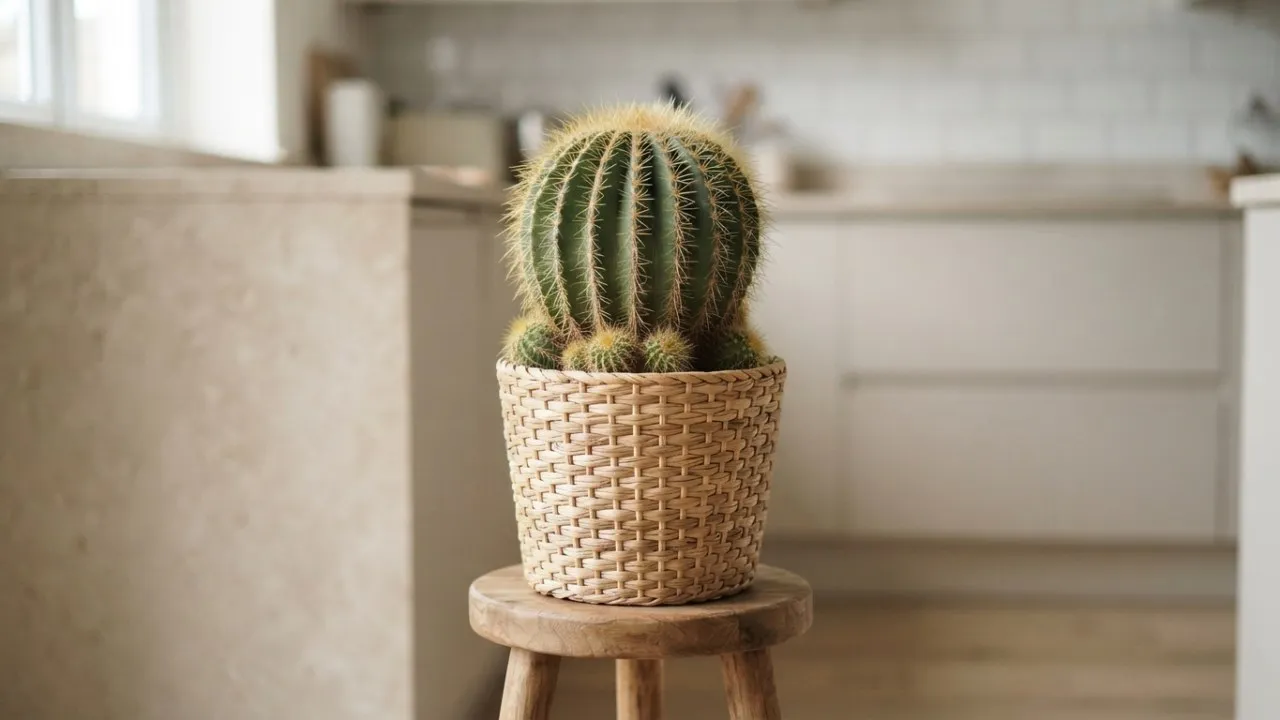 Every 10 days
 Balloon Cactus
Parodia magnifica

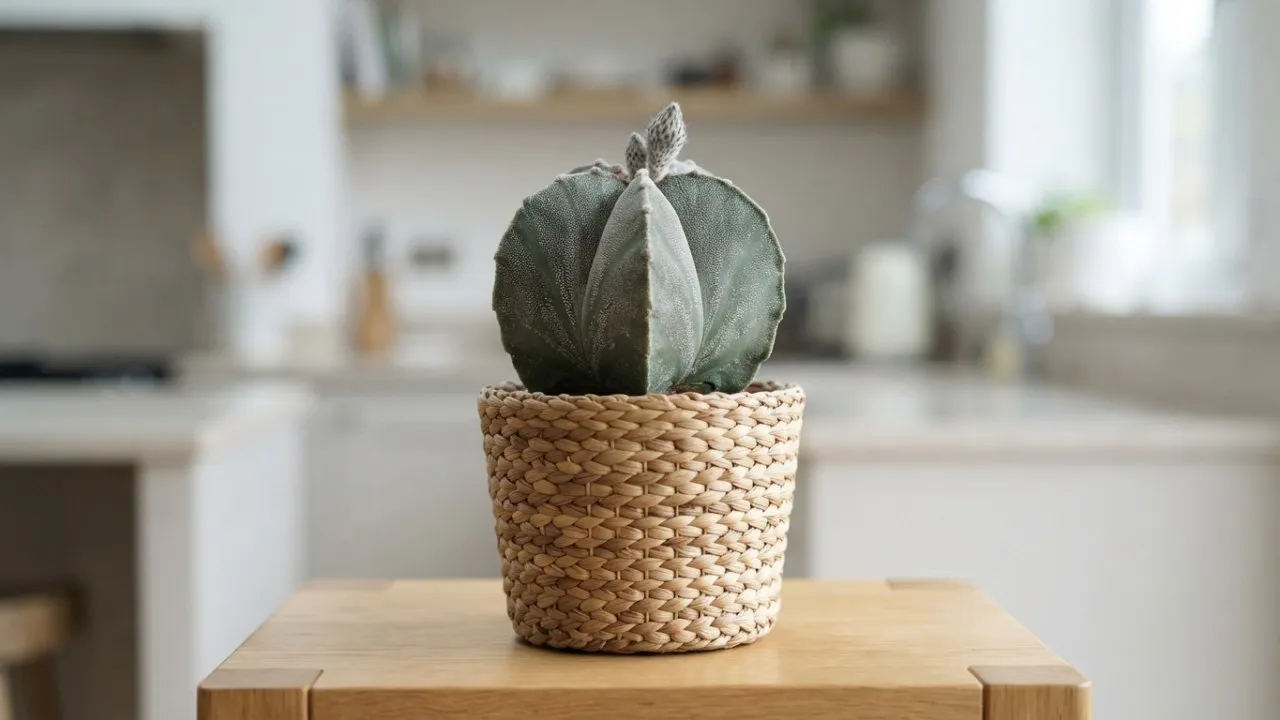 Every 10 days
 Bishop's Cap Cactus
Astrophytum myriostigma
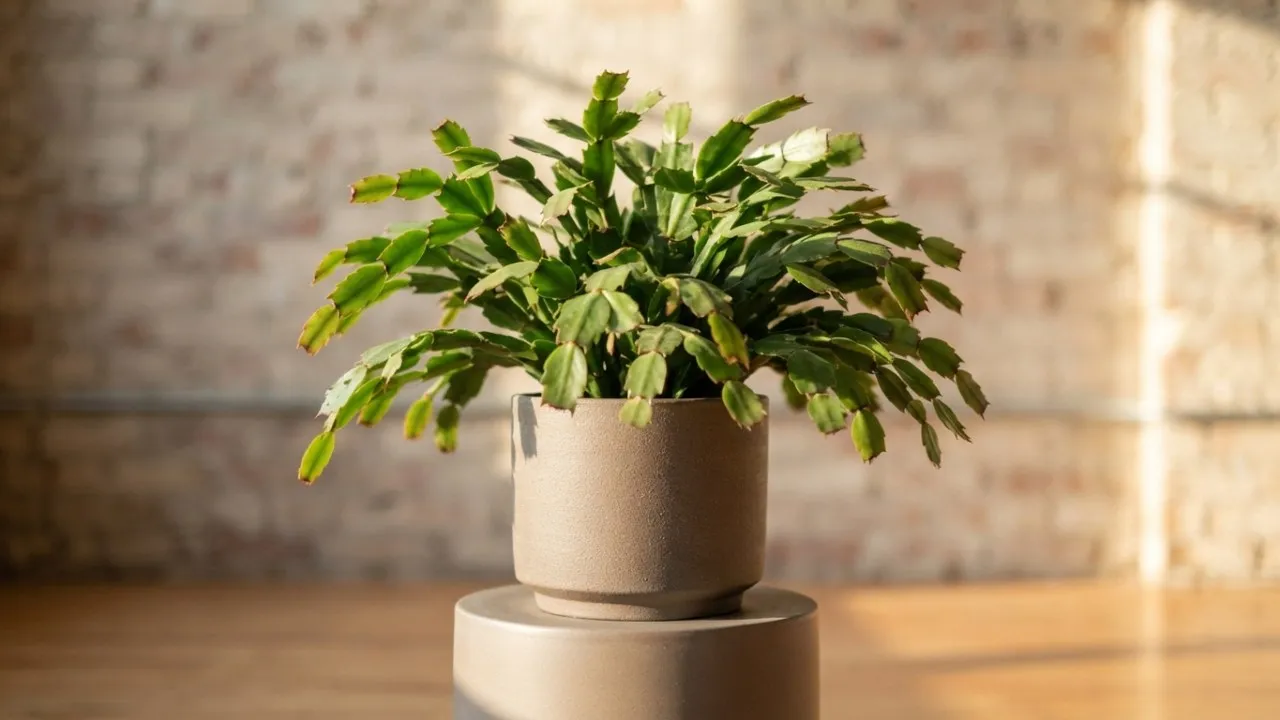 Every 7 days
 Christmas Cactus
Schlumbergera truncata
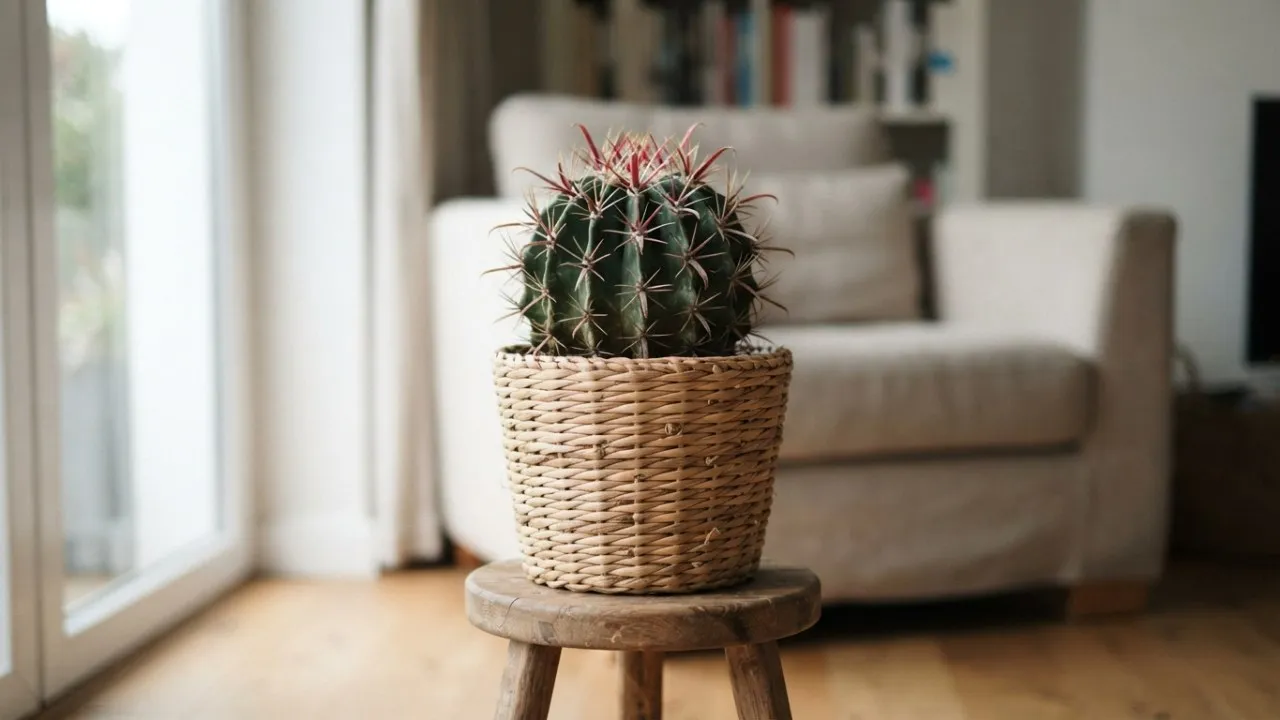 Every 14 days
 Devil's Tongue Barrel Cactus
Ferocactus latispinus