
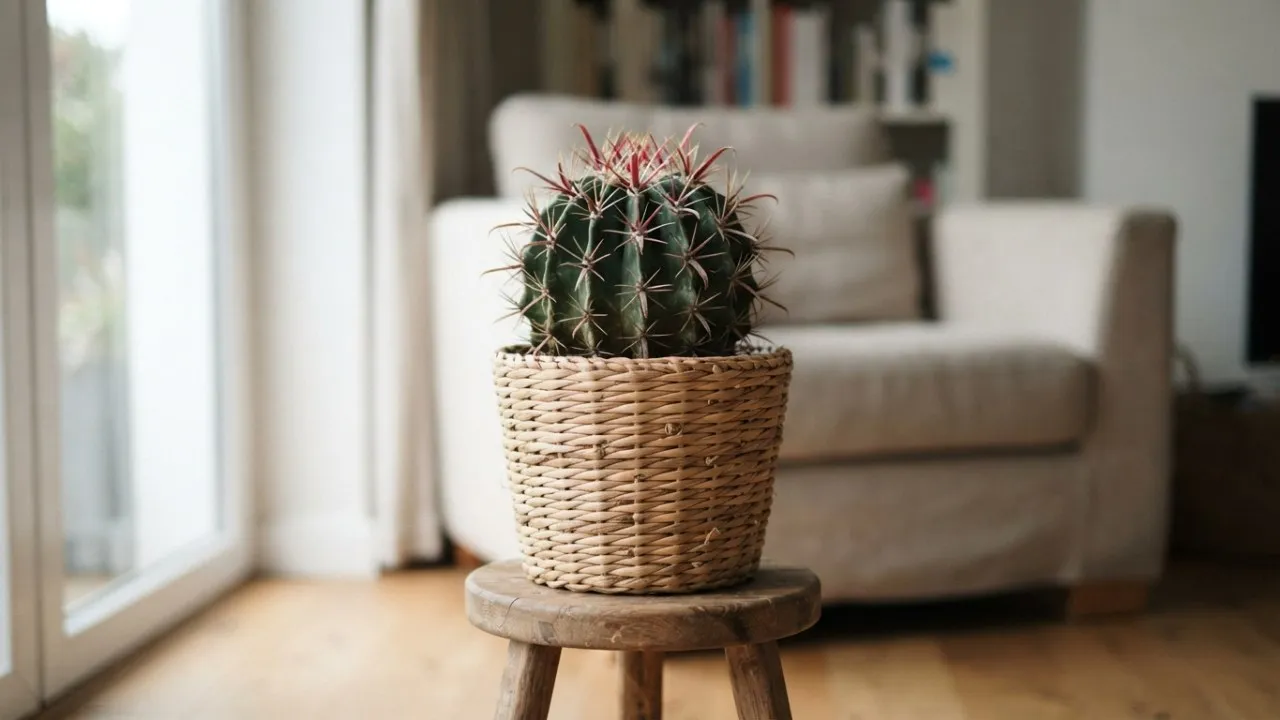
Devil's Tongue Barrel Cactus
Ferocactus latispinus
A barrel-shaped cactus with prominent, deeply ribbed body and formidable, often reddish, flattened and hooked central spines.
The essentials at a glance
-
Watering
Every 14 days
-
Light
Full sun
-
Humidity
10–30 %
-
Temperature
21–38 °C


How to care for your Devil's Tongue Barrel Cactus
Everything you need to keep your Devil's Tongue Barrel Cactus healthy: watering, light, humidity, feeding, repotting and pruning.
Native to central Mexico, particularly Oaxaca and Puebla, *Ferocactus latispinus* is a robust and visually impressive barrel cactus. Its stout, spherical to short-cylindrical body is characterized by 13 to 23 prominent, deeply furrowed ribs, which give it a corrugated appearance. The most striking feature, however, are its formidable spines: numerous radial spines surround several large, flattened, and often strongly hooked central spines that can be red, yellow, or white. These magnificent spines can give the cactus an intimidating yet beautiful appearance, earning it the common name 'Devil's Tongue Barrel Cactus'. In late summer to fall, it produces a ring of vibrant yellow to reddish-orange flowers at its apex, followed by edible, albeit small, yellow fruits.

Watering your Devil's Tongue Barrel Cactus
Every 14 days
Water deeply and thoroughly when the soil is completely dry. Reduce watering significantly in winter dormancy.
How to know it needs water
- Soil is completely dry to the touch throughout the pot
- Cactus body may feel slightly softer or less turgid

How much light a Devil's Tongue Barrel Cactus needs
Full sun
Full sun. Requires at least 6 hours of direct sunlight daily for healthy growth and spine development.
- Direct sun tolerated
- 6 to 12 h a day
- Orientations that suit it
- South, South-east, South-west, East, West

Humidity and misting
10–30 %
Low; thrives in arid conditions. Misting is not necessary and can lead to water spots or fungal issues.

Feeding and fertiliser
Every 45 days
Fertilize sparingly during the spring and summer growing season. Avoid fertilizing in fall and winter.
- Recommended feed
- Diluted liquid cactus fertilizer (low nitrogen). · 2-7-7

Repotting your Devil's Tongue Barrel Cactus
Every 36 months
Repot into a slightly larger, heavy container with fresh, well-draining cactus potting mix. Use heavy-duty gloves or a folded newspaper to handle the spiny body.
- When
- Spring
- Potting mix
- Cactus and succulent mix
- Mix in
- pumice, coarse sand
The tell-tale signs
- Plant is root-bound with roots growing out of drainage holes
- Growth has slowed significantly
- Pot is outgrown by the cactus

Pruning your Devil's Tongue Barrel Cactus
Not applicable. This cactus is not pruned. Any damaged or dead sections should be carefully removed.

Through the year
Watering is not set once and for all: it follows the light and the growth. Allow 42 days between waterings in the depth of winter, against 10 in the growing season.
- 35 J
- 28 F
- 14 M
- 11 A
- 11 M
- 10 J
- 10 J
- 11 A
- 14 S
- 21 O
- 28 N
- 42 D
Active growth · Days between waterings

Good to know
- The large, often hooked central spines are sometimes referred to as 'fishhook spines' or 'devil's tongue' due to their shape.
- It produces striking, yellow to reddish-orange flowers in a ring around its apex during late summer and fall.

Frequently asked questions about the Devil's Tongue Barrel Cactus
How do you care for a Devil's Tongue Barrel Cactus?
Water it every 14 days. Give it full sun. Ideal humidity: 10–30 %. Ideal temperature: 21–38 °C. Water deeply and thoroughly when the soil is completely dry. Reduce watering significantly in winter dormancy.
How often should you water a Devil's Tongue Barrel Cactus?
Every 14 days Water deeply and thoroughly when the soil is completely dry. Reduce watering significantly in winter dormancy. How to know it needs water : Soil is completely dry to the touch throughout the pot ; Cactus body may feel slightly softer or less turgid.
How much light does a Devil's Tongue Barrel Cactus need?
Full sun Full sun. Requires at least 6 hours of direct sunlight daily for healthy growth and spine development. 6 to 12 h a day
Is the Devil's Tongue Barrel Cactus toxic to cats and dogs?
No, the Devil's Tongue Barrel Cactus is not listed as toxic to cats and dogs. That is still no reason to let your pets chew on it.
Why are my Devil's Tongue Barrel Cactus leaves turning yellow?
Yellowing most often comes from too much water: the mix stays wet and the roots suffocate. Check that the pot drains, empty the saucer, and let the mix dry before watering again. Too little light or a cold draught cause the same symptom.
When should you repot a Devil's Tongue Barrel Cactus?
Repot every 36 months, ideally in spring. Repot into a slightly larger, heavy container with fresh, well-draining cactus potting mix. Use heavy-duty gloves or a folded newspaper to handle the spiny body.

At a glance
- Family
- Cactaceae
- Category
- Cactus
- Placement
- Indoor and outdoor
- Mature height
- 30 cm
- Growth
- Slow
- Temperature
- 21–38 °C
- Pot materials
- terracotta
- Growth
- Reaches maturity in 10 years
These figures are for an average plant. In the app they are recalculated for yours, based on your room, its orientation and the season.
And for your plant, in your home?
In the app this plant becomes yours: a watering schedule tuned to your home, health tracking from photos, and reminders at the right moment.
In the same spirit
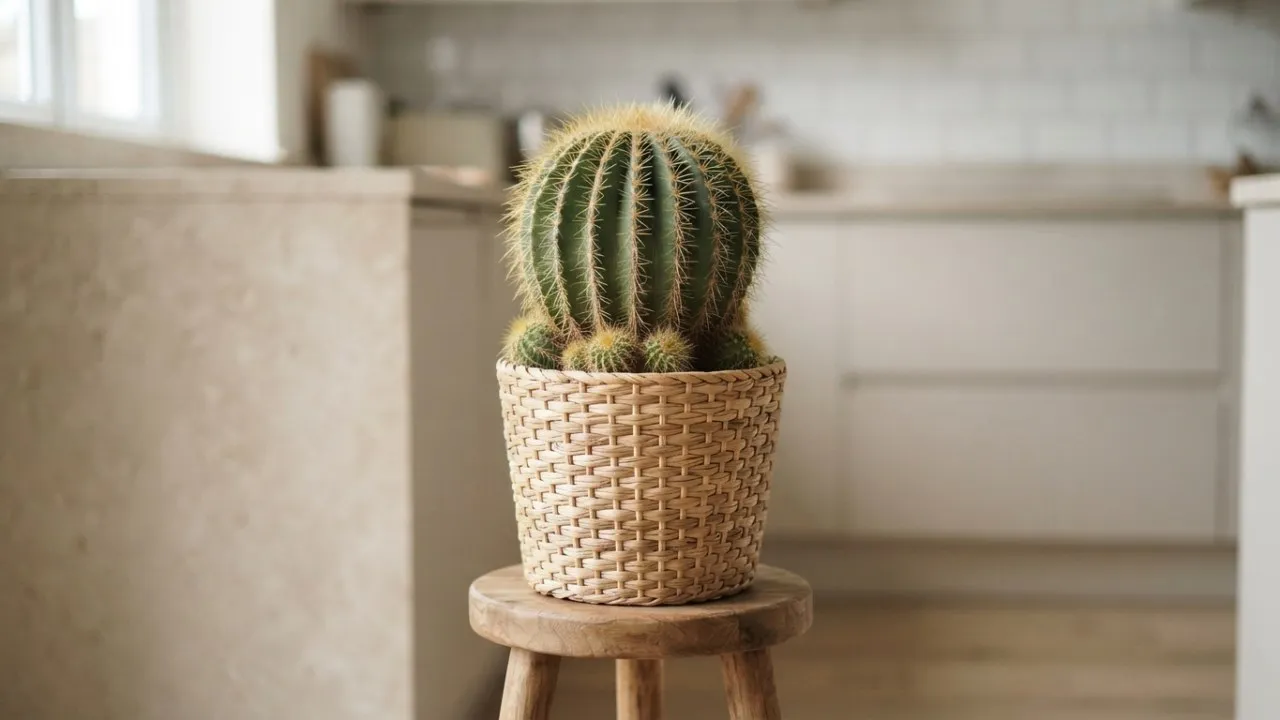 Every 10 days
 Balloon Cactus
Parodia magnifica

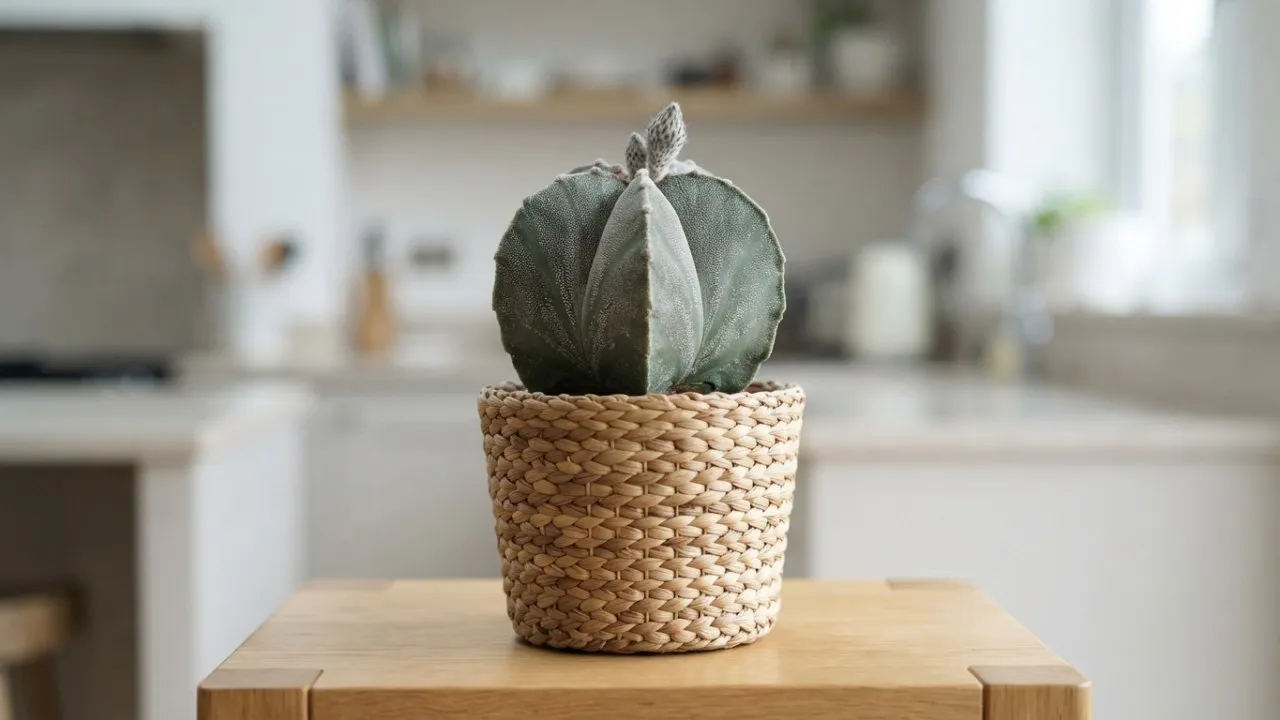 Every 10 days
 Bishop's Cap Cactus
Astrophytum myriostigma
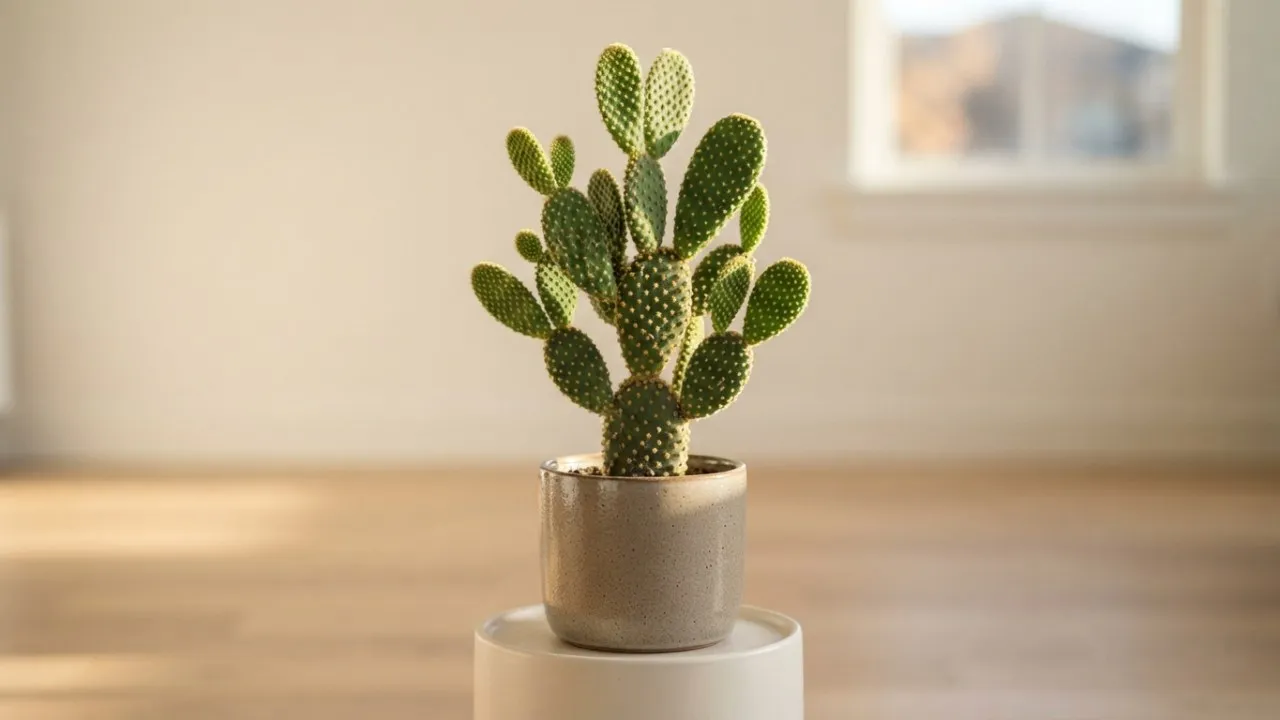 Every 21 days
 Bunny Ears Cactus
Opuntia microdasys
 Every 7 days
 Christmas Cactus
Schlumbergera truncata