
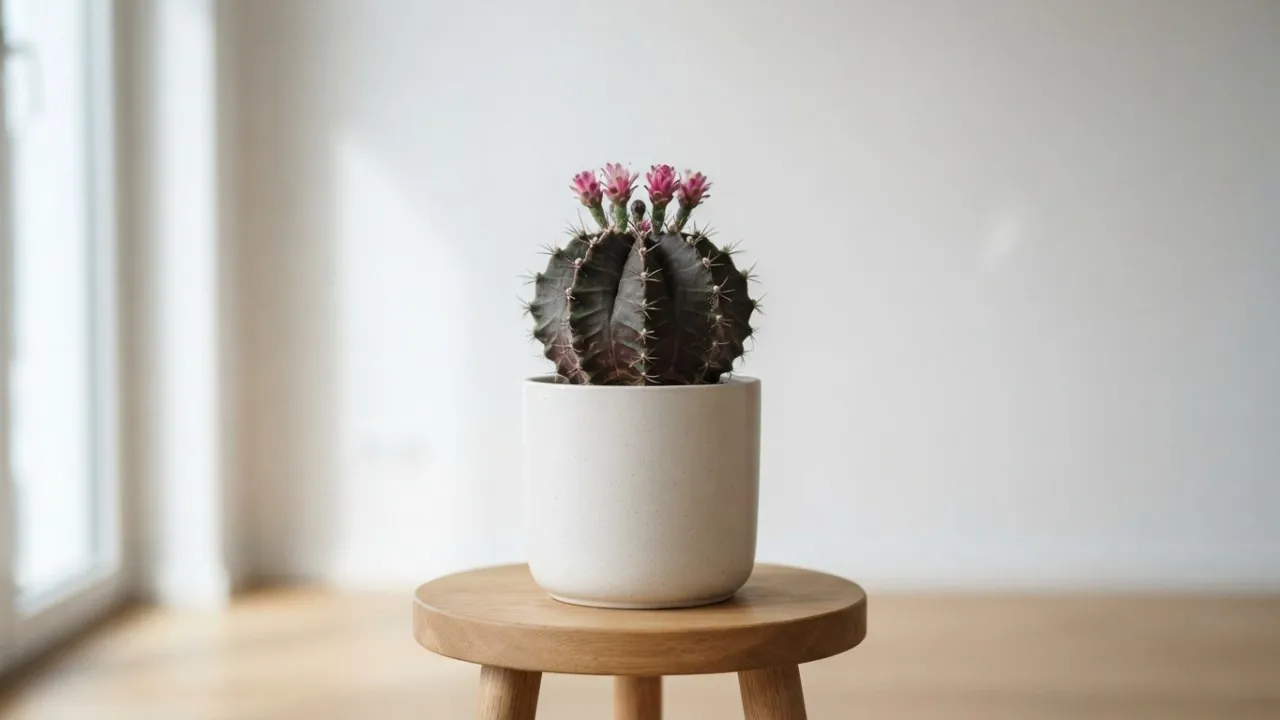
Moon Cactus
Gymnocalycium mihanovichii
A small, colorful cactus sold as a grafted plant, featuring a vibrant red, orange, or yellow spherical top (scion) on a green rootstock.
The essentials at a glance
-
Watering
Every 7 days
-
Light
Bright indirect light
-
Humidity
30–60 %
-
Temperature
20–30 °C


How to care for your Moon Cactus
Everything you need to keep your Moon Cactus healthy: watering, light, humidity, feeding, repotting and pruning.
Native to Paraguay and Argentina, *Gymnocalycium mihanovichii* is a small, ribbed cactus, but it is most famously known in its chlorophyll-deficient mutant forms, which are the vibrant 'Moon Cactus' varieties. These mutants, lacking the green pigment needed for photosynthesis, are grafted onto a sturdy green cactus rootstock, typically *Hylocereus undatus*. This symbiotic pairing allows the colorful scion to survive, drawing nutrients from its photosynthetic base. The striking combination of a bright red, orange, or yellow globe atop a green column creates a visually appealing and popular novelty houseplant, though their lifespan is often shorter than non-grafted cacti due to the artificial union.

Watering your Moon Cactus
Every 7 days
Water thoroughly when the soil is mostly dry. Allow the soil to dry out between waterings. Reduce watering in winter dormancy.
How to know it needs water
- Soil is mostly dry to the touch
- Rootstock may appear slightly less turgid

How much light a Moon Cactus needs
Bright indirect light
Bright, indirect light. Protect from harsh, direct afternoon sun, especially the colorful scion, which can scorch easily.
- Direct sun tolerated
- 0 to 2 h a day
- Orientations that suit it
- North, North-east, East, South-east, South, South-west, West, North-west

Humidity and misting
30–60 %
Low to medium; prefers average household humidity. Misting is not recommended and can contribute to fungal issues.

Feeding and fertiliser
Every 30 days
Fertilize during the spring and summer growing season. Avoid fertilizing in fall and winter.
- Recommended feed
- Diluted liquid cactus fertilizer (low nitrogen). · 2-7-7

Repotting your Moon Cactus
Every 18 months
Repot into a slightly larger container with fresh, well-draining cactus potting mix. Be gentle with the graft union.
- When
- Spring
- Potting mix
- Cactus and succulent mix
- Mix in
- perlite, pumice, coarse sand
The tell-tale signs
- Rootstock has outgrown its pot or appears unstable
- Graft union shows signs of distress or decay
- Overall plant health decline

Pruning your Moon Cactus
Not typically pruned. No pruning is generally done. If the rootstock produces offsets, these can be removed to encourage growth into the scion.

Through the year
Watering is not set once and for all: it follows the light and the growth. Allow 18 days between waterings in the depth of winter, against 6 in the growing season.
- 18 J
- 14 F
- 7 M
- 6 A
- 6 M
- 6 J
- 6 J
- 6 A
- 7 S
- 11 O
- 14 N
- 18 D
Active growth · Days between waterings

Good to know
- The colorful 'top' part (scion) of the Moon Cactus lacks chlorophyll and cannot photosynthesize on its own, so it must be grafted onto a green rootstock.
- The rootstock is typically *Hylocereus undatus* (Dragon Fruit cactus), providing the necessary chlorophyll for the entire plant to survive.

Frequently asked questions about the Moon Cactus
How do you care for a Moon Cactus?
Water it every 7 days. Give it bright indirect light. Ideal humidity: 30–60 %. Ideal temperature: 20–30 °C. Water thoroughly when the soil is mostly dry. Allow the soil to dry out between waterings. Reduce watering in winter dormancy.
How often should you water a Moon Cactus?
Every 7 days Water thoroughly when the soil is mostly dry. Allow the soil to dry out between waterings. Reduce watering in winter dormancy. How to know it needs water : Soil is mostly dry to the touch ; Rootstock may appear slightly less turgid.
How much light does a Moon Cactus need?
Bright indirect light Bright, indirect light. Protect from harsh, direct afternoon sun, especially the colorful scion, which can scorch easily. 0 to 2 h a day
Is the Moon Cactus toxic to cats and dogs?
No, the Moon Cactus is not listed as toxic to cats and dogs. That is still no reason to let your pets chew on it.
Why are my Moon Cactus leaves turning yellow?
Yellowing most often comes from too much water: the mix stays wet and the roots suffocate. Check that the pot drains, empty the saucer, and let the mix dry before watering again. Too little light or a cold draught cause the same symptom.
When should you repot a Moon Cactus?
Repot every 18 months, ideally in spring. Repot into a slightly larger container with fresh, well-draining cactus potting mix. Be gentle with the graft union.

At a glance
- Family
- Cactaceae
- Category
- Cactus
- Placement
- Indoor
- Mature height
- 10 cm
- Growth
- Slow
- Temperature
- 20–30 °C
- Pot materials
- terracotta, ceramic
- Growth
- Reaches maturity in 5 years
These figures are for an average plant. In the app they are recalculated for yours, based on your room, its orientation and the season.
And for your plant, in your home?
In the app this plant becomes yours: a watering schedule tuned to your home, health tracking from photos, and reminders at the right moment.
In the same spirit
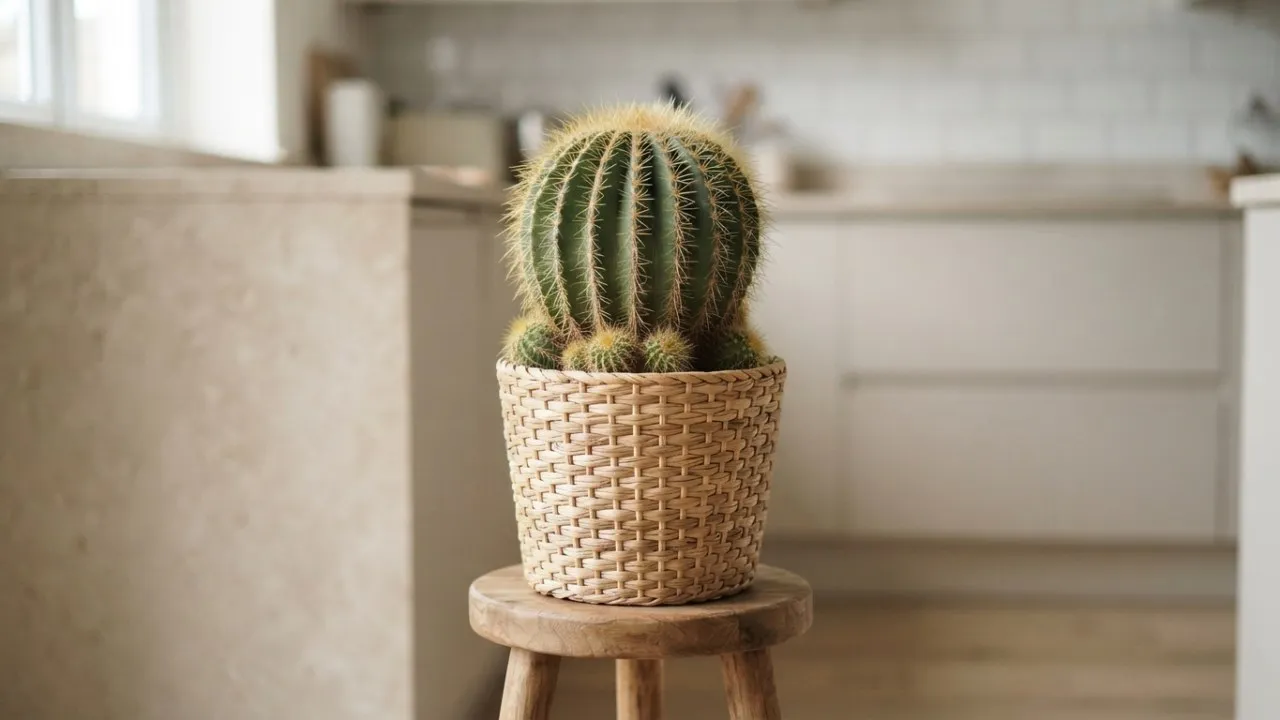 Every 10 days
 Balloon Cactus
Parodia magnifica

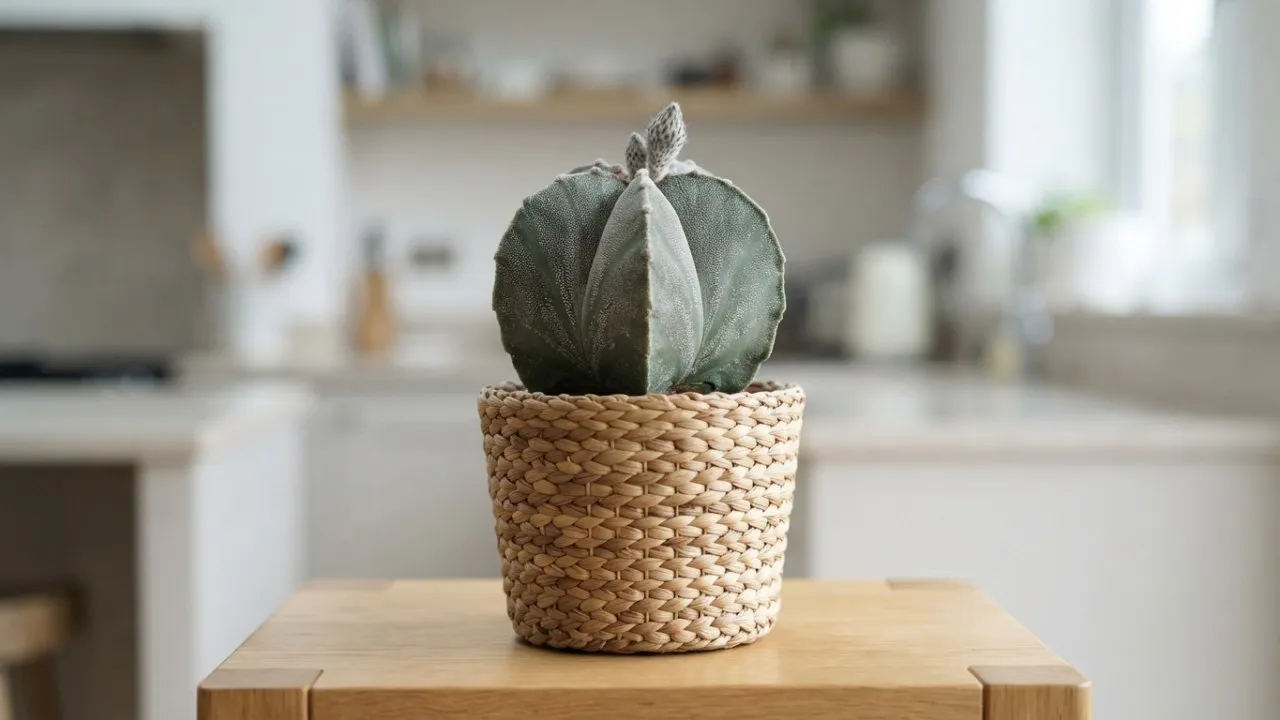 Every 10 days
 Bishop's Cap Cactus
Astrophytum myriostigma
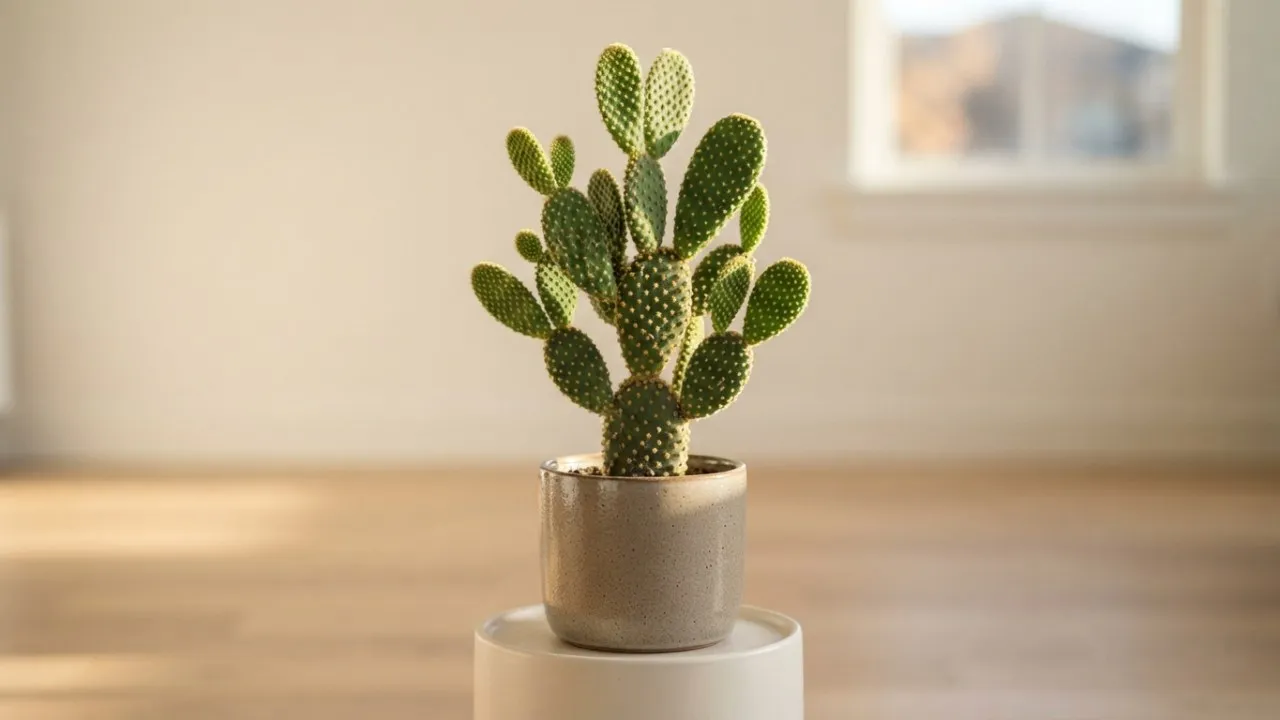 Every 21 days
 Bunny Ears Cactus
Opuntia microdasys
 Every 7 days
 Christmas Cactus
Schlumbergera truncata