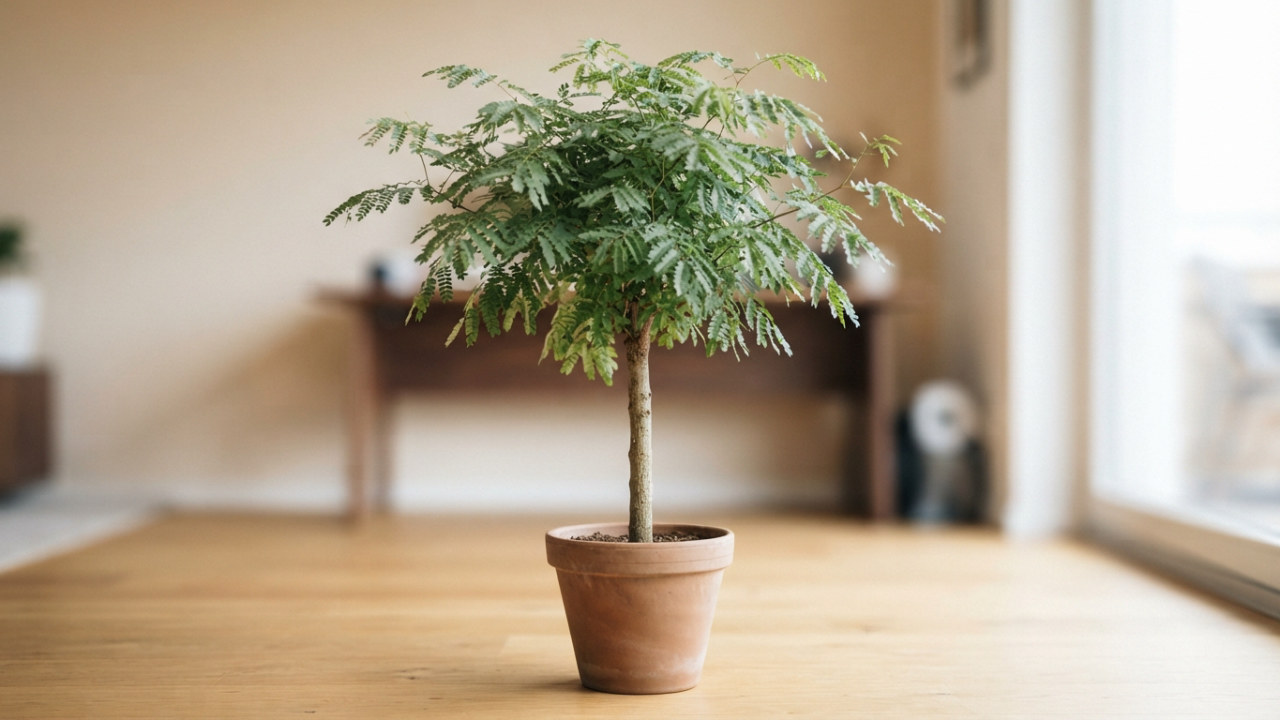
Perennial · Fabaceae
Honey Locust
Gleditsia triacanthos
The Honey Locust is a large, deciduous tree known for its delicate, feathery foliage and tolerance to various conditions.
- Every 5 daysWatering
- Full sunLight
- 30–60 %Humidity
- -25–35 °CTemperature


How to care for your Honey Locust
Everything you need to keep your Honey Locust healthy: watering, light, humidity, feeding, repotting and pruning.
Gleditsia triacanthos, commonly known as the Honey Locust, is a fast-growing deciduous tree native to central North America. It is highly adaptable, tolerating a wide range of soil conditions, drought, and urban pollution. It is very hardy, to about -25 C or colder in the ground; in a pot, protect the roots in hard frost with mulch and a wrapped container. Its light, airy canopy provides dappled shade, making it a popular choice for parks and large gardens. While it can reach significant heights outdoors, young specimens can be grown in large containers. It is notable for its long, flattened seed pods and, in its wild form, formidable thorns on the trunk and branches.

How to recognise Honey Locust
A tall tree with feathery, finely divided compound leaves that turn yellow in autumn, a grey bark, long flat twisted brown pods, and, in the wild form, stout branched thorns on the trunk and branches. It is often confused with black locust (Robinia pseudoacacia), which has simple pinnate leaves, paired short spines, white pea-like flowers and shorter, straight pods, and with Kentucky coffeetree, which has similar leaves but no thorns.

Watering your Honey Locust
Every 5 days
Water moderately when the top 5 to 7 cm of soil are dry, about every 5 days in the growing season in a pot, and only about every 3 weeks in winter when dormant. Young trees need consistent moisture; mature trees are drought tolerant.
How to know it needs water
- Soil dry 5 to 7 cm deep
- Leaves wilting slightly
- Soil pulling away from pot edges

How much light a Honey Locust needs
Full sun
Full sun is essential for optimal development and growth.
- Direct sun tolerated
- 6 to 14 h a day
- Orientations that suit it
- South, South-east, South-west, East, West

Humidity and misting
30–60 %
Low to medium (30 to 60 %) Not required; this plant prefers dry air.

Feeding and fertiliser
Every 42 days
Apply about every 6 weeks from April to June for young trees; mature trees rarely need fertilizing unless soil is poor. Withhold entirely from summer to winter.
- Recommended feed
- Balanced slow-release granular fertilizer or compost · 10-10-10

Repotting your Honey Locust
Every 24 months
Repot young trees every 2 years into a container 5 to 10 cm larger using a rich, well-draining universal potting mix. This is primarily an outdoor tree.
- When
- Early spring (March)
- Potting mix
- All-purpose potting mix
- Mix in
- coarse sand
The tell-tale signs
- Roots emerging from drainage holes
- Growth significantly slowed
- Tree appears top-heavy for its container

Pruning your Honey Locust
Prune in late winter or early spring to remove dead, damaged, or poorly oriented branches. Make clean cuts with sterilised pruning shears or a saw, just outside the branch collar. Wear thick gloves and eye protection when handling the thorny wild form.

Through the year
Watering is not set once and for all: it follows the light and the growth. Allow 9 days between waterings in the depth of winter, against 4 in the growing season.
- 8 J
- 6 F
- 5 M
- 4 A
- 4 M
- 4 J
- 4 J
- 4 A
- 5 S
- 6 O
- 8 N
- 9 D
Active growth · Days between waterings

Toxicity
Pods and seeds are reported to contain saponins and may cause digestive upset if eaten by people or animals. The thorns of the wild form can be 10 cm or longer and cause deep puncture wounds: wear thick gloves and eye protection when pruning.

Good to know
- Its species name 'triacanthos' means three-spined, from the branched thorns it can bear on its trunk and branches.
- It produces long, flat, twisted brown seed pods, up to 40 cm, with a sweet pulp that gave the tree its name.
- Its dense, durable wood is traditionally used in carpentry and for fence posts, and thornless cultivars exist.

Frequently asked questions about the Honey Locust
How do you care for a Honey Locust?
Water it every 5 days. Give it full sun. Ideal humidity: 30–60 %. Ideal temperature: -25–35 °C. Water moderately when the top 5 to 7 cm of soil are dry, about every 5 days in the growing season in a pot, and only about every 3 weeks in winter when dormant. Young trees need consistent moisture; mature trees are drought tolerant.
How often should you water a Honey Locust?
Every 5 days Water moderately when the top 5 to 7 cm of soil are dry, about every 5 days in the growing season in a pot, and only about every 3 weeks in winter when dormant. Young trees need consistent moisture; mature trees are drought tolerant. How to know it needs water : Soil dry 5 to 7 cm deep ; Leaves wilting slightly ; Soil pulling away from pot edges.
How much light does a Honey Locust need?
Full sun Full sun is essential for optimal development and growth. 6 to 14 h a day
Is the Honey Locust toxic to cats and dogs?
Yes. Pods and seeds are reported to contain saponins and may cause digestive upset if eaten by people or animals. The thorns of the wild form can be 10 cm or longer and cause deep puncture wounds: wear thick gloves and eye protection when pruning. Keep it out of reach of your pets and call a vet if any is swallowed.
Why are my Honey Locust leaves turning yellow?
Yellowing most often comes from too much water: the mix stays wet and the roots suffocate. Check that the pot drains, empty the saucer, and let the mix dry before watering again. Too little light or a cold draught cause the same symptom.
When should you repot a Honey Locust?
Repot every 24 months, ideally in early spring (march). Repot young trees every 2 years into a container 5 to 10 cm larger using a rich, well-draining universal potting mix. This is primarily an outdoor tree.

At a glance
- Family
- Fabaceae
- Category
- Perennial
- Placement
- Outdoor
- Mature height
- 20 m
- Growth
- Fast
- Temperature
- -25–35 °C
- Pot materials
- fabric, wood, ceramic
- Growth
- Reaches maturity in 20 years
These figures are for an average plant. In the app they are recalculated for yours, based on your room, its orientation and the season.
And for your plant, in your home?
In the app this plant becomes yours: a watering schedule tuned to your home, health tracking from photos, and reminders at the right moment.