Perennial · Poaceae
Pampas Grass
Cortaderia selloana
Pampas Grass is a large, ornamental grass known for its dramatic plumes and architectural presence.
- Every 5 daysWatering
- Full sunLight
- 30–60 %Humidity
- -15–35 °CTemperature


How to care for your Pampas Grass
Everything you need to keep your Pampas Grass healthy: watering, light, humidity, feeding, repotting and pruning.
Cortaderia selloana, commonly known as Pampas Grass, is a striking perennial grass native to South America. It is highly valued for its tall, elegant, feathery plumes that emerge in late summer and persist through winter, adding significant visual interest to gardens. Its long, slender leaves have very sharp edges, requiring caution during handling. While beautiful, it can be invasive in some regions, so consider local regulations before planting. It is drought-tolerant once established and thrives in full sun. It is hardy down to about -15 °C once established; in a pot, the roots are more exposed, so wrap the pot and move it to a sheltered spot for winter.

How to recognise Pampas Grass
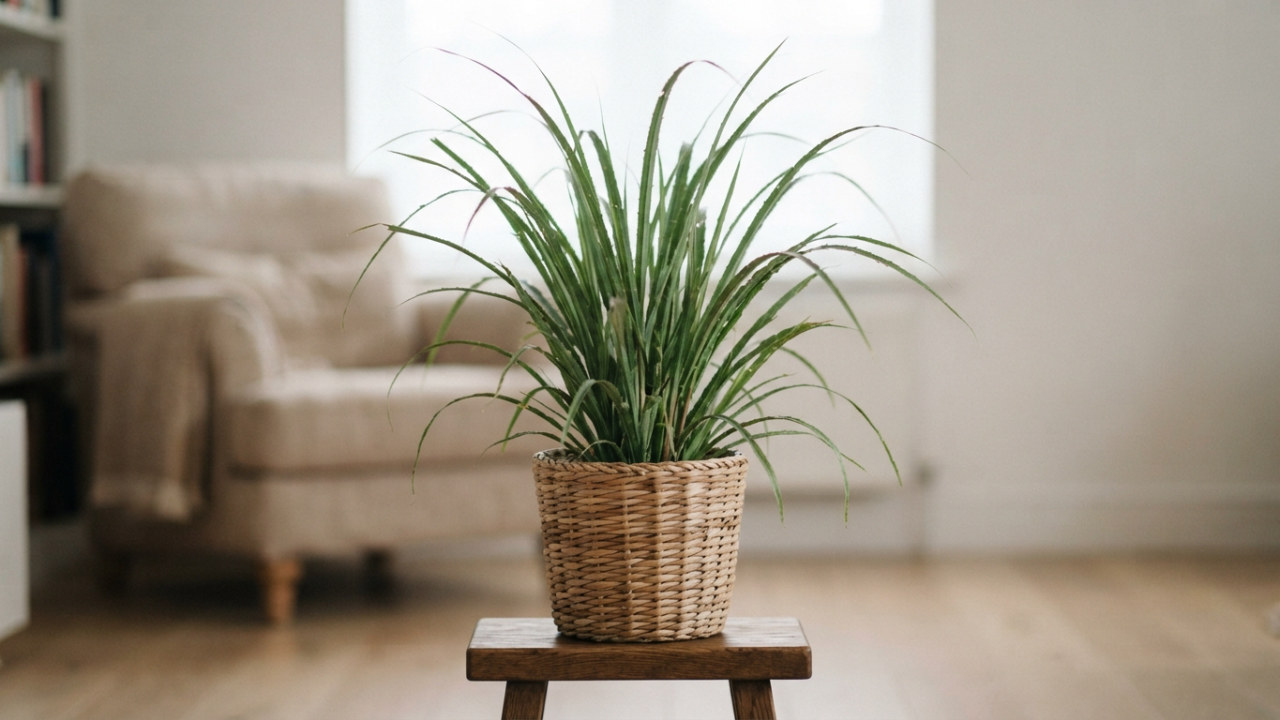
A very large evergreen grass forming a dense, arching tussock of long, narrow, blue-green leaves with razor-sharp edges, topped in late summer by tall, silky white or pinkish plumes. Cortaderia jubata has purplish-pink plumes and is even more invasive, while Miscanthus has smaller, silvery plumes and leaves that cut far less.

Watering your Pampas Grass
Every 5 days
Water deeply when the top 5 to 7 cm of soil are dry, especially during dry spells or in its first year, and less often in the winter rest. Established plants are drought-tolerant.
How to know it needs water
- Soil dry 5 to 7 cm deep
- Leaves showing slight curl
- Prolonged dry spell

How much light a Pampas Grass needs
Full sun
Full sun for at least 6 hours daily; tolerates some partial shade but flowering may be reduced.
- Direct sun tolerated
- 6 to 12 h a day
- Orientations that suit it
- South, South-east, South-west, East, West

Humidity and misting
30–60 %
Low to medium (30 to 60 %) Not needed; Pampas Grass is an outdoor plant that prefers drier conditions.

Feeding and fertiliser
Every 56 days
Light feeding is enough: apply a balanced slow-release granular fertilizer about every 8 weeks from April to July.
- Recommended feed
- Balanced slow-release granular fertilizer · 0-0-0

Repotting your Pampas Grass
Every 36 months
Repot into a larger container (at least 50 cm diameter for mature plants) with well-draining garden soil. Divide clumps if necessary.
- When
- Spring
- Potting mix
- All-purpose potting mix
- Mix in
- coarse sand
The tell-tale signs
- Roots emerging from drainage holes
- Plant becoming root-bound
- Growth significantly slowed

Pruning your Pampas Grass
Late winter to early spring, before new growth appears. Cut back all foliage to about 15 to 30 cm from the ground using sharp, sterilised shears. Wear thick gloves and long sleeves to protect against sharp leaves.

Through the year
Watering is not set once and for all: it follows the light and the growth. Allow 8 days between waterings in the depth of winter, against 4 in the growing season.
- 8 J
- 8 F
- 6 M
- 5 A
- 5 M
- 4 J
- 4 J
- 4 A
- 5 S
- 6 O
- 8 N
- 8 D
Active growth · Days between waterings

Good to know
- Native to South America, it is known for its rapid growth.
- Its feathery white or pink plumes appear in late summer and autumn.
- The leaf edges are razor sharp, so gloves are needed when handling it.

Frequently asked questions about the Pampas Grass
How do you care for a Pampas Grass?
Water it every 5 days. Give it full sun. Ideal humidity: 30–60 %. Ideal temperature: -15–35 °C. Water deeply when the top 5 to 7 cm of soil are dry, especially during dry spells or in its first year, and less often in the winter rest. Established plants are drought-tolerant.
How often should you water a Pampas Grass?
Every 5 days Water deeply when the top 5 to 7 cm of soil are dry, especially during dry spells or in its first year, and less often in the winter rest. Established plants are drought-tolerant. How to know it needs water : Soil dry 5 to 7 cm deep ; Leaves showing slight curl ; Prolonged dry spell.
How much light does a Pampas Grass need?
Full sun Full sun for at least 6 hours daily; tolerates some partial shade but flowering may be reduced. 6 to 12 h a day
Is the Pampas Grass toxic to cats and dogs?
No, the Pampas Grass is not listed as toxic to cats and dogs. That is still no reason to let your pets chew on it.
Why are my Pampas Grass leaves turning yellow?
Yellowing most often comes from too much water: the mix stays wet and the roots suffocate. Check that the pot drains, empty the saucer, and let the mix dry before watering again. Too little light or a cold draught cause the same symptom.
When should you repot a Pampas Grass?
Repot every 36 months, ideally in spring. Repot into a larger container (at least 50 cm diameter for mature plants) with well-draining garden soil. Divide clumps if necessary.

At a glance
- Family
- Poaceae
- Category
- Perennial
- Placement
- Outdoor
- Mature height
- 2.5 m
- Growth
- Fast
- Temperature
- -15–35 °C
- Pot materials
- terracotta, ceramic, plastic
- Growth
- Reaches maturity in 3 years
These figures are for an average plant. In the app they are recalculated for yours, based on your room, its orientation and the season.
And for your plant, in your home?
In the app this plant becomes yours: a watering schedule tuned to your home, health tracking from photos, and reminders at the right moment.