
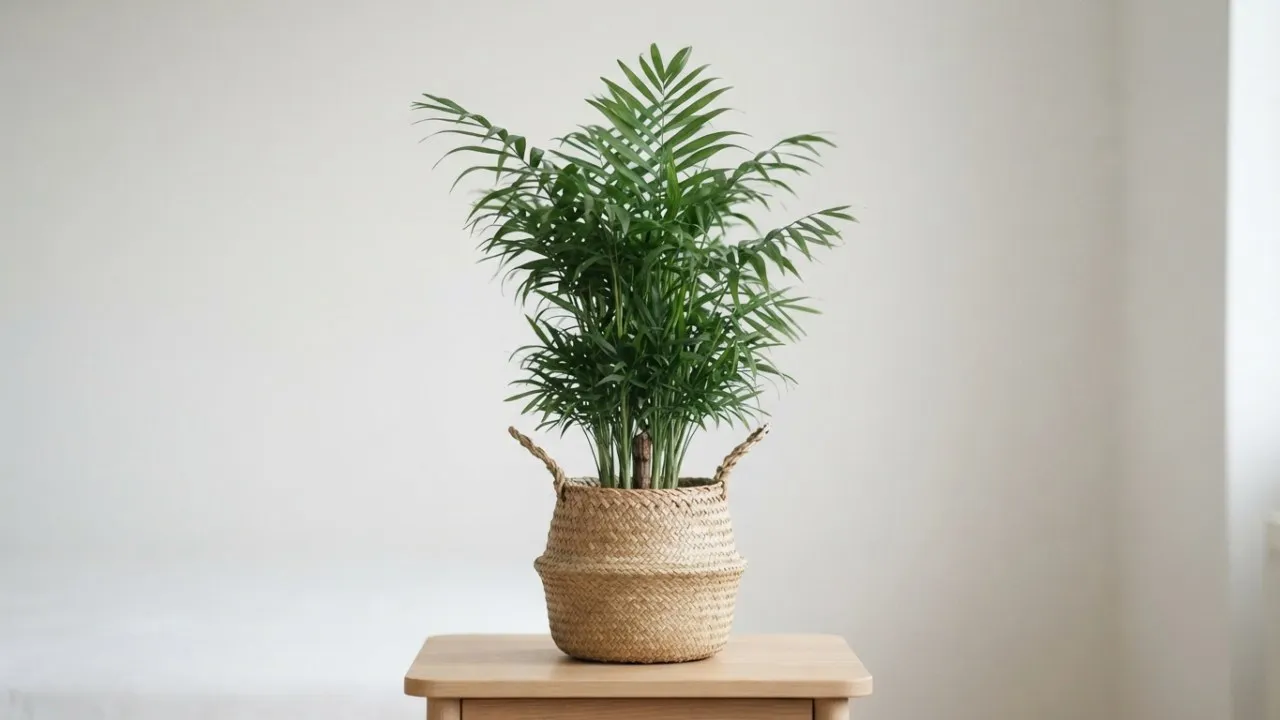
Parlor Palm
Chamaedorea elegans
An elegant small Mexican palm with fine arching fronds, perfect for low-light interiors.
The essentials at a glance
-
Watering
Every 7 days
-
Light
Medium light
-
Humidity
50–70 %
-
Temperature
15–27 °C


How to care for your Parlor Palm
Everything you need to keep your Parlor Palm healthy: watering, light, humidity, feeding, repotting and pruning.
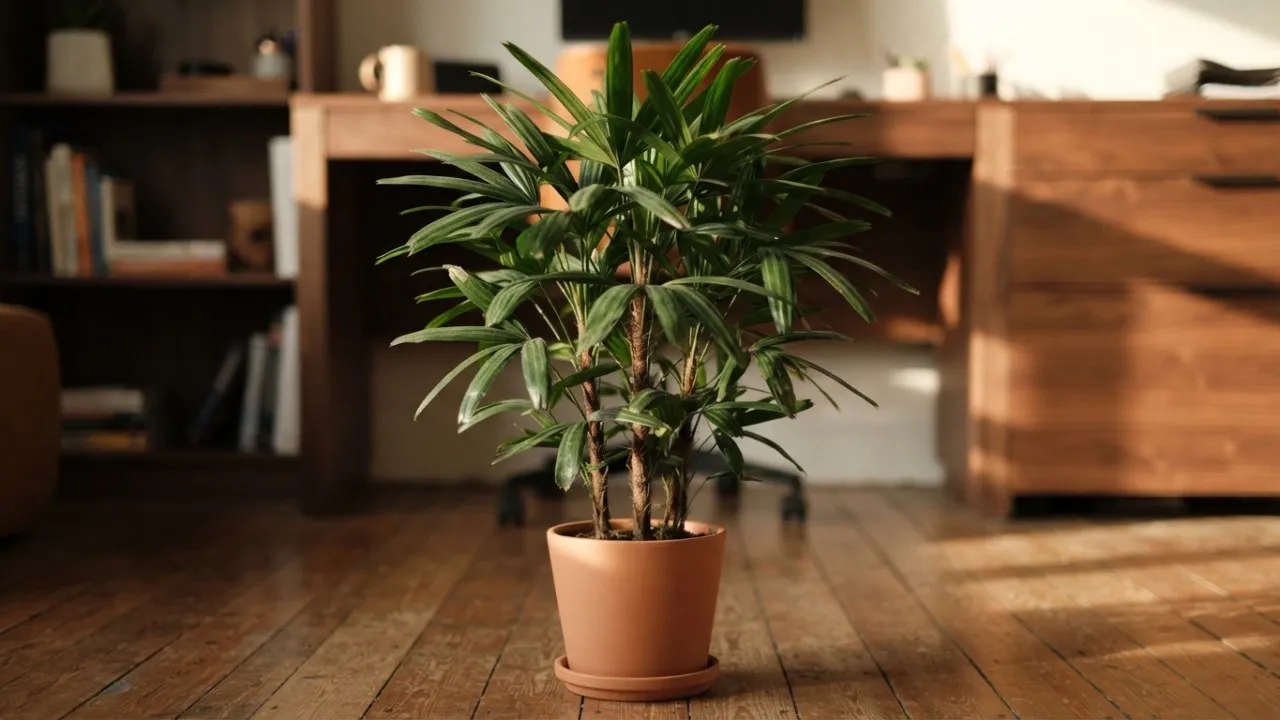
Chamaedorea elegans is a graceful small palm native to the humid tropical forests of Mexico and Guatemala, where it grows in the shaded understory. Its fine, elegant fronds form an airy and delicate silhouette that typically does not exceed 1.5 meters indoors. It is one of the most popular indoor palms in the world thanks to its remarkable tolerance of low light and care mistakes. Undemanding and non-toxic to animals, it is ideal for beginners and households with pets.

Watering your Parlor Palm
Every 7 days
Keep the substrate slightly moist without ever saturating it. Water when the top 2–3 cm of substrate is dry. Empty the saucer after watering. Reduce in winter.
How to know it needs water
- Top 2–3 cm of substrate dry
- Fronds beginning to droop slightly
- Pot lighter than after watering

How much light a Parlor Palm needs
Medium light
Moderate to bright indirect light. Tolerates low light well, making it an ideal palm for less bright interiors. Avoid direct sun which scorches the fronds.
- Direct sun tolerated
- No direct sun
- Orientations that suit it
- North, North-east, East, North-west, West, South-east, South-west

Humidity and misting
50–70 %
Moderate to high (50–70%). Tolerates dry air but frond tips may brown. Mist the foliage regularly to maintain humidity and prevent browning of the frond tips. Especially important in winter with central heating.

Feeding and fertiliser
Every 30 days
Fertilize monthly from spring to autumn. Do not fertilize in winter. Excess fertilizer burns the sensitive roots.
- Recommended feed
- Liquid fertilizer for foliage plants or specialist palm fertilizer at the standard dose. · 5-2-4

Repotting your Parlor Palm
Every 24 months
Do not choose too large a pot (maximum 2–3 cm larger). Rich, well-draining substrate: potting mix, perlite, and a little bark. Do not damage the delicate roots. This palm dislikes being disturbed too often.
- When
- Spring
- Potting mix
- All-purpose potting mix
- Mix in
- perlite, pine bark, coco fibre
The tell-tale signs
- Roots emerging from drainage holes
- Substrate drying out very quickly after watering
- Almost no growth for several months

Pruning your Parlor Palm
Cut only entirely yellow or brown fronds. Cut dead fronds as close to the base as possible with clean secateurs. Never cut the brown tips off green fronds — this causes further browning. Do not cut the apical bud.

Through the year
Watering is not set once and for all: it follows the light and the growth. Allow 11 days between waterings in the depth of winter, against 6 in the growing season.
- 11 J
- 9 F
- 7 M
- 6 A
- 6 M
- 6 J
- 6 J
- 6 A
- 7 S
- 8 O
- 9 N
- 11 D
Active growth · Days between waterings

Good to know
- Chamaedorea elegans was the most popular indoor palm during the Victorian era — it was found in nearly every bourgeois parlor of the 19th century, hence its English name Parlor Palm.
- It is one of the few palms that readily blooms indoors: it produces small clusters of yellow flowers resembling mimosa, even in low light conditions.

Frequently asked questions about the Parlor Palm
How do you care for a Parlor Palm?
Water it every 7 days. Give it medium light. Ideal humidity: 50–70 %. Ideal temperature: 15–27 °C. Keep the substrate slightly moist without ever saturating it. Water when the top 2–3 cm of substrate is dry. Empty the saucer after watering. Reduce in winter.
How often should you water a Parlor Palm?
Every 7 days Keep the substrate slightly moist without ever saturating it. Water when the top 2–3 cm of substrate is dry. Empty the saucer after watering. Reduce in winter. How to know it needs water : Top 2–3 cm of substrate dry ; Fronds beginning to droop slightly ; Pot lighter than after watering.
How much light does a Parlor Palm need?
Medium light Moderate to bright indirect light. Tolerates low light well, making it an ideal palm for less bright interiors. Avoid direct sun which scorches the fronds. No direct sun
Is the Parlor Palm toxic to cats and dogs?
No, the Parlor Palm is not listed as toxic to cats and dogs. That is still no reason to let your pets chew on it.
Why are my Parlor Palm leaves turning yellow?
Yellowing most often comes from too much water: the mix stays wet and the roots suffocate. Check that the pot drains, empty the saucer, and let the mix dry before watering again. Too little light or a cold draught cause the same symptom.
When should you repot a Parlor Palm?
Repot every 24 months, ideally in spring. Do not choose too large a pot (maximum 2–3 cm larger). Rich, well-draining substrate: potting mix, perlite, and a little bark. Do not damage the delicate roots. This palm dislikes being disturbed too often.

At a glance
- Family
- Arecaceae
- Category
- Palm
- Placement
- Indoor
- Mature height
- 1.8 m
- Growth
- Slow
- Temperature
- 15–27 °C
- Pot materials
- terracotta, ceramic, plastic
- Growth
- Reaches maturity in 10 years
These figures are for an average plant. In the app they are recalculated for yours, based on your room, its orientation and the season.
And for your plant, in your home?
In the app this plant becomes yours: a watering schedule tuned to your home, health tracking from photos, and reminders at the right moment.
In the same spirit
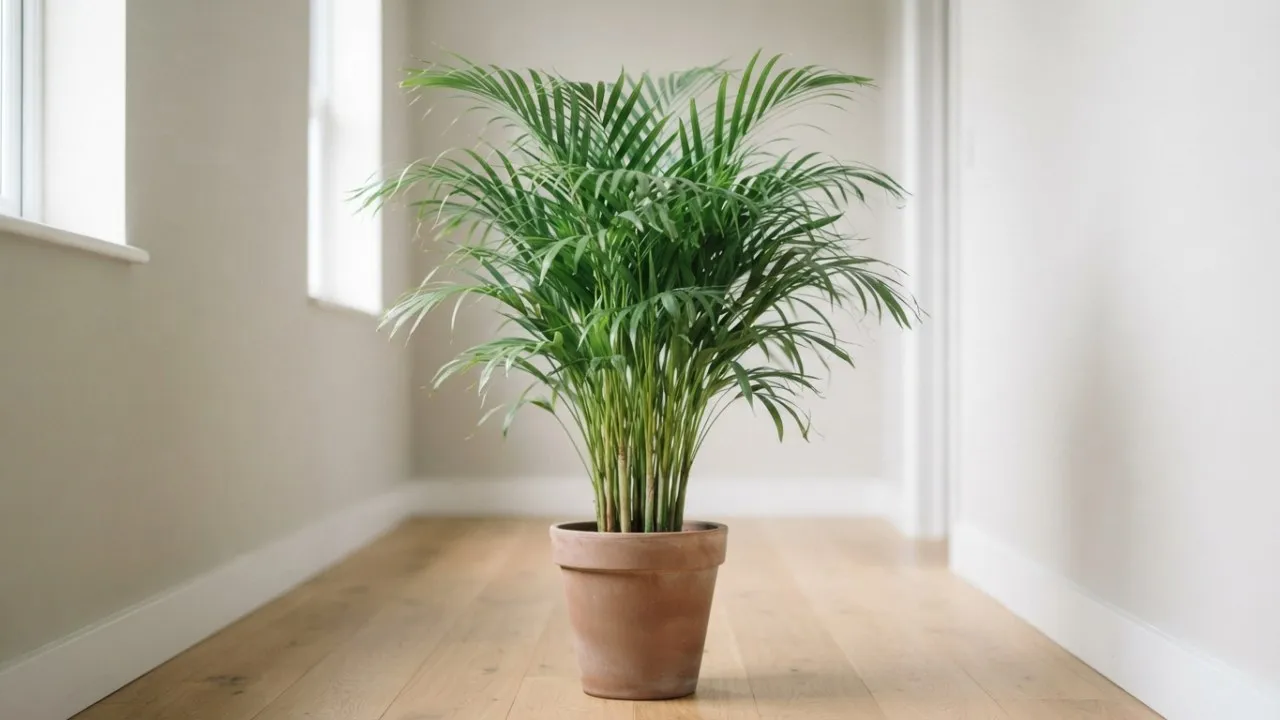 Every 5 days
 Areca Palm
Dypsis lutescens

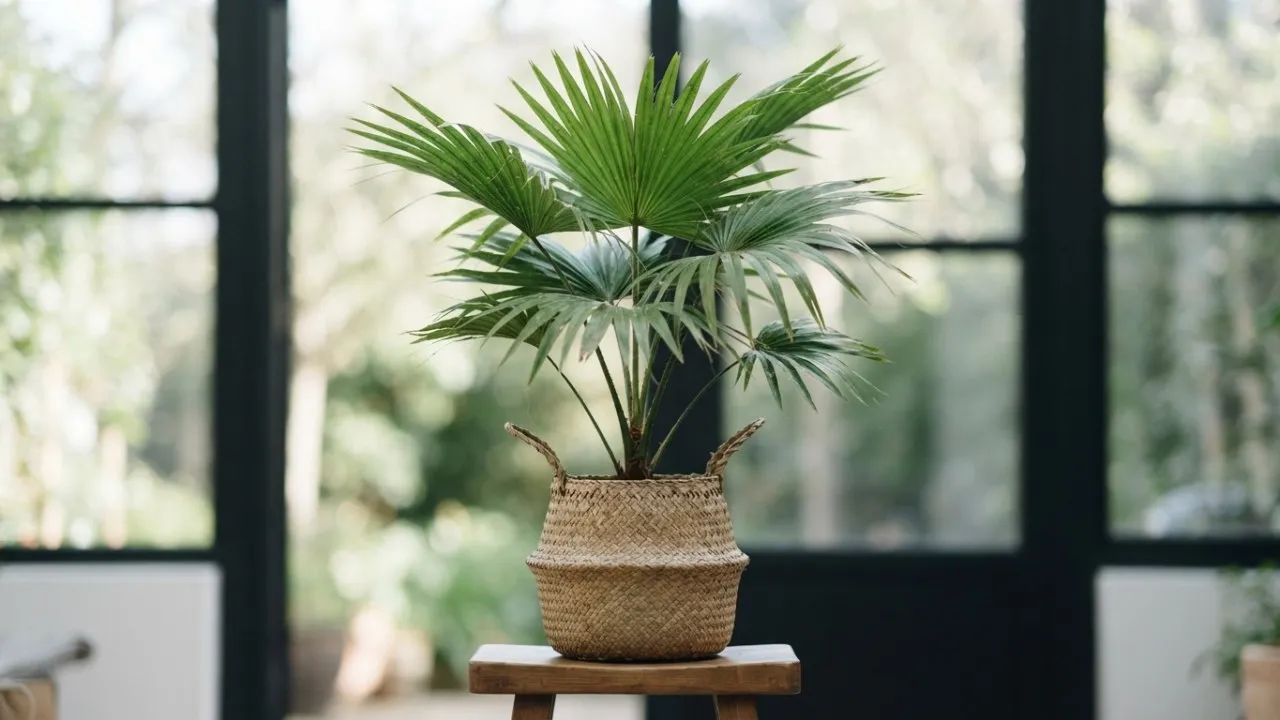 Every 7 days
 Chinese Fan Palm
Livistona chinensis
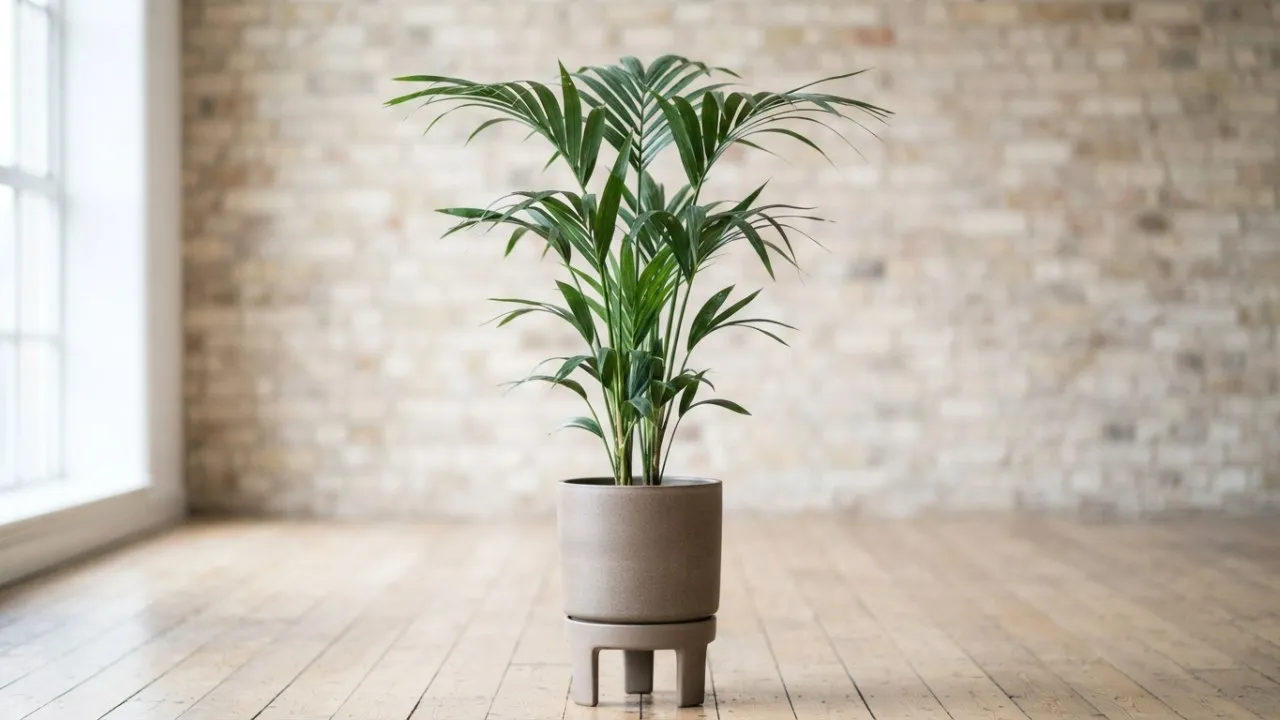 Every 7 days
 Kentia Palm
Howea forsteriana
 Every 7 days
 Lady Palm
Rhapis excelsa