Guides
 Snake plant: the complete guide to the most indestructible houseplant
Varieties, light, watering, division: everything you need to know about the snake plant, the all-time champion of easy plants.
 Plenova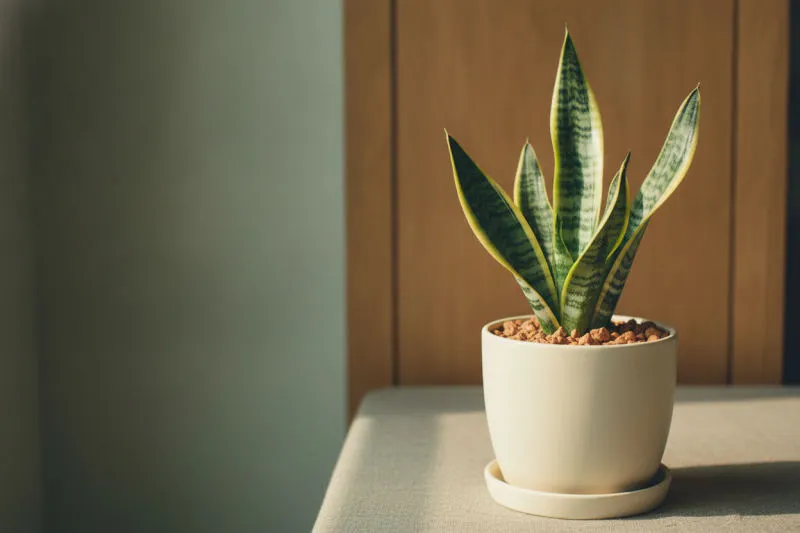
Contents 13
The snake plant is the one we give to people who "kill every plant". It survives almost anything: missed waterings, dim light, AC, moves. If it has a real flaw, it grows slowly. Here is the complete guide to know it well.
What it is
Formerly Sansevieria trifasciata, reclassified in 2017 as Dracaena trifasciata. The common name "snake plant" stuck, also known as "mother-in-law's tongue".
Native to tropical West Africa (Nigeria, Congo). Grows in rocky areas under canopy. Botanical family: Asparagaceae.
Varieties to know
Snake plant laurentii
The classic. Dark green leaves edged with golden yellow. Best-seller. 24-40 inches tall.
Snake plant zeylanica
No yellow edge, dark green striped with lighter green. More understated, ideal for muted decor.
Snake plant hahnii (bird's nest)
Dwarf variety, 6-8 inches tall, in a compact rosette. Perfect on a desk or nightstand.
Snake plant moonshine
Pale silvery-green leaves. Spectacular in minimalist decor.
Snake plant cylindrica
Cylindrical leaves instead of flat. Very architectural look. Often sold braided.
Snake plant masoniana (whale fin)
Single giant leaf per plant, up to 20 inches wide. Very on trend, pricier.
Why it is so resilient
Three superpowers:
- CAM metabolism: opens its stomata at night, saves water by day. The plant can live weeks without watering.
- Underground rhizomes: store water and nutrients, like a reserve.
- Fleshy leaves: also store water (succulent).
Bonus: with no pollen or heady scent, it suits a bedroom very well.
Light: tolerates everything
Ideal: bright indirect light or filtered direct sun. Grows well.
Acceptable: dim light, artificial light only. Grows slowly but survives.
Avoid: prolonged direct sun in summer (scorches leaves).
It is one of the rare plants truly indifferent to light. The factor that drives its growth is available light: more light = faster growth.
Watering: little, really little
This is the number-one mistake on snake plants: too much water.
Rhythm:
- Summer: every 15-20 days.
- Winter: every 30-45 days.
Method: confirm the substrate is fully dry 2 inches deep before watering. Soak or pour at the spout, drain completely.
Overwatering sign: soft leaves bending at the base, sometimes yellow. If you see this, pull the plant out, check the roots, cut the black ones, repot dry.
Substrate and pot
Cactus mix or universal + 30% perlite. Drainage is key.
Pot: terracotta with drainage hole ideally, just 1 inch wider than the root ball. Snake plants like tight pots, their rhizomes eventually crack thin plastic pots (bonus effect).
Fertilizer
Once in spring, once in summer, with cactus fertilizer half-diluted. Enough. No fertilizer in fall or winter.
Dividing a snake plant
The easiest way to multiply it.
- Pull the plant out, observe rhizomes and rosettes.
- Identify natural sections (rosettes with their own rhizomes and roots).
- Separate gently by hand, or cut with a clean knife.
- Let cuts callus for 24-48 hours.
- Replant each section in a fitting pot.
- Do not water for 1 week.
You get 2 to 4 new plants per division.
Leaf cuttings
Longer but possible.
- Cut a healthy leaf at its base.
- Slice into 3-4 inch sections, noting orientation (top / bottom).
- Let cuts dry for 2-3 days.
- Plant the bottom in moist substrate, about an inch deep.
- Patience: 2-3 months to see a new rhizome appear.
Variegated varieties (laurentii) lose their variegation through leaf cuttings. Use division to preserve them.
Blooming: possible but rare
A snake plant indoors can flower in spring after several years (5+). Tall flower stalk with cream-white blossoms, fragrant at night. Visually understated but charming.
Favorable conditions: mature plant, tight pot (rhizomes crowded), bright light, cool overwintering.
Common problems
- Soft leaves at the base — Overwatering → Stop watering, check roots
- Brown leaf tips — Dry air OR hard water → Tolerable, or filtered water
- Yellow leaves — Overwatering or pot too big → Water less, repot tighter
- No growth — Lack of light → Move closer to a window
- Mealybugs in leaves — Air too dry → Cotton swab + alcohol, lukewarm shower
Toxicity
The snake plant is mildly toxic to cats, dogs, and humans if ingested (vomiting, diarrhea). Saponins it contains irritate mucous membranes. Place high if pets chew on plants.
With Plenova
Plenova identifies your snake plant from a photo (trifasciata, cylindrica…) and adjusts reminders. Since this plant needs little attention, the app sends few notifications, always relevant.
A settled snake plant lives 25 to 30 years. You can hand it down to the next generation. Few houseplants can claim that.
Found this useful? Pass it on.
 Guides 8 min
  Guides
 June 27, 2026
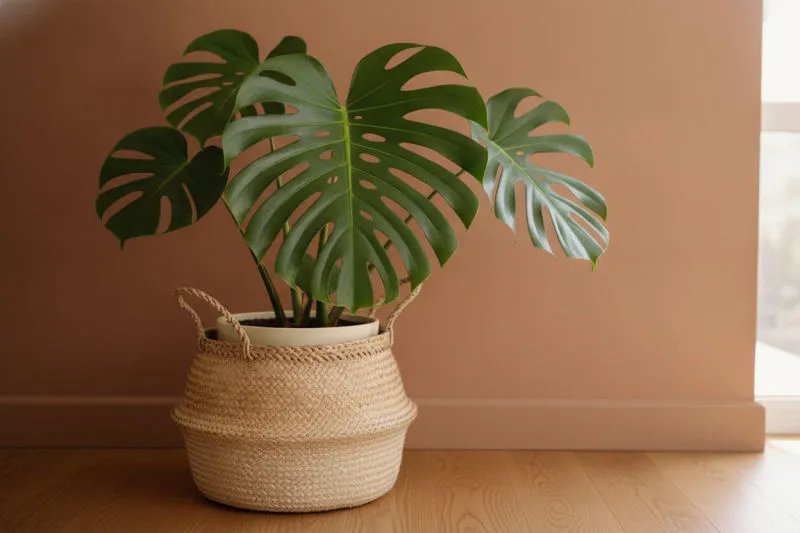
Caring for your Monstera, the guide to those iconic split leaves
Monstera deliciosa is the houseplant of the decade. Light, water, fenestration, aerial roots: here is how to turn yours into a real indoor jungle.
Read the article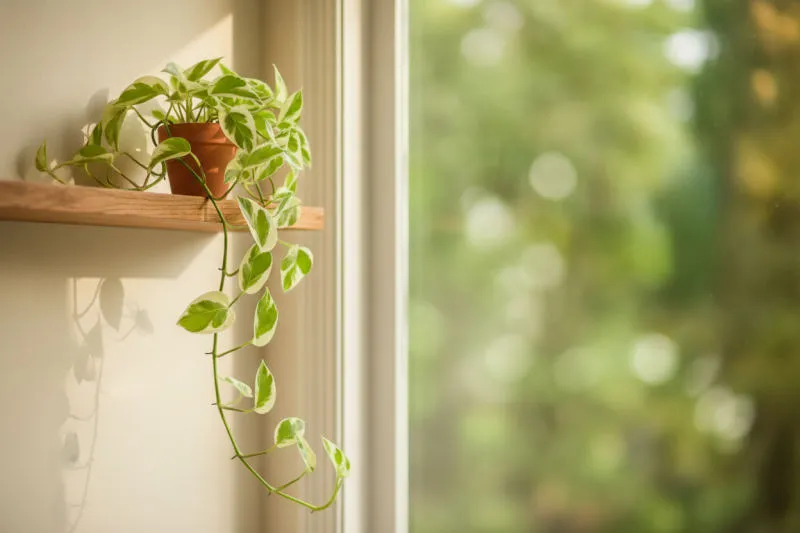 Guides 6 min
 June 26, 2026
Pothos, the complete guide: varieties, care and propagation
Golden, Marble Queen, Neon, N'Joy: everything you need to know about pothos, the most popular houseplant in the world.
Read the article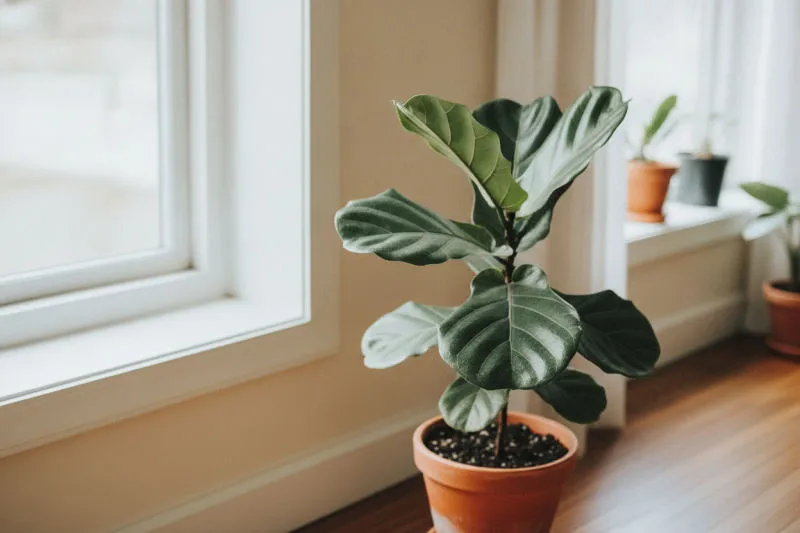 Guides 9 min
 June 25, 2026
Caring for your Ficus, lyrata, benjamina or rubber tree
Ficus is a whole genus, not one plant. Light, water, latex sap, pruning: a guide to figuring out your variety and keeping it beautiful for years.
Read the article